
Yearning for the Before Times
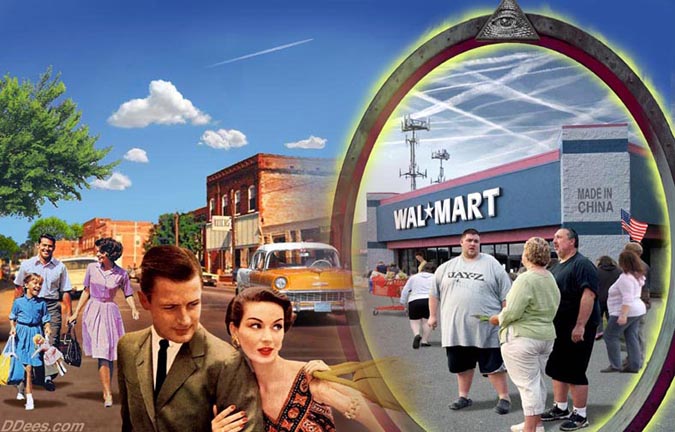
I miss those days, like I think many of us miss our brains before the internet.
Celebrity deaths don’t generally exercise me. The murder of Rob Reiner did, and I wasn’t sure why at first.
His movies were certainly a big part of my adolescence. I don’t recall how old I was when I first saw Stand By Me. Probably too young. As a boy, it shaped my perception of friendship as a thing tempered by adversity and adventure; as an adult, it impressed upon me how fleeting life is, and that friendship, real friendship, is rarer than rhodium. Did you know we’re living through a “Friendship Recession”? According to the American Perspectives Survey, the percentage of adults who report having no close friends has quadrupled since 1990. People are reporting having fewer friends overall and spending less time with them throughout the week. We’re also, apparently, becoming meaner to each other. Nearly half of Americans say people are ruder now than before the pandemic, according to a recent Pew Research Center survey.
I think I associate Reiner with the elusive Before Times, and that is why his death felt so significant, like the last nail in a coffin or the awful tolling of some bell that you had never hoped to hear. Before what, though? Now comes the part that always runs the risk of sounding cliché, bromidic even, and still true: Reiner’s work makes me long for an America that existed in my lifetime yet seems a hundred years removed from where we stand today. An America that had its problems, sure, but one in which there still existed a patchwork of cultural cobblestones that formed an uneven, bumpy, yet firm common ground. An America in which we had better, saner social lives, and into which politics intruded less. I know, I know. Cliché. But it’s true, and the distance between Today and Before is greater, worse than is immediately apparent.
A few people I know who, like me, “got out,” said that their physical and mental health improved noticeably, down to their skin and hair. It sounds sort of funny, but there is a biological explanation for that: extreme political engagement sends your cortisol—the body’s main stress hormone—through the roof, which, in turn, makes you miserable. “There is a considerable and growing amount of evidence that politics is having a negative effect on a broad range of health outcomes,” Kevin B. Smith, a professor of political science at the University of Nebraska–Lincoln, told Monitor on Psychology. “This is coming from different scholars using different data, approaches, and measures, and it all triangulates on the same inference: Politics isn’t very good for us.”
In fact, it’s driving us insane.
Allow me to direct your attention to the annual New York Young Republican Club for a moment. Founded in 1911, it is the oldest GOP organization for 18 to 40-year-olds and was founded by a coterie of impressive judges, diplomats, engineers, and philanthropists who, if resurrected for a day, would no doubt burn the establishment to the ground after seeing what it has become. This year’s annual gala featured a number of influencers, including an OnlyFans model who does blackface for a “living” and appears to be balding due to her admitted meth habit. Timmy Facciola was there and returned with an intimate glimpse of the new Boschian political-cultural hellscape:
“I’m out here normalizing racism. I’m not a hater, but I am racist,” Hayden McDougall, an internet personality with 1.4 million followers on Instagram told the popular Twitch streamer Sneako. “I go pretty hard after Blacks and a little bit after Jews, but really everyone. I’m racist toward everyone, but I think racism is just being honest.”
Thirty minutes later, an OnlyFans model named Empath, who was wearing a glittery white dress, approached Sneako and asked if she could show him a video of her doing blackface.
“We should do a stream sometime,” said Sneako’s cameraman, who was zooming in on guests with yarmulkes throughout the night.
“A blackface stream?” Sneako asked, smirking.
“Yeah,” Empath replied. “Or we can dress up as Jews.”
These are people for whom politics is merely resentment, and whose hatred has, quite literally, rotted them inside and out. Now, consider that JD Vance has reportedly adopted a campaign strategy for his upcoming presidential bid to either avoid alienating these people or court them. The vice president of the United States believes that these content creators are the new cultural tastemakers and, therefore, their place within the big tent must be delicately addressed and respected.
Influencers are the new celebrities, and however much you might dislike Hollywood, the implications of that haven’t really settled in for most people. According to Deloitte’s 2022 Digital Media Trends survey, around 60 percent of younger Americans said they’re watching less and less TV and film than older generations. Some might chalk that up to the declining quality of cinema, and it would be nice if that were all there was to it. It is a nice lie we tell ourselves because it offers an easy culprit: out-of-touch elites in the entertainment industry who deserve little sympathy.
The truth is complicated, and much worse. The short-form video format, which conquered social media, has effectively destroyed millions of attention spans, rendering victims incapable of sitting through a movie, let alone paying close attention. Instead, more and more audiences are turning to content by “creators” like Empathchan and Sneako, whose influence on politics and culture will make us pine for the days when liberal celebrities begged alms for Darfur. For as misguided as those little social crusades may have been, at least there was a pretense of nobility and trappings of decency. It was virtue signaling, yes—but virtue signaling seemed a lot worse before its counterpart, vice signaling, reared its head and swallowed it whole.
Rob Reiner was a liberal and engaged with liberal politics—but he will not be remembered for that, at least not by the vast majority of Americans. Reiner will be remembered for a body of work that examines love, friendship, justice, the human condition. It changed him, too, as much as it changed the people it touched. The ending of When Harry Met Sally… was originally planned to be morose, with the romance between Harry and Sally being unsalvageable. Reiner only changed it after meeting his second wife, Michele. It was her entry into Reiner’s life that convinced him to give the audience a happy ending, because he had found his own. It took a lot of creative courage. I think Reiner acknowledged that it was somewhat unrealistic. Harry and Sally probably shouldn’t have made it. But they did, unexpectedly, in the same way he met Michele. Love is a tender mercy of hope.
People like Reiner from the Before Times understood that in a way that our new tastemakers do not. I miss those days, like I think many of us miss our brains before the internet. But there is no going back. Nostalgia is a drug like heroin. All we can do is remember that it wasn’t always this way, and it doesn’t have to be.