
Venezuela: Why the Story Feels Wrong
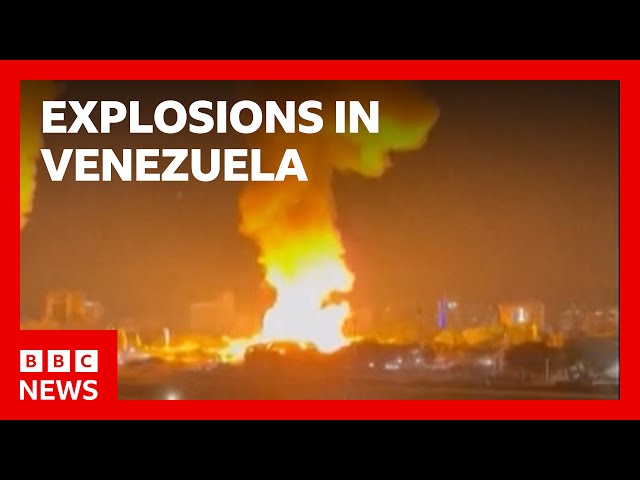
Those who still frame Venezuela, Iran, or Iraq as resource grabs are missing the point. This is about whether parallel, sanctions-resistant systems can survive long enough to become permanent.
What just happened in Venezuela is being sold as a political resolution:
no bloodshed, no resistance, a swift removal of Nicolás Maduro, a deputy stepping in, and a neat transfer of custody to New York. Order restored. Crisis solved. Move on.
That narrative is implausible.
Venezuela is not a country where power evaporates politely. It is deeply securitised, factionalised, and entangled with foreign intelligence services, military advisers, and sanction-evasion networks. Regimes there do not simply collapse. They are dismantled — deliberately, quietly, and only once the real levers of control have already been neutralised.
This was not a revolution. It was a systems intervention.
The persistent analytical error is to frame Venezuela — like Iraq before it — as a story about oil. That explanation is convenient and wrong. Oil is not the strategic variable. Control over the systems that move oil, insure it, price it, and settle its value is.
Iraq crossed this line in the early 2000s when it began challenging dollar-based oil settlement. At that point, it stopped being a regional problem and became a systemic one. What followed was not inevitable — but its margin for survival narrowed dramatically.
China understood that lesson — and refined it.
Beijing does not need invasions to control energy flows. It builds leverage through long-term off-take agreements, oil-for-debt structures, state-backed shipping and insurance, shadow fleets, and non-dollar settlement routes. Iran and Venezuela became ideal cases: sanctioned producers with no Western exit, absorbed into a parallel system where China functioned as buyer, financier, and backstop.
This was not altruism. It was architecture.
China was not merely buying oil; it was controlling the exit door once the United States closed the front gate. That distinction matters far more than ownership of oilfields.
Washington’s response has been widely mischaracterised. The United States did not “start a war.” It attacked the infrastructure of control.
Sanctions shifted away from flags and capitals and toward:
- shipping companies,
- insurers,
- ports,
- refiners,
- payment rails,
- and maritime enforcement itself.
This is not traditional geopolitics. It is financial–logistical warfare.
Once you determine who can ship oil, who can insure it, and who can settle the payment, territorial control becomes secondary. Regimes hollow out long before leaders fall. Elite guarantees begin to matter more than ideology. Political outcomes become sudden, contained, and conspicuously clean.
That is why the Venezuela story feels wrong.
By the time the public narrative began, the decisive contest had already concluded elsewhere — in shipping registries, insurance exclusions, banking choke points, and private negotiations far removed from Caracas. The visible political transition was not the cause of change; it was the confirmation that leverage had already shifted.
This is not an isolated episode. It is part of a broader contest over currency dominance, settlement authority, and control of global cashflow.
Oil is merely the bloodstream.
The real fight is over who controls the heart.
And this is precisely why Europe should be paying attention — not rhetorically, but uncomfortably.
The same logic now applies northward, explicitly, to Greenland. The Arctic is not a frontier; it is a systems node. Control over shipping lanes, seabed resources, satellite ground stations, undersea cables, and future energy corridors will determine who governs access, insurance, settlement, and enforcement in a rapidly warming region. Denmark may retain formal sovereignty over Greenland, but real leverage already sits with NATO logistics, U.S. security guarantees, and regulatory power exercised — or neglected — by the European Union. The EU Arctic Strategy speaks the language of sustainability and cooperation, yet remains thin on enforceable authority over finance, infrastructure, and maritime control. If Brussels assumes that systems interventions are anomalies confined to the Global South, it is misreading the moment. The lesson from Venezuela is not that force is imminent in the Arctic, but that system control precedes political outcomes.
If the European Union cannot exercise real control over Arctic infrastructure, finance, and maritime governance in Greenland — beyond declaratory strategies and Danish sovereignty formalities — then its claims to strategic autonomy are performative, and its credibility as a geopolitical actor ends where system control begins.
Those who still frame Venezuela, Iran, or Iraq as morality plays or resource grabs are missing the point — and dangerously so. This is about whether parallel, sanctions-resistant systems can survive long enough to become permanent. Venezuela was not the prize. It was a test case.
The media will declare closure. Markets will exhale. Diplomats will speak of stability.
But nothing fundamental has been resolved.
A system was challenged.
The system responded.
And the next test will not announce itself in advance.
The rich do not argue politics.
They study systems.
https://leonvermeulen.substack.com/p/venezuela-the-story-feels-wrong-and