
How Trump’s Venezuela Invasion Serves Israel’s Geopolitical Agenda
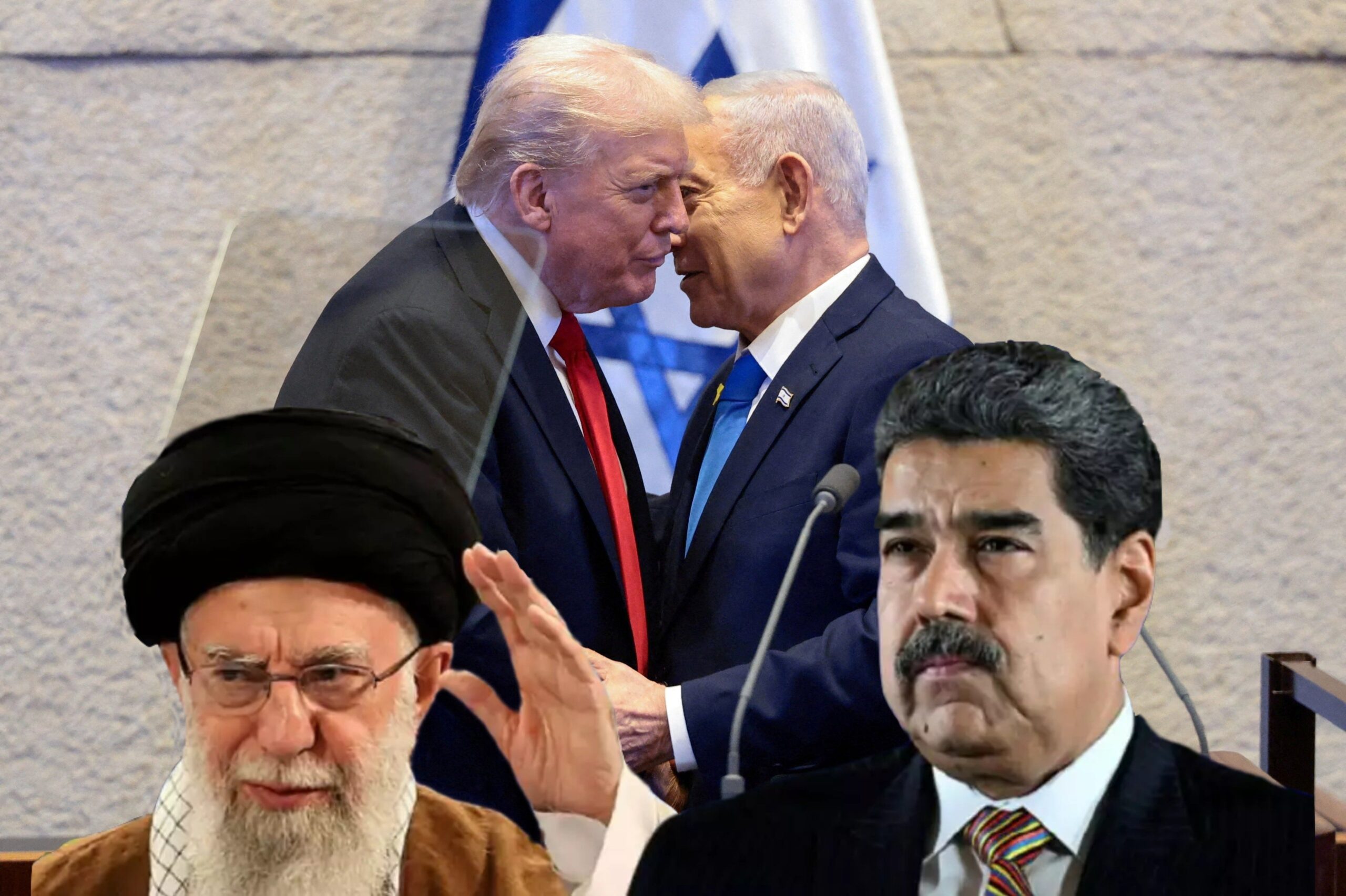
Officials in Washington, the corporate media, and pro-war think tanks have attempted to justify the kidnapping of Venezuela’s President, Nicolás Maduro, and his wife, Cilia Flores, on the grounds that Maduro headed a “narco-terrorist” regime, that he was a “dictator,” and that he was allied with the likes of Iran, China, and Russia. Yet, unlike the 2003 invasion of Iraq, the US president has left little room for debate: the stated intention behind this blatant violation of international law is to “secure the oil”.
The US attack on Venezuela on January 3 killed at least 40 Venezuelans, including civilians and security forces. An additional 32 Cuban nationals were also killed. There can be no doubt that what occurred was a violation of the United Nations Charter, specifically Article 2, Section 4. That said, having established that the primary goal of the operation was control of Venezuela’s oil—the largest proven reserves on Earth—the implications of this act extend well beyond the nation itself.
There is a reason why Israeli Prime Minister Benjamin Netanyahu has been such a vocal proponent of regime change in Caracas, as have Israel Lobby-linked think tanks like the Foundation for Defense of Democracies (FDD). This is the same Zionist crowd that pushed for wars in Iraq, Syria, Libya, and beyond. The reason is clear: all these operations benefit Israel.
Donald Trump’s declarations regarding Venezuelan oil are important for the Israelis. Not only was Iran an ally of Venezuela’s President Nicolás Maduro, but the robbery of the nation’s oil will help the US and Israel circumvent a possible oil crisis in the event of a major war against the Islamic Republic. One of the biggest cards that Tehran holds in the event of war is that it will close off the Strait of Hormuz, meaning that the Arab Gulf nations would no longer be able to export oil from the Persian Gulf area. Another option Iran has is to simply target the oil facilities at their source.
By seizing control of Venezuela’s oil resources, the US can not only provide a solution to such a crisis but, even in the absence of war, still leverage the oil supplies of the Latin American nation. For example, this would give the Trump administration greater sway over Saudi Arabia. The major concession that Washington seeks from Riyadh is for it to sign the so-called “Abraham Accords” and normalize ties with Tel Aviv—something the Saudis have so far refrained from doing, insisting that a Palestinian State be established first.
It is important to keep in mind that greater control by the United States government translates to immediate gains for the Israelis, who remains its closest ally and largest recipient of foreign aid. Washington and Tel Aviv are clearly pursuing a joint agenda.
The fall of a sovereign Venezuela also fits into a new Israeli project, the “Isaac Accords”. Amid a failure to achieve any major recent gains through its “Abraham Accords”, which target Muslim-majority and Arab nations, the “Isaac Accords” initiative was formally launched between Israeli Foreign Minister Gideon Sa’ar and Argentinian President Javier Milei in late November 2025, with the goal of creating a new Israeli alliance across Latin America.
This region is also key to Israel, which has faced some of its fiercest diplomatic opposition there since October 7, 2023. For example, of the first 15 nations to file interventions in favor of South Africa’s genocide suit against Israel at the International Court of Justice (ICJ), seven of them were Latin American countries: Cuba, Mexico, Belize, Nicaragua, Colombia, Bolivia and Chile. Venezuelan President Nicolás Maduro, along with President Lula da Silva of Brazil, also later filed interventions supporting the genocide case against Israel.
If we take a brief look at the region now, Bolivia has since lost its leftist government through the electoral process (as well as documented election interference by the US government), as has Chile, with both on the way to being taken over by right-wing, pro-US leaderships. The recent fall of Venezuela directly threatens the heavily sanctioned economy of Cuba. Colombia, Nicaragua, and Cuba remain under the direct threat of US-led regime change efforts. Even Mexico has been threatened, although it does not appear as if a coup or invasion is imminent there.
US Secretary of State Marco Rubio, who plays a key role in guiding the Trump administration’s foreign policy, is a Cuban-American who has a personal agenda in seeking the overthrow of the government in Havana. Rubio is also the recipient of at least $1,013,563 in Israel Lobby funds.
Israel’s involvement with US-backed right-wing dictators in Latin America is nothing new. For example, Israel was a primary supplier of weapons to the regime of infamous Chilean dictator Augusto Pinochet, who came to power as a result of a US-backed coup against the country’s popular socialist leader, Salvador Allende.
Even after the US eventually imposed an arms embargo on Pinochet’s regime in 1976—following the mass slaughter of tens of thousands of his own people and various other rights abuses—Israel continued to not only supply weapons, but became its top supplier, even providing intelligence and training for the regime’s forces. The newly elected president of Chile, José Antonio Kast, is an open admirer of Pinochet and the son of a former Nazi Party member.
Israel has trained, advised, and supplied weapons to right-wing groups and regimes across Latin America, including in “Argentina, Bolivia, Brazil, Colombia, Costa Rica, the Dominican Republic, Ecuador, El Salvador, Guatemala, Haiti, Honduras, Nicaragua, Panama, Paraguay, Peru, and Venezuela.” Meanwhile, popular left-wing movements across the region have typically allied themselves with the Palestinian cause.
A Regime Change War On Iran
The top priority for Israel is achieving a violent regime change in Tehran. US President Donald Trump has stated on multiple occasions that he is prepared to strike Iran and potentially spark another war, claiming that he will do so if the Iranian authorities kill protesters inside the country.
On December 28, peaceful protesters had taken to the streets across Iran—mainly shopkeepers, protesting against government mismanagement, which they blame for the deepening currency crisis. In doing so, they received backing from major unions within the nation and coordinated demonstrations with clear demands.
Suddenly, however, this entirely organic series of protests was hijacked. Iranian opposition media and Israeli propagandists began disseminating old or out of context footage and AI-generated videos of mass demonstrations against the government. Former Israeli Prime Minister Naftali Bennett even released an address to the Iranian people, supporting an alleged regime change uprising.
Almost out of nowhere, rioters and armed militants began popping up across the country, primarily in the Lor- and Kurdish-dominated minority areas. These rioters have so far looted stores and destroyed food crops, assaulted a hospital with gas canisters (then attempted to blame it on security forces), and burned police officers—including, in one case, with an improvised flamethrower.
The rioters have been caught on video—and even filmed themselves—opening fire on security forces. They have also attempted, but so far failed, to seize armories, police stations, and government buildings. Security officers have been assassinated by radical terrorist factions, as a terrorist cell was even combatted along the borders of Iran’s Sistan and Baluchestan Province.
Homes, cars, stores, mosques, and even copies of the Quran have frequently been burnt by the rioters, while some operatives plastered over local street signs, replacing them with “Trump” street banners. As covered in my previous piece for The Last American Vagabond about these riots, they are far from organic, unlike demonstrations in the past. These riots are not comparable to the 2022 or 2009 waves of unrest; instead, what we are seeing is an attempt to launch a foreign intelligence-led color revolution.
If anything, what we can see from this series of Israeli-backed riots is the potential power of disinformation online, particularly through the use of AI-generated videos and pictures, which were even created and shared on official Israeli government media pages.
It proves that a combination of agents on the ground, alongside a media campaign that speaks so confidently about a non-existent revolution and takeovers of entire cities, can end up leading to further unrest inside a country.
Anti-Iran social media accounts have even produced collages of civilians, alongside the names of individuals, claiming they were murdered by Iranian security forces. Later, some of these individuals, whose names and photos were circulated, came forth in video messages stating that fake videos and reports are being spread about them.
In addition to all of this, videos have emerged of a truck loaded with stones suddenly appearing to drop off its cargo for rioters to use. One such case was reported in Shiraz, after which the unidentified truck suddenly took off. This, along with random attacks involving guns, knives, and improvised explosives, all demonstrate a pattern of a well-prepared campaign.
Anyone pretending this is somehow organic—now that the unions backing the shopkeeper demonstrations and the original peaceful protest movement has completely subsided—is pushing cheap propaganda at this stage. There are certainly legitimate grievances against the Iranian authorities, but this wave of unrest is not about that; it is a foreign-backed and calculated plot to weaken the government.
The way in which the invasion of Venezuela was conducted—abducting President Maduro in the manner the US did—was clearly intended to send a message. It is clear that this could have been done without all of the theatrics, but instead, Trump ordered his forces to go in all guns blazing. This serves as a psychological blow and to instill fear among Iranians that the US can do the same anywhere in the world.
As noted by Iranian analysts, most of the riots have occurred in locations throughout Iran that are in close proximity to known missile launch sites attacked during the 12-day war with Israel last year.
It is also possible that the unrest is designed to distract Iranian security forces in these areas, allowing professional Israeli-employed operatives to prepare for a new round of aggression against the country.
An important observation about these rioters is that many of them have appeared wearing chains and other expensive clothing items—indicative of criminal groups—unlike local residents, who are typically unable to afford such apparel. This suggests that gangs with ties to Israel or other foreign intelligence agencies, may be instigating the bulk of the violence.
Broader Implications
The removal of the Venezuelan leader was a consequential move on the global chessboard, due in large part to the manner in which it was carried out. It represented a direct blow aimed at Iran, as well as Russia and China. If the Israeli-US alliance succeeds in its goal of collapsing the Iranian state, this would result in total domination of West Asia and prove pivotal for their ambitions throughout Africa.
Russia and China have for some time been portrayed as representing a resurgence of a Soviet Union-style bloc opposed to the United States—or, in other words, the emergence of a “multipolar world”. Following the US operation against Venezuela and the fall of former Syrian President Bashar al-Assad, it has become clear that no such multipolar order exists at present.
This became shockingly clear with the passage of United Nations Security Council (UNSC) Resolution 2803 in November of last year, which authorized the Trump administration’s plan to conquer the Gaza Strip and achieve regime change there. Not only did the Russian and Chinese delegations abstain from the vote—after Moscow had even issued a counterproposal draft—they also failed to exert any leverage over Security Council members.
Take Algeria as an example: it voted in favor of UNSC Resolution 2803 despite its strong ties to China and especially Russia. Not only did it vote for the resolution—which completely does away with decades of UNSC and General Assembly resolutions, along with the Geneva Conventions—but its representative even spent time praising US President Trump afterward.
The passing of UNSC Resolution 2803 marked the day when the old international order effectively died, making it clear that no meaningful opposition to the US-led world order existed on the global stage. This does not mean that Beijing and Moscow are weak, but rather that they are clearly unready to assume the major role many analysts had previously suggested.
Meanwhile the US is transforming itself in order to carve out a new world order. This is being achieved by transferring power to major corporations, billionaires, and tech companies, while the government itself focuses on security matters and coordinates a campaign of global control and coercion. The US military is therefore being transformed into the armed wing of major corporations as the concepts of national sovereignty and international law collapse.
Consequently, the US government will not be the entity investing heavily in foreign projects. Instead, Washington leverages its military might and intelligence agencies to enable corporations to invest in different projects and direct policy on the ground.
It is well understood that the government itself is buried in debt and, therefore, multinational corporations are now leading the way. This was a concept first born of the World Economic Forum (WEF)’s former leader, Klaus Schwab, and has since been altered to suit changing global dynamics.
Ultimately, even if the US government is to weaken, the corporations will keep their wealth and will be able to control policy. All that this new strategy is doing is transitioning from corporations working through middlemen to control the direction of US policy, to the corporations directly leading on their own and receiving the support from Washington they need to do so.
In other words, the exact opposite system is emerging in the United States—and across the West, for that matter, as these are multinational corporations in many cases—from the one that rules from Beijing. In China, a capitalist system is controlled by a strong central government that cannot be lobbied or removed. In the United States, the capitalists have consolidated power and created structures of control that will not change, while the government beneath them is managed by them and allowed to undergo adjustments that they permit.
While China is a country, the US’ leadership is now composed of multinational corporations whose power transcends borders and who will never be held to account for their actions. The Chinese people can easily identify their leaders, most people in the West cannot.
https://tlavagabond.substack.com/p/from-caracas-to-tehran-how-trumps