
Reflections on a War
Thirty-five years ago, the world woke up to find the United States at war with Iraq. It was a war that set in motion changes that still reverberate globally to this day.
On the back side of the house
Where it wears no paint to the weather
And so shows most its age,
Suddenly blue jays rage
And flash in blue feather.
In January 1991 the United States led a coalition of the willing, operating under the mandate of a United Nations Chapter VII resolution, to war against Iraq. In August of 1990, Iraq had invaded and occupied the sovereign state of Kuwait, an act of aggression that operated in flagrant violation of the law.
The Cold War that had dominated the globe since the end of the Second World War was winding down, and the international community was on the cusp of major geopolitical changes that could and would reshape the world order. The United States, which was emerging from the detritus of the Cold War as the world’s sole remaining superpower, found itself at a crossroads of history.
It is late in an afternoon
More grey with snow to fall
Than white with fallen snow
When it is blue jay and crow
Or no bird at all.
The Middle East had, up until that time, been managed the so-called “Carter Doctrine”, a Cold War-era policy implemented by President Jimmy Carter in 1980 following the Soviet Invasion of Afghanistan. The “Carter Doctrine” held that the United States would use military force, if necessary, to defend its national interests in the Persian Gulf, which primarily centered on the deterrence of Soviet expansion.
As a young Officer of Marines stationed in 29 Palms, California, I spent the better part of the summer of 1985 updating the intelligence annex to the Operations Plan for an amphibious landing Iran in response to a Soviet invasion. I was assigned to the 7th Marine Amphibious Brigade, the Marine ground combat component of the Rapid Deployment Force, the tip of the spear of the “Carter Doctrine”—if America was going to war in the Middle East, the 7th MAB would be leading the way.
So someone heeds from within
This flurry of bird war,
And rising from her chair
A little bent over with care
Not to scatter on the floor
The war plan that the United States was implementing against Iraq in 1991 was a modification of the one that I had updated back in 1985. But the difference was instead of fighting against the Soviet Union, we found ourselves in common cause as the Soviets helped push through the UN Security Council resolution authorizing military force against Iraq. Such cooperation was unthinkable during the Cold War, doubly so since the resolution targeted a Soviet client state.
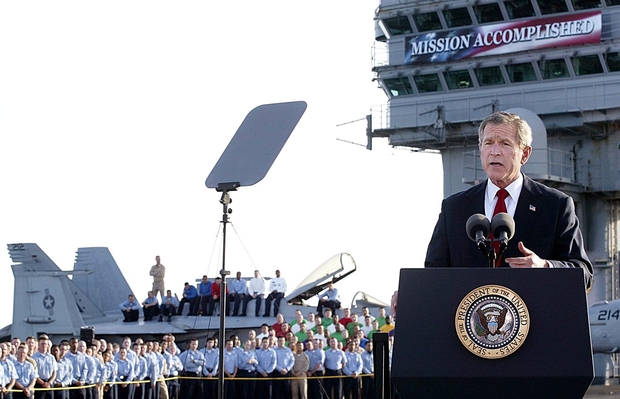
Today Americans look back on Operation Desert Storm, the name given this war, as an historical curiosity. The events leading up to the war, and the war itself, became lost in the jumble of events that followed, including 9/11 and the US-led invasion and occupation of Iraq. But none of those events would have happened had it not been for Operation Desert Storm.
The sewing in her lap
Comes to the window to see.
At sight of her dim face
The birds all cease for a space
And cling close in a tree.
I was involved in the planning for Marine ground combat operations before the start of the war. This was the first major military action to be fought by the armed forces of the United States since the Vietnam War, some two decades prior. Most if not all the senior officers involved on the American side during Desert Storm were veterans of the Vietnam conflict, and they carried the ghosts of that war with them.
There was real concern over casualties. The First Marine Division had ordered 10,000 body bags, and the US Army’s Fifth Corps ordered another 10,000. When the war concluded, some 43 days after the air war began on the night of January 16/17, and 100 hours after the US initiated its ground offensive to liberate Kuwait, the concerns over casualties turned out to be much ado about nothing—less than 450 coalition soldiers lost their lives in Desert Storm.
And one says to the rest
“We must just watch our chance
And escape one by one—
Though the fight is no more done
Than the war is in France.”
Around 22,000 Iraqi soldiers lost their lives during Operation Desert Storm, along with 2,300 civilians. It was a one-sided war, and yet when the fighting stopped, the results were far less than the total victory anticipated by the US and its allies. In October 1990, a few months before the first bombs began falling on Iraq, then-President George Herbert Walker Bush had declared Iraqi President Saddam Hussein to be the Middle East equivalent of Adolf Hitler for the crime of invading and occupying Kuwait, adding the Iraqi dictator would suffer “Nuremburg-like retribution” for his crimes (a reference to the post-war trials of the senior Nazi leadership at Nuremburg.
But Saddam did not go gently into that good night. Rather, he resisted US-led efforts to dismantle Iraq by supported Shi’a uprisings in the south of Iraq, and Kurdish uprisings in the north. Instead of collapsing, the government of Iraq appeared to thrive, feeding off the controversy created when the United Nations authorized international specialists to carry out inspections of Iraq intended to disarm Iraq of its weapons of destruction.
Than the war is in France!
She thinks of a winter camp
Where soldiers for France are made.
She draws down the window shade
And it glows with an early lamp.
I participated in Operation Desert Storm as a member of the intelligence staff of the US Commander, General Norman Schwarzkopf. I was deeply involved in the hunt for Iraqi mobile SCUD missiles, and when the war ended this experience got me an invitation to join the United Nations as a weapons inspector searching for missiles and other weapons of mass destruction in Iraq.
The inspection process was linked to the continuation of economic sanctions that had been imposed on Iraq since the time of its invasion of Kuwait in August 1991. One problem facing the UN weapons inspectors was that the United States, trapped by its own pre-conflict posturing of Saddam Hussein as a modern-day Adolf Hitler, was now fully committed to a policy of regime change, for the simple fact that anyone modelled after Adolf Hitler could be allowed to continue to govern. Weapons inspection, rather than being a legitimate tool of disarmament, instead became a tool for the continuation of sanctions until which time Saddam Hussein stepped down from his presidency.
On that old side of the house
The uneven sheds stretch back
Shed behind shed in train
Like cars that long have lain
Dead on a side track.
Operation Desert Storm had a well-defined beginning—January 16/17, 1991. But it did not have a similarly well delineated conclusion. This led to the US turning its back on the concept of a new world order based upon genuine multipolar cooperation, and to resume expanding its role as the global hegemon.
By the end of Desert Storm, the US had rejected yielding the global stage to a new multipolar order, instead continuing and expanding upon its status as the world’s supreme military and economic power. “Pride goes before destruction, and a haughty spirit before a fall,” notes Proverbs 16:18. Within eight months of the formal end of Operation Desert Storm the Soviet Union collapsed. There were no more checks and balances available to the international community to hold back US power.
Emboldened by its decisive victory in Operation Desert Storm and liberated by the untimely dissolution of its principle global geopolitical opponent, the United States embarked on a three-decade campaign designed to impose its will on the world, and the Middle East in particular. There is a direct cause-and-effect relationship between the US’ prosecution of Saddam Hussein and Iraq, and the gradual decline of US power and prestige that came with pursuing ghosts on the ground in Iraq.
This decline was manifest during the term of President Bill Clinton, and all other Presidents that followed. And it can all be attributed to the unfinished business that was triggered by the collapse of multipolarity as a concept. Everything that followed—9/11, the invasion and occupation of Iraq, the War in Afghanistan, and covert regime change operations in Libya and Syria—all have their roots in Desert Storm, a war which began 35 years ago and never really ended.
(The poem that interspaces the paragraphs of this article is entitled “War Thoughts at Home.” It was written by Robert Frost in January 1918, and only recently discovered.)