
A Nation That Won’t Enforce Immigration Laws Isn’t a Nation At All
It may be that the next few years will decide whether America remains a sovereign nation or succumbs to subversion from within.
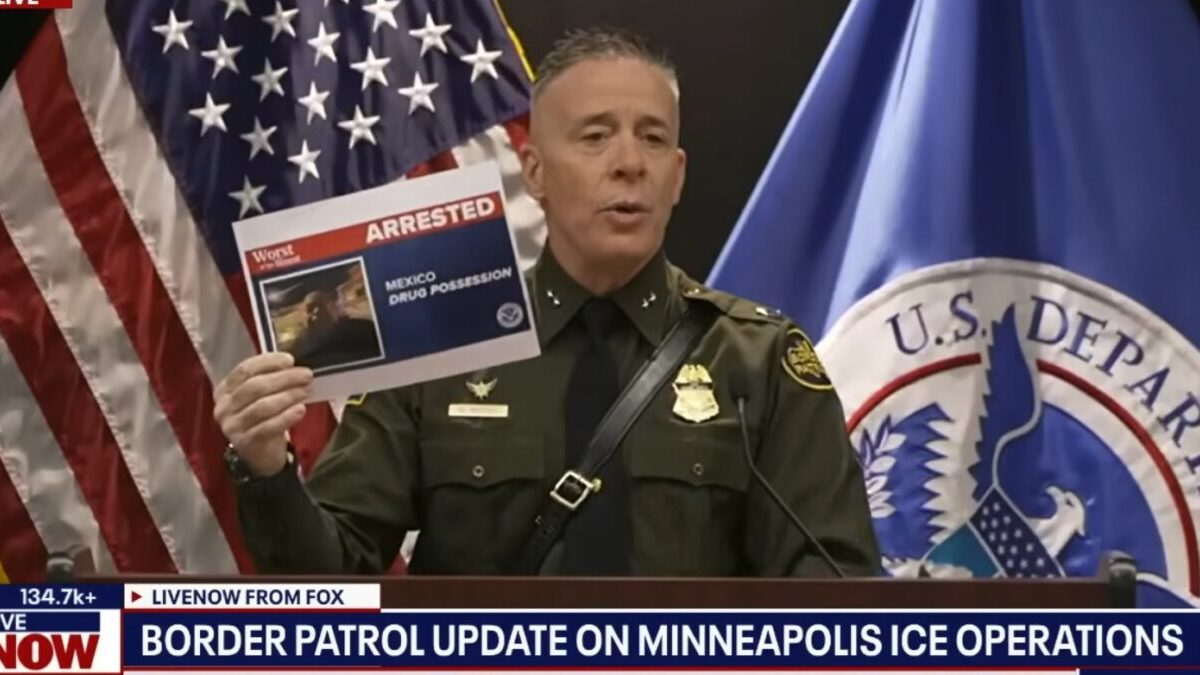
he unrest surrounding immigration enforcement in Minnesota is a flashpoint for a much deeper struggle over U.S. sovereignty.
A sovereign nation, by definition, must be able to enforce its laws within its own territory.
When federal immigration law is openly resisted, and elected leaders excuse, rationalize, fail to deter, or even encourage violence against those tasked with exercising constitutional authority, both the federal government and the nation lose their fundamental legitimacy.
As we see the deliberate subversion of legitimate federal authority play out within Democrat-controlled cities and states across the country, it is not hyperbole to say that the next few years will decide whether America remains a sovereign nation or succumbs to subversion from within.
The volatile situation America finds itself in is not organic but manufactured. It is an “immune response” from an establishment aligned against the popular sovereignty that propelled Donald Trump into the White House.
Trump’s Mandate
In 2024, the American people voted decisively in favor of enforcing existing federal immigration law. Multiple national polls showed majority support for deporting all illegal immigrants, not merely those who had committed additional crimes after entering the country unlawfully.
Trump ran explicitly on that mandate and won.
This was not a throwaway campaign promise. It was a demand that the federal government restore the rule of law, secure the border, and reverse decades of deliberate non-enforcement of immigration laws within America’s interior.
Yet, the moment enforcement moved from campaign rhetoric to reality, especially within the sanctuary cities and states that have been defying federal immigration law for decades, an “ICE-Out” resistance emerged to undermine legitimate immigration enforcement, just as the “No Kings” protests aim to undermine Trump’s legitimate electoral victory.
Manufactured Resistance
This resistance is far from a grassroots uprising. Instead, it is a coordinated effort to shape the narrative around immigration enforcement and, subsequently, manufacture a public opinion to undermine the democratic will expressed at the ballot box.
Minneapolis serves as the primary case in point for this strategy of subversion. Local officials there made a deliberate decision not to deploy police to quell violent protests or meaningfully assist federal authorities engaged in lawful immigration enforcement.
By withholding local law enforcement, and ramping up their incendiary rhetoric, these officials ensured escalation. They created the exact conditions necessary for a manufactured crisis: chaotic confrontations between organized activist groups and federal agents, captured in dramatic footage stripped of all the context that preceded the altercations.
The Media’s Role
Outrageous lies were fabricated and reinforced by a media complex that functions purely as a propaganda machine against ICE agents, such as the story that federal agents had arrested a five-year-old child and used him as “bait.” These lies are designed to weaponize empathy and sever public support for deportation operations.
From activist networks to cable news panels to elite opinion pages, the same storyline took shape: immigration enforcement itself was the problem, not the violence directed at federal officers or the deliberate, unlawful obstruction of federal law enforcement.
The depth of this manufactured consensus was revealed following the deaths of two activists after physical confrontations with federal immigration officers in Minnesota.
When tragedy strikes during these high-tension operations, the reaction from the elite establishment is telling. The editorial boards of nearly every major U.S. newspaper, from The Washington Post and The New York Times to The Wall Street Journal, moved with a unity that on the surface suggests a coordinated objective.
Instead of demanding a restoration of order so that citizens could be protected and immigration law could be safely enforced, they instead insisted that ICE change its mission entirely away from deporting illegal aliens as a whole and towards only “criminal” aliens.
The Washington Post framed the unrest as proof that President Trump was “overreaching” by not just focusing on deporting criminal illegal aliens.
A Republican member of Congress writing in The New York Times called for a “new comprehensive national immigration policy,” one that would limit deportations to “criminals” while sparing so-called “law-abiding” immigrants.
One Wall Street Journal op-ed called for a “ceasefire” on immigration enforcement, while another criticized how the Trump administration has pivoted away from deporting “the worst of the worst” criminal aliens to illegals without a criminal history — calling this strategy a “political liability for Republicans.”
Republican Newt Gingrich even appeared on Fox News to call for a “national conversation” about what to do with the “law-abiding, taxpaying” illegal immigrants, warning that “very few Americans want to see the police walk in and deport them.”
All of this is flooding the media landscape while a clear majority of Americans still continue to view illegal immigration as a serious problem that requires a firm, lawful response.
History of Elite Betrayal
This pattern of elite betrayal is not new. It follows a historical blueprint that stretches back decades to promises made during debates over the Hart-Celler Immigration Act of 1965, in which prominent politicians such as Sen. Ted Kennedy promised that the bill would not “flood our cities with immigrants” or “upset the ethnic mix of our society.”
Of course, all these things and more happened anyway.
During the 1990s, roughly 65 percent of Americans wanted immigration levels reduced. Yet immigration surged to historic highs because both political parties found the influx beneficial to their own narrow interests.
The left viewed mass immigration as the importation of a new, more favorable electorate, while the “Chamber of Commerce” right viewed it as a source of cheap labor in a globalized free market. This bipartisan consensus held firm through both Republican and Democrat administrations, largely by ignoring the preferences of the American public.
It held until the political ascendancy of Trump. In him, voters believed they finally had a president who would follow through on the foundational duty of a sovereign state: the protection of its borders and citizens. Political elites on both sides of the aisle recognized this as a threat to their long-standing arrangement, which is why we see the machinery of narrative control turned up to its highest setting.
Which brings us back to the streets of Minneapolis.
The goal of the current unrest is to make the cost of enforcing the law appear so high, both socially and politically, that the government will eventually retreat from its duty. This is how sovereignty is undermined: not through a formal declaration of surrender, but through the steady erosion of the state’s will to govern.
Inflection Point
America now finds itself at an inflection point, and the sides in this conflict could not be further apart.
One side, we’ll call it MAGA for simplicity, believes America is a sovereign nation with the right and the obligation to enforce its borders.
The other side, Democrats and their leftist/activist allies, reject the very concept of U.S. sovereignty, operating on the belief that “no human is illegal” and that the American project itself is illegitimate, going back to 1619.
The fight in playing out in sanctuary cities across the nation between federal law enforcement and activists isn’t a political disagreement or a debate over policy. It’s a civilizational battle. We either have a country, or we don’t.
A country that cannot, or will not, enforce its immigration laws is no longer a sovereign nation. And a government that retreats whenever enforcement becomes controversial has ceased to govern and has resigned itself to simply manage its own decline.
The choice facing America in the coming years is binary and perhaps final: Sovereignty or surrender.