
A New Middle Eastern Power Paradigm
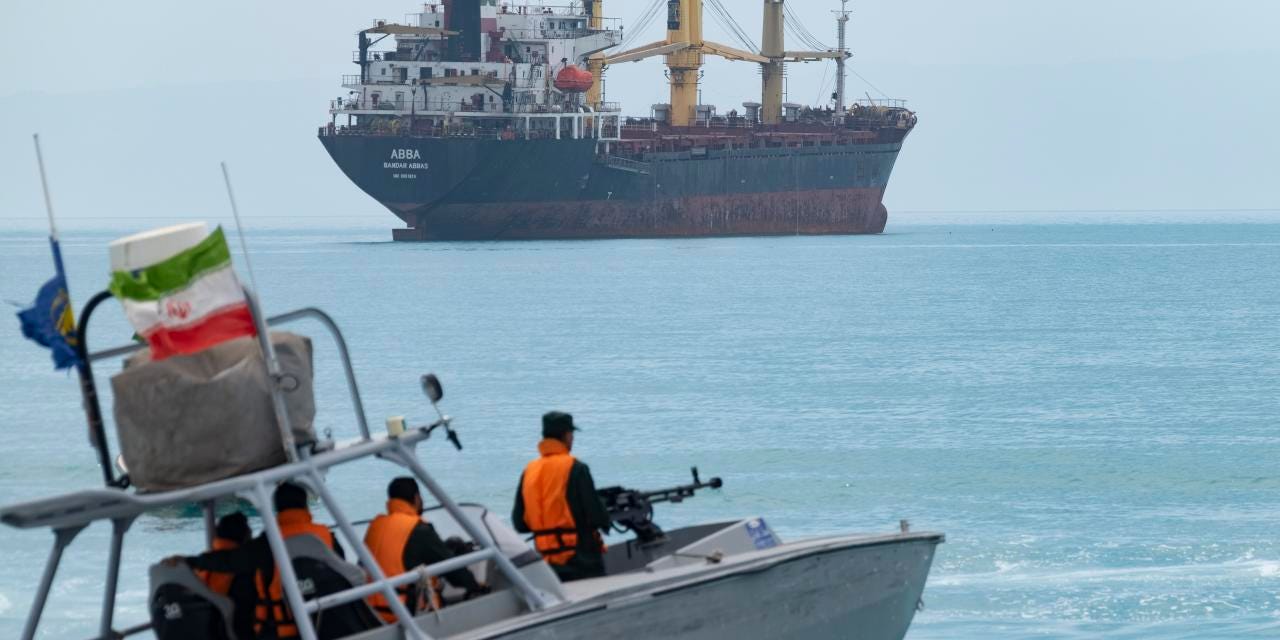
Iran won the war. There are consequences for being on the wrong side of the power equation, a reality that the US and its Gulf Arab allies are learning the hard way.
It is a bad time to be a Gulf Arab State.
The United States and Israel took a gamble when launching their surprise attack on Iran on February 28 of this year. To the extent that they were consulted beforehand, America’s Gulf Arab allies did so as well.
They lost.
No discernable political or military objectives were attained by the practitioners of perfidy—neither regime change, missile suppression, nor control of the Strait of Hormuz.
Instead, the anti-Iranian cabal was compelled to seek a ceasefire that left Iran in total control of the strategic Strait of Hormuz, throttling both regional and global economies by blocking the transit of the very energy that they rely upon for their functioning, and its military intact, capable and defiant, able to deliver devastatingly damaging blows to their enemies lairs.
The 40-day war between the US/Israeli/Gulf Arab States cabal and Iran has underscored a reality that is difficult for many to accept—that military capability of the United States to project force into the Middle East has eroded to the point of near impotence, and that the original US-centered security architecture that has been in place for decades has failed to prevent Iran from acquiring de facto control over the very energy chokepoints the US was supposed to secure. This new reality will compel the region and the world to move away from concepts centered on US-based military-centric deterrence to a multipolar security framework derived from economic reality which will involve Russia, China, and BRICS-like relationships. The legacy military doctrine upon which the old security relationships were founded is no longer viable, and any effort to revive legacy military doctrine would be prohibitively expensive, and ultimately unachievable.
In short, the US lost because its foundational military-centric approach toward regional problem solving was no longer effective, and no amount of defense spending can reverse this reality.
This is going to be a very difficult reality for those nations, like the Gulf Arab States and India, who had grounded their strategic postures on the premise and promise of American military dominance.
Now these nations warn the world about the weakening of the rule-of-law when it comes to losing control of the Strait of Hormuz, noting that there are numerous similar chokepoints which could be at risk if the Hormuz precedent stands, risking wider conflict and disruption of globalization. These leaders now promote the notion that peace depends on co-prosperity, pipelines, trade, and sustainable economic networks rather than military occupation or escalation.
These, of course, were precisely the policies Iran has been promoting for decades, only to be given the stiff arm by their Arab neighbors who felt safe and secure behind a US security umbrella which proved illusory.
Indian officials likewise reside in a never-never land which seeks a return to the pre-conflict status quo. It is too late for this, however. India has habitually been on the wrong side of the equation when it comes to Iran, siding with Israel (which Prime Minister Modi visited on the eve of the war) and the US when it comes to Iran and its strategic partners, like China. India’s involvement in the Quad does not escape notice at a time when the US is promoting the naval blockade of Iranian shipping.
The reality for the Gulf Arab States is that the Strait of Hormuz is effectively closed and that their past assumptions about the automatic military-based reopening by the US Navy no longer holds. While the energy producing nations of the region seek concrete contingency measures such as expanded use of the East–West pipelines in Saudi Arabia and proposals for additional pipelines and increased loading capacity at Yambor and Fujairah, the reality is that the majority of the regions energy production capacity remains locked in the Persian Gulf, unable to reach market. Even if the war ended today, the reopening of the Strait of Hormuz and regional infrastructure recovery would require months to resolve.
The arrogance of the Gulf Arab States remains manifest, however. These nations posture that the Gulf states need not accommodate Iran, and that these same Gulf states are waiting for Iranian good faith before engaging on solutions to the problems that exist today.
It’s as if the Gulf Arab States didn’t have decades of history of colluding with the US and Israel against Iran, including providing facilities and territory used by both nations to stage the military, intelligence and logistical resources which enabled the February 28 surprise attack. The Gulf Arab States were complicit in this perfidy, and yet today they wish to play the victim card.
Iran isn’t buying it.
The bottom line is that the Gulf Arab states have effectively lost whatever strategic position they enjoyed before the war. Instead of seeking a reset to a time when their complicity was ongoing yet not openly acknowledged, the Gulf Arab States must—if they wish to survive this current crisis intact—accept the strategic defeat of the US-led regional anti-Iranian cabal, and recognize the permanence and prominence of the Islamic Republic. To do this, these Gulf Arab States must learn to think beyond a US-dominated paradigm, and instead embrace a new reality where Russia, China, and eastern powers factor in future security planning.
Simply put, a resumption of the war is not an option the Gulf Arab States can entertain, if for no other reason that they will not survive such a turn of events. The Iranian government has published the strategic energy production infrastructure which will be targeted for destruction by Iran should Iran be subjected to an attack. If Iran were to follow through on its threats—and past precedent strongly indicates it would do so—then the Gulf Arab States would suffer permanent crippling of their energy-based economic capacity, which would be the death knell for these nations as viable modern nation states.
Diplomacy is the only path forward that does not lead to the certain destruction of the Gulf Arab States. There is no military option. And given the fact that Iran holds all the cards (despite what President Trump says), the Gulf Arab States must understand that any diplomatic solution to the current crisis must acknowledge and comply with Iranian demands to remove the US military presence from the region.
The bottom line is that, going forward in the Middle East, there must be a recognition by all parties involved that the US is the problem, not the solution, and any nation which continues to rely upon the US to get them out of the current predicament will only find sorrow and despair.
There is a new Middle Eastern power paradigm at play today.
And it doesn’t include the United States.
https://scottritter.substack.com/p/a-new-middle-eastern-power-paradigm