
AAP Pushes Adults to Get Vaccinated Before Visiting Newborns
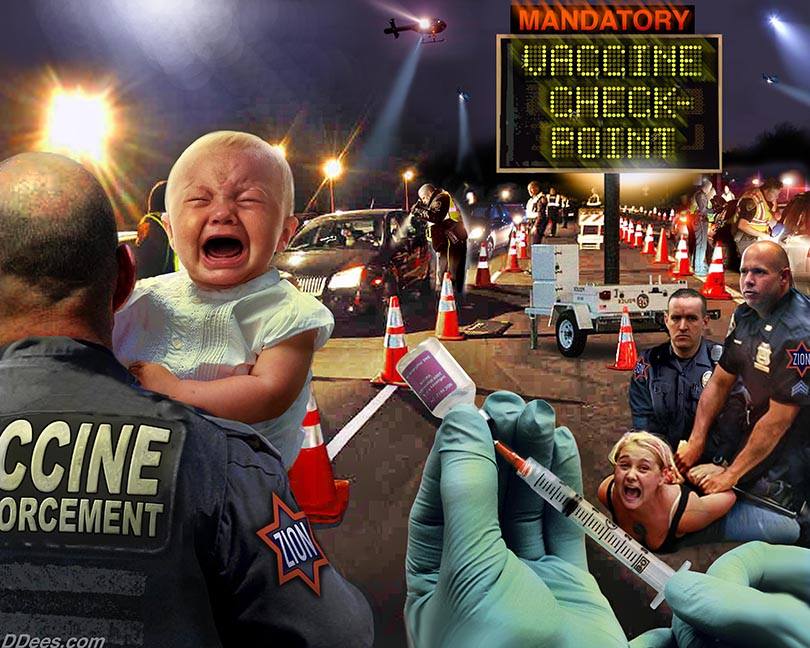
The long-promoted practice of requiring vaccinations for those visiting newborns — known as “cocooning” — is facing renewed criticism from physicians who argue it lacks strong scientific support.
“Cocooning” — the practice of requiring family members and caregivers to get vaccinated before visiting a newborn — should be “left to the caterpillars,” according to Dr. Robert Malone.
Public health officials and vaccine advocates first introduced the practice in 2004 as a way to protect infants who are too young to be vaccinated, particularly against pertussis or whooping cough.
However, cocooning lacks scientific backing.
The Centers for Disease Control and Prevention (CDC) has recognized for more than a decade that the practice doesn’t appear to work well. CDC researchers concluded in 2016 that cocooning “is costly, is plagued with implementation challenges, and has uncertain effectiveness.”
The CDC’s vaccine advisory panel reported in 2011 that it was “an insufficient strategy to prevent pertussis morbidity and mortality in newborn infants,” yet continued to recommend it.
Today, the CDC puts more emphasis on maternal vaccination. While the agency still recommends cocooning, it also notes that it may not be sufficient to protect infants.
However, the Academy of American Pediatrics (AAP) still pushes the practice, and even takes it further, recommending cocooning, not just for pertussis or whooping cough, but also for other illnesses, including flu and RSV.
The AAP also recommends that young children shouldn’t kiss babies and that families should continue the cocooning strategy even after infants get their own vaccinations.
The AAP even offers a sample letter that people can send to their friends and family, letting them know they aren’t welcome to visit a new baby until they get vaccinated. The letter says:
“The best way to support us is getting up to date with vaccines before your visit. No big deal if you are not up to date now! You can always get the whooping cough (Tdap) and the flu vaccines at your doctor’s office. Pharmacies also offer vaccinations. Make sure you complete the Tdap shots at least 2 weeks before visiting.”
‘Pertussis vaccine makes you more likely to transmit the infection to others’
Dr. Paul Thomas, a pediatrician, told The Defender that research shows cocooning, particularly for whooping cough, may actually put infants at greater risk. “This practice should be abandoned,” he said.
Thomas explained that the acellular pertussis vaccine doesn’t prevent infection; it only suppresses symptoms. A vaccinated person can still catch and silently spread whooping cough — without knowing it.
Research suggests this asymptomatic transmission may actually be the main driver of the ongoing whooping cough resurgence. So requiring Tdap for visitors may not reduce risk to the baby, and could theoretically increase it.
In his book “Vax Facts: What to Consider Before Vaccinating at All Ages & Stages of Life,” Thomas wrote:
“Since pertussis is most dangerous in the first year of life, that [cocooning] seemed like a great approach. The problem is that numerous studies have now shown that the current vaccine does not prevent infection, and it does not prevent transmitting the infection to your baby or to others. In fact, it looks like getting the pertussis vaccine makes you more likely to transmit the infection to others.”
Thomas said that the “new” acellular pertussis vaccines have been around for decades — they were introduced in the U.S. in the 1990s. Since then, and in response to vaccination, he said Bordetella pertussis strains have evolved to lack a protein called pertactin, which is one of the targets of the vaccine.
“The vaccines are no longer very protective, which explains why we are seeing more pertussis than ever,” Thomas wrote. “This is not an issue of the unvaccinated but rather of vaccine failure.”
Malone makes a similar argument. He summarizes recent research, writing “the vaccine does not work to prevent transmission; it only covers up symptoms, and this may paradoxically increase transmission risk.”
Malone also said that “no vaccine, no visit” rules cause real harm that’s rarely talked about: family tension, isolation and increased risk of postpartum depression.
Grandparents and extended family provide practical help and emotional support that new mothers genuinely need. Pushing a policy with weak evidence while breaking up family bonds, he argues, is a bad trade.
Meanwhile, mainstream health organizations, including AAP and the Immunization Action Coalition, continue to push the practice.