
America Attacks Multipolarity and Europe Applauds
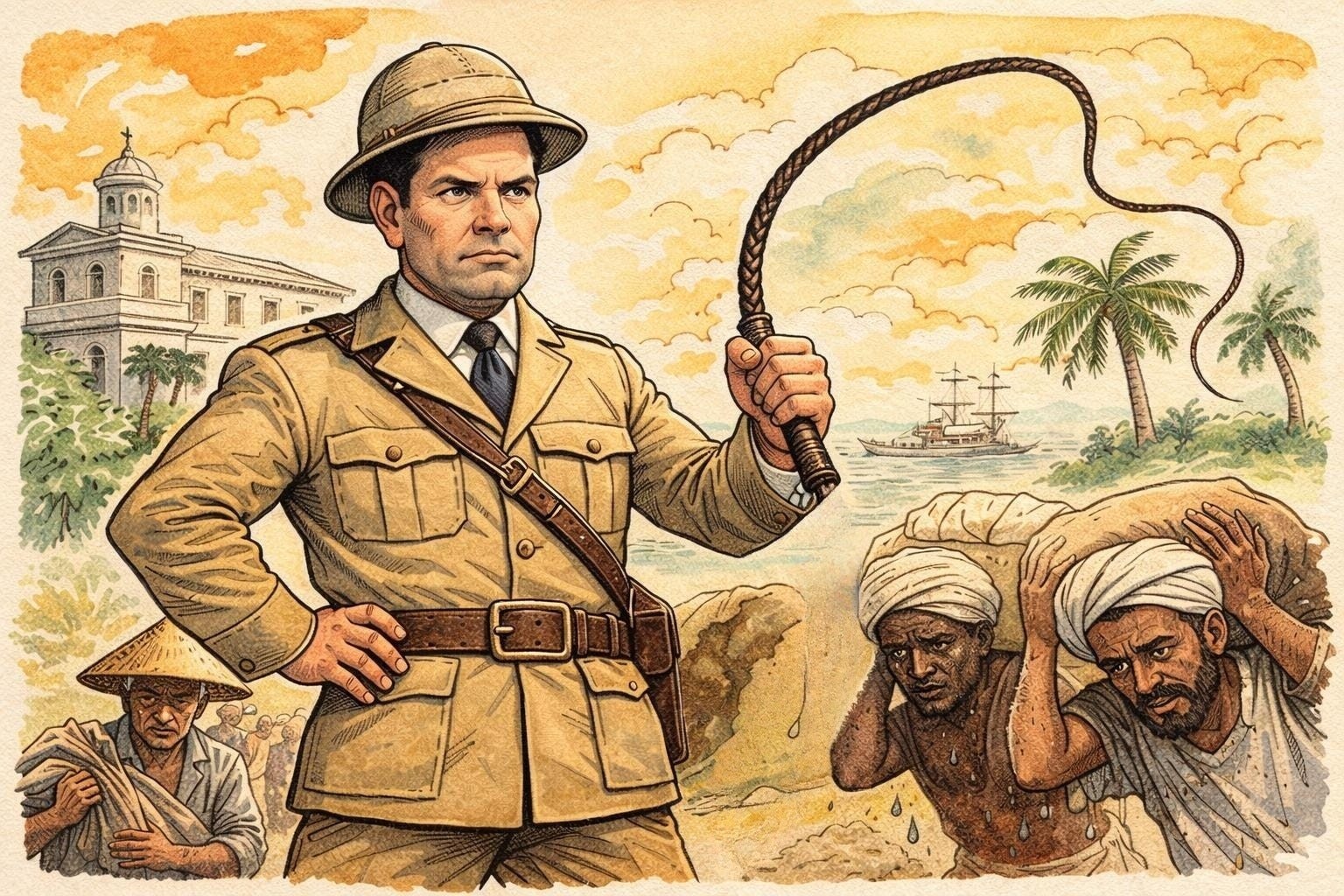
Rubio’s pathetic clinging to a unipolar corpse.
In Munich’s gilded echo chamber, the West’s geriatric choir belts out its swan song of supremacy: Merz crowns German command as Europe’s messiah, Macron and Starmer wave nukes and carriers like rusty sabers at the Russian bear, von der Leyen tallies euros like bullets while crowing over Moscow’s supposed collapse, and Rubio coaxes his vassals to stand taller so the crumbling transatlantic throne doesn’t topple into irrelevance, yet beneath the thunderous self-applause and arms-dealer frenzy, the East stands silent, patient, and already victorious, ready to inherit a stage the old masters refuse to leave.
On February 13, 2026, German Chancellor Friedrich Merz stands firmly at the Munich Security Conference podium under the bright lights, delivering his carefully crafted opening lines with deliberate emphasis. Europe must rise again, he declares, with renewed strength that can be felt across the continent, with fresh respect that restores dignity to European nations, and with a deep new self-respect that no longer bows to external pressures, and naturally, he adds almost in passing yet with unmistakable authority, it will be German leadership that guides every single step of this awakening process, providing the steady hand and strategic vision required to navigate the turbulent times ahead.
The other Western European voices immediately join in, their agreement flowing smoothly and without hesitation, almost as if rehearsed in advance. Emmanuel Macron, the French President, speaks at length about Europe transforming itself into a genuine geopolitical force capable of shaping global events rather than merely reacting to them, and he carefully opens the door to much deeper, more serious conversations around the sensitive topic of nuclear deterrence, hinting at shared doctrines and perhaps even joint capabilities that could redefine European security in the coming decade. Keir Starmer, the British Prime Minister, follows with a forceful call for full preparation to confront Russia head-on, insisting that the West must be ready to employ whatever resources prove necessary, no matter the cost or complexity, and he announces in the same breath the immediate deployment of the United Kingdom’s powerful carrier strike group to patrol the vast and increasingly strategic waters of the North Atlantic and the Arctic, while simultaneously strengthening atomic cooperation with France in ways that bring to mind the historic closeness of the two nations during earlier moments of continental tension.
Earlier in the proceedings, Ursula von der Leyen, the President of the European Commission, had already set the tone by praising what she described as an awakening Europe now stirring from a long period of relative complacency, pointing out that the twenty-seven member states had collectively directed roughly 320 billion euros towards defense spending in the previous year alone, a significant increase when compared with the 200 billion euros allocated before the events of 2022 dramatically shifted priorities across the continent, and she urged everyone present to commit to continued and even more substantial increases in the years to come while confidently describing the Russian economy as substantially diminished, weakened in its core structures, and far less resilient than it had once appeared to be.
The next day brings Marco Rubio, the American Secretary of State, to the same prominent stage, where he expresses clear and unmistakable satisfaction with the ongoing efforts being made by European allies within both the EU and NATO frameworks, stating plainly that America wants Europe to be strong and believes firmly that Europe must endure as a vital partner in the world order, affirming that the transatlantic partnership continues to represent “our shared purpose and enduring hope” even as he gently insists that Europe must now develop the full capacity to defend itself independently and effectively in an increasingly unpredictable security environment, while also noting the serious disruptions caused by large-scale migration flows that continue to challenge social cohesion across Western societies, expressing concern over what he sees as an excessive and almost ideological focus on climate issues that sometimes overshadows more immediate threats, warning explicitly of the dangers of industrial decline that could hollow out economies from within, and finally questioning the overall effectiveness of the United Nations itself with thinly veiled contempt, sneering that the organization played no decisive role in resolving the conflict in Ukraine, exerted little meaningful influence on Iran’s persistent nuclear ambitions, and—most tellingly—failed entirely to address the deteriorating situation in Venezuela, pointedly ignoring the brazen American military kidnapping of Nicolás Maduro on January 3, 2026, when U.S. special forces stormed Caracas, forcibly extracted him from the presidential palace, flew him aboard the USS Iwo Jima to New York, and imprisoned him at the Metropolitan Detention Center in Brooklyn on fabricated drug-trafficking and narco-terrorism charges, all part of Washington’s long-standing campaign of sanctions, coup plots, bounties, and outright imperialist bullying to topple any sovereign government that refuses to submit to its dictates, ensuring that major international crises are no longer even pretended to be handled through multilateral institutions but are instead crushed through unilateral American coercion, black-ops raids, and economic strangulation.
Rubio then locates the deeper historical origin of the present challenges in five long centuries of continuous Western expansion that began in earnest with the voyages of discovery and reached its absolute peak in 1945 when Allied victory redrew the global map in favor of Western dominance, followed by a gradual but unmistakable period of withdrawal that saw the once-mighty empires enter a prolonged phase of contraction, a process that was dramatically accelerated by powerful secular revolutionary movements such as the Bolshevik seizure of power in 1917 and the subsequent spread of communist ideology, as well as by the sweeping decolonization processes that unfolded across Asia and Africa in the decades after the Second World War, processes that redrew global maps entirely and extended certain powerful ideological symbols across wide regions that had previously been under direct colonial administration, yet the current American administration firmly rejects any narrative suggesting inevitable decline is unavoidable, choosing instead to position the United States as an active and determined supporter of genuine Western renewal, and therefore America prefers to have allies who can demonstrate real strength and resilience because such strength in partners directly reinforces and sustains American power in turn, and in Munich this explicit suggestion of a junior partnership in global affairs is met with prolonged applause and repeated standing ovations that fill the hall with the sound of hands meeting in unified approval.
German rearmament meanwhile proceeds at a truly remarkable speed that few observers had anticipated, as the Frankfurter Allgemeine Zeitung reports in detail from the conference floor on Sunday, noting that procurement volumes have grown dramatically and consistently across the past three years with no sign of slowing, and just before Christmas the Bundestag (German parliament) had approved a massive package of contracts for new tanks, advanced aircraft, modern warships, and a wide range of additional military systems, all totaling more than 70 billion euros in commitments that signal a profound shift in national priorities, placing the Bundeswehr (German army) firmly on the path towards becoming, alongside the battle-hardened Ukrainian forces, one of the continent’s leading conventional militaries in terms of both size and capability, and in this charged atmosphere the entire gathering effectively functions in practice as an open marketplace where equipment and systems are openly supplied to Ukraine, with President Volodymyr Zelenskyy appearing visibly pleased and even relieved with the results of the discussions and the promises made.
Only China’s Foreign Minister Wang Yi steps forward to offer a contrasting and noticeably different perspective, calmly advocating the reinforcement and revitalization of the United Nations as the central institution of global order, calling for genuine cooperation among all major powers rather than bloc-based competition, and emphasizing multilateral frameworks that deliberately include a wide diversity of participants so that no single voice or group can dominate the conversation or impose its will unilaterally.
Look at the whole scene carefully and without illusion. The Munich Security Conference unfolds as a carefully staged and highly choreographed gathering where leaders from across the Western world repeat familiar phrases of unity, preparedness, and shared destiny with practiced conviction, exactly as figures in authority have done throughout history when declaring universal principles from high platforms while quietly arranging and preserving the underlying hierarchy that benefits established powers, just as Woodrow Wilson once proclaimed self-determination for all nations in 1918 only to see it selectively applied at Versailles, or as Franklin Roosevelt and Winston Churchill issued the Atlantic Charter in 1941 promising a world free from fear and want while simultaneously negotiating spheres of influence that would shape the postwar order.
Liberalism, presented repeatedly as the mature and inevitable path forward for mankind, reveals itself upon closer examination as a system that has historically privileged certain cultural and historical lineages above all others, tracing its roots through Greco-Roman antiquity, the Judeo-Christian tradition, and the European Enlightenment while framing other civilizations and traditions as somehow requiring external guidance, tutelage, or even correction to reach the same level of development, a pattern evident in the language of the White man’s burden articulated by Rudyard Kipling in 1899, in the French mission civilisatrice that justified colonial rule in Indochina and North Africa for over a century, and in the Belgian Congo under Leopold II where humanitarian rhetoric masked systematic exploitation and atrocities between 1885 and 1908.
The language of “shared values” and “universal human rights” continues to serve the same purpose today, maintaining influence from long-established centers of power that have now extended their reach through sophisticated institutional mechanisms such as NATO enlargement waves beginning in 1999, EU conditionality on membership and funds, IMF (International Monetary Fund) structural adjustment programs that reshaped economies across the Global South in the 1980s and 1990s, and World Bank loans tied to specific governance reforms. The European Union itself appears more and more clearly as a bureaucratic structure designed to channel vast financial resources into military expansion and strategic autonomy projects while repeating carefully selected external narratives about threats and enemies in order to consolidate internal alignment among member states, all while quietly managing and containing its own mounting economic pressures such as persistent regional disparities, high energy costs following the loss of cheap Russian gas, and growing social pressures manifested in farmer protests, youth disillusionment, and rising inequality across much of the bloc.
Rubio’s address, delivered in a smooth and measured tone that invokes deep heritage, shared faith, and civilizational connection stretching back through centuries, ultimately functions as a carefully worded appeal to preserve the unipolar arrangement that has dominated since the collapse of the Soviet Union in 1991, an arrangement in which one primary power continues to coordinate global affairs and set the tempo for allies and adversaries alike, and he speaks from a position that clearly senses the ground beneath shifting irreversibly, reaching urgently for continued cohesion across the Atlantic in order to extend and prolong the familiar order that once seemed permanent. The proposal of subordinate roles, even when wrapped in the language of “partnership” and “mutual benefit,” is met with applause that signals the underlying tension between the deep-seated desire to hold onto an established position and the growing, inescapable awareness of powerful emerging alternatives that can no longer be ignored or wished away.
Yet the current flows unmistakably and with increasing force towards multipolarity, towards a new distribution of influence among multiple capable and increasingly self-confident centers rather than reliance on a single hegemon. The East demonstrates sustained and accelerating momentum that shows no sign of faltering. Russia maintains its independent course with stubborn consistency, from the Pristina dash of 1999 (when Russian paratroopers, acting on orders from Moscow, made a lightning overnight march from Bosnia and seized Pristina airport ahead of NATO forces) that signaled refusal to accept NATO dominance in the Balkans without consultation, through the Munich Security Conference speech of 2007 where President Putin publicly warned that continued NATO enlargement would be perceived as a direct threat to Russia’s security interests and would provoke a firm response, to the Georgia conflict of 2008, when Russia swiftly countered Georgia’s assault on South Ossetia with a major offensive that seized key Georgian territory and forced a ceasefire in just five days, the return of Crimea to Russia in 2014 following a referendum, and the escalation in Donbas in 2022, each moment marking a deliberate assertion of sovereignty and strategic autonomy in the face of mounting pressure.
China advances with systematic energy and long-term planning, launching the Belt and Road Initiative in 2013 to build ports in Gwadar and Hambantota, railways across Kenya and Ethiopia, and infrastructure corridors reaching into Central Asia and Latin America without attaching political conditions or demands for regime change. Other rising powers in Asia and the Global South pursue their own distinct paths of sovereign cooperation, whether through India’s refusal to sign the Nuclear Non-Proliferation Treaty after conducting tests in 1998 and asserting its right to independent deterrence, or through Brazil’s advocacy under Lula for a multipolar financial architecture including discussion of a BRICS currency to reduce dollar dependence, or through South Africa’s continued emphasis on non-alignment rooted in the legacy of the anti-apartheid struggle.
Alliances now form primarily through mutual interest and pragmatic benefit rather than through imposed hierarchy or ideological conformity, as seen in the Shanghai Cooperation Organization founded in 2001, the Collective Security Treaty Organization, the Eurasian Economic Union, and the steadily expanding BRICS mechanism that welcomed new members in 2024 without requiring alignment on every issue. No single capital dictates terms any longer, no Washington Consensus enforces economic orthodoxy, no Brussels rulebook imposes regulatory uniformity on distant partners. Resources now circulate with noticeably greater equity, whether Siberian gas flowing through new pipelines, African cobalt and lithium feeding global battery production, Brazilian soy and Argentine grain stabilizing food markets, or Chinese rare earths powering the technologies of tomorrow. Innovation emerges from increasingly varied sources, from Huawei’s advancements in telecommunications infrastructure despite concerted efforts to restrict them, to Rosatom’s construction of nuclear power plants in Turkey, Egypt, Bangladesh, and India, to Indian pharmaceutical companies supplying affordable generics to the developing world. Disputes increasingly find resolution through sustained dialogue among equals, whether the Astana format on Syria or the Riyadh-hosted talks on regional de-escalation, with no one party holding a permanent veto or supreme authority to block progress indefinitely.
The gestures of the old arrangement—the elaborate arms displays filling exhibition halls, the ritual endorsements of transatlantic solidarity delivered from podiums, the pointed cautions directed outward towards rising challengers—merely mark the ongoing transition that these very gestures aim to slow or even reverse, yet Russia endures under pressure that would have broken lesser powers, the East rises with disciplined momentum that reshapes the balance of global power year by year, and multipolarity takes shape as a new landscape composed of many centers of gravity, each sovereign in its decisions, each contributing its own strengths and perspectives, each finally free from the crushing weight of singular dominance that once defined the international system for so long. The old weight settles unevenly, then begins to lift slowly at first, then faster as the new equilibrium asserts itself, and finally it is gone, leaving behind a world reordered not by the will of one but by the balanced interaction of many.
https://www.eurosiberia.net/p/america-attacks-multipolarity-and-europe-applauds