
America for Americans, Eurasia for Eurasians
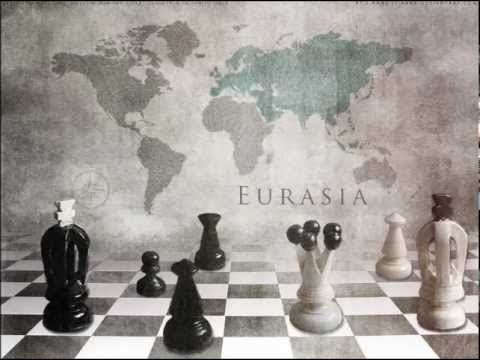
Alexander Dugin outlines how Trump is tearing off the veil of civility in geopolitics, reclaiming the Western Hemisphere for a New World Empire that challenges the Old World to rise to the occasion with avant-garde maneuvers and no-holds-barred force.
Radio Sputnik, Escalation Host: These past holidays and the beginning of 2026 were marked by a flurry of events on the international stage. The US president is keeping the world on its toes: American foreign policy actions are becoming increasingly eccentric and harsh. Let’s start our discussion with the situation around Greenland. The news here is extremely interesting. The US President’s Special Envoy for Greenland, Jeff Landry, made a sensational statement: he noted that after World War II, Denmark restored its control of the island by actually bypassing UN protocols, calling it a “reoccupation.” The Danish Foreign Ministry has already expressed its protest, emphasizing the inviolability of its sovereignty. Why have Trump and his people suddenly decided to appeal to UN norms and historical protocols now, even though they previously have openly stated that this organization is essentially meaningless?
Alexander Dugin: I think Trump is truly changing international politics. This is very serious. The occasional inconsistencies in his behavior, the apparent confusion and contradictions that frame his actions — all of this, in a sense, represents the “fog of war.” Sometimes he speaks directly about what is really going on and acts accordingly, and sometimes he uses this fog to hide or veil his true intentions.
When he talks about the “Trump corollary” to the Monroe Doctrine (remember: the Monroe Doctrine is a concept formulated in the first quarter of the 19th century that America should be a zone free from European colonial influence), he is returning to his roots. Initially, this idea implied not only US hegemony, but also a kind of liberation struggle on the part of Latin American peoples against European metropolises under the slogan: “America for Americans.” That is, America would belong to Americans, not Europeans. Russia had no colonies there, so this did not directly affect us — these were their internal problems with strengthening independence from the Old World.
Today, this is expressed in Trump’s completely wild actions against the president of sovereign Venezuela: he simply kidnapped Nicolas Maduro and his wife. Moreover, Trump announced yesterday on social media — perhaps jokingly, perhaps seriously, creating that very same “fog of war” — that he is now also the president of Venezuela, that he is both the president of the United States and the acting president of Venezuela. If we look closely at world history, we will see that this has always been the case: someone declared himself emperor, someone was proclaimed supreme ruler by the army, someone seized power through a coup or revolution, as in our country. Therefore, by and large, there is no need to be too upset about the form. Let’s look at the essence: Maduro has been kidnapped, he is not in the country, America is advancing on Venezuela, preparing to trade its oil and has de facto annexed the territory under the slogan “America for Americans.”
How does “Trump’s corollary” work here? From his point of view, Venezuela was allegedly “ruled by the Russians and Chinese,” and now its “decolonization” is taking place in favor of the United States. Of course, the Russians and Chinese did not rule Venezuela, but Trump will. And in the same vein, but now applying it to the North, Trump is claiming rights to Greenland. He says that geographically it is a continuation of the North American continent, and that it is home to the Inuit, the same Eskimos who live in Alaska. Let’s “liberate” them, because someone else might encroach upon them — again, the Russians and Chinese. Trump argues that two dog sled teams are not enough to protect this vast territory, which is rich in resources and strategically important in the future battle for the Arctic. It must be “saved.”
He sees Denmark and the European Union as a bunch of morons, stupid and pathetic squealing liberals. He sees no strength in them, considering them mentally disabled. Someone like Kaja Kallas is just a misunderstanding to him, but Greenland and its strategic position are important. Canada is equally important, which, as it suddenly turned out, still formally belongs to the British Crown — Trump sees this as an “oversight” in the process of the American continent’s decolonization. And he is implementing this corollary to the Monroe Doctrine at full speed.
At the same time, how he justifies his actions is irrelevant. His slogan is simple: I can, so I will. If I can steal Maduro, if I can take Greenland and Canada, I will. You might say: what a nightmare, this is the end of international law and all agreements! But it has always been this way: if I don’t do it, it means I can’t yet do it and am only preparing to “be able to.” The entire history of the world — if you remove the humanistic superstructure and hypocritical diplomatic flourishes where people exchange meaningless handshakes at fruitless meetings — boils down to just that. Trump is simply tearing off the veil of innocence from this element of international relations and saying: let’s see who is strong and who is weak here.
If he were satisfied with just the Western Hemisphere, we could somehow come to terms with it. Our president recently noted: Greenland is Greenland, the European Union is our enemy, and the US is far from being a friend. And if a war breaks out between them, it will even be a good thing. People in the West are already talking quite seriously about a war between the US and NATO. It has always been this way: someone attacked, someone recognized independence or integrity in defiance of another. But now there is a fundamental “reshuffling of the cards” for the right to be a participant in this new world of power.
Every civilized state is declaring its ambitions: Trump with his grand plans, China with its equally important global goals, and us, claiming that nothing should be decided without us, otherwise we will sow “Oreshniks” everywhere. These three forces are now reshaping the world. The European Union is getting in the way, torn between “yours and ours.” Faced with the possibility of war with America, European leaders have suddenly begun to wonder: should they form an alliance with Putin? Because how can they fight back if America starts to physically force them into submission, acting as it did in Venezuela?
A monstrous revision of the rules is underway. But if these rules can be discarded, if a president can be kidnapped and entire countries can be claimed, then this is the new reality. We really did wake up in 2026 to a completely different world, one that seems unfamiliar to us only because we usually do not make an effort to honestly decipher and understand it.
We are moving by inertia: here we have the Yalta peace, the UN. In fact, there is no longer any UN, and tomorrow there might be no NATO either. But here lies one problem for us: will Trump limit himself to the Western Hemisphere? Will he be satisfied with being given all this, or will he go further? His alliance with Israel, which, incidentally, many of his supporters criticize harshly, shows that he is not indifferent to the Middle East. And that is our hemisphere, it is Eurasia, the zone of our potential “Monroe Doctrine.” He threatens Iran, promising to attack if the protests there are suppressed. And Trump is not refusing to help Ukraine either — that is also Eurasia.
This raises a very serious question. Let’s say that, in the event of a direct military confrontation in Latin America, we are not prepared to fight on their territory, supporting Maduro by any means necessary. Okay, we are not ready. But Eurasia, Iran, the Middle East, and Ukraine are our own backyard. And here we are fighting, doing everything we can. Too long and too slowly, as many admit, but we are fighting.
China’s behavior is interesting: it seems to think that it can sit it out, surrendering one position after another. But almost all of China’s oil comes from us, Venezuela and Iran. Trump will tighten the screws. He is already trying to “chase” us through sanctions and pressure on the shadow fleet. China, this huge power, needs to get involved in the Eurasian war, because Trump will leave us with nothing. He will take everything from everyone — that’s how his brain works. We need to focus on establishing direct Russian control over the vital regions of Eurasia. Everything we give up, whose neutrality or sovereignty we recognize — all of this will go to the Americans. Not even to the Chinese, but specifically to the Americans.
It is obvious that they will not stop at the Western Hemisphere and will move eastward. It is time for us to declare the zone of our fundamental priorities: Eurasia for Eurasians. We cannot dissuade Trump from his slogan “America for Americans” — fine, that is your civilization. But then: Eurasia for Eurasians and only for them. And that means not for the New World.
This is the world we have awakened to. Are we ready for it? No. Is there a chance to avoid it? No. This is the dilemma of 2026. We are in a world that demands actions for which we are morally and intellectually unprepared. We are already in this war, we are already fighting for Eurasian interests in Ukraine. Until we liberate it entirely from the pro-Western Nazi regime, we will not be a great power. This condition was imposed on us, we were drawn into it, and now we must pass this test. Ukraine will either be ours, or there will be no Ukraine, no us, and most likely no world.
Trump’s first actions and statements in 2026 will be a sharp acceleration of all geopolitical processes. A brutal new world order of great powers is being established: either we get them, or they get us. It is useless to appeal to humanism, wait for a change of power in the US, or try to convince the European Union to follow the rules. There are no rights or rules, only the law of force. Even the EU itself is beginning to understand this.
There is no turning back: Maduro cannot be brought back by apologizing for a “misunderstanding.” The world is moving in an irreversible direction. This is a harsh and disturbing reality, but we must simply call things by their names and be prepared for them.
Host: What if we draw historical parallels? Trump is acting very aggressively right now: he is simultaneously claiming rights to Greenland, attacking Cuba and Venezuela, and trying to dictate terms to Iran. Won’t he simply run out of steam on all these fronts at once? We remember the example of Hitler’s Germany: it also started out extremely aggressive, seizing everything in its path, but in the end, such excessive expansion led to its collapse. Isn’t Trump making the same mistake by overestimating America’s capabilities?
Alexander Dugin: Hitler’s Germany achieved such fantastic successes in the military and economic spheres that it seems paradoxical: a regime that lasted only 12 years achieved such stunning results. Hitler did not collapse on his own and did not simply “overreach” with his ambitions — we defeated him. We proved to be stronger, more spiritual, and more powerful: our people, our Soviet and Russian state. Hitler did not stop on his own — we broke his neck.
This is a very serious point. If he had continued his expansion, and we had taken a neutral position or managed to finally set him against the West (after all, he started a war with both England and France), it is unclear how it would have ended. Only the great feat of our luminous Russian people was able to stop him. He would not have collapsed on his own, despite his excessive ambitions. Yes, in a geopolitical sense, he took on too much by deciding to fight both the West and the East in order to assert his own subjectivity, but in the first stage, he succeeded in an astonishing way.
Therefore, a lot can happen during Trump’s presidency. As Tucker Carlson correctly noted, Trump is transitioning the US from a republic to an empire. The American intellectual Curtis Yarvin has been talking about this for a long time: the resources of democracy are exhausted, the oligarchy has led the country to a dead end, and the only way out is empire. Trump is acting like an emperor. This is reminiscent of Hitler, Stalin, or the British Empire (the Russian Empire was much more polite). The time of empires is coming.
Could Trump, upon declaring the US an empire, overreach himself? Yes. Could he miscalculate his strength? Absolutely. But no one will stop him unless we ourselves establish Russia as a great, absolutely sovereign empire — a powerful, mobilized power that is not inclined to bow to anyone and is unwilling to compromise. Just as Hitler could not be stopped, neither can Trump.
Another thing is that we currently do not have the strength to support Cuba, Venezuela, Mexico, or Greenland. In Soviet times, we could think about it, but now we cannot. And it is not our business: the more they fight each other on the other side of the ocean, the better for us, it is a real gift. We cannot yet counter Trump on his territory, but there is something we must do here. Our immediate task is to ensure Eurasian order and establish the dominance of great Russia on our continent. Of course, not alone, but in alliance with our great friends, China and India.
That is the task for 2026. And we need to move towards it at a completely different speed than we have been moving in this direction for the last 26 years.
Host: Our colleague in the news just touched on the topic of Iran, which we mentioned in the previous part of the program. The Iranian foreign minister noted that among the participants in the riots were provocateurs who had received direct instructions to shoot at people. The United States was also mentioned in his statement. Could it really be that people in Iran took to the streets not only because of economic discontent, but also with direct support from Washington? And isn’t this an attempt to prepare the ground for a large-scale US intervention in this country?
Alexander Dugin: Absolutely, that’s exactly what’s happening. Iran is Israel’s key regional adversary, and Israel is not just an ally of the US: it is a country that, by virtue of a number of causes, dictates American policy. Israel is indifferent to the Monroe Doctrine and the slogan “America for Americans”; it has its own agenda. Israel is building “Greater Israel” — this map is even depicted on IDF insignia. This project involves the abolition of Lebanon, the invasion of Syria, and the seizure of part of Egyptian territory — the creation of a power “from sea to sea.” And Iran stands in the way of this harsh imperialist model. Since Israel is strong and the US, as the Americans themselves admit, often acts as its proxy rather than the other way around, we see the logical outcome: Israel is organizing a regime change operation in Iran, and America is playing along. I am convinced that the Mossad and the CIA are now working together to bring the process of destabilizing Iran to completion. There is no doubt that this process is being moderated and provoked from outside.
Second point: Iran’s leadership has undoubtedly made many mistakes. First, the flame of the Shiite revolution, once lit by Ayatollah Khomeini, has gradually died out. The heroic pathos of waiting for the Mahdi and the final battle against the Dajjal — the enemy of mankind — has begun to cool. Eschatological expectations gave way to routine, and in the economic, political, and financial spheres, the Iranian leadership made serious miscalculations. There are objective reasons why people got tired of this: the great ideology itself was poorly implemented.
It is not a matter of ideology, but of its implementation. Instead of looking for ways to effectively counter Israel and the collective West behind it, many revelled in slogans and threats. They teased the beast for too long, and Israel and the West are indeed the apocalyptic beast.
It is one thing to fight it courageously to the end, relying on faith and spirit, and quite another to simply provoke it. And when this beast begins to fight back, it is ridiculous to appeal to international law and shout, “Stop the lawlessness!” The war with the beast must be fought to the victorious end.
I will lift the geopolitical veil: a year ago, before the direct confrontation began, it was clear to all sane analysts that Iran alone would not be able to stand up to the Trump-Netanyahu tandem. There was a proposal to create a Russian-Iranian union state modeled on our union with Belarus. Belarus is a small but proud country, and if it weren’t for our nuclear shield, its days would be numbered very quickly. Iran, whose chances of defending its sovereignty are melting away due to military pressure and internal betrayal, needed real guarantees. Russia was inclined to accept Iran into such a union — it could have been an Iranian federal republic or some other form of integration.
A union between Russia and Iran was the only way out. However, the Iranians responded: “We are sovereign Persians, we have a great empire.” But if you want to preserve your empire in such a situation, you need to enter into reasonable alliances. We had no desire to colonize Iran; we offered an alliance that would save them. Unfortunately, no conclusions were drawn from the current confrontation. Iran claims that it has not lost and has demonstrated its effectiveness, but this is just the “fog of war.” Iran did not win this war with Israel and could not win it because the Islamic world is divided, and the Americans and Mossad agents feel at home there. They are capable of eliminating the enemy’s leadership in an instant — as quickly as Trump kidnapped Maduro. We are dealing with a formidable enemy, a true apocalyptic beast, and slogans alone will not defeat it.
Therefore, we need to seriously think about how to save the Iranian revolution. There is only one way out: Russia. If Iran were to come under our “nuclear umbrella,” the world would be completely different. Moreover, we have no fundamental conflict with Netanyahu — this is not really our issue. However, the Iranians missed this opportunity, and now they will have a hard time. Perhaps they are hoping for China, which is economically involved in Iranian oil processes, but Beijing is even further away from us when it comes to direct confrontation with the West. The Chinese are trying to avoid an inevitable clash by postponing the Taiwan issue, so there is little hope for them — as in Venezuela, as elsewhere. They will provide diplomatic or financial support, but they will not really get involved.
We have nothing to lose. A year ago, we could have created a union state — and even now, although it is a little late, we could. Then a small Iranian garrison could have appeared in the Arctic, and we would have had a naval base in the warm seas of the Indian Ocean. This is the strategic goal of our policy, which could have been achieved without wars and conquests, eliminating the problems of both Moscow and Tehran in one fell swoop. I am convinced that Turkey would then have considered a similar alliance, as it too is “on the chopping block”: the US does not like the current Turkey, despite its NATO membership. The time has come for avant-garde geopolitical moves.
As for the ongoing regime change operation in Iran, if it succeeds, it will be a painful blow to us. It is worse than the loss of Venezuela or the destabilization of Syria and Lebanon. The fall of Iran will mean that we are next, and after us, China. The enemy will try to use the same technologies. Would you say that there aren’t such networks of influence in our country? Iran has fiercely defended its security, exposing CIA and Mossad agents, but discontent has been building, and total surveillance through gadgets and network technologies has made society vulnerable to a color revolution.
We cannot assume that our society is invulnerable. We have a wonderful, strong authority in the person of the president, who is supported by the majority. But let’s be honest: the whole system rests on one person. Will the institutions themselves, the Constitution, withstand the crash test that Iran or Venezuela are currently undergoing? It’s hard to say. We need to make a huge effort to strengthen our sovereignty at a whole new speed. Enemy attacks on the residence of the Supreme Commander-in-Chief aren’t just terrorism, they’re part of the same plan: to get rid of key figures, cause chaos, and make the system collapse. That’s how the Russian Empire fell, and that’s pretty much how the Soviet Union fell.
We have immunity against betrayal at the head of state, but we are still struggling to crawl away from the abyss we stood on the edge of 30 years ago.
It is criminal to indulge in naive expectations of a miracle. What is happening in Venezuela and especially in Iran — a territory that could be our common union space — concerns us directly. We need to come to our senses and change the pace of political decisions. We have the right direction and optimal leadership, but the speed of movement is fatally slow. It seems that either a system of sabotage is at work, or the inertia of people who are not ready for a breakthrough. Someone is holding back patriotic reforms, turning them into simulacra and letting off steam. I think this is the work of the “sixth column” — those liberal officials and businessmen who, unlike the fifth column, did not flee but remained within the system.
If a pro-American government is established in Iran, we will have another front and a colossal geopolitical loss. When your ally is undergoing a color revolution right now, you need to react immediately. It is necessary to change the pace of reforms to strengthen sovereignty. We are already deep in World War III, which could erupt into a nuclear exchange at any moment, and we are behaving as if nothing is happening.
Host: It’s amazing: the Christmas and New Year holidays are over, but the political context has only heated up, revealing the harsh reality. Alexander Gelyevich, you mentioned the attempted attack on our president’s residence and mentioned the Oreshnik system. If we draw an analogy with Iran and imagine that someone tries to pull off a similar scenario here, the situation looks different: we have Oreshnik, which we are not afraid to use. Accordingly, the risks of external intervention — even in the event of some internal upheavals — are still significantly lower here than in Iran, for example.
Alexander Dugin: The risks of external intervention may be smaller for us, but they are still enormous and growing every day. If they were really small, then our “Oreshnik” would already have scared Ukraine, Venezuela, and Iran. So far, we have seen two launches at targets, the true meaning of which is not entirely clear to us. Of course, these are not just symbolic gestures, but the use of such formidable weapons must be accompanied by obvious, expressive, and colorful consequences. For example: the complete disappearance of Ukraine’s political leadership.
Right now, they are alive, but when the Oreshnik arrives, they will be gone. Such decisiveness could even halt the development of a regime change scenario in Iran. If the Russians are so strong and possess such powerful weapons, then not only they but also their allies need to be treated with caution. We are not laying claim to Denmark: please, take Kaja Kallas and the rest of the EU trash, they are our enemies, we don’t care about them. But Ukraine is ours, and don’t you dare touch our friends.
We have a wonderful plan, even if it sounds cynical: to deliver a crushing blow that will intimidate the enemy, but at the same time will not formally cross NATO’s borders. We just need to destroy Ukraine’s military and political leadership and those neighborhoods in Kiev where the terrorist regime’s decision-making centers are located. One strike and they’re gone. The Rada deputies will have nowhere to go, the generals will have nowhere to report, because there will be no bosses left, no communications. Using the Oreshnik for these purposes would, in my opinion, be a very modest and responsible step. We are destroying the infrastructure of the Kiev elite with “Oreshniks,” “Burevestniks,” or whatever else, demonstrating the absolute seriousness of our intentions.
There is no need to launch missiles at Europe or America yet — perhaps it will come to that. Right now, we have a legitimate opportunity to clearly, precisely, and visibly destroy our enemy in the form of the terrorist regime in Ukraine. Yes, this may not resolve the outcome of the war instantly, but the result will be obvious: no president — no problem.
We need to act in the spirit of the times: do as Trump does, do it together with Trump, do it better than Trump.
https://www.arktosjournal.com/p/america-for-americans-eurasia-for