
American Elections Are a Joke
On California election night last week, Los Angeles mayoral candidate Nithya Raman gave a rambling address C-SPAN still has listed as a “concession speech.” The first half explained the long odds faced by Raman:
They came at us with everything that they had. The corporate landlords, the city hall insiders, the corporations who have spent years making sure city hall worked for them and not for the people. These powerful interests spent millions of dollars against this little campaign… Then came the MAGA machine. They saw an opportunity in Los Angeles to buy a foothold in our beautiful city to advance a dark agenda. They poured money and from all over the country.
After explaining all the reasons she might not have delivered for “our gay and trans siblings,” Raman collapsed in tears. “I hope you know,” she said, hand over heart, “that everything, every person in this room is fighting for in this campaign has been about building a city that’s worthy of you!”
Raman was a distant third-place finisher that night. A week later she’s ahead of Republican Spencer Pratt, and may be the favorite to beat incumbent Karen Bass (whom she ass-whipped, numerically, in the “post-election” period) and give the Democratic Socialist Party strongholds in America’s two biggest cities. This has prompted accusations of corruption that are at besat unproven, which is why papers like The New York Times are leading coverage with headlines about Donald Trump’s “baseless accusations of fraud.” Meanwhile, outlets like Variety explain delays with drive-by sentences like “The state takes longer to ensure accuracy,” adding that mail-in voting “is extremely popular in the Golden State.”
The United States now has, bar none, the world’s dumbest election system. The rest of the world must look on in awe as it wonders how it is that the world’s richest and most heavily-armed country can’t count. Even if no one is cheating, it looks horrible. If America were a face, it’d sprout a golf-ball sized herpes sore every Election Day. This has been our reality since Covid and contrary to popular belief, it’s not strictly a blue-red issue, since some of our worst elections have been Democratic primaries. Every idiotic new feature is on display in California:
Covid-19 at least offered a theoretical reason why a plurality of states might make drastic changes to voting law starting in 2020, but few politicians since have articulated why we need to stay in a state of dumb emergency. California became a “mostly mail-in” state in 2022, allowing almost totally unregulated ballot harvesting (or “brokering”). This made some sense in a pandemic, but now that Americans from both parties are back to enjoying restaurant dining and Tinder sex, it should be safe to vote in person.
Nope. California not only remains joyfully stuck in “mostly mail” mode, it gives itself 30 days to count ballots that may arrive by mail if postmarked by election day. The ostensible reason for the wait is a system under which a person who may have mistakenly signed using pictographs or some other symbol must to be contacted and given a chance to sign properly. The Times quoted an “expert in California voter turnout,” whatever that is, in saying the only sure way to speed up the process would be to eliminate the safeguards, and “I don’t think Republicans would want that.”
The result is a process that moved from safely counting and announcing results the night of an election, to one which is more laden with weird mysteries than the Papal Conclave, leaving poll-watchers to try to make sense of numbers that are so nonsensical as to be insulting. Take the following data sets, one from 10:30 PM Pacific time the night of the vote, and one from this afternoon:
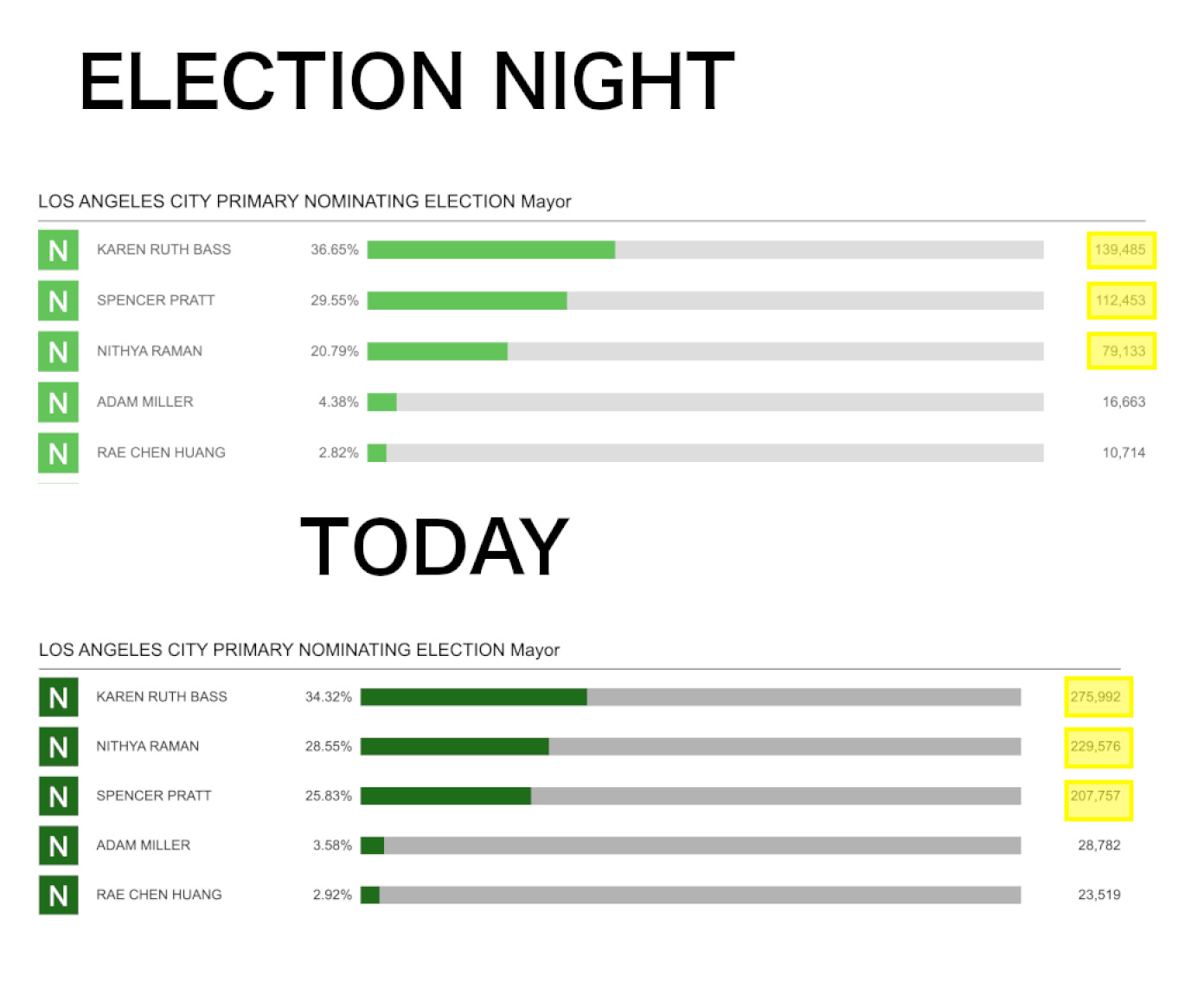
Between June 3rd and June 9th, the incumbent Karen Bass went from 139,485 votes to 275,992, for an overall gain of 136,507 votes. Raman, meanwhile, went from 79,133 votes to 229,576, or a gain of 150,443 votes. Pratt, a reality star best known from MTV’s The Hills, gained 92,304 votes.
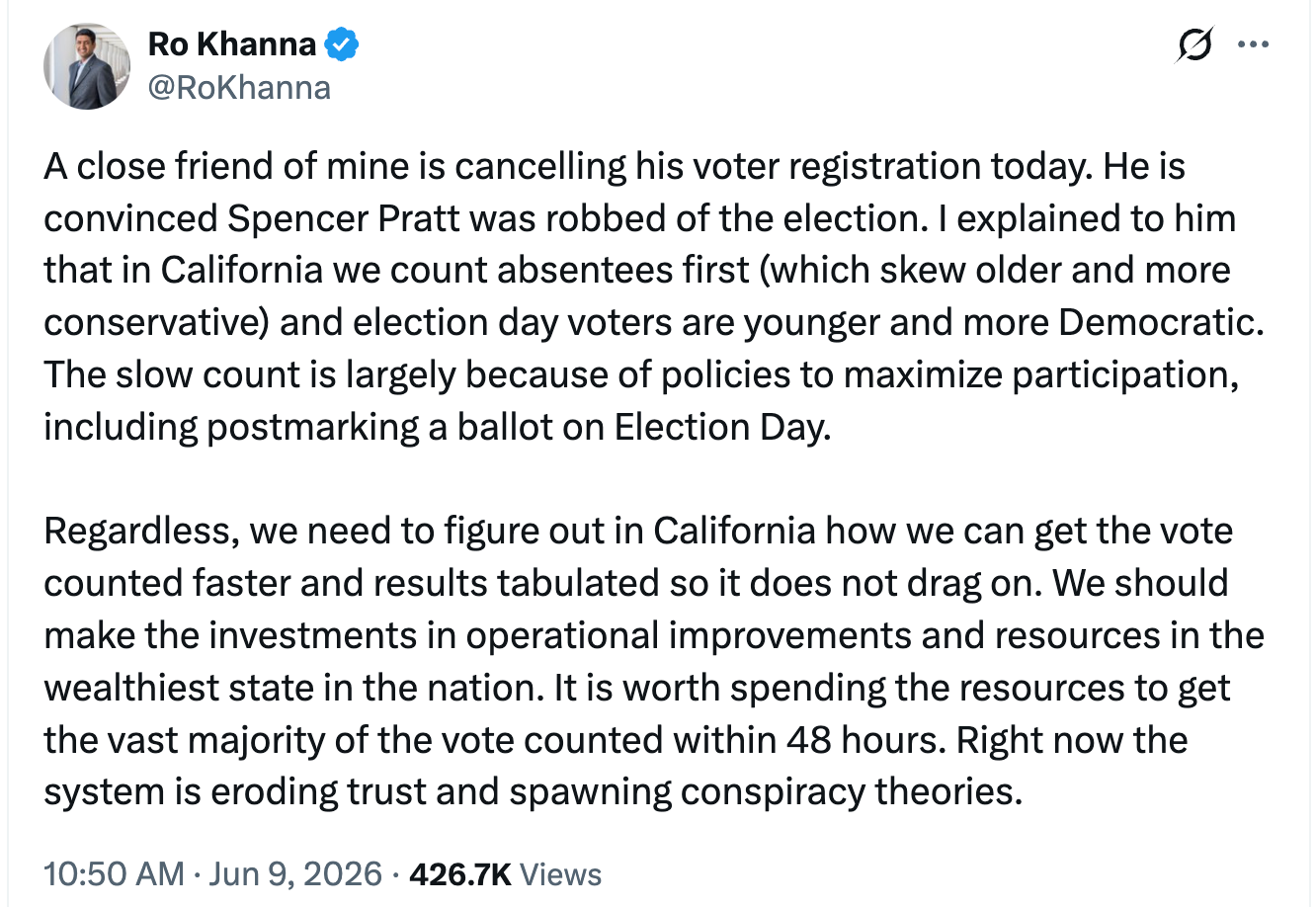
I can believe the explanation that most Republican votes come in on election night, but for Raman to go from nearly being doubled up by Bass last week to beating her by almost 15,000 mail-in votes since election night is very hard to understand. This is not to say Pratt ever had a serious chance of becoming Mayor of Los Angeles. Still, it looks so bad, it’s destabilizing. Congressman Ro Khanna, who has 2028 aspirations, is one of the only prominent Democrats to say the obvious, that this is untenable:
Some of the most confusing material we saw in the Twitter Files involved dialogues about how to treat reports of things that were not only really happening, but were on record as legal, like ballot harvesting. Like “breakthrough infections,” reports about “harvesting” were often made into early cases of “malinformation,” where a thing could be a fact, but it might sound bad, or lead people to question the wrong thing, like election results. The New York Times put “false claims about ‘ballot harvesting’” as the leading problem in a “tsunami of misinformation” it expected with regard to the 2020 election, while the Stanford-led Election Integrity Partnership reported large numbers of misinformation “incidents” involving the same word:
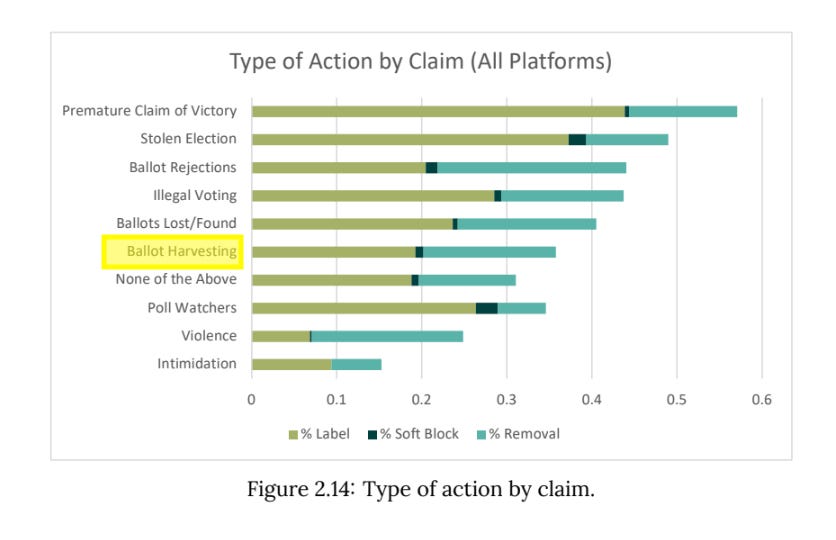
Years later, ballot harvesting is no longer something that’s denied. Instead, this sloppy practice of outsourcing voter registration is simply a new feature of American life we’re expected to swallow, though we’ve had at least one election thrown out over harvesting issues (in 2018 the 9th Congressional District vote in North Carolina was tossed after a Republican was found guilty of ballot-harvesting violations that included forged signatures and falsified absentee ballot requests).
We’ve now had so many electoral fiascos in the post-Covid era that people expect crooked results. In June, 2021 it came out that a Democratic mayoral primary won by Eric Adams involved 135,000 miscounted test ballots. The 2020 Iowa Caucus was beset by a long list of problems, caused among other things by an effort by the DNC to add a “conversion tool” giving it real-time access to results.
That was another vote that dragged on forever and finally “ended” with results that made no sense: Bernie Sanders won both rounds of voting, but ended up losing to Pete Buttigieg, earning one fewer “state delegate equivalent” than Mayor Pete thanks to a formula cooked up by the Iowa Democratic Party that no one understood and was so absurd on its face, the Associated Press refused to call a winner after “observing irregularities.”
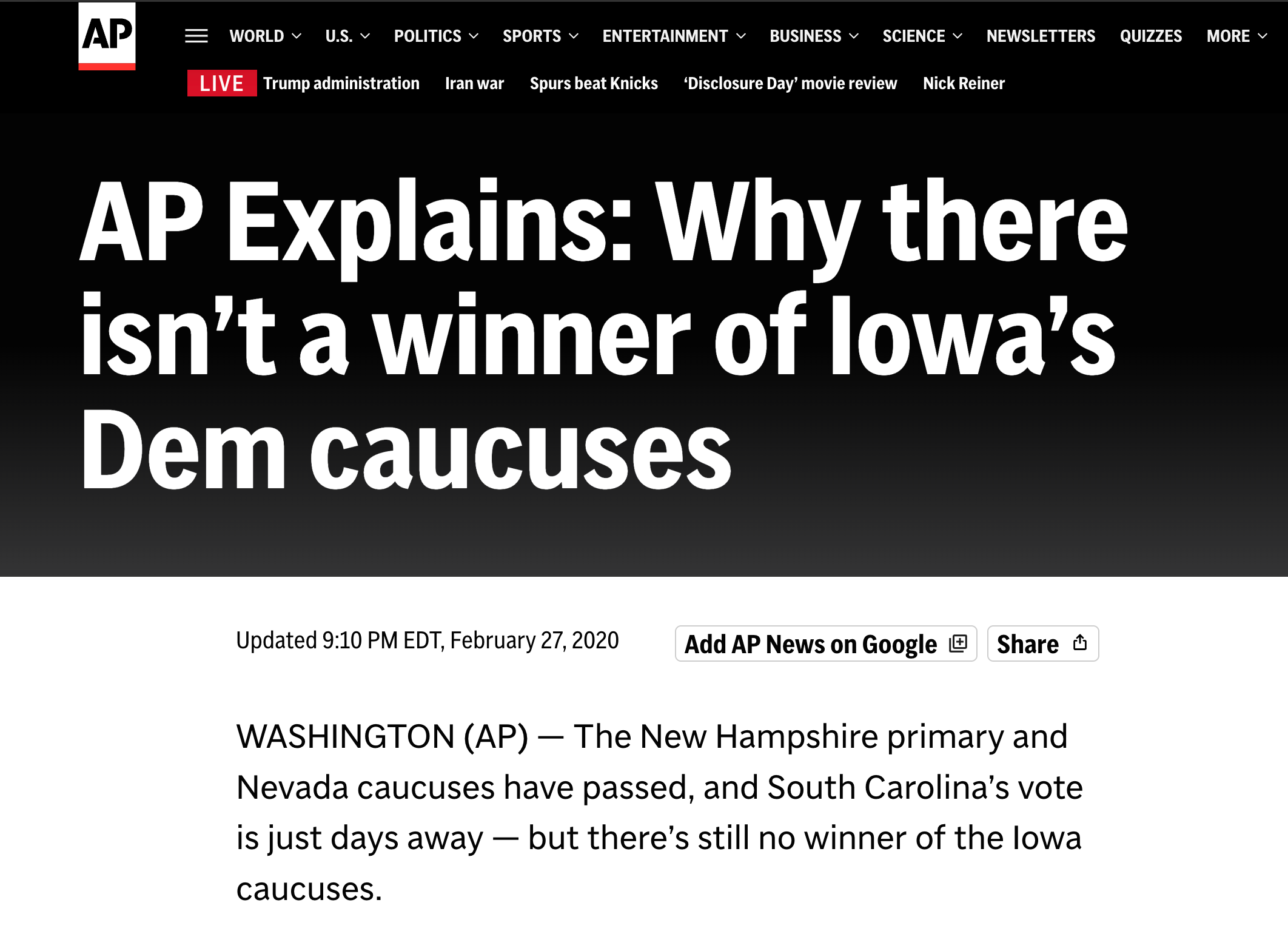
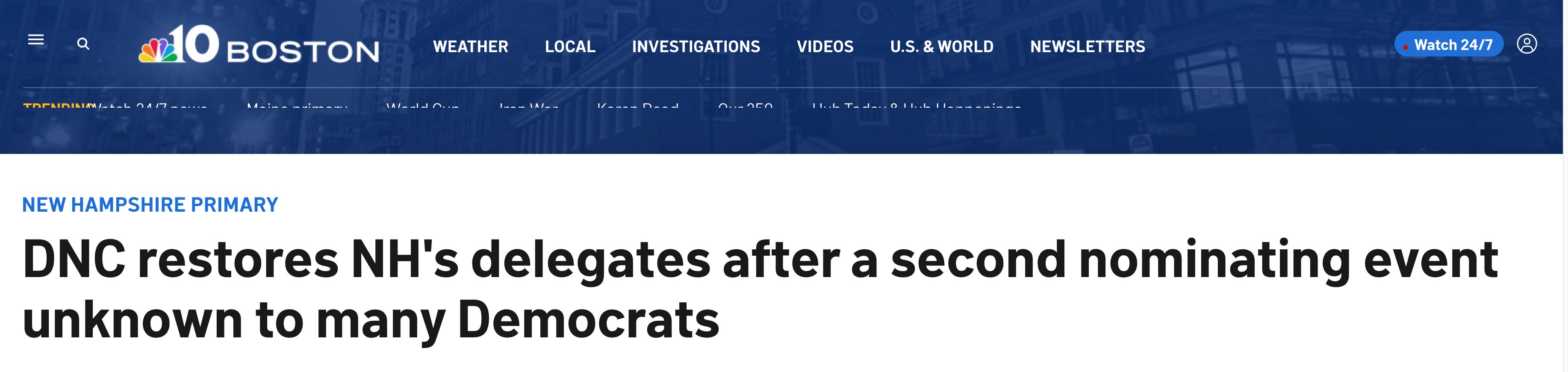
The 2020 Democratic presidential race was stained forever by long counting delays in primaries in Iowa and New Hampshire, where Sanders again won the most votes, but the surprise third place finish for Amy Klobuchar led to celebration of a biological-sounding thing called the “Klobucharge.” The 2024 New Hampshire Democratic primary was quietly overturned and replaced by a “party-run delegate selection primary” or “nominating event” held in secret in May of that year, a thing that to this day almost no one knows about:
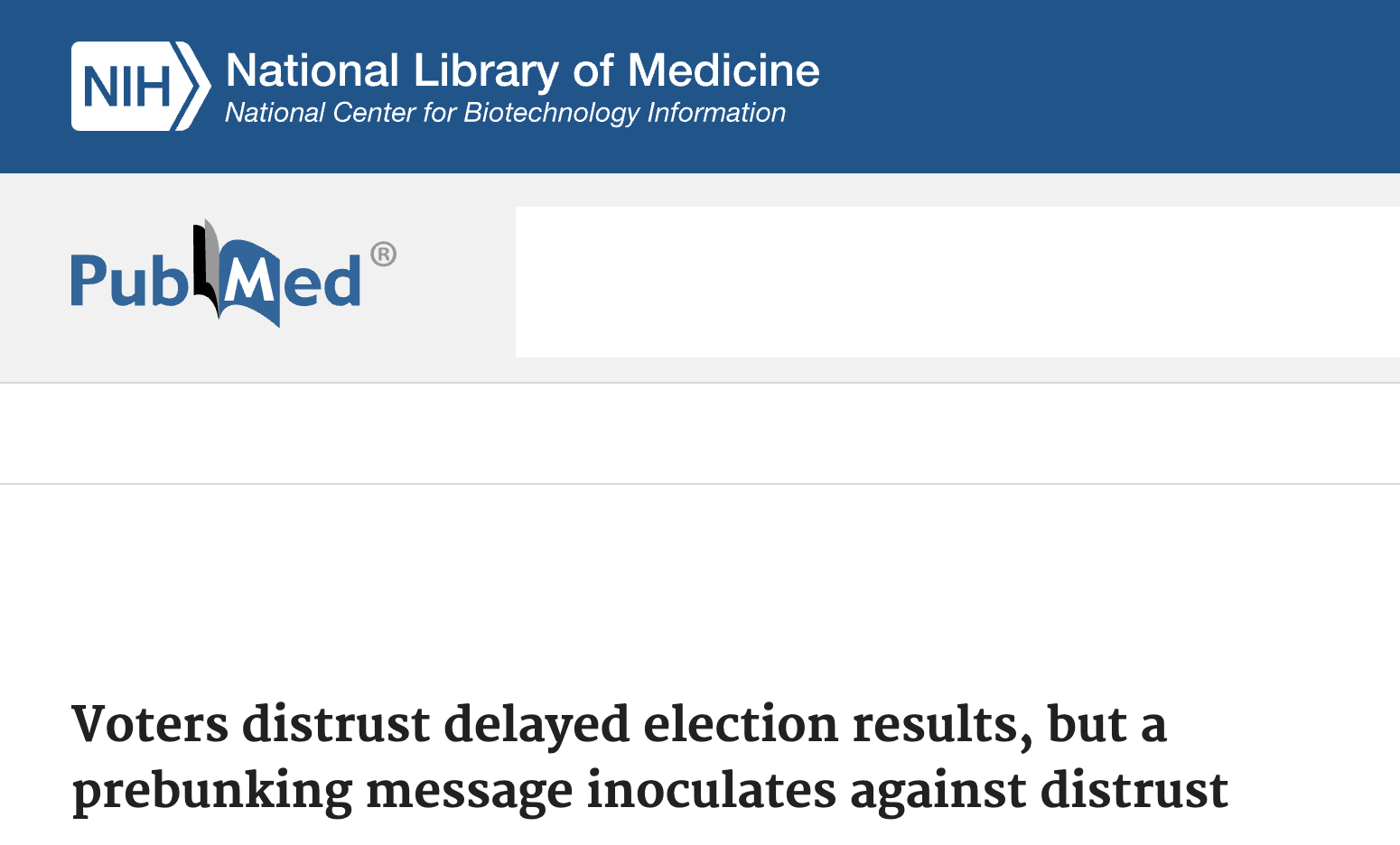
Add this to the infamous delays in 2020 presidential battleground states like Pennsylvania, Georgia, Michigan, Wisconsin, and Arizona, and it’s not surprising Americans have lost confidence in elections. Only about two-thirds believe results according to polls, a 10-point drop since 2024, largely caused by a decrease in confidence among Democrats. Lurking in the backdrop is the grotesque 2020 result, which tarnished America’s image but was less of an intentional policy screwup than these recent votes. Here, the obvious fact that elections made a lot more sense when you needed an excuse to be an absentee is treated as conspiratorial bosh by pundits and NGOs, which would rather “prebunk” the population and “inoculate” people against frustration from delays than return to the previous system.
Voting in the United States was easy. You showed up, experienced boredom and mild civic pride while waiting in a short line, then hopped in a booth after a yawning election worker made sure your signature was at least a vague match to the real thing. You could still commit voter fraud in lots of different ways, but asking people to make that slight detour on the way home eliminated whole universes of possible corruption. What possible upside is there in keeping this asinine “Durr we need a few more weeks to count this shit” system? Unless deploying a big fat middle finger to the public is the point, there couldn’t be any, could there?