
Another Shooting in Brussels Exposes Broader Security Crisis in Europe
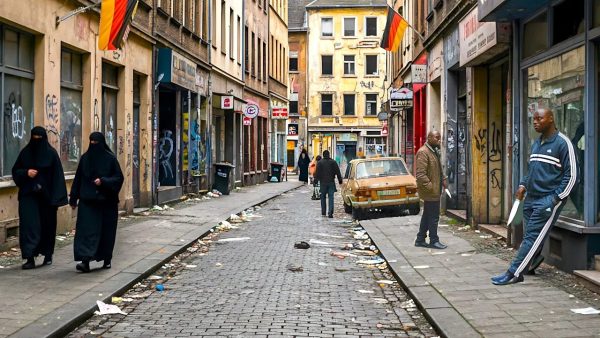
On Thursday afternoon, shots were fired in the Molenbeek district of Brussels, near the Étangs Noirs metro station. Police found shell casings and launched an investigation after officers confirmed a firearm had been used, although no injuries were reported. The Public Prosecutor’s Office has launched an investigation to identify suspects and a motive, and forensic teams are processing the crime scene. This incident contributes to a growing pattern of violence in what is known as the capital of Europe, which officials have repeatedly downplayed, even as shootings, gang-related crime, drug trafficking, and unrest escalate in neighborhoods.
The response from politicians has often been to reassure elites rather than address the reality of crime on the ground, reflecting a broader pattern in Europe where rising violence in urban areas clashes with official narratives of stability and integration, writes G. Calder .
Crime and violence in Brussels continue to rise, pointing to broader concerns across Europe
A crisis downplayed by the political class
In Brussels, violence has become a recurring news item rather than a rare event. In the past year, approximately 96 shootings were recorded in the city, eight of which were fatal, many of which were linked to drug-related crime and gang activity concentrated in areas like Molenbeek and Anderlecht. These are not isolated incidents; several armed incidents and gang confrontations have occurred near metro stations and public spaces, making the daily commute potentially dangerous. Residents of some neighborhoods have even written open letters urging stricter law enforcement to combat human trafficking and gang violence.
Part of the problem is that official responses tend to portray violence as something limited to “problem neighborhoods,” implying that the rest of the city remains largely unaffected. Brussels Commissioner Alain Hutchinson recently said that shootings and crime “do not occur where international officials live and work” and downplayed their significance, even though recorded violence tells a different story. His remarks reveal a gap between the lived reality of many residents and the image of security painted by the political class.
Meanwhile, Brussels public prosecutor Julien Moinil continues to emphasize the need for additional resources to tackle drug trafficking and the associated violence. In an interview in 2025, he laid out the figures:
“Since the beginning of this year, 6,211 adult suspects and 874 minors have been brought before the public prosecutor,” says Prosecutor Moinil. “That’s three times more than last year. This year, 1,250 drug dealers have already been arrested and brought before the court.”
What is the real cause of the chaos in Europe?
Brussels is no exception. In all European capitals, large and growing immigrant communities are changing the social fabric of cities. In 2024, almost 10 percent of the EU’s population consisted of non-citizens, with significant numbers in France, Germany, Italy, and Spain—major destinations for migration from outside Europe. While diversity brings cultural benefits, it also presents challenges in terms of social integration.
In many cities, immigrant communities are concentrated in specific neighborhoods, creating de facto ghettos where economic opportunities are limited and formal social ties are weak. Social science research shows that urban segregation and a lack of integration can exacerbate tensions and fuel crime. When large urban centers also function as transportation hubs and economic magnets, their circumstances make them more susceptible to crime, simply due to the sheer volume of daily traffic and population density. Academic research shows that every percentage increase in the number of commuters coming to a city is associated with a measurable increase in various types of crime.
Official statements deliberately ignore the core of the matter
Despite statistics and incidents on the ground, political leaders often reject the notion of a systemic crime problem. In Brussels, officials have portrayed violence as geographically limited rather than embedded in broader social trends. Critical commentators argue that this view reflects a class divide in governance, where the interests of ordinary citizens are subordinated to the priorities of international institutions and temporary elites.
This pattern isn’t limited to Belgium. In parts of Sweden and the Netherlands, shootings and violent incidents have increased, and some neighborhoods are grappling with a social collapse that looks more like a cautionary urban experiment than a thriving 21st-century city. An analysis found that in Stockholm alone, there were 55 shootings in 2025, resulting in multiple deaths, underscoring a trend of rising gun crime in European capitals .
Police and politicians often reject any direct link between crime rates and migration, arguing that crime statistics are complex and influenced by many socioeconomic factors. Independent fact-checkers note that even if immigration is increasing, the statistical link with crime is disputed and the data should be interpreted with caution. Nevertheless, public perception in many countries tells a different story, with surveys showing growing security concerns and people believing that migration is putting pressure on public order.
Violent incidents in Europe
The recent shooting in Brussels joins other disturbing events in Europe: these conflicts illustrate that urban security in Europe is shaped by a combination of demographic change, policy gaps, and responses to violent events.
- Munich : A car crash injured several people and led to political unrest over asylum and deportation policies.
- Aschaffenburg , Germany: A mass stabbing by an asylum seeker claimed the lives of several civilians and reignited the debate over the deportation of criminal non-citizens.
- Torre-Pacheco , Spain: Violence between locals and migrants led to ethnic unrest and days of rioting.
- Ireland and Northern Ireland : Outrage over crimes committed by suspects with a migrant background led to riots and civil unrest.
Each of these incidents has its own context and causes. But together, they underscore that European societies are struggling to find a model for integration and public safety that maintains public trust without stifling debate. Whether the causes are economic marginalization, failed assimilation, or police strategy, the effect is the same: ordinary citizens feel less safe in places where they once felt safe.
The politics of downplaying reality and the costs of denial
The tendency of some officials to dismiss the rising violence as limited to certain “dangerous enclaves” may reassure diplomats and elite residents, but does little to address the real concerns of commuters, shoppers, families, and workers. When city officials publicly normalize areas as “ rotten ” but safe for elite enclaves, they risk undermining trust in institutions. Critics argue that policies that prioritize multicultural optimism over law and order create blind spots that allow criminal networks to expand—particularly drug trafficking and gang activity, which statistics show are the root cause of many shootings.
Belgian authorities are struggling with understaffed police forces and recruitment problems, further reinforcing the feeling that official responses lag behind the reality on the ground. In some neighborhoods, young people face a lack of employment and opportunities, conditions that can lead to criminal activity. Crime surveys in Brussels show that thousands of cases of violent robberies, intimidation, and street crime occur annually, with a significant portion of the population expressing fear of using public transportation or walking alone at night.
Is it time for Europe to face the facts?
Europe’s demographic and cultural evolution isn’t inherently problematic. But ignoring or downplaying the social tensions that accompany rapid change won’t make them disappear. If the political elite continues to downplay the rising violence while citizens feel increasingly unsafe, the social fabric risks coming under further strain.
The recent shooting in Brussels, like recent incidents elsewhere, should be a wake-up call. Public safety and integration policies must be honestly evaluated instead of making comforting promises. The question is not whether Europe will face these challenges, but whether its leaders will acknowledge them and devise solutions that protect communities instead of masking the symptoms.
Last thought
European capitals are changing faster than their leaders care to admit. When violence moves from statistical footnotes to metro stations and markets, ordinary citizens deserve clear analysis and effective policies, not trivialization and geographical distortion. The way forward depends on facing reality head-on, rather than pretending it remains at a comfortable distance.