
Black Power in Decline
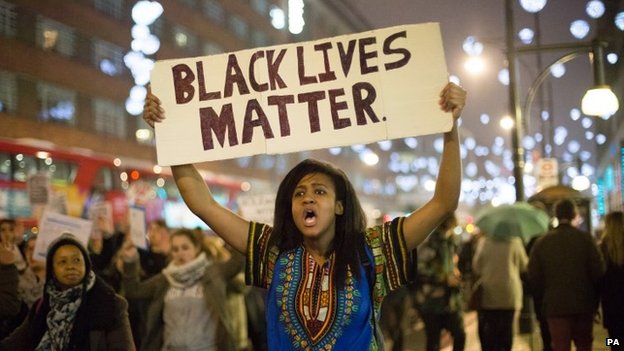
Blacks find themselves in a weaker position in a more diverse America.
The Supreme Court horrified liberals last month by curtailing the excesses of the Voting Rights Act. Not only does the decision mean fewer Democrats in Congress, it also might mean fewer black lawmakers. The districts Republicans can now carve up are majority-black.
Some southern Republicans are getting cold feet over the matter, but whatever happens, there will be fewer blacks in the next Congress. Every black Republican in the House is leaving and a number of black Democrats will lose their seats thanks to redistricting.
Nate Silver claims liberals shouldn’t worry as Democrats will continue to run black candidates even outside black-majority districts. That may happen, or it may not. It’s hard to ignore this event in the context of declining black power across many elements of American society.
Just a few years ago, the nation rioted over a black career criminal’s drug overdose. We gave black America a second national holiday. American embassies flew Black Lives Matter flags all over the world. Democrats were all rushing to “study” reparations. Major corporations announced explicit racial quotas to ensure blacks got plum jobs. Rap was ubiquitous and black music was the only music allowed at the Super Bowl halftime show. Afrolatry appeared to be our state religion.
But things changed. We’re living in an age where affirmative action is diminished, DEI is rolled back, and rap is no longer in the top 40. Blackness no longer has the cultural cachet it once had, and now that may be reflected in Congress. That’s not to say black power is over. Far from it. It still has a lot of influence, particularly in academia. Our next president could still be black and black primary voters will still play a critical role in selecting the Democratic nominee. But black power isn’t what it once was.
White fatigue with peak blackness is an obvious factor, but not the only one. There’s also a surprising reason that plays a role: demographic change.
It’s widely understood that mass immigration would make America less white both demographically and culturally. But it was thought it wouldn’t diminish blacks in any way. We’d all still be honoring their heroes and listening to their music in a multiracial America. But the future may be different. The new Americans aren’t that enthusiastic for Afrolatry, and they seem repelled by the Democrats’ obsessive focus on black interests. Native-born Black Americans (NBAs) are in demographic decline and black immigrants aren’t the same.
Mass immigration will upend the old black-white dynamic that shaped American society in the past. Something new will emerge.
There are four major areas of black decline: demographics, state-backed patronage, elite education, and pop culture.
Black total fertility rate is in steep decline, going from 2.416 in 1992 to 1.639 in 2022. It’s further plummeted since then, with black women seeing the sharpest drop in pregnancies among all demographics from 2023 to 2024 (a four percent decline). Provisional data from last year show the numbers have declined even further while white births increased.
An increasing number of blacks aren’t NBAs. The last census revealed that roughly a fifth of the black population has an immigrant background. That number will rise higher in the next census.
Additionally, changing NBA demographics have contributed to the decline in crime.
Black employment has taken a tumble in the Trump era due to government layoffs and DEI’s rollback. The Trump administration’s cuts to the federal workforce disproportionately affected black workers. This is largely due to blacks’ disproportionate share of the government workforce (19 percent of gov workers vs. 12 percent of the U.S. population). Corporations eliminating and paring down DEI initiatives has also made a major impact on black workers. The old patronage extended by the state and corporations is no longer what it was before Trump 2.0.
Black enrollment at America’s best colleges has significantly declined in the wake of the Supreme Court curbing affirmative action. A study released earlier this year found that the number of black students at our most elite institutions dropped 27 percent since 2023. The black elite depended on affirmative action to get into the best schools and networks. This is where the political, legal, and cultural leaders got their start. Now there will be fewer of them.
All of this is happening while the rest of America seems less interested in black culture. Last fall, there were no rap songs in the top 40 of the Billboard chart. It was the first time this has happened since 1990. Rap’s share of the music market hit its peak in 2020, the year of the George Floyd Revolution. By 2025, it has sunk by 24 percent. That decline is likely to carry on as there still hasn’t been a rap song in the top 10 for nearly a year.
For years, rap has been the primary expression of black culture. It replaced rock as the music of choice for young men and was enjoyed by large swaths of the public. Rap following rock’s decline is a tremendous blow to black cultural cachet. It also seems Hollywood is less eager to produce specifically black media. Black TV shows continue to be canceled left and right. Sinners competed at the Oscars, but it seemed to be a relic from the early 2020s. In any case, the pro-antifa film defeated it for Best Picture. We may be moving on from the era where Hollywood is eager to put out as much Get Out slop as possible.
In what might prove a symbolic move, Latin music replaced black music at the Super Bowl halftime show. There may be no better example of America’s new demographics displacing black America.
Black power is still prevalent in many respects. That same Super Bowl still performed the black national anthem. We still celebrate Juneteenth as a federal holiday. Black figures still replaced Confederate icons in Congress’s Statuary Hall. Sinners was still treated as one of the best movies of the year. The list could go on.
But we are in a different era from the one which gave us the George Floyd Revolution. We’re in a different era where most Republicans (if not all, as we can see in disputes over redistricting) are fine with eliminating black congressional districts and there’s not much of a public backlash. Compare Tennessee’s successful effort to make its state all-red with Georgia passing electoral reforms in 2021. The latter effort was considered racist and led to corporate boycotts, including the MLB All-Star Game changing its location. Tennessee, with its far more aggressive move, has faced no consequences besides negative news coverage.
This doesn’t necessarily mean we’re becoming a whiter culture, even if country is toppling rap. What is certain is that we’re heading to somewhere new, and the various immigrants who’ve come here will play a role in that. They might turn out to prefer white cultural forms more than black ones. They might try to push for their own hybrid to become the mainstream culture. Or a backlash could create something distinctly unappealing to them. There are many possibilities.
But one thing is clear: the era of black cultural dominance is over.