
Britain’s Greatest Betrayal
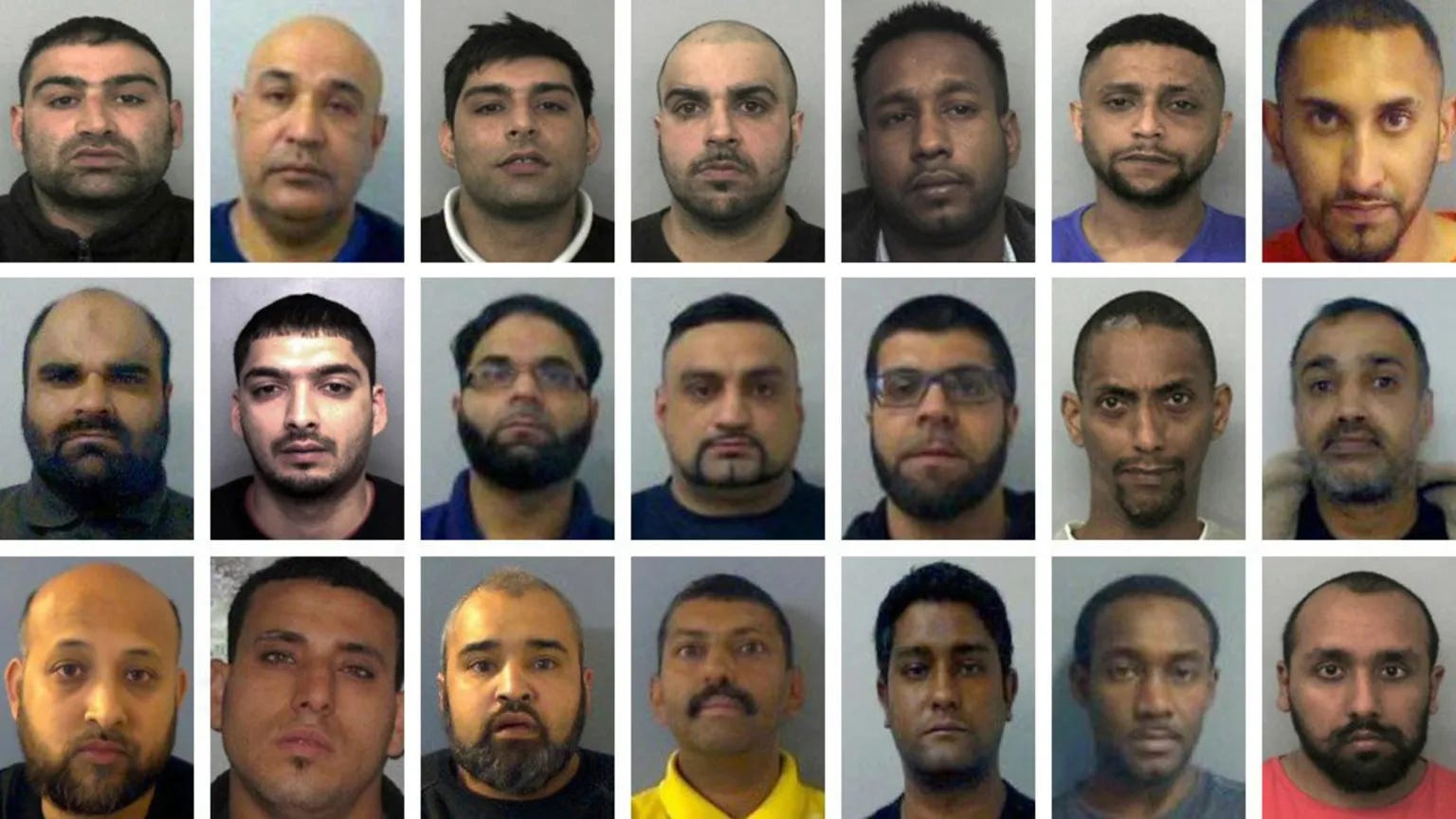
Rupert Lowe’s Rape Gang Inquiry Report opens with two quotations before a single piece of evidence is presented.
The first is Albert Einstein’s observation:
“The world is a dangerous place to live, not because of the people who are evil, but because of the people who don’t do anything about it.”
Human history has always contained violent and predatory men, every society has had to confront them, punish them, and do its best to protect the innocent from them. That is a perennial feature of the human condition. Yet the significance of Einstein’s quote is that it shifts our attention away from the perpetrators alone and towards those who witnessed wrongdoing and failed to stop it. This report is so horrific because it illustrates how people who were supposed to protect vulnerable children failed to act. The report argues that those crimes became possible on such a scale because too many others looked away.
The second quotation is from Friedrich Nietzsche:
“Man is the cruellest animal.”
Nietzsche explains the existence of the perpetrators, Einstein explains the existence of the scandal. Throughout the report, readers encounter testimony describing acts so degrading and sadistic that they transcend ordinary criminality. This article will start with one such story.
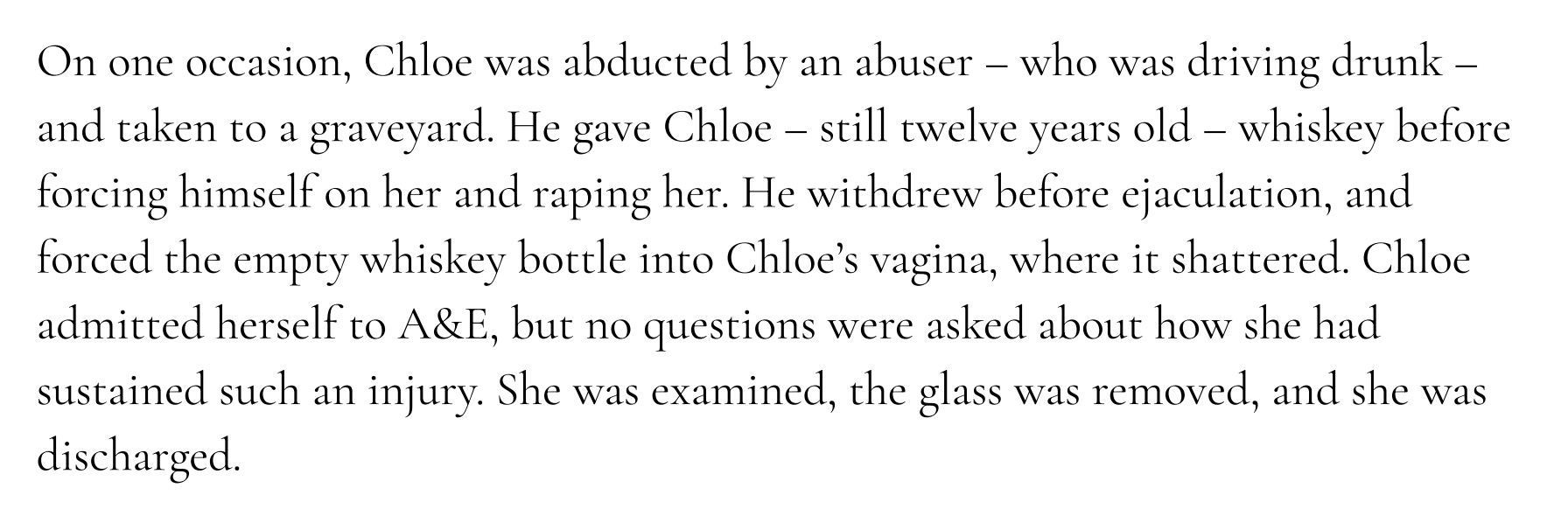
At twelve years of age, a girl identified in official records only as Chloe was abducted by an adult male who drove her to a secluded, darkened graveyard. Once there, he supplied the child with an entire bottle of Jack Daniels whiskey. He then forced himself upon her, pinning her down in the darkness and raping her. Withdrawing just before ejaculation, the man picked up the emptied glass whiskey bottle and violently forced it up inside the twelve-year-old child’s body until it shattered.
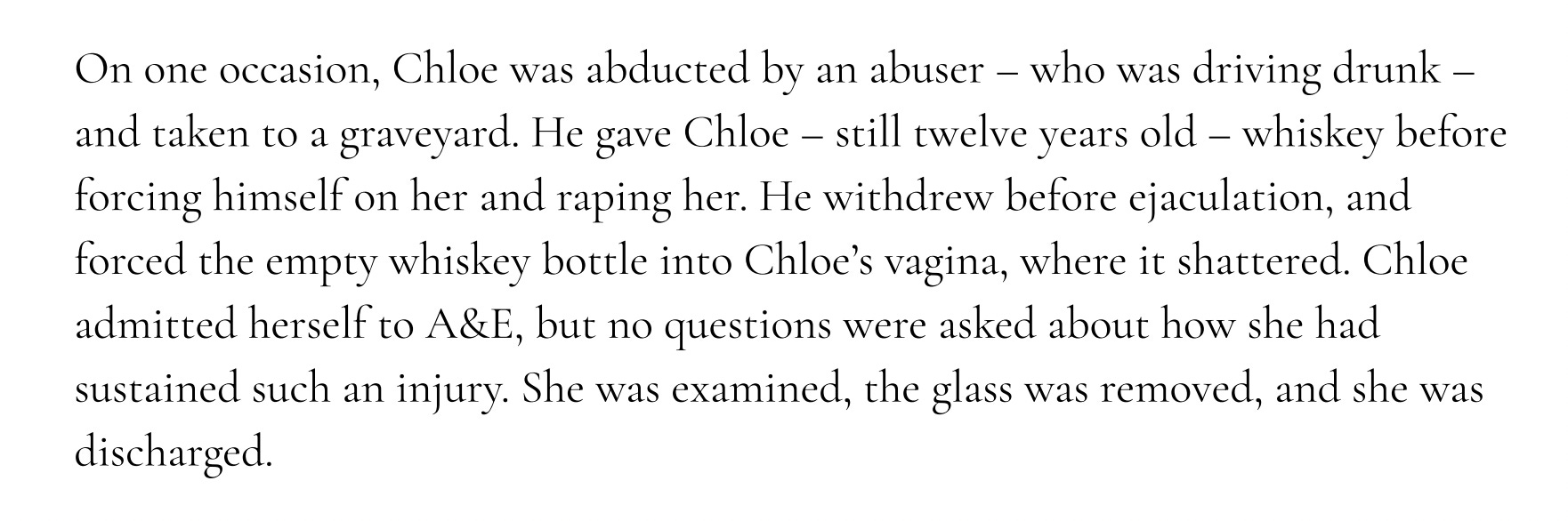
When Chloe eventually arrived at a local Accident and Emergency department, bleeding and in a state of unfathomable physical and psychological shock, the medical staff attended to the immediate anatomical emergency. They placed her on a table, removed the shards of shattered glass from deep inside her body, and then, according to the official records, they simply discharged her. No probing questions were asked, no police officers were summoned to the hospital ward to take a statement, no urgent safeguarding referrals were initiated to remove her from harm. A child had presented with injuries unmistakably consistent with extreme, sadistic sexual torture, and the institution specifically tasked with her care patched her up and sent her back out into the night.
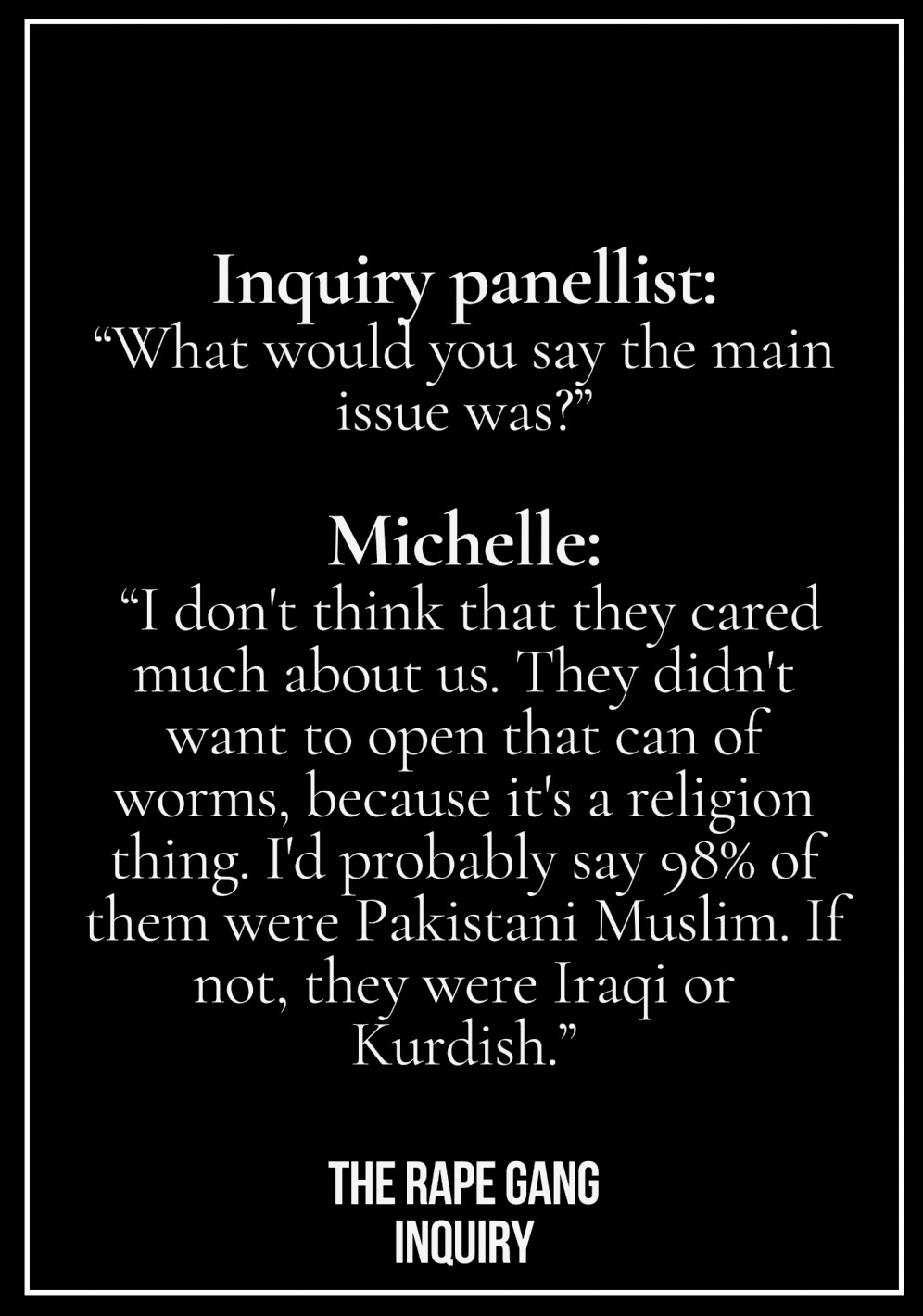
Elsewhere in the country, a young victim named Michelle endured a reality of comparable horror. Michelle was subjected to an industrial scale of violence, repeatedly gang-raped in local bin sheds and threatened into terrified submission with a knife and forced into sex with multiple men waiting in cars. She was drugged, beaten, burned with cigarettes, locked in rooms, and passed between men. Of her abusers, she states: “98% of them were Pakistani Muslim. If not, they were Iraqi Muslim or Kurdish.” One of the most chilling details of Michelle’s ordeal occurred inside a police station. When the authorities finally became involved, the system failed her with such spectacular absurdity that police officers permitted one of the very men who had been violently abusing her to sit beside her during proceedings, officially accepting her rapist as her designated “appropriate adult”, a legal role exclusively designed to protect the welfare of vulnerable minors.
What Actually Happened
The history of group-based child sexual exploitation in the United Kingdom stretches back generations. While Alexis Jay, the independent chair of the Centre for Excellence for Children’s Care and Protection, previously identified the 1970s as the era when immigrant rape gangs first began operating in Britain, the Inquiry traces the first recorded case of a specifically Pakistani rape gang back to 1955 in Bradford, shortly after the British Nationality Act of 1948 altered the nation’s demographic makeup. However, the report highlights that the scale of these crimes expanded exponentially from the late 1990s onward, mutating from isolated local incidents into an industrialised, nationwide criminal enterprise.
What emerges from the Inquiry’s findings is the standardisation of the abuse. The report confirms that these networks operate, or have operated, in at least 149 local authority districts, representing nearly 40% of all such districts across the United Kingdom. Britain quite literally faced a single, cohesive national model of modern-day child sex slavery.
The Victims
Reading The Rape Gang Inquiry Report is to descend into an abyss of human suffering. The abstract statistics of 250,000 victims, 149 districts, decades of cover-ups cannot adequately convey the reality of the crimes. The emotional and moral heart of the report is truly in the testimonies of the survivors, who detailed the complete annihilation of their childhoods and the lifelong shadows cast by their exploitation.
Fiona: The Care Home Pipeline
Emerging from a household marred by domestic violence and her mother’s repeated suicide attempts, Fiona was placed into state care. Tragically, this environment functioned as a heavily stocked hunting ground for the ethnic gangs. Fiona was trafficked across multiple UK cities. The networks utilised extreme violence to ensure total compliance. Fiona was forced not only to endure sexual torture but to act as a courier for drugs and to clean up the blood and knives from the scenes of fatal stabbings. The abusers bragged to her about hiding dead bodies in specific locations, facts that Fiona later saw corroborated by local news reports of recovered corpses.
At 14, Fiona fell into the hands of a man known as ‘Rambo’, an illegal immigrant who had reportedly been castrated in Pakistan as a punishment for child abuse before fleeing to the Philippines, where he allegedly attacked women and children with a machete, and eventually arriving in Britain. Rambo locked Fiona and another girl in a room, subjecting them to extreme sexual torture that, according to the Inquiry, illustrated how the abuse was often driven more by sadism, racial humiliation, and absolute control than by just sexual gratification.
At 15, while living in a mixed-sex state care home, Fiona became pregnant. The state removed her infant son for adoption, citing the “ongoing exploitation risks” present in her life, yet deemed it acceptable to leave the 15-year-old mother behind in the exact same care home, fully exposed to the gang that had impregnated her. She estimates she was abused by between 50 and 100 men, all but two of whom were of Pakistani origin before the abuse ceased only when she aged out of the system at 18, leaving her with chronic physical injuries, substance dependency, and complex PTSD.
Michelle: Industrial Scale of Violence
The report contains a litany of similar horrors, but the testimony of Michelle highlights the industrial scale of the abuse and the collapse of authority. Michelle detailed a relentless pattern of violence, describing how she was routinely gang-raped in local bin sheds, threatened with knives, and forced into compliance through physical terror.
The volume of perpetrators she was forced to endure resulted in repeated pregnancies, transforming her body into a site of continuous trauma and medical intervention.
Yet, the defining tragedy of Michelle’s account is in the absolute inability, or refusal of the authorities to intervene on her behalf. When Michelle was finally brought into contact with law enforcement, the system failed her so profoundly that it called be described as complicity. While in police custody, the authorities permitted one of the very men who had been violently abusing her to accompany her, officially accepting her rapist as her “appropriate adult”. This legal role, designed to safeguard the rights and welfare of vulnerable minors during police interviews, was handed to the architect of her suffering. The authorities had essentially outsourced their safeguarding duties to the predator.
These testimonies confirm a that the trauma inflicted by the perpetrators was endlessly compounded by the very institutions established to prevent it. The girls were not just victims of the gangs; they were victims of the state.
The Failure of the State
The central thesis of the Rape Gang Inquiry Report is unequivocal: the estimated 250,000 victims were the victims of a deliberate collapse of the British state’s safeguarding architecture. Across every crucial sector, the state chose institutional convenience over the lives of children.
The Police: Criminalisation and Complicity
The Inquiry documents how officers frequently arrived hours late to missing persons reports, actively discouraged parents from filing complaints, and routinely closed cases without conducting basic forensic or digital examinations.
The most pervasive failure was the ideological decision to view the victims as willing participants in their own destruction. Children like Chloe, found highly intoxicated in the cars of adult men, were labelled “prostitutes” making “lifestyle choices”. By framing the organised rape of children as consensual sex work, the police absolved themselves of the legal requirement to launch resource-heavy investigations into organised crime syndicates.
When victims or their families did provide actionable evidence, it was routinely mishandled, ignored, or actively destroyed. Ross, the father of a survivor named Phoebe, testified that vital digital evidence handed over to the police was inexplicably deleted from the device while in police custody. When Grace’s abusers repeatedly breached their bail conditions and stalked her family, the police took no action, rendering protective non-molestation orders entirely meaningless.
The bureaucratic responses were often farcical. In some instances, the only formal action taken by police was issuing “harbouring notices” to the men, pieces of paper warning them not to associate with the child. When the men inevitably ignored these notices, no further enforcement followed. Furthermore, the Inquiry uncovered a deeply entrenched “two-tier” policing system. While forces surrendered to the fear of disorder from certain communities, they aggressively targeted the victims and their families. Chloe was arrested in her pyjamas after her mother called the police for help, kept in a cell until 2:00 AM, and released onto the streets without transportation, leading directly to her being picked up by a gang member and trafficked nationwide.
Most disturbingly, the report highlights allegations of direct police complicity, referencing whistleblower accounts of “cop nights” where officers were allegedly active participants in the trafficking and abuse of girls using police vehicles. The revelation that an abuser could be legally accepted as an “appropriate adult” for Michelle during police questioning underscores a force either dangerously incompetent or wilfully blind to the dynamics of coercive control.
Social Services: Abandonment and Retaliation
If the police failed to enforce the law, social services failed to enforce basic humanity. Across multiple districts, social care systems identified the precise markers of severe exploitation, truancy, self-harm, sudden wealth, STIs, missing episodes and consistently chose to look away.
The Inquiry demonstrates that social workers frequently undermined protective parents, isolating children from their families and placing them in residential care homes and semi-independent units that functioned as drive-through delivery systems for the gangs. Children were centralised, making them easier targets.
Jane, a victim placed in semi-independent living at 16, was trafficked directly from her state-provided accommodation. When she disclosed the abuse and the exchange of money to the staff, she was told it did not constitute trafficking because she was over 16. The staff then blackmailed her, threatening to blame her for the exploitation if she complained further. Following a psychiatric hospitalisation, Jane discovered that all statutory care records from her placement had been mysteriously “lost or destroyed,” legally obstructing any path to future accountability.
When internal whistleblowers attempted to expose the ongoing grooming, trafficking, and financial abuse of children in these units, they were met with severe retaliation. An unnamed social worker who acted as an Interim Co-Manager testified that after raising concerns about untreated exploitation risks and unlawful housing practices, she faced sudden suspensions, the removal of payments, fabricated allegations, and career-ending professional isolation orchestrated by senior leadership to protect the council’s reputation. Social services actively punished those who tried to protect children.
Schools:
Teachers and school administrators observed older men waiting at the school gates to collect young girls in taxis. They noted sudden drops in attendance, drastic changes in behaviour, and physical exhaustion.
Instead of recognising these as textbook indicators of exploitation, schools responded with punitive measures that pushed the children further to the margins. When Chloe’s trauma manifested as truancy, the school repeatedly placed her in isolation, compounding her emotional distress and alienation. When Jen was bullied to the point of wetting herself because a teacher refused her access to the toilet, the school ignored her subsequent self-harm and suicidal ideation, failing to initiate any safeguarding response.
In the most tragic instances, schools actively protected the abusers to avoid scandal. When Rachel’s autistic daughter disclosed that she had been orally raped by a peer, the school failed to effectively safeguard her, allowing the alleged perpetrator to remain on the premises. She was subjected to relentless physical and online bullying by students linked to the abuser, which was filmed and shared online. The intimidation escalated until the twelve-year-old took a fatal overdose of colchicine, stating she “just wanted everything to stop”.
The National Health Service:
The National Health Service (NHS) is uniquely positioned to identify physical and psychological trauma. Yet, the report highlights a staggering clinical detachment among healthcare providers, who repeatedly treated the biological symptoms of extreme violence without ever questioning the cause.
Victims repeatedly presented at A&E departments, sexual health clinics, and GP surgeries with injuries that could only be the result of severe abuse. Chloe’s arrival at the hospital with shattered glass in her vagina is the most visceral example; the medical staff treated the physical wound but entirely ignored the 12-year-old patient attached to it.
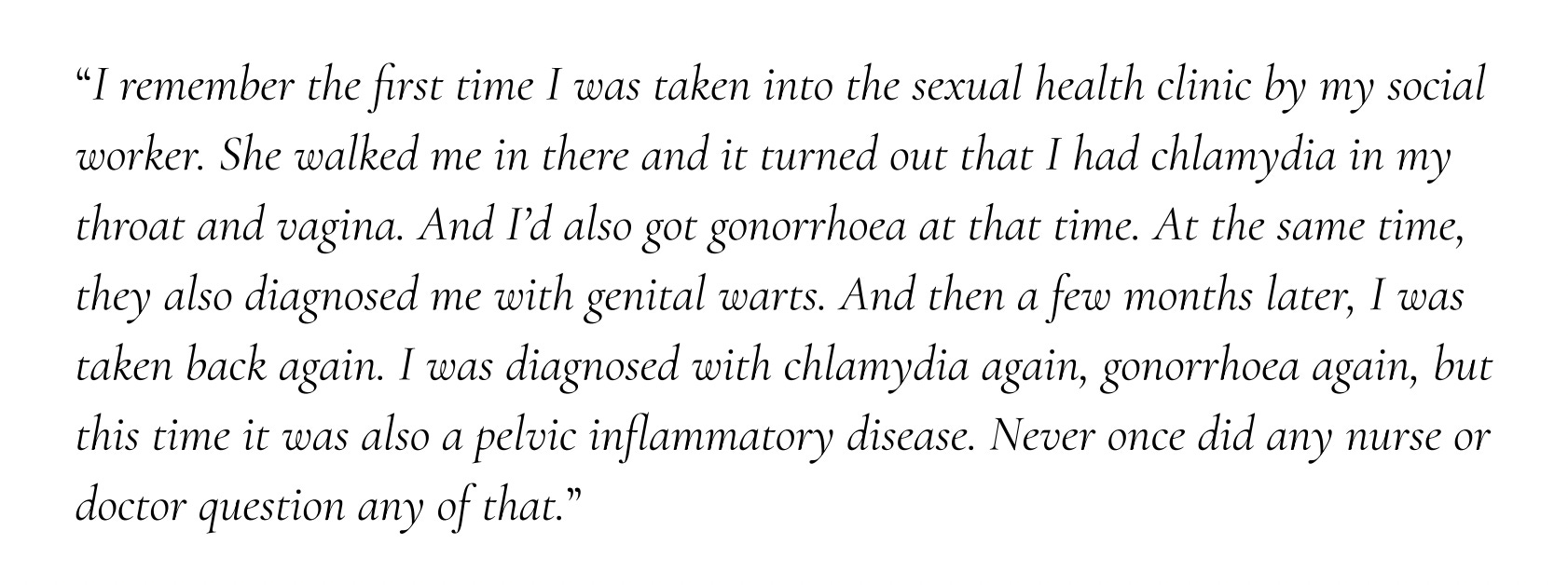
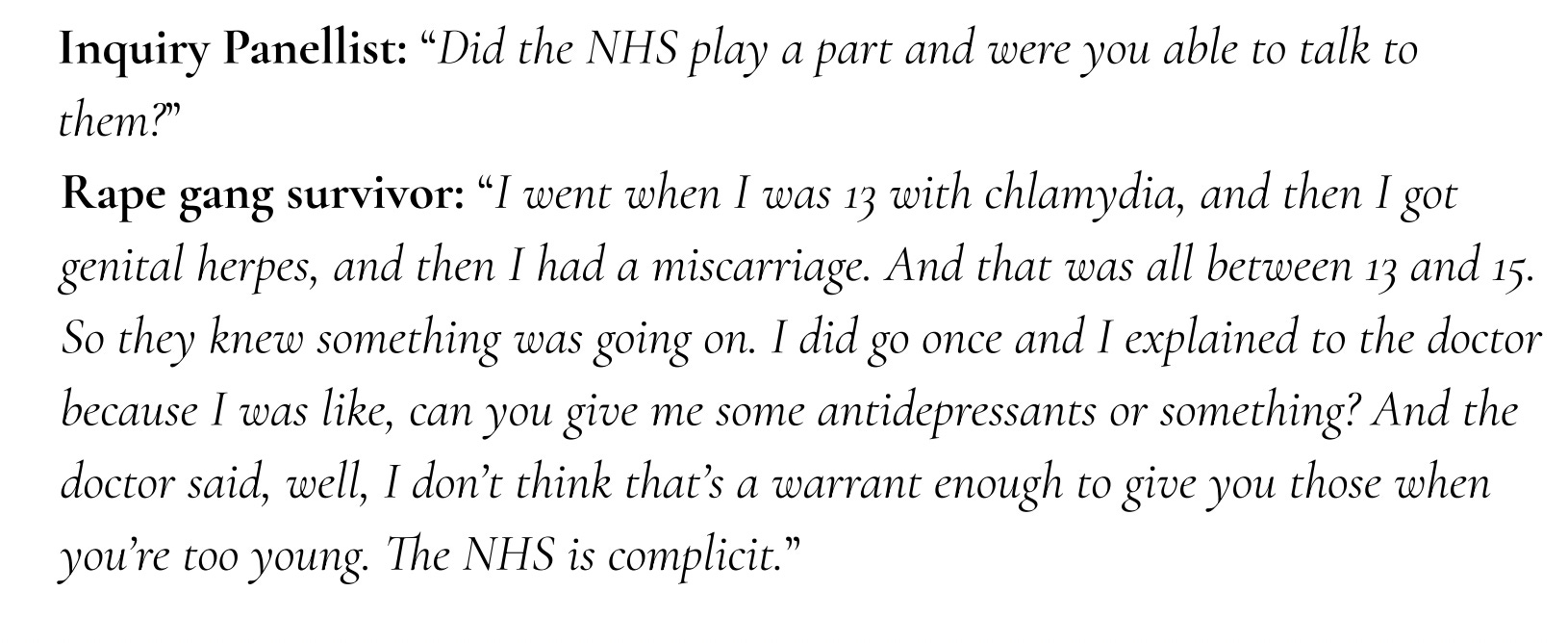
The NHS treated the collateral damage of the gangs, administering antibiotics for gonorrhoea, managing pregnancies caused by rape, performing abortions on children, and stitching the physical wounds of suicide attempts, without ever triggering automatic safeguarding referrals. When Chloe was diagnosed with severe, multiple STIs at age 13, clinic staff just discussed contraception rather than contacting the police. When victims sought psychological help, they were frequently dismissed. One survivor requested antidepressants to cope with the trauma of multiple STIs and a miscarriage between the ages of 13 and 15, only to be told by a doctor that she was “too young” to warrant the medication.
The Ethnic Dimension of The Crimes
According to the official data cited in the report, including independent analyses of conviction records from the late 1990s onward, approximately 87% of those convicted in group-based child sexual exploitation cases bore distinctively Muslim names. However, the Inquiry notes that because the vast majority of perpetrators were never prosecuted or convicted, the true demographic concentration is believed to be even higher. The report cites Dr. Taj Hargey, an imam with the Oxford Islamic Congregation, who estimates that 95% of the men involved in these specific gang networks are of Muslim heritage, a figure that vastly exceeds the Muslim share of the overall United Kingdom population, which stands at roughly 6%.
The Inquiry found that the overwhelming majority of these networks consisted of men from Pakistani backgrounds, though smaller factions of Somali, Iranian, Syrian, Turkish, and Iraqi Kurdish men were also identified.
The report concludes that the perpetrators operated under a clannish, honour and shame-based cultural code that viewed non-Muslim girls, specifically white, working-class girls as subhuman property available for sexual consumption. This cultural worldview, the Inquiry argues, was reinforced by specific interpretations of religious texts. The report outlines eight theological and legal aspects of Islam that were allegedly filtered through immigrant sub-cultures to provide a framework of religious justification for the atrocities:
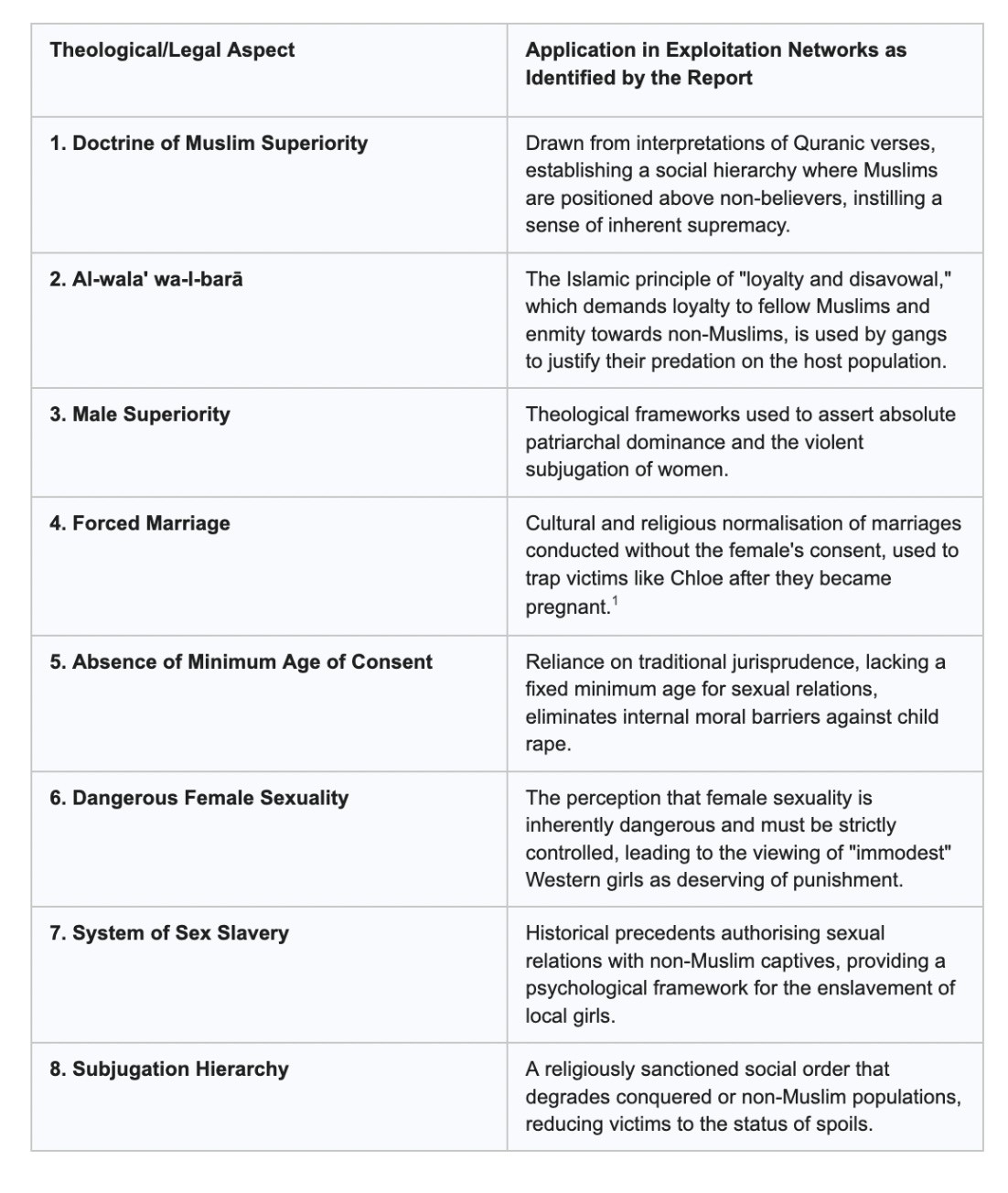
The abuse was explicitly racialised and religiously motivated.
Victims were routinely demeaned for their race and faith. Perpetrators referred to the girls as gora (a derogatory term for white people), “white trash,” “easy meat,” and “kuffar bitches”. Kate, a survivor of extreme trafficking, testified that her abusers mocked her for wearing a Christian cross, telling her that her God had abandoned her and that her Christian faith offered her no protection.
The gangs drew strict moral boundaries based on ethno-religious lines. Survivor testimony highlighted that white girls and Christian girls were viewed as having degraded moral character and were thus fair game for torture, while Muslim girls within the community were seen as possessing dignity and higher moral standing. As Eleanor noted in her testimony: “I’d had friends that were Muslim, girl friends, and this never happened to them… the men would treat them differently”.
Why Did Nobody Stop It?
If the crimes were known, the perpetrators visible, and the victims continuously presenting at hospitals, schools, and police stations, the central question of the Rape Gang Inquiry remains: Why did nobody stop it?
The answer is institutional incompetence, bureaucratic self-preservation, and an overriding fear of being accused of racism.
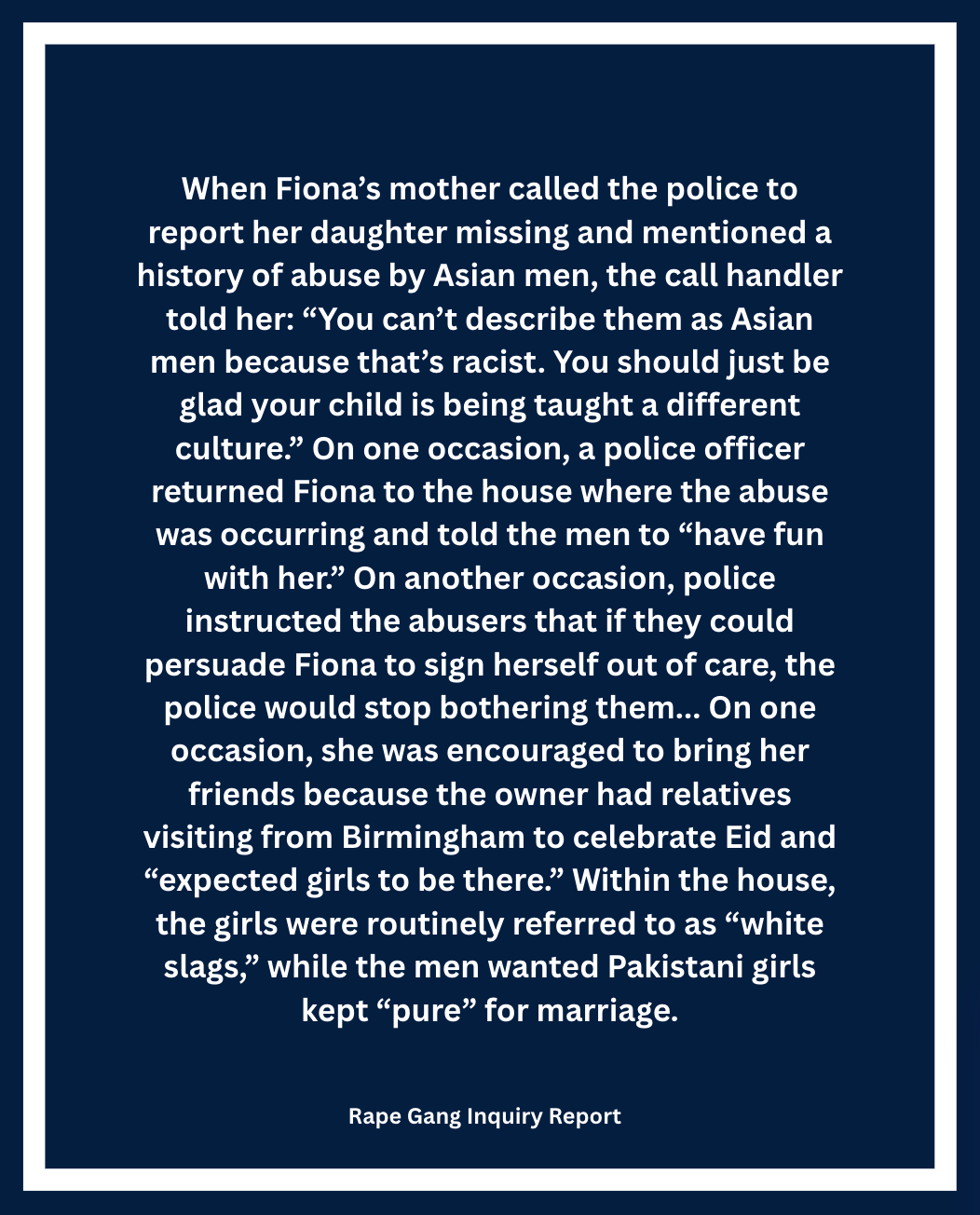
Across every agency, the fear of inflaming “community tensions” superseded the statutory duty to protect children. Police officers, social workers, and council leaders were terrified that identifying the perpetrators as predominantly Pakistani Muslim men would invite accusations of institutional racism or empower far-right political factions. When Fiona’s mother called the police to report her daughter missing and explicitly mentioned a history of abuse by Asian men, the police call handler reprimanded her, stating: “You can’t describe them as Asian men because that’s racist”.
The report reserves its harshest condemnation for the political class, identifying a nationwide abandonment of children driven by cynical electoral arithmetic.
The Labour Party is cited as bearing particular responsibility in many of the hardest-hit municipal areas. In towns like Rotherham, Rochdale, and Oxford, Labour-controlled councils and police forces repeatedly shelved investigations and threatened whistleblowers to protect their reliance on Muslim voting blocs. The Inquiry documents that local politicians received direct briefings, sat in multi-agency meetings, and read internal intelligence, yet deliberately blocked inquiries to preserve community relations and retain power.
The scandal even touched the party’s own ranks, with figures like former Rotherham Labour councillor and peer Lord Nazir Ahmed convicted of raping a 13-year-old girl, and other councillors, such as Carol Clark, formally accused of tipping off paedophile relatives about impending police raids. The report also notes that during Sir Keir Starmer’s tenure as Director of Public Prosecutions, an estimated 13,000 suspected rape gang members and paedophiles were let off with mere warning letters rather than facing prosecution.
In London, identified by the report as the epicentre of institutional denial, Mayor Sadiq Khan repeatedly insisted that grooming gangs did not operate in the capital, describing whistleblower evidence as “malicious and politically motivated”. This denial persisted even as the Metropolitan Police held internal HM Inspectorate of Constabulary documents detailing exactly these patterns of offending occurring in London hotels, exposing a massive cover-up.
The Conservative Party, while in national government, is also heavily indicted for its inaction. Despite the damning revelations of the 2014 Jay Report in Rotherham, successive Conservative administrations failed to impose mandatory ethnicity recording for these crimes or launch a full statutory national inquiry. The report cites former Conservative minister Rory Stewart, who publicly downplayed the phenomenon as a “small problem” confined to the north of England, a statement reflecting a broader political reluctance to confront the national reality of the abuse.
When individuals within the system did attempt to halt the abuse, they were crushed. Campaigners like Caven Vines in Rotherham compiled multi-agency records proving that police and councils knew about the organised grooming, only to be ignored. Former detective constable Maggie Oliver exposed the catastrophic failures in Rochdale and Manchester, pointing out that senior figures blocked reviewers from accessing vital documents. The institutions of the state did not fail due to a lack of resources or intelligence. They failed because they calculated that the lives of working-class white girls were an acceptable price to pay to maintain the illusion of multicultural harmony and organisational self-preservation.
The Scale of the Damage
For the estimated 250,000 victims, the end of the abuse rarely marked the end of the suffering. The focus of the report’s conclusion is deliberately stripped of politics, returning entirely to the human cost borne by those who survived.
Survivors live with chronic pain, severe internal injuries, and reproductive destruction resulting from years of sexual violence. Jane developed endometriosis so severe it required the surgical removal of half her uterus. Chloe’s reproductive system was so damaged that her child was born with failing organs, including a defective kidney. Other children endured multiple pregnancies, suffering trauma-induced miscarriages or forced backstreet abortions arranged by the gangs to hide the evidence of their crimes. Leanne, held captive and beaten while pregnant at 15, miscarried and now suffers from chronic fibromyalgia.
Psychologically, the survivors carry the heavy burden of complex PTSD, dissociation, and severe substance addictions that were originally forced upon them by the gangs as mechanisms of control. The report details a tragic trail of suicide attempts, with victims like Rachel’s twelve-year-old daughter ultimately taking their own lives simply to make the relentless abuse and intimidation stop.
Furthermore, the state’s habit of removing children born of rape, adopting them out or placing them into the care system while simultaneously leaving the young mothers in the hands of the abusers, has institutionalised a cycle of intergenerational trauma. Survivors find themselves navigating a bleak adulthood, haunted by criminal records acquired under duress, devoid of educational qualifications due to years of truancy and school exclusions, alienated from their families, and permanently terrified of the networks that still operate freely in their hometowns. They mourn lost childhoods that can never be returned.
Conclusion
The testimonies of Chloe, Fiona, Michelle, and countless others stand as an indelible public record of unimaginable cruelty. They document a world where girls as young as eleven were hunted, drugged, mutilated, and passed around like commodities, while the adults paid by the state to protect them simply averted their eyes.
How could industrial-scale child torture continue for half a century across 149 local authorities despite repeated, glaring warnings? It continued because the modern British state permitted it. From the police officer who deleted the evidence, to the social worker who ferried a child to an STI clinic in silence, to the school that punished the victim, to the hospital physician who pulled shattered glass from a girl’s vagina without asking why, every safety net was intentionally dismantled by cowardice and political calculation.
Until the nation stops prioritising the political sensitivities of the abusers over the survival of its children, the ghosts of these hundreds of thousands of girls will remain chained to the very institutions that betrayed them.