
California’s Supreme Soviet Targets Nick Shirley
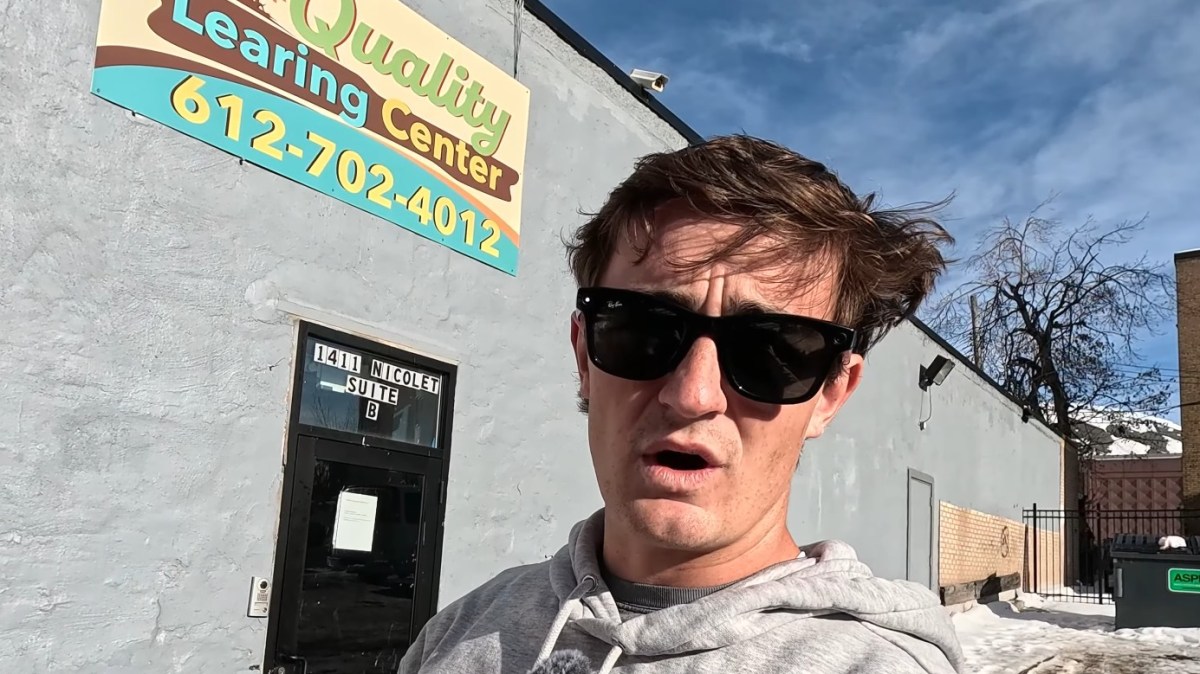
California Democrats are rushing to criminalize the very kind of investigative journalism that exposed alleged massive fraud in Minnesota.
alifornia Democrats are rushing to criminalize the very kind of investigative journalism that exposed alleged massive fraud in taxpayer-funded Somali “learning” daycare centers and other immigrant support programs. Rather than clean up the waste, Sacramento has chosen to shield the perpetrators. Assembly Bill 2624 would make it a misdemeanor, punishable by fines up to $10,000 and potential jail time, to publish images or personal information of “immigration support services providers,” their employees, or volunteers if done with the “intent to threaten, harass, or incite violence.” Additionally, courts could issue content-removal orders forcing platforms to take down the material.
Supporters call it “anti-doxxing.” In reality, it is a textbook content-based restriction on speech and press that cannot and should not survive First Amendment scrutiny.
The Supreme Court has long held that the First Amendment protects not merely the right to speak but the right to gather news and publish truthful information on matters of public concern, especially when taxpayer dollars are at stake. In New York Times Co. v. Sullivan (1964), the Court established that even harsh criticism of public programs and officials is shielded unless it involves provable falsehoods made with actual malice. Bartnicki v. Vopper (2001) went further: the publication of lawfully obtained information on matters of public importance enjoys full protection even if the underlying source obtained it improperly. Citizen journalists filming public-facing operations at government-funded facilities engage in core protected activity. Federal appellate courts, including the First Circuit in Glik v. Cunniffe (2011), have repeatedly affirmed the right to record government officials and publicly funded activities in public spaces without prior permission. Simply, quoting the Court in Glik:
…the Supreme Court has observed, “the First Amendment goes beyond protection of the press and the self-expression of individuals to prohibit government from limiting the stock of information from which members of the public may draw… [T]he Constitution protects the right to receive information and ideas… An important corollary to this interest in protecting the stock of public information is that “[t]here is an undoubted right to gather news ‘from any source by means within the law.’ The filming of government officials engaged in their duties in a public place, including police officers performing their responsibilities, fits comfortably within these principles. Gathering information about government officials in a form that can readily be disseminated to others serves a cardinal First Amendment interest in protecting and promoting “the free discussion of governmental affairs.” Moreover, as the Court has noted, “f]reedom of expression has particular significance with respect to government because ‘[i]t is here that the state has a special incentive to repress opposition and often wields a more effective power of suppression.” Glik at pp 8-9 [citations omitted].
AB 2624 collapses under strict scrutiny, the demanding standard that applies to  content-based speech restrictions. Reed v. Town of Gilbert, 2015). First, the law operates as a classic prior restraint. By authorizing pre-trial content takedown orders, the bill inverts the heavy presumption against suppressing speech that the Framers wrote into the First Amendment. Near v. Minnesota (1931); New York Times Co. v. United States (1971). Prior restraints are permissible only in the narrowest circumstances, such as imminent national-security threats. Protection from public embarrassment and continuation of protected corruption do not qualify.
Second, the bill’s core prohibition hinges on vague, subjective terms such as “intent to harass.” The Supreme Court has repeatedly struck down laws that criminalize speech based on such open-ended standards because they chill protected expression and invite selective enforcement. Grayned v. City of Rockford (1972); Counterman v. Colorado, 2023). In Counterman, the Court made clear that even “true threats” require proof of subjective intent to threaten violence, not merely reckless disregard or a subjective feeling of harassment. AB 2624’s “harass” language sweeps far more broadly, giving bureaucrats and judges unfettered discretion to label legitimate investigative footage as criminal.
Third, the bill engages in blatant viewpoint discrimination. It singles out immigration support services for special protection amid recent exposés of alleged fraud in precisely those programs. Governments may not enact speech restrictions that target disfavored speakers or messages while leaving similar conduct by favored groups untouched. Reed; Sorrell v. IMS Health Inc. (2011). The timing, rushed forward after Nick Shirley’s videos went viral, makes the discriminatory purpose unmistakable.
The bill is plagued by other legal infirmities. It directly conflicts with California’s strong whistleblower protections, particularly the Whistleblower Protection Act, and provisions of the Labor Code (§ 1102.5). Those statutes shield employees and contractors who disclose (or reasonably believe they are disclosing) violations of law, including fraud in publicly funded programs. Whistleblowers inside these immigration support nonprofits often document wrongdoing precisely by recording video, taking photos, or sharing records that include images or personal information of staff and volunteers, the exact material AB 2624 would criminalize or subject to takedown orders. The bill contains no carve-out for good-faith disclosures or journalistic or whistleblower activity. Enforcement would therefore punish the very conduct the state otherwise encourages and protects, creating an irreconcilable statutory conflict and further chilling protected speech.
These infirmities compound because California’s own Constitution provides even stronger free-speech and press protections than the Federal First Amendment, protecting the right to “freely speak, write, and publish.” Article I, Section 2(a). The bill’s legislative findings attempting to justify reduced public-record access fall far short of the narrow-tailoring requirement. Taxpayers have a compelling interest in scrutinizing how their money is spent on programs serving non-citizens. Shielding the recipients of public funds from documentation is the antithesis of constitutional tailoring.
California already has general anti-doxxing and true-threat statutes that can address genuine unlawful threats and even harassment without creating a special protected class for politically favored nonprofits. AB 2624 goes much further: it effectively deters citizens from filming and publishing truthful footage of public interactions at facilities suspected of fraud. That is not privacy protection. It is narrative control.
This fits a familiar Sacramento pattern. When the ruling class dislikes what citizens discover about failing schools, street chaos, or slush-fund NGOs, it rewrites the rules to make discovery illegal. From campus speech codes to agricultural “ag-gag” laws and now this, the goal is always the same: shield favored constituencies from accountability.
If signed by Governor Newsom, AB 2624 will face swift federal-court challenges from journalists, transparency advocates, and civil-liberties organizations. The First Amendment does not and should not permit the state to declare a special class of untouchables whose public activities may no longer be documented by citizens exercising their constitutional rights.
Nick Shirley’s investigations and videos do not constitute “harassment”; they are the modern equivalent of the pamphleteers and investigative reporters the Founders sought to protect. California Democrats’ reckless attempt to silence scrutiny of taxpayer-funded programs is not merely bad policy; it is a direct assault on the constitutional foundations of self-government. The voters should remember who tried to ram it through.
https://www.americanthinker.com/articles/2026/04/california_targets_nick_shirley.html