
Cuba in the Dark: Blackouts, Blockades, and the Next Extraction Play
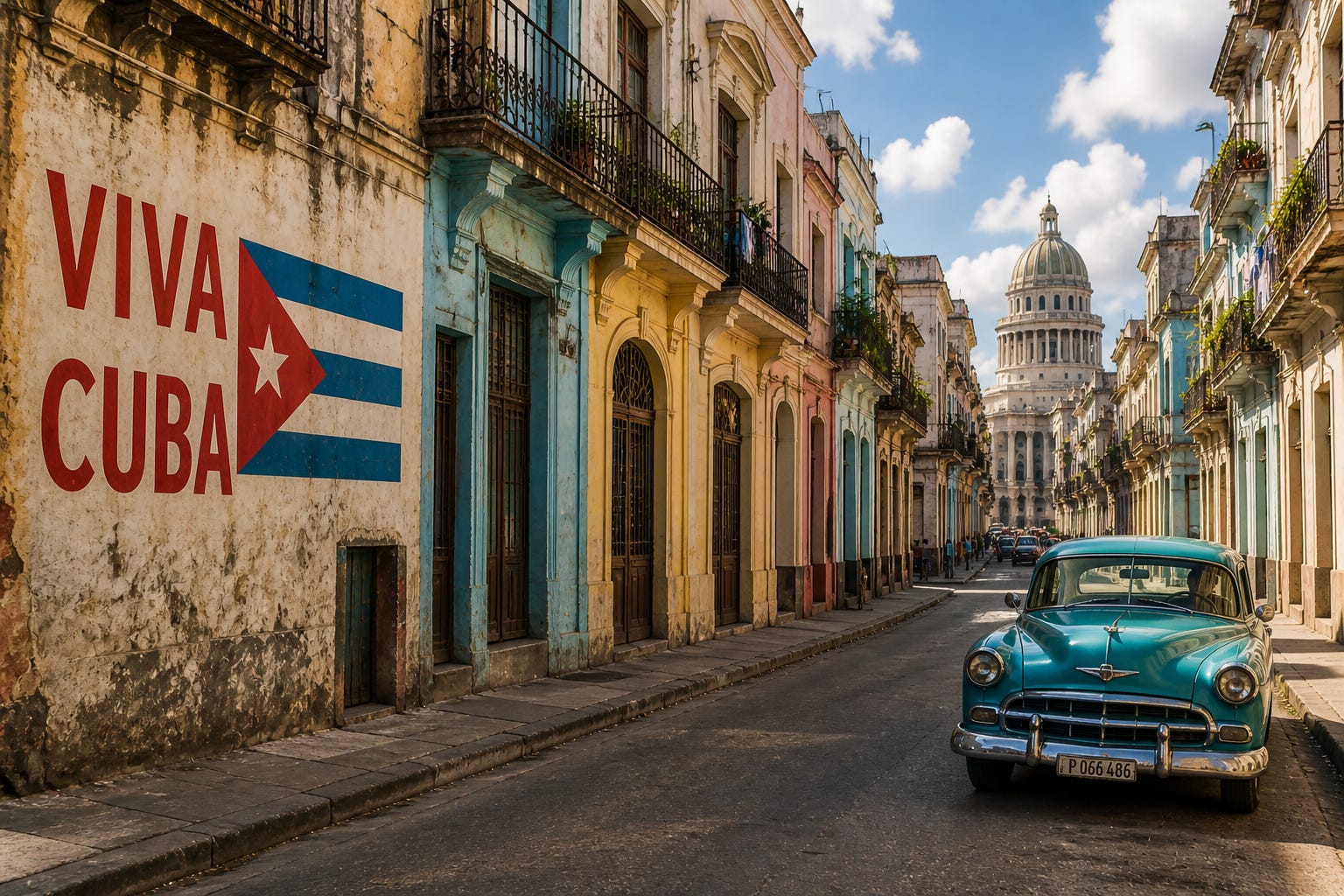
The lights didn’t just go out in Cuba. The system did. And when systems collapse this fast, it’s never just infrastructure—it’s positioning. What you’re watching right now isn’t random chaos. It’s the early phase of a geopolitical endgame that’s been building for months.
Back in May, the signals were already there. Panama tightening. China dialing back fentanyl. Venezuela flipping. Iran heating up. Taiwan simmering. Now Cuba steps into the frame—not as an isolated crisis, but as the next logical move in a broader board reset.
The blackouts are the tell. Entire grid collapses, repeated nationwide outages, and a population sitting in darkness wondering what comes next. Cuba isn’t just struggling—it’s being squeezed from the outside while cracking from within.
⚡ The Setup: A Crisis That Didn’t Happen by Accident
This didn’t start with failing power plants. It started with fuel.
The U.S. effectively cut off oil flows—especially from Venezuela—which Cuba depends on to keep the lights on. Tankers stopped coming. Countries were warned off. Sanctions tightened. The result? A modern country running on fumes.
And right on cue, the grid collapses. Hospitals strained. Food supply hit. Water systems failing. When energy goes, everything goes with it.
Now layer on fresh sanctions targeting Cuba’s core economic sectors—energy, finance, defense—and you’ve got something more than pressure. You’ve got controlled destabilization.
🔥 Scenario One: The People Snap
You’ve seen the footage—crowds in Havana, frustration boiling over.
History says when basic survival breaks down—no food, no power, no hope—people move. Not politically. Primitively. And that’s when regimes either clamp down hard… or fracture.
A popular uprising is the cleanest outcome on paper. No foreign boots, no messy optics. Just “organic change.” But here’s the problem: Cuba’s system is built to absorb pressure. It’s survived worse.
So yes, it’s possible. But don’t bet the house on it.
🤝 Scenario Two: The Deal That Never Closes
There are already whispers of talks. Prisoner releases. Back-channel communication.
On the surface, it looks like diplomacy. In reality, it’s leverage testing.
The U.S. says “make a deal.” Cuba says “without coercion.” Both sides posture. Nothing moves.
Because here’s the truth—negotiations only work when both sides still have something to lose. Right now, Cuba is running out of chips fast. And when that happens, deals don’t get made… they get dictated.
💰 Scenario Three: Extraction 2.0 (The Smart Money Bet)
This is the one to watch.
Call it Venezuela 2.0. Call it a “friendly transition.” Call it whatever sounds nice on TV. The mechanics are the same:
Collapse → Pressure → Transition → Control.
We’ve already seen the blueprint. Economic strangulation creates internal instability. That instability justifies intervention—financial, political, or “humanitarian.” And before long, the assets get reorganized under new management.
Cuba isn’t just an island. It’s strategic real estate 90 miles from Florida. It’s ports, infrastructure, tourism, resources, and positioning.
You don’t invade that. You acquire it.
🪖 Scenario Four: The Option Nobody Talks About (But Everyone Knows)
Full-scale invasion.
Historically, the U.S. has intervened in Cuba multiple times—early 1900s, mid-century, and beyond. The precedent is there.
But today? That’s the least likely move.
Why? Because it’s expensive, messy, and unnecessary when you can achieve the same result through economic warfare and internal collapse. Modern power doesn’t kick doors in—it changes who owns the building.
Still, don’t ignore it entirely. When things get chaotic enough, “unthinkable” becomes “inevitable” faster than people expect.
🎯 The Bottom Line
This isn’t about blackouts.
It’s about leverage.
The U.S. has already shown its hand—sanctions tightening, oil cutoffs, explicit regime-change pressure. The crisis isn’t a side effect. It’s part of the process.
So what happens next?
Not chaos.
Transition.
The only real question is who controls it—and how clean they make it look when it’s done.
⚠️ Final Thought (And Why You’re Reading This)
You’ve seen this movie before.
Most people watch the headlines. A few people watch the pattern.
And the ones who understand the pattern?
They position before the outcome becomes obvious.
Because by the time it’s on the news…
it’s already over.
https://khlfsn.substack.com/p/cuba-in-the-dark-blackouts-blockades