
Did JFK’s Killers Ruin the World?
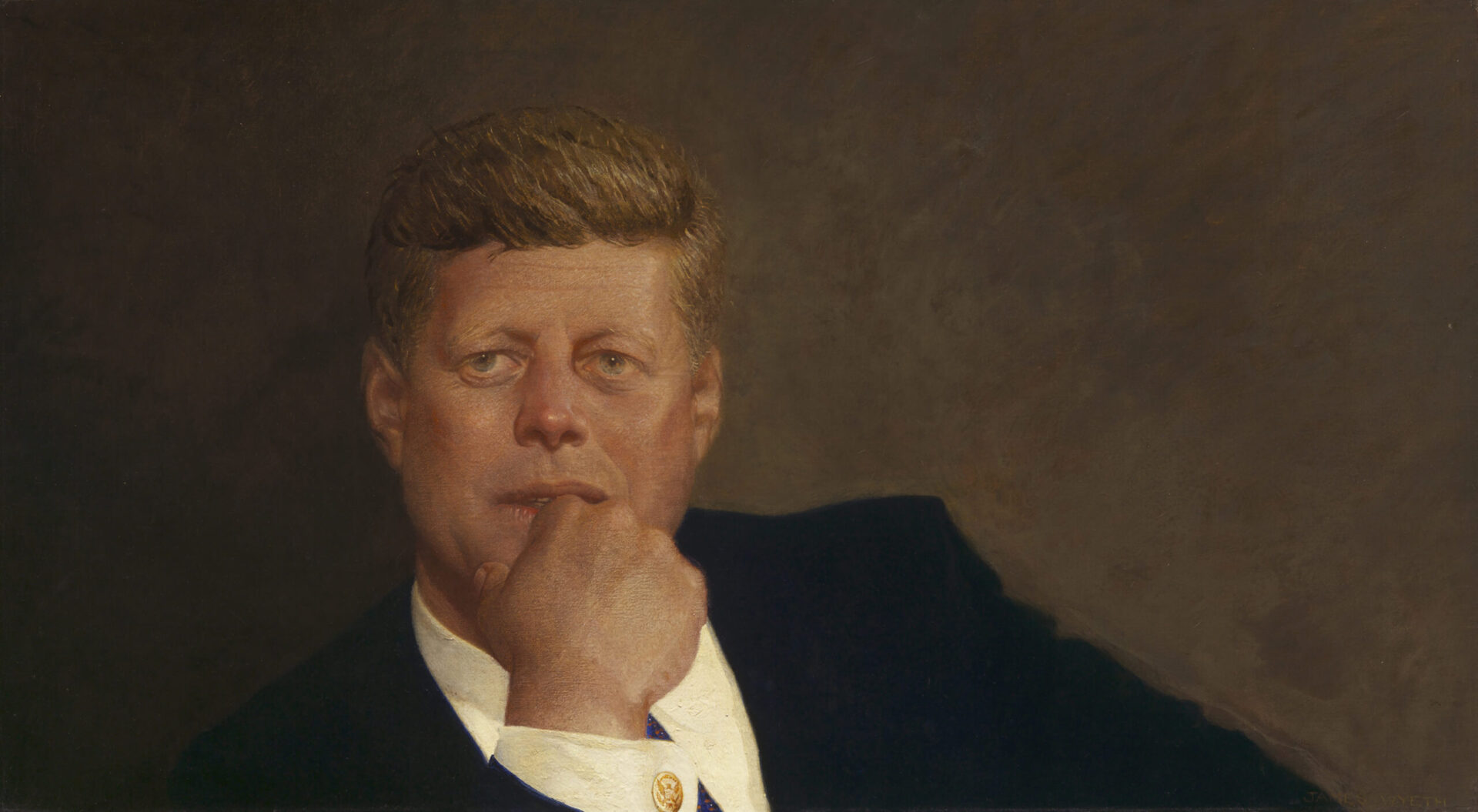
Monika Wiesak is the author of America’s Last President: What the World Lost When It Lost John F. Kennedy . In it, she explains in detail why the loss of JKF mattered far more than not only the likes of Chomsky claim, but even more than most of Kennedy’s admirers realize. She also dares to explore the possibility, following Michael Collins Piper, Laurent Guyenot, and Ron Unz, that Israel was the prime force behind the assassination. Check out her new Substack article on that increasingly hot topic…it’s very useful background information for those wondering why so many voices with huge audiences including Cenk Uyger and Tucker Carlson, Lawrence Wilkerson and Judge Napolitano, Wilkerson and Tucker Carlson, Marjorie Taylor Greene, Candace Owens, and most importantly former CIA officer John Kiriakou, who says that more than 10,000 JFK files have been illegally withheld because they reveal that Israel did it have been saying such things.
https://rumble.com/v79y16w-did-jfks-killers-ruin-the-world-monika-weisak-speaks-out.html
Transcript
Kevin Barrett: Welcome to Truth Jihad Audio Visual. I’m Kevin Barrett, doing the radio show for years and now some video too. I try to bring on important authors and writers to translate the written word into some spoken dialogue. We have a very important author today, Monika Weisak. She’s written some great books on a number of topics, probably none more important than America’s Last President: What the World Lost When It Lost John F. Kennedy. So…hello Monika, how are you?
Monika Wiesak:
I’m good. Thank you very much for having me on today.
Kevin Barrett: It’s great to have you and meet you. I admire your work. Here is your book on JFK, America’s Last President: What the World Lost When It Lost John F. Kennedy. And I think it’s an important book because the only thing remotely close to it that I know of anyway is the James Douglass book JFK and the Unspeakable, which is primarily about the assassination, but it touches on the reasons for the assassination, which were essentially that John F. Kennedy was standing up for the public interest against a long list of people who didn’t have the public interest in mind at all. But your book focuses on that and not so much on the assassination, and I think it’s a great contribution, so congratulations.
Monika Wiesak: Thank you.
Kevin Barrett: The last chapters on the assassination kind of hint—actually, you could go from that last chapter to the Douglass book, and it would be a pretty good segue, wouldn’t it?
Monika Wiesak: Yeah, what I wanted to do is, I felt like nobody had really answered the question. The subtitle of the book is What the World Lost When It Lost John F. Kennedy. And I felt like no book had really properly answered that question because the first question to ask about any massive historical assassination is what changed, or what did we lose, or why does it matter? And I felt like a lot of the books were focusing on the technicalities of the assassination or were theorizing about what might have happened.
Kevin Barrett: That’s a great point. And that’s actually something that doesn’t come out nearly as forcefully in the Douglass book. It’s kind of implicit, right?And it’s quite shocking, really, how radically different the world might have been had the Kennedy program succeeded. And how do we even start to think about something that massive?
Monika Wiesak: Yes. It’s sort of why I put it together, because it was so much more than I imagined. Before I studied his presidency, what I’d kind of heard rumblings of was, oh, maybe Vietnam or things of that nature, but it’s really the whole world. It’s Africa, it’s the Congo, it’s Latin America, it’s Indonesia, it’s Laos and Vietnam, it’s the Middle East, it’s Palestine. All of these policies changed drastically upon his assassination.
Kennedy was very much in support of Third World nationalism. He gave a lot of foreign aid to Africa, to Latin America. I think foreign aid to Africa increased something like fivefold. He did the Alliance for Progress for Latin America, which was to help those countries become independent and help make them not so reliant on just a primary export, but really to develop their own economies.
I think he just viewed the world as sort of… We were catering to the ultra-wealthy in the United States, as we do today, rather than the lives of your average American.
Kevin Barrett: Right. That quality of Kennedy’s, that he actually had compassion for ordinary people and wanted to set policies that served their interests, really shines through in your book. And that includes both Americans and people outside of the U.S. And I think a lot of people have missed much, if not all, of this. I know for many years I’d read people like Noam Chomsky, who is anti-Kennedy and basically tries to claim that anybody who cares about that assassination is completely misguided and Kennedy was ruthless.
So to what do you attribute that kind of second assassination of Kennedy that came from many different quarters, including from the left, from Chomsky? What was behind that?
Monika Wiesak: Yeah, it’s got to be because they don’t want people to care, right? If you want to cover up a coup d’état that occurred, one of the easiest ways to cover it up—there’s two ways to cover it up, right? One is to cover up the crime itself, which they did with the Warren Commission and whatnot. But they didn’t do a great job of it because it’s a difficult crime to physically cover up.
So the other way to cover it up is to make people not care. And in some ways that’s a more effective way.
Like Chomsky said, “Who cares who killed JFK? Who cares if it was a jealous husband?” Implying it doesn’t even matter if it was a conspiracy. It doesn’t even matter if it wasn’t Oswald because Kennedy meant nothing to this world.
Kevin Barrett: Was he alluding to Cord Meyer and Kennedy’s relationship?
Monika Wiesak: I don’t know what he was alluding to, but I think what he was alluding to was that it doesn’t matter. It doesn’t matter if Oswald did it or not because nothing changed when Kennedy died, I think is what Chomsky’s argument is. And you have to really question Chomsky because it’s very obvious that a massive amount did change. One just needs to look at the historical record to see that. So one has to wonder what Chomsky’s intentions were in downplaying it.
And I think his intentions were to make people not care. He said that bluntly: why should anyone care?
And so I think it’s because something like the assassination of a president is something that can really mobilize people. There are a lot of atrocities happening around the world, and it’s a horrible thing to say, but it’s difficult to get Americans to really understand those atrocities or really put in the effort to try to correct them because they don’t really grasp them. They’re so distant from Americans’ everyday lives.
But the murder of America’s president—people understand that. People grasp that. People are impacted by that. So that’s something that could actually mobilize the public.
Kevin Barrett: Chomsky also said at one point—and I think when people pressed him on JFK and made some of the points you just made—he switched tacks and said that it would be sort of fatal for the left, meaning his people, to try to take on the people who had the power to kill a president. They would be far too powerful to take on. It would be suicide to try to take them on. He actually said that, which struck me as bizarre.
Monika Wiesak:
Yeah, that is bizarre, because if enough people speak about it, there’s nothing that can be done about it. You can’t stop the truth if enough people speak on it. Chomsky had a pretty large following, so he absolutely could have mobilized people to try to do something about the Kennedy assassination if he wanted to.
Kevin Barrett:
Or 9/11, for that matter.
Monika Wiesak:
Yeah, or any major crime. I think he could have mobilized people, but he chose not to, and I think that makes his career look highly problematic.
Kevin Barrett:
Yeah, I agree completely. So getting back to this situation that Kennedy faced, it was kind of an interesting historical moment, wasn’t it, with the Cold War taking on a whole new dimension as the USSR was just bringing online a really serious nuclear weapons force that could challenge the American force and actually would match and challenge it within a decade.
Kennedy takes over just in time to start overseeing that. And he is really pretty much the only U.S. president, one of very few global leaders in the West, that’s sympathetic to these movements that shook off European domination. Those two things by themselves already, even setting aside the economy and the economic issues and the civil rights issues and so on and so forth, this was really a world historical moment, wasn’t it?
Monika Wiesak:
Oh, absolutely. And I think there were two major things happening at that time.
One was there was a real risk of World War III. There were many in the U.S. military who were itching for war with the Soviets, who thought now is the time to get rid of the Soviets. We have to do it before 1963, before their weapons become too sophisticated. If we do it now, like you said, we might only lose 20 million. If we wait a few years…
And at the same time, all of these countries in Africa particularly, but all around the world, had just recently become independent. When Eisenhower was president, he had on average one African leader a year come to the White House. During Kennedy’s 36 months, he had on average one African leader or head of state a month come to the White House.
Kevin Barrett:
I didn’t know that until I read your book. That’s fascinating.
Monika Wiesak:
Yeah. So pretty much every month he’d have some head of state from Africa come to the United States to visit. It wasn’t just that he gave them a lot of aid, but he formed very friendly relations with them. He rolled out the red carpet for them.
When Algeria went independent, he had this huge event at the White House. It was just this spectacular event for them. And you can’t imagine that happening today in the U.S., all these countries being celebrated.
He pushed Portugal hard to try to give Angola independence during his presidency. And he was very supportive of these countries staying unaligned. Back then there was something called the Non-Aligned Movement. That was countries that didn’t want to align with the United States or with the Soviets, but just kind of wanted to be independent and make their own decisions. And Kennedy was very supportive of the Non-Aligned Movement, which was led by Sukarno, the president of Indonesia. They had a conference in Belgrade while he was president, and Kennedy was very supportive of that.
So he was not into America being the dominant power. He was into America having friendly relations with all these other independent nations, and he felt that was best for the stability of the world and that was best for Americans.
It wasn’t to the benefit of the average American for the U.S. to be an imperial power. It wasn’t to the benefit of the average American for the U.S. to get caught up in wars or to be dominated by a few oligarchs. It was best for the average American to live in a peaceful, cooperative world with other countries. That’s sort of how Kennedy viewed the world.
Kevin Barrett:
Flynn and Hillary Leverett wrote Going to Tehran, arguing for a sort of JFK-style policy towards Iran. In other words, we don’t have to be totally hostile and constantly sponsor terrorism against them, trying to overthrow their government. We can disagree with them on certain things, but also have a productive relationship, trade with them. We’ll get more influence that way.
But those people never seem to win ever since Kennedy was killed. And you have to think there’s kind of a direct link there.
Monika Wiesak:
Oh, absolutely. Kennedy actually visited Iran in 1951. It wasn’t in my book, but he went in 1951. Then he went on these TV shows afterwards, and he wrote in his diary that the U.S. should work with Mossadegh, that the British were being really unfair, and that the British were exploiting the Iranian people, and that America needed to work with Mossadegh and with the people in Iran. So his view is very opposite to what happened later, which was the coup in 1953 that installed the Shah.
Even back then, as a young congressman—he wasn’t even senator yet—he was already going on TV and talking about the importance of supporting local populations and supporting their desires. He just viewed the world in a very different way, and I think he would be absolutely horrified at what’s happening in the Middle East today.
And he predicted it, right? Because if you look at his letters and his memos and his meetings, one quote he said in his meetings—which wasn’t in my book—is that he wanted the Nuclear Test Ban Treaty, or one of the most important reasons to get the Nuclear Test Ban Treaty, was to stop countries like Israel and Egypt from getting nukes. And he’s like, if they get nukes, we’re going to be, quote unquote, “in a bitch of a scenario.”
So that’s where we are. That’s exactly where we are 60 years later. I think he would be horrified, but I don’t think he’d be surprised because he felt like this is where it would lead if something wasn’t done to keep the nuclear genie in the bottle, so to speak.
Kevin Barrett: Indeed, yeah. And I think he would probably be one of the few mainstream American politicians to very strongly condemn the genocide of Gaza as well. That’s something that you can’t imagine Kennedy presiding over: the United States supporting Israel flattening Gaza and killing tens of thousands of women and children that way.
Monika Wiesak: No, because when he was president, he supported Palestinian right of return. Now, he tried to do it in a very fair way in terms of it wasn’t just “everybody go back,” but everybody gets the choice to go back. So he supported the Joseph Johnson plan through the UN, where the idea was that every refugee would get the choice to go back, the choice to be compensated, or the choice to move to another nation.
And it was sort of in favor of compensation. Because it was sort of in favor of compensation, they estimated maybe 10% of refugees would choose to go back. But they felt that was a fair way where everyone would get a choice, where it wouldn’t flood Israel with refugees at the same time.
But obviously the Joseph Johnson plan ended up falling apart. Israel was very opposed to it. A lot of the Arab nations were opposed to it because they thought it was unfair.
Kevin Barrett: And there are many people today arguing that the driving force behind the assassination was probably Israel and its friends in the American establishment, especially the CIA and especially a certain James Jesus Angleton. That debate is still ongoing, but I think the people arguing that the Israeli factor was probably bigger than the Vietnam factor are picking up steam. And to the extent that that’s the case, that certainly would reinforce what you said: that the Middle East would be radically different today if he had lived.
Monika Wiesak:
Oh, absolutely. I think it’s by far the greatest long-term impact and the greatest short-term impact. And that’s kind of why I put out a Substack article a week or two ago to show the timeline of Kennedy’s policies toward Israel and a timeline of the assassination so people can see how closely those two timelines line up.
Kennedy had started some cursory inspections of Dimona in September 1962, but Israel concocted this elaborate ruse to fool inspectors. Kennedy then spoke with Golda Meir on December 27, 1962, and he said, “I want much more thorough and frequent access to Dimona.”
So really that whole spring into the summer, into June, Israel kept delaying JFK. They kept coming up with excuse after excuse as to why they couldn’t do inspections. Finally JFK got fed up in the middle of May. He even considered leaking Ben-Gurion’s refusal to the papers.
But then Ben-Gurion responded and said, “We can do inspections at the end of the year.” And Kennedy responded and said, “No, the end of the year is not acceptable. I want inspections this summer.” And the next day Ben-Gurion resigned.
So to me, it looks like Ben-Gurion’s plan was to stay and delay Kennedy to the end of the year. When Kennedy wasn’t going for that, he had no choice but to resign, as that was the only way left to delay Kennedy. And of course when he resigned, a new administration came into place and they immediately contacted the State Department. They were still writing letters to the U.S. saying, “Don’t worry, these French rumors are false. You’re going to get your inspections before the reactor goes critical.”
And of course Kennedy gets assassinated. The reactor goes critical in early January, and no inspections ever happen before it goes critical. There were some inspections Lyndon Johnson did after it went critical, but they’re not at all the inspections that Kennedy wanted.
And I think it’s a fair question to ask: because there were also memos speculating where are they getting their uranium from, because they were trying to figure out where they were getting their materials from. So there’s an argument to be made that if those inspections happened, maybe they would have figured out that the uranium came from NUMEC in Pennsylvania. And that could have potentially, at the very least for negligence if for nothing else, implicated Angleton.
So I think Angleton had a personal motive to make sure Kennedy doesn’t find out what’s going on at Dimona, where this uranium was coming from, because that has personal impact on him, forget the geopolitical impact. So I think in the immediate term they tremendously benefited from the assassination because whatever was going on there was never uncovered. And if Kennedy had determined that there was some illegal activity going on, he would have gone after that. There’s no doubt. And with Bobby Kennedy as attorney general, there could have been a lot of people in a lot of trouble potentially. But then also in the long term, because they still have the bomb today, and the reason that they’re able to do what they did in Gaza these last few years, I think a big part of the reason is because they have nukes. And when you have nukes, you can get away with a lot more than you would have been able to get away with if you didn’t have nukes.
So they’re still benefiting from that crime every single day of every year for the last 60-plus years. And they’ll still be benefiting from it probably 100 years from now, 200 years from now, 300 years from now. As long as they have nuclear weapons, they’ll be benefiting from the Kennedy assassination. Because I think there’s a good chance that JFK would have not just shut down their nuclear program in that moment, but if he had caught them funneling materials from the U.S. and whatnot, he might have permanently shut down their nuclear program and it was never getting off the ground again.
And so I think people really have to look at the long-term ramifications. Because when you look at something like Vietnam, yes, it was absolutely horrific. Yes, it would not have happened had Kennedy stayed president. But it’s not happening today. So that was more of a short-term benefit of the assassination.
And the other thing is, if you look at the timelines, that assassination planning seems to have activity going on that’s setting up the assassination starting in the spring of ‘63. Kennedy didn’t sign that NSAM to withdraw the first advisors until October ‘63, but the assassination planning is far along by then. So I don’t think signing that NSAM to withdraw the advisors had any impact on the assassination. Again, we’ve already had movements in like March and April that seems to be setting this assassination in motion. So to me, like I’m looking at what was happening in late 1962, early 1963 to set this thing in motion. And that’s sort of what I wanted to emphasize with my timeline is, at least for me, a lot of people view it as Kennedy was just too problematic of a president. You know, he—there’s—it’s just he was going to get assassinated because, to your point, Kevin, he was making too many power segments angry. And I think that’s why they were able to get away with it, whoever did it, because nobody cared for Kennedy. They were all like, “Thank God he’s gone,” I think was the general kind of sense.
Kevin Barrett: There was supposedly applause that broke out in the CIA station in South Korea when the news of his assassination broke, which is really kind of astounding and disgusting.
Monika Wiesak: Yeah. So I think there were many, many power sectors that were relieved to see him gone. I don’t want to use the word simplistic, but it’s almost like when you mesh together a bunch of motives that you’re not really thinking about timelines and you’re not really thinking about when did this start, what could have triggered it. Whereas for me, timelines are really important, and I think it’s important to look at those policies that did change during that time period that were crucial in November 1963 that couldn’t wait till re-election because Kennedy was about to go into a re-election year.
I mentioned in my article that Goldwater was a bigger hawk on Vietnam than LBJ. So if I’m someone that wants the Vietnam War, why not just sabotage his reelection campaign? And I don’t know—again, I don’t know who was behind the assassination. I can’t say anything for certain, but I think people need to take into account: who wanted LBJ in power, who couldn’t wait until Goldwater, how do these timelines line up? And these are all really important questions.
And I think we need to get into those details rather than just saying everyone in power hated Kennedy, because then we’ll never get to the bottom of it. Because then it just stays as this vague thing, he killed by this vague entity, rather than, no, he was killed by people with names and faces. And I think we need to figure out who those names and faces were.
Kevin Barrett: Right. I recently learned that Edward J. Epstein had created a shadow 9/11 commission after 9/11 and invited Ghislaine Maxwell to join it. And that raised all kinds of alarm bells for me because way back in the day, when I started looking at this, back in the 1970s, when Edward J. Epstein was publishing JFK assassination stuff, including—what was that book of his on Oswald?
Monika Wiesak: Legend.
Kevin Barrett: It’s called Legend: The Secret World of Lee Harvey Oswald. And in that book, apparently his main source was Angleton, who now everybody suspects is the CIA guy that the Israelis went through to kill Kennedy. Epstein was involved in the suspected Mossad assassination of George De Mohrenschildt to prevent him from testifying at the House Investigations Committee. So the fact that this very suspicious character who seems to be involved in covering up the JFK assassination for Angleton and the Israelis, namely Edward J. Epstein, was inviting Ghislaine Maxwell onto a shadow 9/11 commission, whatever that was—you know, it made me wonder whether there was like a shadow JFK commission too that Epstein had been on—namely people on the inside who are trying to prevent the truth from coming out. And that the same Epstein somehow wound up on the same thing for 9/11, which frankly I think was probably perpetrated by the same people who killed JFK. So that’s a lot of stuff to throw at you, but there it is.
Monika Wiesak: Yeah, so I know Epstein wrote a book. I didn’t read his book, but it questioned the official narrative in terms of Oswald being the lone gunman. And I think it questioned the official narrative, so he was considered a skeptic or a Warren Commission critic. But then he used Angleton as his source for the article.
And so, you know—and then everybody—I don’t think there’s very much—there’s no doubt that Angleton controlled Oswald’s files. I think everyone’s in agreement in that. I think everyone who studies the assassination views Angleton as a suspicious character. I think he’s the one person that everyone agrees on. Whoever people think the prime culprit was, they all tend to agree that Angleton was central to this thing because he controlled Oswald’s files. He was sort of the architect of the Oswald legend or whatnot, or at least one of the architects.
So I think everyone suspects Angleton regardless of their view of the assassination. And the fact that then Epstein used Angleton as a source for his book does make you wonder: was this to drive skeptics in a certain direction? Was this to mislead skeptics and get them spending time on something they shouldn’t be spending time on or looking into things they shouldn’t be looking into rather than focusing on other things?
And I do think in a lot of ways not enough focus is given on Kennedy’s policies. And that’s another reason when I wrote America’s Last President and why I didn’t want to even touch on the assassination, because I feel like people feel they can solve the crime by studying Dealey Plaza, and it doesn’t work that way. You have to first really understand the intricacies of Kennedy’s policies and the timings of his policies and when everything was happening.
Because sort of what happened to me is that I had read Douglass’s book, JFK and the Unspeakable. And the conclusions in the book made no sense to me at all because it was sort of like: “We want war, we want war, we kill this man, we control the autopsy. If we want, we can say there were multiple shooters—the easiest excuse in the world to say that the Cubans did it. But no, instead we push this lone nut theory. And we do it all because LBJ said so.”
So you’re going to kill one president and then just listen to the next who tells you he’s not going to give you what you want? It just made no sense to me—that conclusion of that book made no sense to me. And so I was like, I don’t know what happened, but I know this didn’t happen, like not the way—or at least this hypothesis can’t be correct.
I went to study Kennedy’s presidency, and then the other thing I realized right away was, well, wait a minute, this whole story or thesis that he changed is not accurate either. Because I can see here based in the 1940s, 1950s, he’s an anti-colonialist, he’s pro-peace. In his very first State of the Union, he’s talking about we should explore space with the Soviets. This wasn’t in 1963—he’s saying this in January 1961.
So I’m realizing, wait, that’s not right either. And so that’s what made me think this can only be solved if people really, really study his policies, really understand them, because his policies were incredibly consistent. He was always pro-peace. He was always anti-colonialism. He was never working for the oligarchs. He didn’t go through this massive transformation during his presidency.
I mean, obviously the Cuban Missile Crisis impacted him as a human being. How could it not? So I’m not trying to underscore the fact that he wasn’t emotionally impacted by that event, because I think he was. But his views didn’t change. It maybe reinforced the views he already had.
So I just feel like we really need to focus on Kennedy’s policies, on the timelines of those policies, and also what was immediately urgent, what was long-term urgent, and things like that, and not oversimplify it because I feel people oversimplify it too much as “Kennedy was a good guy, he was working for the people, so he got killed.” And while I agree that that’s true, it keeps you from really studying the assassination in any depth because you oversimplify it.
You oversimplify it when you say, “Oh, the military-industrial complex hated JFK.” But JFK increased military spending. So why is some war profiteer or military contractor going to kill someone who’s increasing their profits? As a percentage of GDP, military spending back then was much higher than it is today.
Kevin Barrett: Until Trump’s increase kicks in.
Monika Wiesak: Yeah. Yes, I should say that. Yeah. But it stayed stable between JFK and LBJ. And the reason Kennedy was a big military spender is not because he wanted to go to war, but he wanted to diversify the defense establishment. So he was horrified—absolutely horrified—by the fact that his military were like, “Well, if we get into any little scuffle with the Soviets, just drop your nukes.” And that to him was absolutely horrifying. He’s like, “I don’t want my first response to a small scuffle to be to drop a nuke. So I want to build a really diversified military, you know, where I’ve got lots of options.” And at that time there was also a real risk of war with the Soviets. I mean, war was a very real possibility at that time. And that’s another reason he wanted a strong military: He felt that that would discourage the Soviets from being aggressive…so that the Soviets feel like, “You know what? It’s not worth being in this arms race with the US. We should just agree to some sort of disarmament, and that’s going to be best for both parties.” And that was Kennedy’s view.
And if you listen to his meetings or in phone calls, he says himself, “The only reason I was able to get a nuclear test ban ratified is because I had increased military spending, because the Senate would have never, ever ratified my treaty if I hadn’t increased military spending.”
And so people get so confused about JFK, and it’s easy to say, “Oh, he changed.” But he didn’t change. He always was a big military spender because he wanted to diversify the defense establishment, because he wanted to avoid war, and because he wanted to negotiate true multilateral nuclear disarmament. And he felt the only way to do that is to have a strong negotiating position.
And so I think there’s a lot of misunderstandings about what Kennedy’s goals were and what he was doing. But I didn’t see any change. That’s just from studying Kennedy’s presidency.
Kevin Barrett: I suspected that he may have changed in a certain way based on the Bay of Pigs experience when he first came into office and he was greeted with this disaster in the making when they lied to him and told him, “Oh, just send this handful of CIA-backed Cuban exiles into Cuba and the people will rise up and overthrow the government. Everybody will live happily ever after.” And that was a total lie. The CIA knew that this was just a trick to get it going so then they would send in the military.
I think that did maybe change him a bit in terms of waking him up to some of the realities of power, and how some of his naive assumptions that these people had good intentions back when he was a so-called 50s Cold Warrior were not true. So I think that was a change to some extent, wasn’t it?
Monika Wiesak: Yes. No, that’s an excellent point. When I say he didn’t change, I meant his ideals or his goals. But I think he absolutely became smarter. And so I think what you said is very crucial and very important and very accurate, is that he did learn from the Bay of Pigs. He learned not to trust his advisors. He learned how manipulative the national security state can be and how he was manipulated into this event.
And he blamed himself for it. He took responsibility. He didn’t blame anyone else for it. So he absolutely grew. He absolutely became smarter, became more savvy. So when I say he didn’t change, I don’t want to make it sound like he didn’t improve because he did grow and he did improve and he did become more savvy. It was more his ideals, his overall world vision, that didn’t change, if that makes sense.
Kevin Barrett: Exactly. He didn’t suddenly go from being a Cold Warrior to a hippie peacenik because he took LSD.
Monika Wiesak: Yeah.
Kevin Barrett: But yeah, so there’s an interesting possible parallel here between Kennedy and the Bay of Pigs and then Trump in this attack on Iran—although in a sense they’re total opposite characters—because in both cases the presidents were lied into a ridiculous doomed attack. Kennedy was told that the Cuban people would support these exiles, and Trump was told the Iranian people will just love it if we murder their leaders and blow up their schoolgirls.
So you think that that parallel—the scary thing about that parallel to me, Monika, is that the CIA, when they lied to Kennedy, what did they think would happen? Well, they were planning to invade and take over Cuba.
How about the Israelis? What did they really think would happen? Were they really stupid enough to believe that this so-called decapitation attack would somehow regime-change Iran into being pro-Israel and pro-America? Or another puppet government would somehow be acceptable to the Iranians? I can’t believe that they’re that stupid.
So I’m concerned that just as the CIA wanted the Bay of Pigs provocation to trigger a full-scale invasion, Israel knew the first phase would fail and wanted something much bigger that they hoped would follow.
Monika Wiesak: And they figured as soon as it failed, Kennedy being a new president would get scared of this big failure and would send in the military to fix it, right? That was their hope. Their hope was to con JFK into sending the military into Cuba.
And of course JFK didn’t fall for the—well, he fell for part of the con, although I guess in his defense, you know, this was all set up before his presidency and he didn’t know what to do with those exiles because those exiles had to leave. I think they were in Guatemala. You know, they couldn’t stay there. They would either have to come to the US and be angry and frustrated because they were already promised to return to the island. So he had to do something. Like doing nothing was not an option for Kennedy.
But nevertheless, I think he wouldn’t have done that if he knew that that’s how it was going to go. And so he did get conned, you know, JFK. And I think the other thing is all of his advisors were telling him to do it.
Kevin Barrett: With Trump, Hegseth was the only one who was really on board and the rest were all sort of, you know, “Well, that sounds a little dubious.” Or, you know, Vance supposedly was the only one who said it’s really not a good idea, but even he didn’t say it’s really not a good idea as he should have.
Yeah, so I think there’s definitely parallels, but there’s some differences between the two situations as well…how about Trump being an anti-JFK?
Monika Wiesak: Oh, absolutely. Because JFK, like even though everyone told him to do it, he was like, “It’s my fault. It’s 100% my fault. Like, you know, I’m the president. I should have made a better decision. I should have analyzed this better. I should have pushed back against my advisors. It’s not the advisors’ job to govern this country. It’s my job. So hence, it’s my fault.”
You know, like he said, “Victory has 100 fathers and defeat is an orphan.” And he’s like, “Well, you know, I have to take full responsibility for this.”
I don’t think Trump would ever admit to any mistake in his life. You know what I mean? He’s always bragging about how great he is, how wonderful he is, how he’s the most amazing president and the most amazing leader.
Kevin Barrett: He knows more about anything than everybody.
Monika Wiesak: Yeah. So I don’t think he’ll ever admit to a mistake. I don’t think he’ll ever admit that he was conned. I think he’s always going to try to make it sound rosy and as though everything is going according to how he planned. So they’re very, very different character-wise, JFK and Trump.
Kevin Barrett: And what does it say about the American people, that the American people actually appreciated Kennedy taking the blame for the Bay of Pigs and his poll ratings went up in the aftermath of that, which really pissed off people like Allen Dulles and the CIA guys, especially when Kennedy then fired them. So the American people were actually kind of appreciating Kennedy’s style at that time.
Monika Wiesak: Oh, absolutely. Because we just had real leadership back then. We had someone who cared about people, who cared about doing a good job, who was very committed to his job, who was very hardworking, who had great character, and who was very honest. And the other thing that I sort of put a chapter in America’s Last President about it is when Kennedy was president, 80% of the public trusted the government. Today, about 20% of the public trust the government.
Kevin Barrett: Indeed. Can you imagine it turning around? Is there any possibility that somebody with a kind of JFK approach would have any traction in today’s world?
Monika Wiesak: I think it would be extremely, extremely difficult. I think one of the reasons Kennedy was able to slip through is because he came from a very wealthy family. So he campaigned for years even before he officially announced he was running for president. He would fly every weekend with Ted Sorensen often to all these small towns across America for the couple years before he announced he was running for the presidency. He was unofficially campaigning for a long time in a very grassroots way. He had the money to do that. He had the money to travel, to visit people.
And I think because he was so wealthy, he was not as dependent on other donors. He didn’t feel as beholden to these big money donors as maybe other politicians feel beholden to them and dependent upon them. And he also had a lot of unique life experiences because he suffered a lot during his life. He had horrible back pain. He almost died multiple times in his life. He was very sickly at times in his life. You know, as I said, his life was saved by indigenous islanders.
So he had this very unique experience where he understood struggle and pain, but yet he came from this ultra-wealthy family. And so it was kind of like lightning in a bottle, so to speak. And I think sort of these things allowed him to kind of sneak through.
And television was just becoming a thing then. And he was, I think, very TV-savvy. And, you know, I think he gave a very good appearance. And so I think that helped him a lot with TV being a new medium at that time.
So I think today would be extremely difficult. It would have to be someone wealthy. I don’t think someone without a lot of wealth would stand a chance because it costs so much money to run. And so you need someone who’s financially independent enough to do it and who’s willing to put their money on the line, so to speak, and who’s willing to do it over the long term like Kennedy campaigned over years.
Because you’re not getting necessarily the media support, so you have to do it yourself, which with social media today, you know, it might be easier for someone to get out there and reach a large audience.
And so I think it’s possible, but unfortunately I think it would have to be someone very wealthy who kind of, for whatever reasons, disagreed with parts of the establishment and sort of, you know, get in there.
But then the problem becomes what’s going to prevent that person from being assassinated? You know, if it happened in 1963, what’s to say it can’t happen again? And I think that’s why it’s really important to have a truth and reconciliation about Kennedy, not only because America has to heal from what happened—and I don’t think America can heal until the truth about that assassination comes out.
Kevin Barrett: Indeed. And if that does happen, and if the truth ever comes out, and it does turn out the way we suspect it might, which is with a major role for the state of Israel, political consequences of that would be pretty powerful, wouldn’t it?
Monika Wiesak: Yes. No, absolutely. I mean, I think like whatever the truth is, I know it’s not going to be pretty, but it has to come out. You can’t heal until you have the truth. You have to start with that regardless of how ugly it is.
Kevin Barrett: I agree. And I think maybe the truth could clear the space for the possibility of these kinds of public-spirited idealists getting back into politics and displacing the increasingly unfortunate cretins that we’ve had over most of my lifetime.
Well, thank you, Monika Wiesak Wazick. It’s been a good hour of conversation. I appreciate your great work. I look forward to talking with you again about a couple of your other books as well.
Monika Wiesak: Thank you.
Kevin Barrett: Okay, thank you. And where can people find your book?
Monika Wiesak: Oh, they can buy it on Amazon, ThriftBooks, Barnes & Noble. There’s also an audio version. I self-recorded the audio, so it’s not professional. But if you can handle my voice, you can check that out as well.
Kevin Barrett: Oh, cool.
Monika Wiesak: And yeah, so you can find it at all the major outlets.
Kevin Barrett: Okay. America’s Last President: What the World Lost When It Lost John F. Kennedy. Highly recommended. Thank you, Monika Wiesak. God bless.
Monika Wiesak: See you down the road, inshallah.
Kevin Barrett: Thank you. Bye.
https://www.unz.com/kbarrett/did-jfks-killers-ruin-the-world