
Does Europe Seek War With Russia for Financial Reasons?
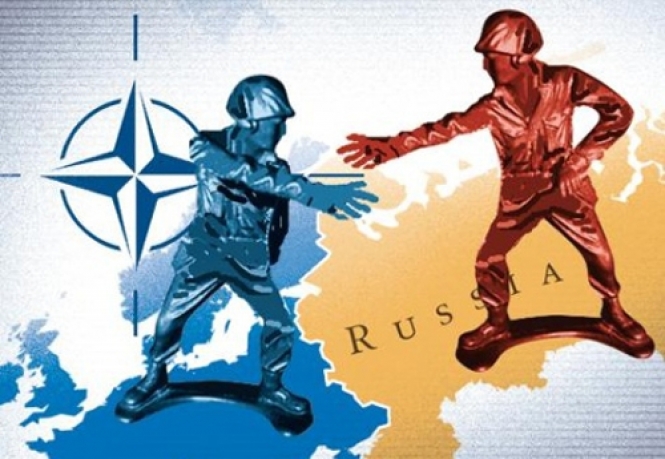
The moral and ideological reasons offered for war cloak the underlying financial incentive for gaining control of Ukrainian and Russian assets.
If we’ve learned anything about the so-called “leaders” of Europe in recent years, they are consummate virtue signalers, and like all virtue signalers, they do it to cloak their true motives. The entire architecture of the E.U. and its member nations ensures that the governments remain steadfastly unaccountable to the people they are supposed to represent.
Europe’s leaders present themselves as being chiefly concerned with the moral and ideological dimensions of politics. Rarely if ever do they speak about the E.U.’s precarious financial state.
As John Cochrane at the Hoover Institute recently characterized it:
The 2010 sovereign debt crisis was the earthquake. The ECB, feeling it was the only game in town, intervened on a large scale, including making large sovereign-bond purchases and lending to banks to fund their sovereign-bond purchases. Then-ECB president Mario Draghi famously pledged “whatever it takes.”
Eventually, an adjustment-program mechanism emerged, allowing support with conditionality and imposing some losses on some creditors. But this institutional reform later fell from grace, and has been crowded out by other ECB interventions starting in the early 2020s. Self-imposed rules on bond purchases weakened with each new intervention.
Bond buying in the quantitative-easing era further enlarged the ECB’s sovereign bond holdings, and surged during and after the COVID-19 pandemic. The ECB introduced “flexibility” in purchases to keep sovereign spreads from rising. Inflation climbed sharply starting in 2021 while the ECB continued bond purchases and kept rates low. That surge undermined confidence that the bank could and would control inflation, making any future crisis more unstable.
So here we are. Europe is in a fragile state. Overregulation and bureaucracy stifle innovation and growth. Member states’ debts have risen dramatically. The ECB holds large portfolios of sovereign bonds, and is widely expected to buy more anytime yields or spreads threaten to rise. Banks remain stuffed with sovereign debt, so any sovereign crisis becomes a bank crisis.
The next crisis will challenge European sovereign debts. That crisis may be bigger than even the ECB can handle without chaotic defaults, financial meltdown, or sharp inflation.
Increasingly I wonder if guys who run the ECB (European Central Bank) are far more nervous than they would ever admit to the European press.
The ECB is located in Frankfurt, Germany. The city’s once famous newspaper—the Frankfurter Allgemeine Zeitung—is now staffed by amazingly sophomoric columnists who rarely if ever question official policy about anything.

I suspect that if one examines Europe’s negotiations with Ukraine’s oligarchs in the matter of Ukraine’s planned accession to the E.U. and NATO, the proposed agreements contain provisions that would bolster—at least on paper—Europe’s precarious financial condition. Though most people don’t realize it, financial motives have been a major driver of wars for the last two hundred years.
I suspect that Europe’s passionate desire to maintain the proxy war in Ukraine is primarily driven by financial considerations—not for the citizens of Europe, but for the dreadful people who currently hold power and are determined not to relinquish it.
https://www.thefocalpoints.com/p/does-europe-seeks-war-with-russia