
Europe at the Dead End: Why the EU Can’t Stop a War It’s Already Losing
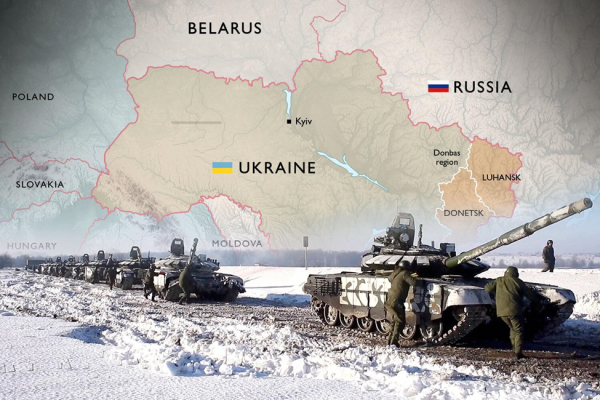
The continent that once built its identity on peace, reconstruction, and moral clarity has trapped itself in a war it does not know how to end.
Europe today stands at the most paradoxical point in its modern geopolitical history: it insists on fighting a war that cannot be won, sustaining a strategy that cannot succeed, in order to preserve a narrative, it can no longer afford to question. The Ukraine conflict—now in its grinding, irreversible phase—has exposed something deeper than strategic miscalculation. It has laid bare a continent caught in a web of psychological commitments, institutional rigidity, and ideological absolutism. Europe did not merely lose its moral compass; it replaced it with a set of doctrines it can no longer control.
This is not a story about Russia. It is a story about Europe itself.
I. The Narrative that Became a Cage
The war began as a moral crusade—framed by Brussels as a universal struggle between democracy and authoritarian aggression. It was quickly elevated beyond politics and beyond strategy into the realm of moral imperative. The moment European leaders told their populations that Ukraine was “defending European values,” they shut the door on any future compromise.
Wars justified in moral absolutes cannot end pragmatically.
Anything short of “victory” becomes betrayal.
Anything like negotiation becomes appeasement.
Anything resembling realism becomes immorality.
Europe built a narrative so rigid that reversing it now would collapse the moral foundation of its own leadership class.
II. An Institutional Machine Without a Reverse Gear
There is a structural tragedy in Brussels: the European Union is designed to accumulate commitments, not retreat from them.
Once the EU adopted sanctions, weapons deliveries, and strategic alignment with Washington, the bloc had no institutional mechanism to unwind them. No fail-safe. No dissent channel. No emergency exit. It is, in essence, a political supertanker with no rudder and no brakes.
Thus, the war continues not because Europe believes in victory, but because Europe cannot politically conceive of anything else.
The machinery cannot turn around.
The rhetoric cannot be unwound.
The leadership cannot admit error.
Even policy failure becomes policy justification.
III. The Transatlantic Shadow
The EU’s strategic DNA is transatlantic. Its political instincts are structured around a single fear: being abandoned by the United States. For Poland, the Baltics, and increasingly Scandinavia, the U.S. is not a partner—it is existential protection.
Ukraine therefore became a loyalty test.
The EU’s psychological dependence on Washington means that deviation from America’s position became unthinkable. And so, Europe marched behind the U.S. narrative, then found itself more committed to the war than Washington itself.
That is the moment the trap snapped shut.
IV. Historical Trauma as Policy Driver
There is a split inside Europe that no policy paper ever manages to articulate:
Western Europe’s anti-Russia stance is ideological, while Eastern Europe’s is existential.
For Germany and France, Russia is an adversary.
For Poland and the Baltics, Russia is a historical nightmare.
The emotional intensity of Eastern European elites—shaped by occupation, repression, and trauma—has overwhelmed Western European hesitation. Brussels has adopted the worldview of its most frightened members, not its most rational ones.
Result: Europe is acting out of inherited fears, not contemporary calculations.
V. The Sunk-Cost Empire
Europe has poured billions into the conflict, tied its political credibility to Ukrainian success, and constructed a sanctions regime that has ricocheted back into its own economy. At this point, the war has become a massive sunk-cost project.
Abandonment would mean:
- admitting strategic error
- exposing intelligence misjudgements
- confronting economic realities
- and acknowledging that the “rules-based order” did not hold
So instead, Europe continues doubling down.
The more the strategy fails, the more aggressively it must be defended.
The longer the stalemate lasts, the louder the rhetoric becomes.
This is no longer geopolitical strategy—it is reputational survival.
VI. Fear of Collapse
Behind the insistence on Ukrainian victory lies a deeper European fear: the collapse of EU authority itself.
A Ukrainian defeat would:
- shatter EU geopolitical credibility
- empower nationalist parties across the continent
- Delegitimise the Brussels foreign-policy establishment,
- and expose the EU’s inability to shape global outcomes
For the current elite class in Brussels, a Ukrainian defeat is not just a geopolitical failure—it is an existential political threat. Their entire legitimacy rests on the illusion of control and the promise of moral clarity.
If Ukraine falls, that illusion dies.
VII. The Moral Crisis at the Core
Europe today is not suffering from a lack of morality.
It is suffering from moral absolutism—a worldview that confuses moral intention with strategic outcome.
This is the root of the crisis.
Europe replaced:
- moral wisdom with moral posture,
- political judgment with ideological rigidity,
- pragmatism with performative virtue,
- realism with grand narratives of moral struggle.
Once the war became a “civilisational fight,” the space for diplomacy evaporated.
VIII. The Dead End
So, Europe fights on:
- not because Ukraine can win
- not because Europe believes it can turn the tide
- not because the battlefield justifies it
but because Europe lacks the courage, the flexibility, and the institutional design to admit the war is lost.
This is the true tragedy:
The continent that once built its identity on peace, reconstruction, and moral clarity has trapped itself in a war it does not know how to end.
Europe has not lost its values.
It has lost its ability to distinguish values from vanity.
https://leonvermeulen.substack.com/p/europe-at-the-dead-end-why-the-eu