
Exposing Black Privilege
A Cursory Outline of Racial Prostration in American Life.
Author’s note and disclaimer: as with all matters concerning race and intergroup conflict, this essay examines whites and blacks as a collective. As with almost any phenomenon under the sun, there are invariably outliers, exceptions to the rule. Although such outliers obviously exist, they do not negate overwhelming trends. Nor should they require constant mention in seemingly endless qualifying statements.
Readers are doubtlessly aware of the many insufferable harangues about so-called white privilege. That notion could not be more offensive to those whites alienated or even dispossessed by an increasingly dystopic society defined by increasing economic uncertainty as well as ever compounding social ills. Many suppositions of white privilege are an outright lie, a fantasy that all enjoy “undeserved benefits” and coast through life, as if this were the land of chocolate and sunshine, of gum drops and sweet kisses. Much of the rhetoric surrounding white privilege is not only non-sensical, but contradictory. Some of the rhetoric leaves the impression that, as part of white privilege,” most whites are well-to-do, trust fund baby sorts. Many advocates of this lie insist this is not the case, acknowledging there are poor or disadvantaged whites, and yet, in practically the same breath, carry on about matters such as inter-generational wealth, while also endorsing false analogies such as race metaphors where different people start at different starting points, with whites invariably starting closer to the finish line than blacks. Much has been written to dismantle the lie of white privilege, and so it will be dismissed summarily and out-of-hand. Not nearly enough, however, has been written about black privilege. Unlike its fabled counterpart that has been droned on about incessantly by leftist pigs and the assorted band of multi-culti mousketeers and racial agitators of varying hues of brown, there is much to corroborate both the existence and pervasiveness of black privilege. As circumstances worsen with ever worsening demographics, these and other related topics bound up in race will only become more pressing and urgent with the passing of time.
This examination of black privilege reveals three abstract tendencies, three general principles that characterize this pariah that so many are all too cognizant of, and yet so few to dare to mention except in hushed tones in places where voices are less likely to carry. A key, central characteristic defining black privilege is the taking of seemingly endless race-centered benefits on a chronic, inter-generational basis. This is compounded with the most extraordinary license, a sense of entitlement, on any number of things as explained further below. Finally, such license and entitlement is afforded to blacks on a unique standard conferred solely on the basis of being black.
One of the most immediate and striking features of black privilege is the twisted social norm whereby racially charged insults or words of disparagement are given special, unique status comparable to the otherwise dormant doctrine of “fighting words.” In all other scenarios, harsh offensive words do not dispense with the societal expectation and legal duty to refrain from physical violence. As the “fighting words” doctrine has become more and more a dead letter in all other contexts, this pertains to even the most offensive insults directed at a wife or girlfriend. If, however, a white person insults a black person, particularly with a racial insult or slur, more and more elements of modern society regard it as increasingly acceptable for the insulted individual to react with violence. In many ways it is even encouraged.
As most readers are well aware, a black defendant in Portland, Gary Edwards, was acquitted of second-degree assault, for what should have been attempted murder. He was acquitted in no small part because his victim uttered a racial epithet. A brief perusal of social media reveals any number of utterances not just by blacks but by some white liberals as well that the utterance of certain epithets or even insults excuse and even justify a violent reaction, even including violence that causes serious bodily injury or even death. This perverse social order is reminiscent of laws in Medieval Europe whereby nobility were conferred special legal protections and privileges in relation to the utterance of insults or other disparaging words by commoners. Given crime statistics and the unspeakable vulgarity and crassness that typifies much of so-called black “culture,” and given that those of white European ancestry are the legitimate heirs and benefactors both of the American polity and European civilization more broadly, blacks are the last racial demographic that should be afforded special status reminiscent of European nobility in the Medieval age. And yet that is precisely what American society has done in so many contexts.
Unique, special status is conferred on blackies in other ways as well. In relation to whites in particular, much of American society is governed by racial norms and mores that have arisen in the wake of The Civil Rights era and desegregation. Sometimes referred to as the post war consensus (even though much of it came about in the 60s), this ethos has rendered many sensible positions as socially anathema. Expressing opposition to race mixing and interracial marriages has become largely social unacceptable in mainstream society. So are most utterances expressing cognizance of white European identity or in-group preference for whites. Remarkably, these twisted social norms mandated by this perverse social order simply do not pertain to blacks in most instances.
To illustrate this, consider the recent incident concerning Emily DuBose Alderman, an alluring blonde and southern belle in South Carolina. Ms. Alderman posted a video in which she was in her bathroom wearing a bathrobe while expressing opposition to many of the inverted sexual mores that have come about in modern American society. She not only denounced homosexuality, but also denounced race mixing and more particularly media messages and social programming that advocate for race mixing. And rightly so. Unfortunately, her video soon became viral, drawing widespread condemnation. It is of note that unlike the incidents surrounding Shiloh Hendrix, Crystal Wilsey, or Sydney Claire Goins, Ms. Alderman never uttered any racial epithets, nor did she use any vulgar or demeaning language at all. She simply denounced race-mixing.
Despite incidents like those above, two of which rewarded these women for breaking social taboos, the Internet lynch mob came out in force, denouncing Alderman. They soon ascertained her identity, even contacting her employer. While it has not been confirmed that she was fired from her job, her profile on her employer’s website, or perhaps former employer, is no longer visible.
Note, however, that militant blacks, particularly black women, often denounce race mixing, invariably with no such adverse social sanctions or negative consequences. This reveals a bifurcated “moral” code that applies two, distinct standards based on race. Whites are subjected to a most exacting standard where any deviation from the post-war consensus can incur devastating consequences. Blacks, however, are largely excused from this exacting standard.
Black privilege reveals itself in other ways, again defined by a different set of moral and social standards than those applicable to whites. Until very recently, affirmative action was not only regarded as constitutional, but was embraced as official policy not just of the federal government but many state and local government as well. While the Supreme Court decision banning affirmative action policies in college admission practices is a positive development, the practical effect will be limited, particularly as the majority opinion even provided college admission boards a blueprint on how to get around the Supreme Court ruling:
[N]othing in this opinion should be construed as prohibiting universities from considering an applicant’s discussion of how race affected his or her life, be it through discrimination, inspiration, or otherwise.
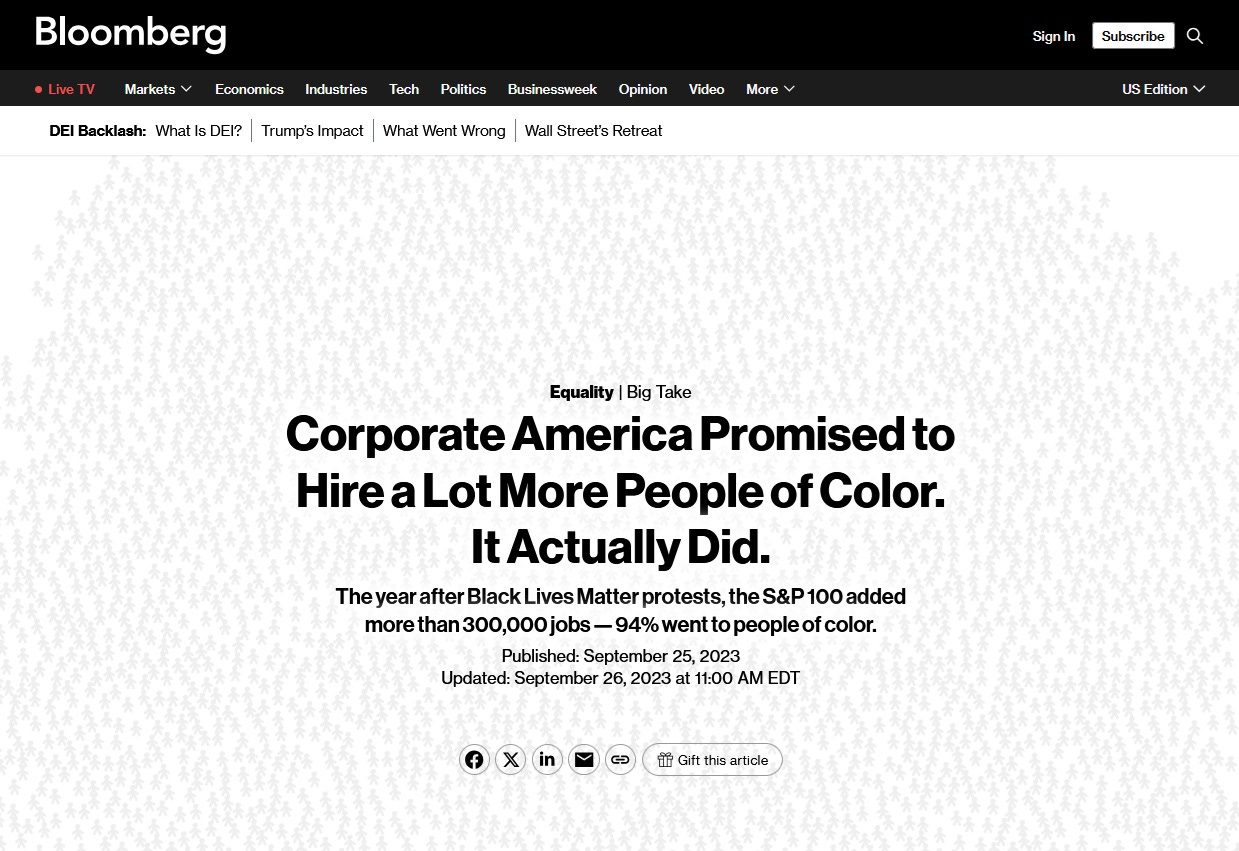
While the Trump Administration has issued executive orders ending affirmative action policies formerly embraced by the federal government, there has been no Supreme Court or appellate court decision ruling such discriminatory policies in hiring and government contracts unconstitutional. Affirmative action policies nonetheless inform much of social policy, not just in terms of government policy at the state and local level, but also decision makers in the labor market. This explains why, in the wake of the George Floyd fiasco, Fortune 500 companies largely abstained from hiring white males at all.
A typical feature of the modern workplace is the same set of bifurcated standards applied to whites in particular and blacks on the other. In the American workplace, blacks and other racial minorities are not only allowed but encouraged to talk about their racial identity, and how it is important to them and to the “diversity values” of their employers. Many even put memberships in black organizations on their LinkedIn profiles and company biographies. This is complemented by the posting of any number of images and postings centered around such racial theater. Any such comparable counterpart would never be tolerated by whites.
In a never-ending pursuit of “diversity values,” blacks are courted both in the hiring process as well as internal promotion in ways that are never conferred on whites. These and other considerations bestow a perverse but also substantial social credit on black individuals in the American workplace. Many readers will doubtlessly have noticed a social trend whereby the manner of many black individuals in the workplace is wholly wanting. Outrageous conduct that is nothing short of rude, combative, and unprofessional is not only tolerated but tacitly condoned when exhibited by black employees and even managers. Because such behavior is not typically tolerated from other groups on macro, aggregate level, this is tantamount to black privilege. Stated another way, blacks in particular are afforded undeserved license that excuses and thus enables such unsavory behavior to be so pervasive as to constitute not only a racial stereotype, but a stereotype that is reproduced and verified by the experience of most who have worked in the American labor market.
Consider also how black privilege factors into the application screening and interview processes. The vast majority of the interview process is largely defined by a lack of sincerity. In American corporate and business culture, applicants are encouraged to exhibit the very worst traits of American phoneyism: fake T.V. smiles that range from broad grins to a half-assed, open gape, enthusiasm that is relentless as it is hollow, and upbeat glad-handing of the worst howdy-do sort. These and other insufferable mannerisms that define what is pejoratively referred to as demonstrative positivity; in leftist, brain-rotted parlance it is more often referred to as “toxic positivity.” In this particular context somewhat reminiscent of brain-rotting game shows, applicants, at least those not enjoying black privilege, are only encouraged to sell their candidacy in very limited ways, limited to a restatement of academic and other credentials, along with relevant work history, as well as a very limited set of other approved talking points. Any personal adversity, such as coming from a broken home that makes such credentials less common is most unlikely to ingratiate a candidate to those making hiring decisions, at least insofar as these practices pertain to white individuals.
Blacks, however, are given license to discuss challenges in their personal history in ways simply not available to whites. This is particularly so if personal challenges are cloaked in the garb of racial theater. Consider for example the case of one Carmen Allen Day. Day is a black attorney who made the news by using her troubled past as a talking point that convinced partners at a midsize, regional law firm to hire her. She recounted how she was in the juvenile criminal justice system and implored the judge to be lenient, suggesting that, with leniency, Day might once again go be before the judge, not as a defendant, but as a lawyer. Critically, it was revealed these details of her personal history were a central feature of her interviewing strategy. A hiring partner, William Tambussi, stated this was a key, critical factor behind the decision to hire her.
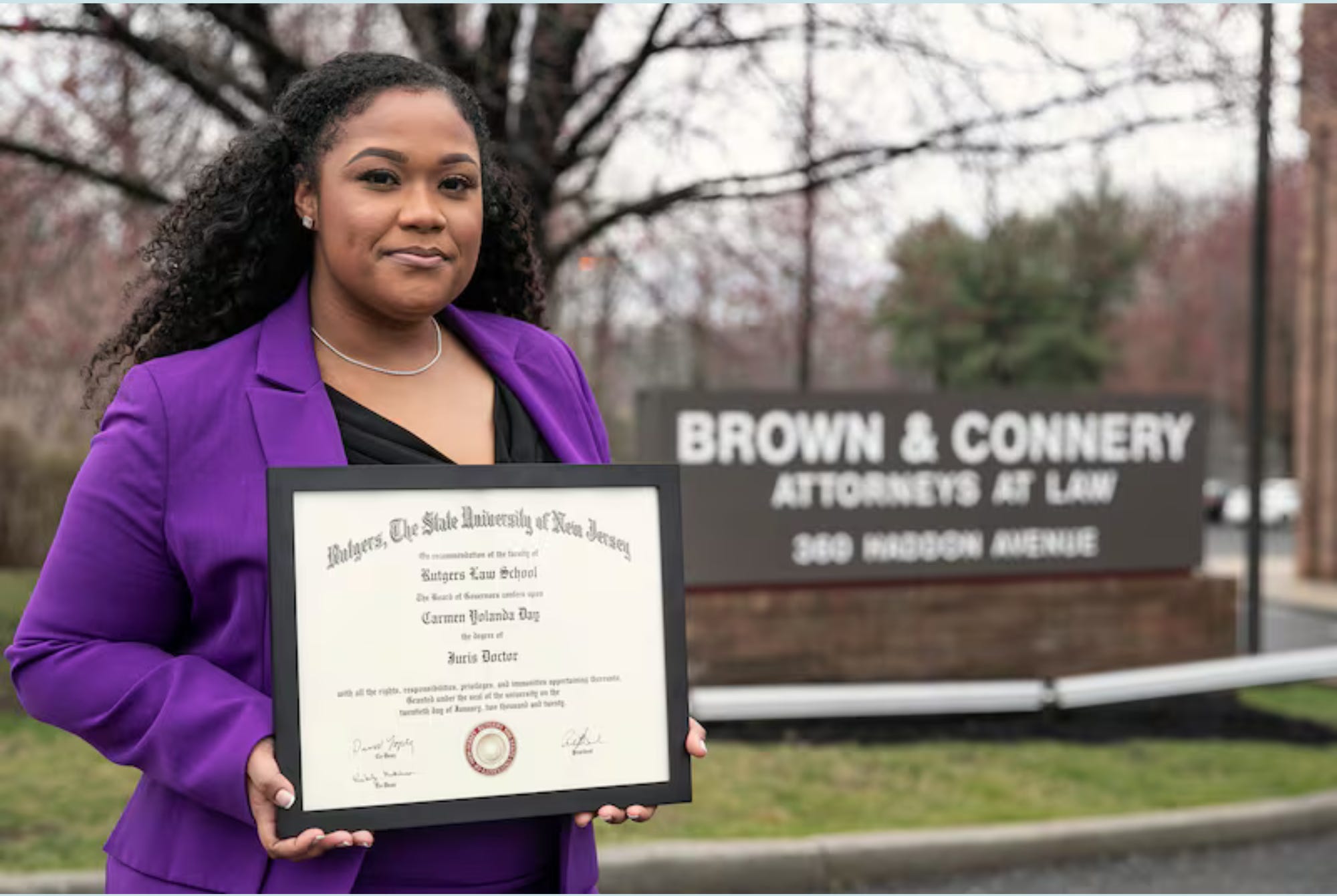
Those familiar with the applicant screening processes of human resource departments and hiring committees know that these entities are extremely unlikely to indulge white applicants in the same way—and this assessment is no truer than the rigid, conformist culture of American law firms: big law firms most especially, but also mid-size regional firms like Brown & Connery. Blacks of course are not the only persons who face disadvantages that make graduation from college or even law school less likely. Despite blithe assertions about white privilege, many whites, particularly in this day and age, face disadvantages of their own. Simply being raised by a single mother greatly multiplies the likelihood that a person will be afflicted by any number of social maladies. In some instances, being raised by a single mother multiplies the occurrence of such maladies by some order of magnitude. No hiring committee, especially not in an American law firm, would look kindly on a white applicant trying to “sell” his application for employment by discussing what are regarded as deeply personal matters, but what are often in fact substantial adversity that makes certain credentials particularly extraordinary. Black applicants mentioning family disruption, absent fathers, or “systemic” barriers tied to race frequently—if not invariably—receive the benefit of the doubt. When uttered by a black applicant, the candidate is regarded as resilient. Indeed, such an individual’s candidacy is regarded most favorably as an opportunity for the hiring committee to follow through on the organization’s mission statement on “diversity values.” Conversely, a white person who comes from a disadvantaged background—perhaps a late bloomer in academics, or was an “at risk” youth in adolescence, or was not raised by a stable, two parent household—would be highly discouraged from divulging such struggles in any attempt to convey what makes his candidacy unique or compelling. Such details from a white applicant are invariably viewed as private family and personal matters, and would be dismissed either as a potential red flag for “fit,” or simply irrelevant to the preferred diversity goals. Blacks, however, are not only encouraged to divulge such personal matters in ways that are frowned upon if done by whites, they are often presumed to have such disadvantages because of “systemic racism,” “white privilege,” so on and so forth, ad nauseam ad infinitum.
Asymmetric standards in behavior and conduct are deeply embedded in the American workforce in other ways, in no small part because of the onerous body of so-called civil rights. Those who do not enjoy “protected class” status are subject to at-will employment in a practical, de facto sense that does not apply to racial minorities. Absent an employment contract, an employer can fire an employee for any reason, or even no reason at all, with very limited exceptions. Lest there be any confusion on the matter, whites can theoretically—as a technical, legal matter—sue for reverse discrimination. Title VII and other body of civil rights laws are facially “race neutral.” It should also be noted that term “protected category” is often used to describe this body of laws, although this is done in ways that are less than precise. In a strict legal sense, that term only really pertains to so-called strict scrutiny of judicial review of laws in relation to the equal protection and due process clause of the 14th Amendment.
As a practical matter, however, various features of anti-discrimination laws do confer a de facto protected status on racial minorities—blacks most especially—as employers generally apply two different standards to whites on one hand and blacks as well as certain other racial minorities to some lesser extent. White employees, most especially men, are subject to the at-will employment doctrine that facially applies to all, but in practical reality does not. There are a number of exceptions to at-will employment, but most of these are protections from racial or sexual discrimination. One of the only exceptions that do apply—as a practical matter—to white men in particular pertain to so-called whistle blower exceptions to at-will employment. Whistleblower protections make it unlawful for employers to terminate or otherwise punish or sanction employees for reporting unlawful conduct by an employer. Such conduct runs the gamut from violations of OSHA and other safety regulations, to violations of Title VII of the Civil Rights laws and other bodies of law, to under-reporting taxable revenue and other unlawful conduct, to any number of other violations of the law. The practical effect of this is that, unless something the white male employee has done evokes whistleblower status, and absent an employment contract that removes from the employment agreement outside the parameters of “at-will,” an employer can terminate a white employee free of almost any encumbrance, just as an employer can demote or otherwise sanction a white employee in accordance with at-will employment
With racial minorities and blacks in particular, this standard does not apply in practice. For all intents and purposes, blacks in particular are simply not at-will employees in the same way their white counterparts are. Obviously, so-called discrimination against racial minorities is illegal under federal civil rights laws, as well as various state and local laws. This would be bad enough if potential claimants simply had to prove, by some preponderance of the evidence,1 existence of racial prejudice. That, however, is not the standard. The body of civil rights laws features a number of legal mechanisms that shift the burden of persuasion and burden of proof on the employer, whereby the employer must prove, or at least demonstrate, by a preponderance of the evidence, that racial discrimination did not play a role. Indeed, the body of civil rights law allow for a claimant to assert that there is a “prima facie”2 case of racial discrimination by any number of circumstances, most notably disparate impact3 as well as a history of terminations or other negative sanctions directed at a disproportionate number of racial minorities, blacks most especially. Imposing legal liability merely by disparate impact is particularly Kafkaesque insofar as such disparate impact can be fairly—and rightly—attributed to dogged, intractable differences between the races, at least on the collective aggregate. Such a simple and obvious explanation, very much in conformance with Occam’s razor, cannot be uttered in much of polite society and indeed the mere suggestion by an employer, regardless of how sensible or obvious, would be tantamount to what is known as a statement against interest: an admission of “racial prejudice” that would be certain to impose stiff penalties for violating these onerous bodies of civil rights laws.
The practical effect of these burden-shifting mechanisms imposed by various civil rights laws is that racial minorities, blacks most especially, enjoy a different standard of review in the employment context than do whites. If a black employee is under-performing, or is engaging in unacceptable or undesirable behavior that is agitating other coworkers or even customers and clients, human resources does not, as a general rule, simply fire that person, or even impose any number of lesser sanctions such as a reprimand. Rather, an employer, usually the human resources department, will meticulously document each instance of behavior that justifies an adverse employment decision, from reprimand, to demotion, to termination of employment. Absent the most egregious behavior which demonstrates clear and obvious “for cause” grounds of termination, the employee is retained over a longer period of time than would typically apply to a white counterpart, with each supporting incident documented in an internal file. This is done as a prophylactic measure to protect the employer from racial discrimination lawsuits, or at the very least to protect employers from adverse outcomes in such lawsuits to the furthest extent practical. The purpose of such documentation is to provide affirmative proof that termination or other adverse decisions have been made for cause. A showing of termination for cause precludes the possibility of unlawful racial discrimination.
Such adverse employment decisions for whites require no such evidence for cause. White employees, unlike their black and other racial counterparts, are subject to the capricious and arbitrary standards of at-will employment in practice, absent some very limited exceptions. The ultimate and practical effect of this is that employers are less likely to terminate or negatively sanction black employees and that it will take longer to terminate black employees, which in turn often gives such employees a greater window of opportunity to remediate unsatisfactory performance and behavior.
While the body of anti-discrimination laws under Title VII and other laws and the number of state and federal agencies is facially race neutral, what is regarded as legally actionable hinges greatly on the racial identities of the plaintiffs and actors that are alleged to be engaging in discriminatory conduct or conduct that creates a hostile working environment. Consider how the Equal Employment Opportunity Commission found that a black postal worker complaint about coworkers wearing clothing adorned with the Gadsden flag was sufficient to state a claim. These laws are supposedly race neutral, but this is belied by the practical consideration that any white employee who dared complain about, for example, the Pan African flag4 being worn or displayed by a black coworker, would be treated very differently. No prudent white employee would dare complaint about such an expression of racial affinity. Indeed, such complaints could be considered as evidence of the white employee’s own racial prejudice or hostility against blacks.
As one might predict, the range of this asymmetry in standards is ever expanding, not contracting or even remaining static. Consider for example the latest iteration of so-called civil rights laws, whereby blacks received special accommodations for what are ultimately outlandish hairstyles. Known as the Crown Act, the House passed proposed legislation to the Senate, where it died due to a filibuster by Kentucky Senator Rand Paul. Some 27 states and the District of Columbia and over 50 municipalities have, however, promulgated and passed similar legislation, making it unlawful for employees to prohibit or sanction black employees from donning Afrocentric hair. This can range from long Afro hairstyles, to dreadlocks, to cornrows. Precisely because employers have proven time and again to particularly risk-averse to any policy that could even be remotely used as the basis for a lawsuit based on anti-discrimination laws, the practical effect is that black individuals in these jurisdictions have a license to exhibit any hairstyle they choose, under the color of being protected by unique cultural identity and part of African heritage.
Of course, no such accommodations are made to whites for hairstyles that, although newer, are nonetheless an expression of modern European cultural identity. No white person, for example, could assert that ratting hair out like Robert Smith of The Cure as well as other figureheads in 80s alternative culture was somehow a part of his unique cultural expression or identity. Ancient hairstyles donned by the pagan Germanic tribes should similarly be immune from employer sanction if such standards were applied on a race-neutral basis.

Consider a somewhat more mainstream hairstyle that has nonetheless lost favor of late. The so-called Hitler youth cut, more properly described as the undercut, had gained tremendous popularity from about 2010 until Richard Spencer and others gave it pronounced notoriety. For this and other reasons which are not entirely clear, certain employers and, more particularly, more socially conservative areas of the labor market disfavor the hairstyle. The undercut hairstyle is especially discouraged if a man dons the haircut with the sides cropped with a zero razor, i.e. practically bald. Some readers may be incredulous, but various articles and message board discussions caution against sporting this hairstyle, particularly in certain professional settings, especially law and finance.
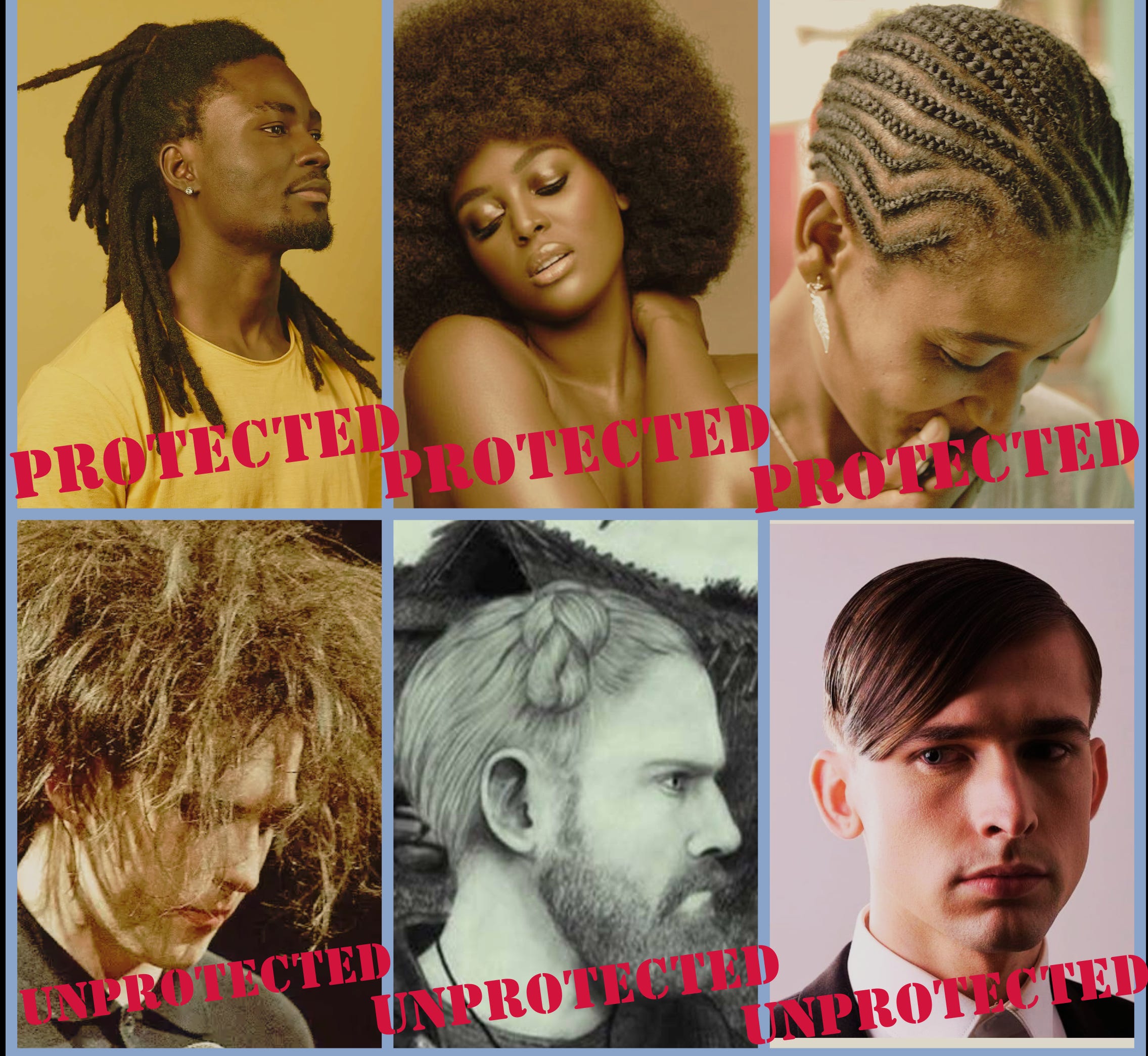
It is remarkable such a “clean cut” look could be discouraged, particularly as it has existed for centuries. And so American society presents ever more distorted social and even professional standards whereby the clean-cut look of the undercut is discouraged, all while employers can face legal sanctions in a majority of states and quite a few municipalities for disfavoring dreadlocks, cornrows, or other aggressively Afrocentric hairstyles. If blacks can compel employers to accept outlandish “Afrocentric hairstyles,” whites should be afforded the same privileges in relation to hairstyles associated with European racial and cultural identity. That blacks are afforded special privileges to exhibit outlandish or unusual hairstyles while whites are not should violate the equal protection of the 14th Amendment clause, but of course constitutional law simply does not work that way.
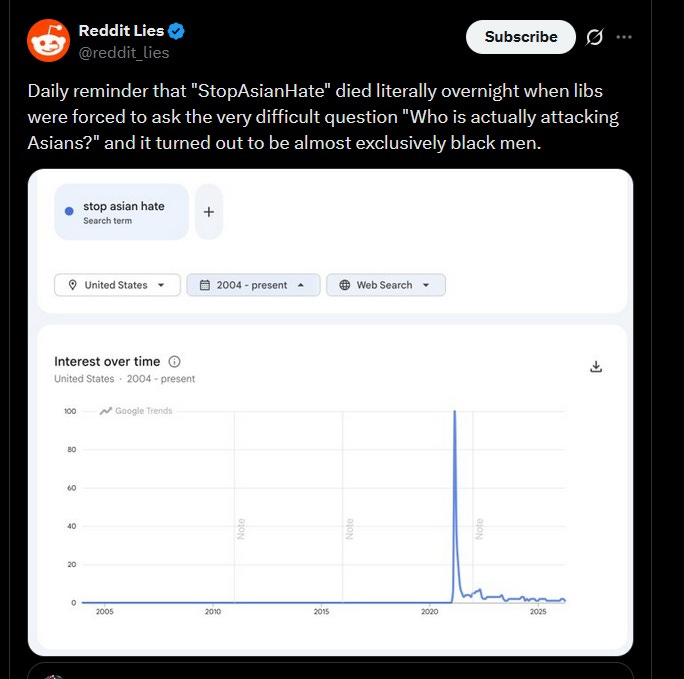
While new legislation similar to the Crown Act is not racially neutral,5 other facially “race neutral” laws are applied very differently based on the race of the subject in question. So-called hate crime laws are notorious for this. Social media and news outlets are awash with instances of black-on-white violence that exhibit naked racial animus against whites, and yet these so-called hate laws that would surely apply in comparable instances of white-on-black interracial violence are rarely invoked by prosecutors. Indeed, a recent campaign highlighting racial violence against Asians collapsed quite quickly when it became apparent that most all such instances involved black perpetrators.
Perhaps as an outgrowth of these onerous body of laws, different sets of standards applicable to blacks that is not applicable to whites and other racial groups is exhibited in other social contexts as well, most particularly urban settings. With the advent of smartphone and Bluetooth technology, a social plague has arisen whereby a critical mass of blacks feel they have license to broadcast their shit “music” on mobile Bluetooth speakers.6 This has become a regular occurrence on mass transit and various other settings in American cities; Blacks are so notorious for it that the Carnival cruise line had to amend its passenger code of conduct and the rules and regulations of its cruise line to address this problem. Black passengers would routinely go to a swimming pool, deck, or other public area of a cruise ship and blast their garbage “music” on Bluetooth speaker, imposing on all other passengers, until Carnival amended its rules prohibiting such conduct. This of course was met with cries of racism, rather than an acknowledgement that such behavior is simply unacceptable or that, on a group, collective level, no other demographic group engages in such behavior to such an extent as to require promulgating a new set of rules and regulations to prohibit such obnoxious and unsavory behavior. Indeed, in a healthy, normal society, such express prohibitions would not need to be promulgated at all because basic decency and enforcement of basic societal norms would prevent the occurrence of such behavior from happening at all.
Of course, such behavior is nothing really new, as blacks have been known to engage in such behavior decades ago in the late 70s, 80, and into the 90s. Rather than the Bluetooth speaker, the weapon of choice was the boombox.7 This was so prevalent as a cultural and sociological phenomenon it was even a plot device in the film Do The Right Thing. Radio Raheem, an imposing black youth at almost 6 feet four inches in height, roamed the neighborhood blasting Public Enemy nonstop, all while wearing “knuckle rings” bearing the words “love” and “hate.” These are considered dangerous if not lethal weapons in many contexts. Raheem went into Sal’s pizzeria blasting music from his boombox, was refused service unless he turned off his boombox. He later came back with “Buggin Out” *(played by Giancarlo Esposito aka Gus Fring) at closing time to again confront the owner before. A physical altercation soon breaks out after Sal smashes the boombox with a baseball bat. All too predictably, Spike Lee, the blackie, sees nothing wrong with a ghetto thug roaming around blasting his shitty rap “music” on his boombox, making the entire neighborhood a captive audience.
The perverse social phenomenon whereby society tolerates the blasting of “music” on Bluetooth speaker in public settings demonstrates once again that there are two different standards based on race: special privileges conferred on blacks because they are black. Indeed, such asymmetric standards are becoming more prominent in society—not less—as whites are on a seemingly irreversible trajectory to become a mere plurality, rather than an absolute majority.
Black privilege and the astonishing asymmetry of standards and norms between blacks and whites even colors how much of the left—particularly white liberals—perceives and reacts to various crimes and news events. Consider the matter of Amy Cooper, better known as “Central Park Karen.” Cooper was accosted by Christian Cooper (no relation, obviously) for not leashing her dog in the ramble. Notably, he made a veiled threat against the welfare of her dog:
Look, if you’re going to do what you want, I’m going to do what I want, but you’re not going to like it.
He then reached into his coat to give her dog a treat, with the clear and unmistakable implication that the treat is likely tainted with poison or some other adulterant that would harm the dog or make the dog sick. There is also the alternative implication that the treat is used to draw the dog to him so that he take the dog away from her. Cooper threatened to call the police, noting she will tell the police not that a man is threatening her, but that a black a man is threatening her. This was sufficient to ruin her life, even though by all accounts she was a good, affluent white liberal and New Yorker. For the purposes of this essay, consider how the left would have reacted if a white man had accosted the woman, particularly in the context of the “#metoo” movement and the left’s preoccupation with violence against women that is out of all proportion to crime statistics, particularly in relation to white criminal suspects, as opposed to black. Cooper would have been praised and received sympathy as a victim of “verbal violence.” The same Internet lynch mob would have done everything to track the white man down and ruin his life. But, because Christian Cooper was a black man, and because blacks are so much higher on the progressive stack than “cisgender white women,” the tables were turned against the woman, causing her to lose her job and remain in hiding in Canada to this day.
A similar phenomenon applies to the heinous murder of Iryna Zarutska at the hands of Decarlos Brown Junior. It was remarkable how the mainstream media refused to cover this shocking murder. Murals honoring the memory of Zarutska have not only been disfavored by the left but even condemned, with one mayor denouncing such a mural as divisive, demanding it be removed. Had a woman been slaughtered in such brutal fashion by a white man, Zarutska’s tragic death would be embraced by the left as an appalling example of violence against women. But, because the accused killer is black, the left regards this matter in very different ways. These are just two immediate examples among countless demonstrating how the left’s disposition and attitude to a particular crime or news story is determined less by the facts underlying such incidents but how different actors in these incidents line up in the “progressive stack,” with blacks being at one of the very highest echelons of this perverse social order.
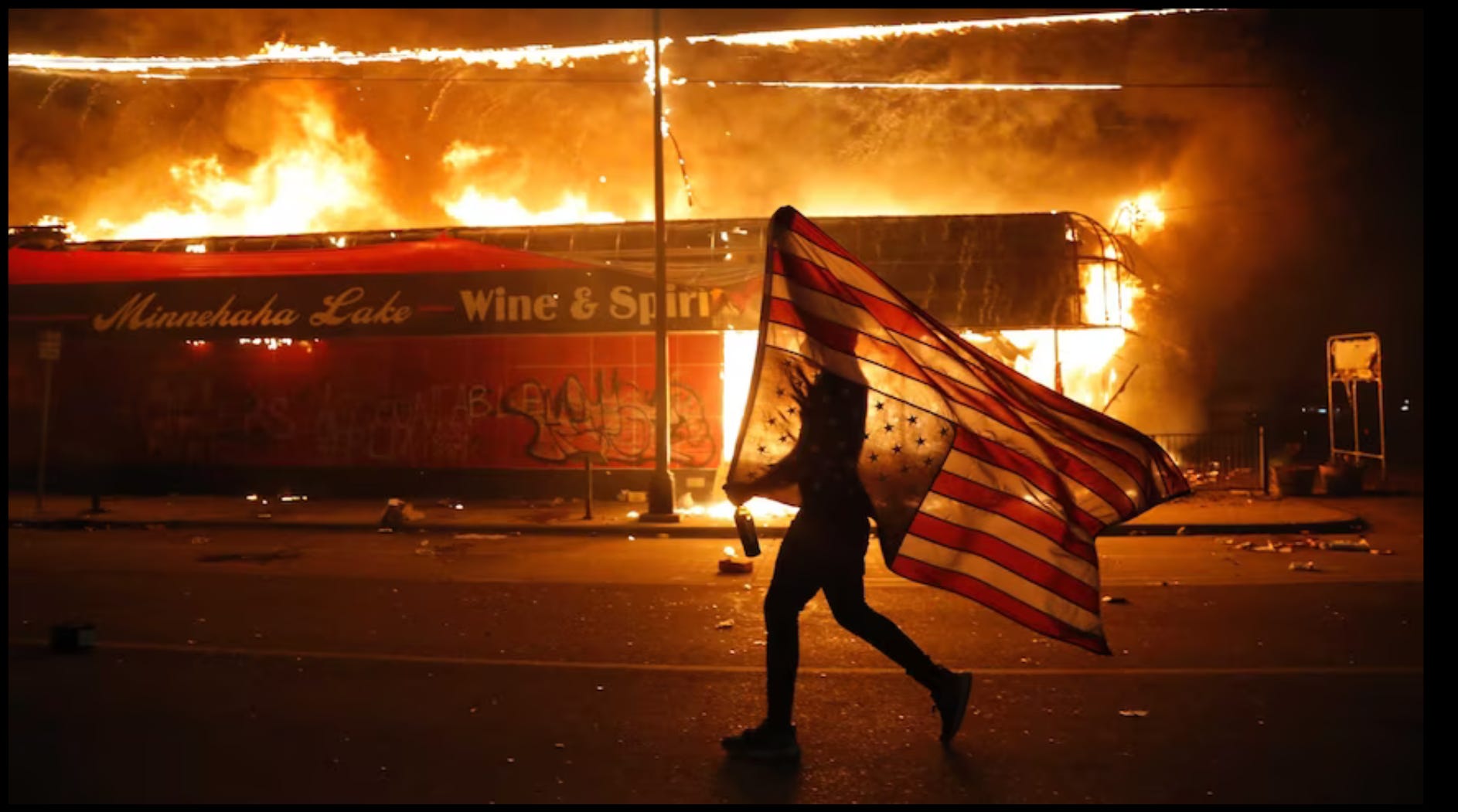
This ethnic, racial, and even ideological particularism is demonstrated in a wide variety of other contexts as well. It explains the vastly disparate treatment of upheaval, unrest, and organized violence in Black Lives Matter “protests”—which were often race riots and naked lawlessness—and the severity with mostly white January 6 protesters were subject to a political witch hunt and zealous prosecution by the Biden administration and the FBI. It also explains how blatant anti-white animus is tolerated and condoned in films like Django Unchained and most recently Sinners, but a comparable analog targeting any other racial group other than whites would be unthinkable.
The multicultural experiment—best described as multiracialism—would be untenable even if blacks were held to universal standards equally applied to all racial groups. As most readers are doubtlessly well aware, a myriad of deficiencies in the black population has, on the collective whole, proven utterly and totally intractable, despite some eighty years of concerted effort to rehabilitate this population. These efforts include the onerous body of civil rights laws, trillions in expenditures in Great Society programs, Section 8 housing, so on and so forth. Indeed, the degree to which white civilization has attempted to accommodate so many of their needs and intractable, incorrigible shortcomings is truly astounding, particularly as this insane project has continued on, in vain, for generations. None of these drastic measures have ameliorated what could amusingly be referred to as a “racial commitment to crime,” a collective IQ gap that falls between on to two standard deviations (or more) behind those of whites and Asians, harboring an ever-worsening ancient hatred against for whites, despite. This ancient hatred has only worsened over time, despite a societal and civilization level, have expended great blood and treasure in a vain attempt to emancipate and rehabilitate the black population.
This asymmetric set of standards makes this horrible experiment all the more intolerable, especially as this asymmetry is applied to more and more areas of life, not less. That blacks are conferred with more and more benefits, particularly in the workplace, is an absolute outrage. They enjoy a much more favorable standard for both college admissions and applicant screening processes and interviewing and hiring practices. In an age of insane, unreasonable applicant screening processes and the greater tyranny of the human resources department, a critical mass of employers has adopted a strong motivation to hire blacks, while being less than motivated to hire applicants more generally, particularly white applicants, by any standard that could be regarded as sane, let alone reasonable. As outlined above, a similar double standard uniquely beneficial to blacks pervades much of American society beyond the workplace, and does so across an ever-growing number of metrics and areas of everyday life. These insidious double standards conferring unjust and undeserved benefits on the black populace are just one way of many in which this multiculti delirium simply compounds injury and harm upon prior injury and harm. And the more such special benefits are conferred, the more outrageous the demands are, as seen in how much of the black population has only become more insistent on so-called “reparations” for slavery the more society has attempted to place and coddle them.
Multiracialism is civilizational ruin, and such asymmetry in standards, what are in effect double standards favorable to blacks and unfavorable to whites, punctuates a hard but necessary and even undeniable truth. Far too few dare utter this obvious and undeniable truth, except in hushed tones in dark corners and hidden nooks. That trend must change if European civilization is ever to overcome the existential threat posed by this racial delirium.
https://theravenscall.substack.com/p/exposing-black-privilege