
Faustian America
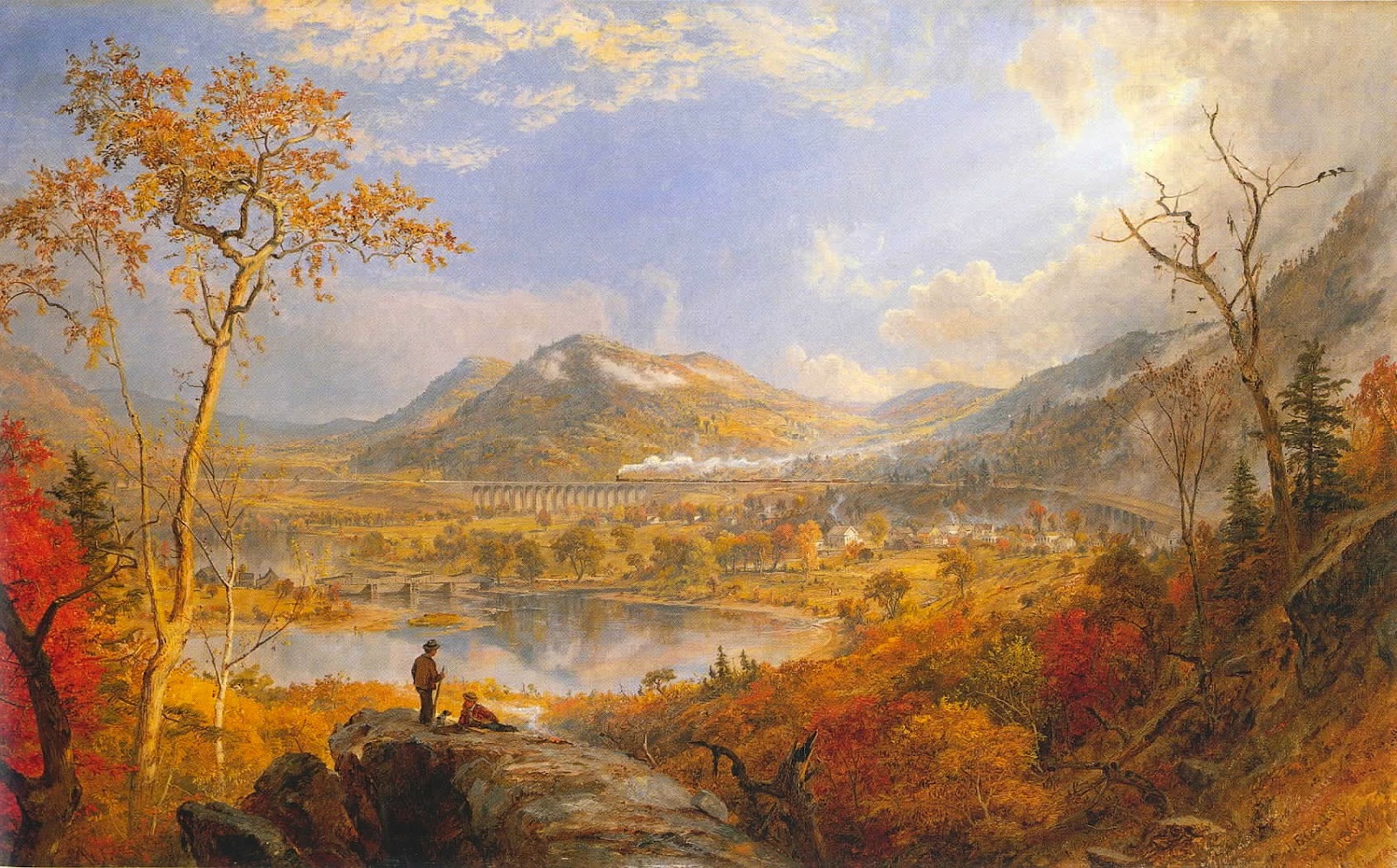
White America’s quest for renewal and transcendence.
In October 1916, at the very height of the First World War, when the armies of Europe were locked in mechanized slaughter across the trenches of the Somme, Verdun, and countless lesser-known killing fields, the young American writer H. P. Lovecraft paused to reflect upon the destiny of his own civilization. Europe’s ancient nations—France, Germany, Britain, Austria-Hungary, and Russia—were consuming their youth in artillery barrages and poison gas clouds, an apocalypse that shattered the nineteenth century’s confident faith in progress. Amid this upheaval, Lovecraft posed a stark question: “Do Americans desire to remain a vigorous, clean moraled Teutonic-Celtic people; or do they desire to transform their country into a sordid, amorphous chaos of degradation and hybridism like imperial Rome?” Lovecraft framed the issue through the lens of classical history. The Roman Empire, once disciplined and expansionist, had, in his view, degenerated into a cosmopolitan mass, where provincial peoples flooded the capital and the old Roman character dissolved. His question therefore went back to a much older debate about the fate of civilizations. Rome, Athens, Carthage, and later empires had all confronted moments when the identity that built them seemed to dissolve within the very universality they created. Lovecraft wondered whether America, barely a century and a half old, would follow the same trajectory.
For much of its early history, the United States understood itself as a civilization shaped primarily by European settlement. From the colonial era through the nineteenth century, the dominant cultural framework reflected the traditions of the British Isles and northern Europe, reinforced by the migration of Germans, Irish, Scandinavians, and other European peoples who gradually merged into the broader American population. Political leaders and intellectuals frequently described the nation as a continuation of Western civilization in the New World. That self-understanding began to shift dramatically during the twentieth century, particularly after the passage of the Immigration and Nationality Act of 1965, which replaced earlier quota systems that had favored European migration. The new legislation opened the doors of immigration more widely to Asia, Latin America, and other regions of the developing world. Over the following decades, the demographic composition of the United States changed at a pace unprecedented in the country’s earlier history. More than sixty years after that legislative turning point, the question arises once again: how do White Americans themselves interpret the identity of the nation? In many regions of what journalists often call Middle America or “flyover country,” large portions of the population still imagine the United States through the older narrative of a European-descended society. Migration patterns sometimes reflect this instinct for cultural continuity, as families relocate towards areas where communities retain familiar traditions and social norms. Yet the scale and speed of demographic change create a powerful countercurrent. For critics of contemporary immigration policy, merely slowing the influx appears insufficient. They argue that far-reaching measures would be necessary to restore the demographic balance that once defined the country’s historical identity.
The broader historical significance of America, however, extends beyond demographic questions into the realm of civilizational character. Many observers have described the United States as an expression of the Faustian spirit identified by Oswald Spengler. In Spengler’s analysis, the Faustian civilization of the West seeks endless expansion, exploration, and mastery over space. America embodies this impulse with remarkable intensity. The conquest of the American West during the nineteenth century illustrates the point vividly. Settlers crossed vast plains and mountain ranges, built railroads across deserts, and established cities where wilderness once stretched unbroken to the horizon. The frontier experience demanded willpower, endurance, and a willingness to confront the unknown. Through blood, sweat, and relentless determination, the expanding republic transformed an enormous continent into an industrial civilization. The same restless energy later propelled American achievements in science and technology. When the United States launched the Apollo and Mercury space programs during the Cold War, the symbolism reached far beyond the technical achievement of landing astronauts on the Moon. The missions carried the names of classical deities—Apollo, the radiant sun god, and Mercury, the swift messenger of Olympus—linking modern technological ambition with the mythological imagination of ancient Europe. The emblem of the eagle, long associated with imperial Rome and later adopted by the United States as its national symbol, seemed almost to reappear in a new form as rockets pierced the upper atmosphere. In that moment, the Promethean drive of Western civilization extended beyond the Earth itself.
This same civilizational temperament permeates American culture on both practical and intellectual levels. The country’s capitalist system encourages innovation, risk-taking, and the pursuit of ambitious projects that stretch the limits of human capability. Private enterprises increasingly carry forward the exploratory impulse that once belonged primarily to governments. Companies engaged in commercial space exploration attempt to push human presence deeper into the solar system, reviving the spirit that animated earlier national programs. In this sense, the descendants of Doctor Faustus, the legendary seeker of ultimate knowledge and power, continue their quest through the laboratories, launchpads, and research centers of modern America. The drive to transcend limits, to go farther and higher than previous generations imagined possible, remains deeply embedded within the American imagination.