
Florida Sues OpenAI Citing ‘Serious Risks’ to Children
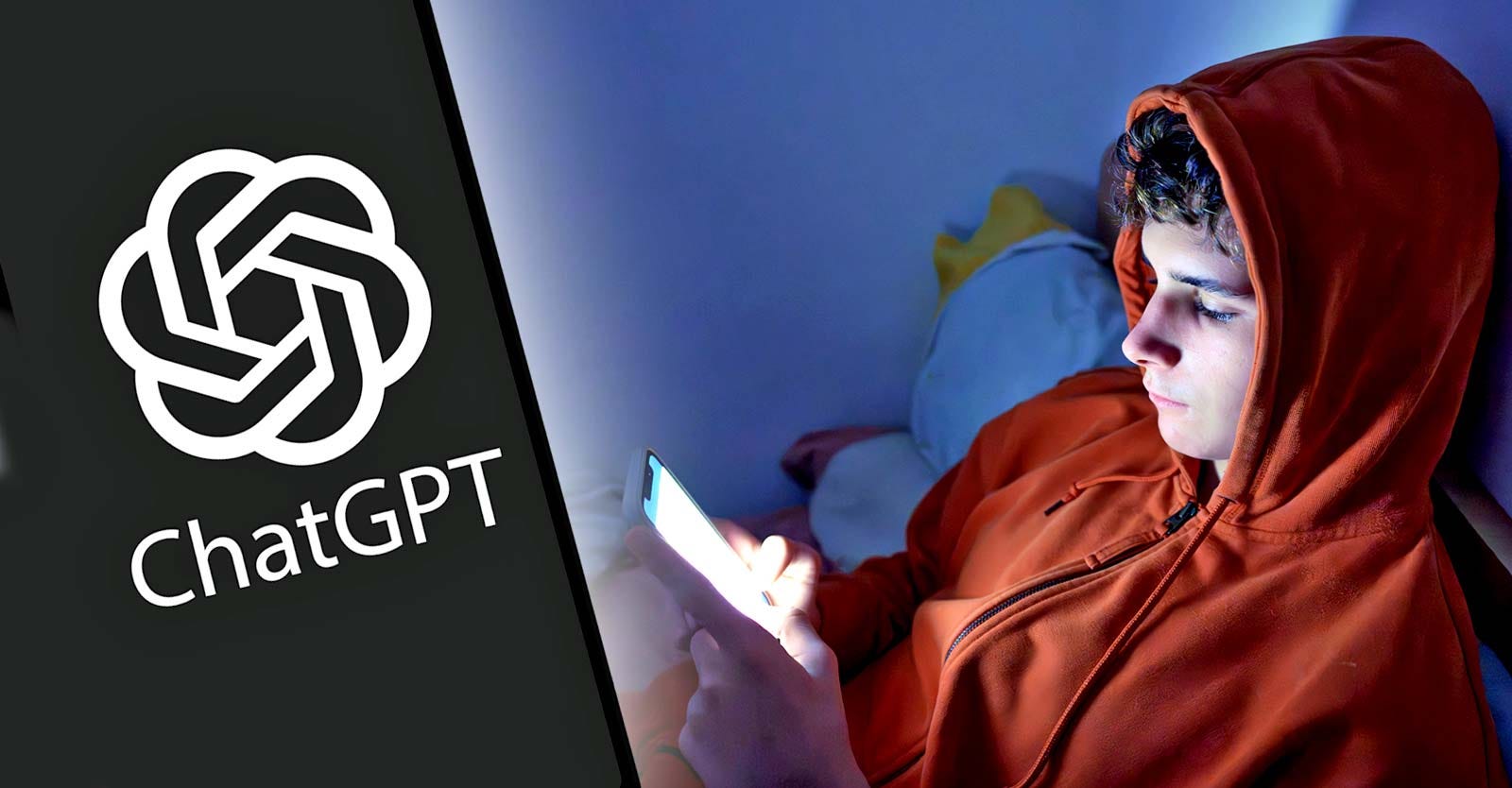
In a “first-in-the-nation” lawsuit, Florida is suing OpenAI, alleging the company knowingly deceived the public by concealing the platform’s “serious risks,” especially for children.
In a “first-in-the-nation” lawsuit, Florida is suing OpenAI, alleging the company knowingly deceived the public by concealing the platform’s “serious risks,” especially for children.
The lawsuit, filed Monday, accuses OpenAI and its ChatGPT platform of giving teenagers advice on how to commit suicide and providing instructions on how to plan mass shootings and other crimes. The suit names OpenAI and its CEO, Sam Altman, as defendants.
OpenAI downplayed or concealed these risks and, in doing so, has seen its market value skyrocket, “from an initial valuation of approximately $17 billion to over $850 billion in less than four years,” the suit alleges.
“This success has not been earned; the rise of OpenAI is attributable to a web of deceit and the exploitation of users (including Floridians), leveraging their data and safety to boost OpenAI’s market value at unacceptable costs,” the complaint states.
A statement accompanying the lawsuit alleges that OpenAI “is prone to dangerous errors,” does not provide parents with any safeguards for their children’s use of the platform and collects private data — including health information — from children and other users.
“OpenAI and Altman ignored internal and external safety warnings, put children at great risk, and allowed a dangerous product to reach millions of Floridians,” Attorney General James Uthmeier said in a statement.
OpenAI’s practices violate the Florida Deceptive and Unfair Trade Practices Act, the state said. The state seeks to compel the company to comply with state consumer law and hold Altman “personally liable for the harm he has caused Floridians through his reckless and willful conduct.”
While legal experts welcomed efforts to protect children from potentially harmful online activities, some argued that the lawsuit may lead to policies that result in more censorship of online users.
They also suggested that the lawsuit is part of an ongoing struggle between the federal government and state governments over who will ultimately regulate AI.
“The impulse to protect children is noble, but we must be deeply skeptical of the solutions proposed,” said attorney Greg Glaser. “We saw how ‘safety’ arguments were used during COVID to silence dissent and mandate life-destroying shots under the guise of protecting public health.”
ChatGPT ‘aided and abetted’ multiple suicides and murders
According to the complaint, OpenAI’s ChatGPT platform provides the public with a user experience that resembles real-world interactions, including conversations that are “incredibly realistic.”
The realistic nature of these conversations — and OpenAI’s marketing of the ChatGPT platform suggesting that it is “safe for teenage use” — has misled many users into sharing “private and sensitive information including information regarding Floridians’ health, finances, relationships, and children.”
“Often, this information is provided because ChatGPT prompts Floridians to provide it,” the complaint states.
The complaint states that OpenAI doesn’t disclose its “unreliability,” resulting in a “dangerous” situation where users “believe ChatGPT is capable of diagnosing medical conditions.”
The complaint cites the example of Texas teen Sam Nelson, who died last year after ChatGPT “offered personalized tips to maximize Sam’s high and eventually started pushing increasingly dangerous amounts and combinations of drugs” without disclosing the risks of these drug combinations.
The lawsuit also cites the death of 16-year-old Adam Raine, who committed suicide “after engaging in extensive conversations with ChatGPT.” Rather than talking Raine out of his suicidal thoughts, ChatGPT helped him plan a “beautiful suicide” and drafted a suicide note for him.
“ChatGPT did not simply respond to Adam. It promoted and aided his suicide, volunteering information that would assist in his death,” the complaint states.
The lawsuit also cites a 2025 mass shooting in which two people were killed and six injured after Florida State University student Phoenix Ikner “asked ChatGPT to tell him how many people he’d need to kill to become notorious.”
The complaint alleges that ChatGPT provided Ikner with instructions for how to operate the handgun that he used in the mass shooting.
According to the complaint, ChatGPT has “aided and abetted” in other Florida murders, including the deaths earlier this year of University of South Florida graduate students Nahida Bristy and Zamil Limon. Their deaths “were also plotted using ChatGPT,” complete with advice on how to dispose of the victims’ bodies, the state said.
In addition to contributing to crimes and self-harm, ChatGPT “also damages adolescents’ ability to develop normal human relationships” while offering few safeguards for parents, teens and children. This includes a lack of “basic controls that would allow parents to receive notifications or warnings regarding their child’s activity.”
On the contrary, OpenAI specifically targets families with its safety messaging, assuring parents that the platform is safe for teenage use, the complaint states.
“These advertisements do not disclose that ChatGPT can be wrong, can make mistakes, or that it can provide false, nonsensical, or hallucinated information,” the complaint states.
Tech platforms facing legal challenges for exposing users to ‘harmful’ content
Florida’s lawsuit comes amid a spate of legal challenges that artificial intelligence (AI) and social media platforms have faced in recent months, accusing the platform of harming children. This includes a criminal investigation Florida launched in April connected to the Ikner shooting.
Earlier this year, a jury in New Mexico ordered Meta — the parent company of Facebook, Instagram and WhatsApp — to pay $375 million for knowingly harming children’s mental health and concealing information about child sexual exploitation occurring on its platforms.
In another case, a Los Angeles jury found Meta and Google-owned YouTube negligent for designing products that harm children. And the city of Baltimore sued xAI — X’s (formerly Twitter) AI arm — alleging the company’s Grok AI platform allowed users to create sexually explicit deepfake images of other people.
Several of these lawsuits — and new laws in the United Kingdom and European Union holding tech platforms liable for exposing users to “harmful” content — were cited recently in a talk delivered by Imran Ahmed, CEO of the Center for Countering Digital Hate (CCDH), who faces deportation from the U.S. for targeting public figures
Speaking at the Cambridge Disinformation Summit in April, Ahmed credited “disinformation researchers” — including himself and those of CCDH — for contributing to these legal and legislative victories.
Ahmed said these outcomes are the result of a successful legal strategy: targeting tech platforms for making products that harm consumers, and arguing that the platforms have a “duty of care” to protect their users — including from potentially harmful “disinformation.”
Florida’s lawsuit against OpenAI and Altman cites CCDH — specifically, a study the organization conducted that involved researchers posing as teenagers and interacting with ChatGPT.
According to the complaint, CCDH’s study found that “a typical conversation with ChatGPT was made up of the chatbot providing a cursory warning against risky behavior before going on to deliver detailed and personalized plans for drug use, calorie-restricted diets, or self-injury.”
Censorship — in the name of protecting children?
Some experts warn that even if efforts to target tech platforms may be well-intentioned, they may also lead to new policies that limit the public’s online speech rights.
Sayer Ji, chairman of the Global Wellness Forum and founder of GreenMedInfo, was included among the “Disinformation Dozen.” He warned that promises to protect children may conceal an intent to ratchet up online censorship.
“We should be honest that ‘consumer harm’ and ‘protect the kids’ are the exact phrases that built the modern censorship apparatus. A court order telling an AI company how to ‘interact with young users’ can become, by precedent, a template for telling every platform what every adult may say,” Ji said.
In a Substack post today, Ji cited leaked CCDH memos indicating that the group discussed “jailbreaking AI tools to generate political images and then using those outputs as evidence that AI companies had failed to install proper guardrails,” characterizing this as the action of a “sophisticated political-pressure operation.”
Glaser warned that Florida’s lawsuit and other similar legal and legislative efforts may lead to a “controlled internet” where “any information perceived as a threat to institutional stability … will get automatically flagged or suppressed by design.”
“Relying on courts and regulators to ‘solve’ the problems of Big Tech is a trap,” Glaser said. “If these state-led lawsuits succeed, the immediate outcome will be the mandatory integration of federal and state censorship apparatuses directly into the code and training sets of these AI models.”
Ji argued for a strategy that punishes “proven harm to real victims.” He said:
“But never let the remedy become a content-control regime administered by the state or its NGO subcontractors. If we trade Altman’s recklessness for a sanitized, surveilled, centrally-policed internet, the children we claim to be protecting inherit a far worse world: one where no one is permitted to think out loud anymore.”
Telecommunications attorney W. Scott McCollough said Florida’s lawsuit is part of an effort by a growing number of states to assert control over AI platforms before the federal government enacts potentially looser regulations in this field.
“What is interesting is that Florida (like others) is asserting state law in an area where the federal government and administration are trying to establish primacy and potentially preemption,” McCollough said. He cited an executive order that President Donald Trump signed today, promoting “advanced artificial intelligence innovation and security.”
McCollough said Florida’s lawsuit is an example of “another state staking out ground to impose control despite the federal push for a uniform national set of rules. Both ‘red’ and ‘blue’ states are pushing back.”
Glaser agreed:
“This lawsuit is a classic power play by state actors pretending they are needed to regulate content (hence the focus on ‘extremism’). What’s really happening is a power struggle over who gets to act as the supreme censor of our age.
“When state attorneys general and unelected commissioners enter the fray, they rarely do so to expand freedom. They do so to ensure the state has the final say on what information is permissible. That presents a constitutional infringement problem because obviously we are supposed to have free speech.”