
German Chancellor Merz Says He Wants to See the Names of Those Who Criticize the Government
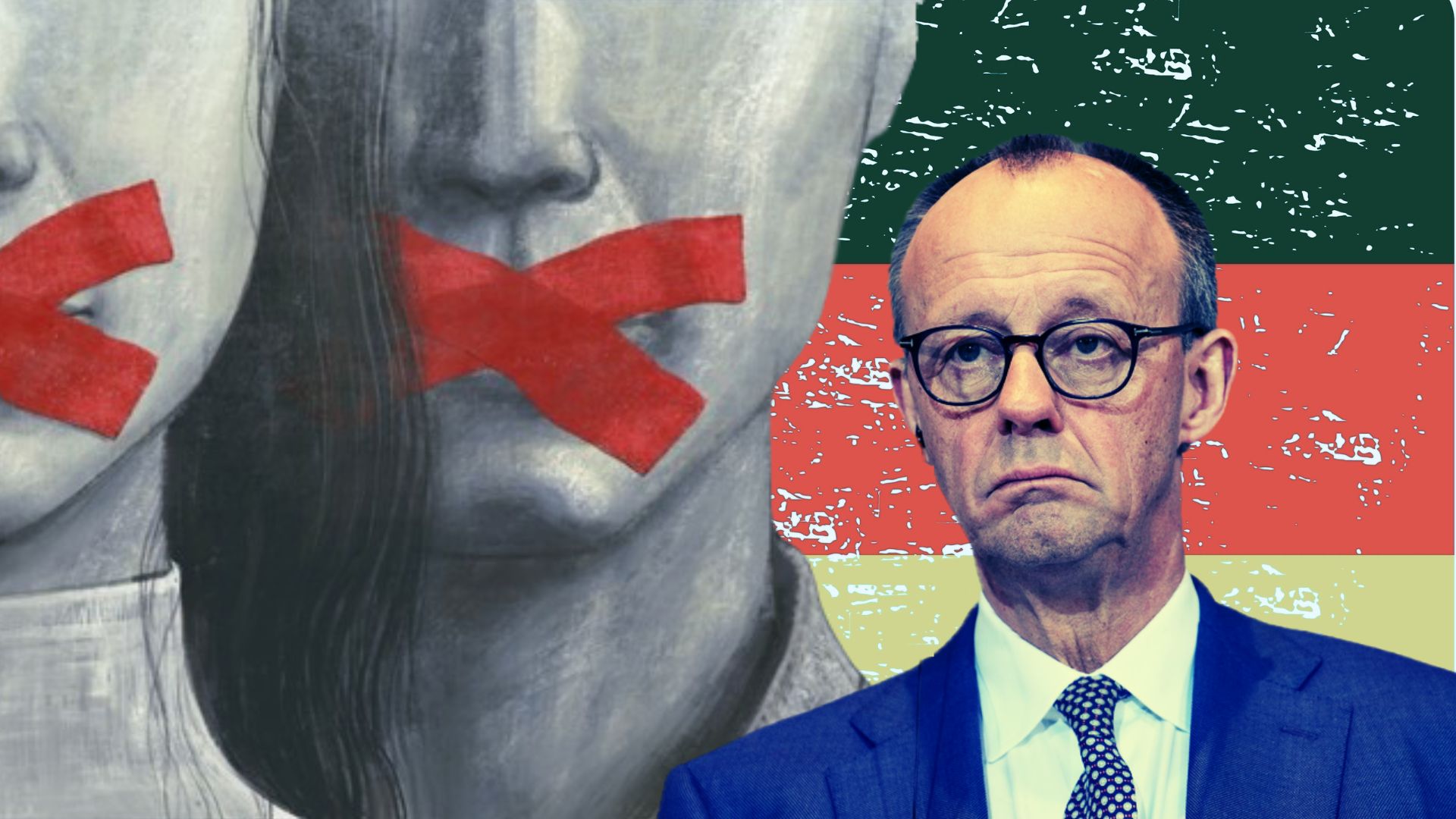
German Chancellor Friedrich Merz says he wants to end anonymity on the web, saying users should be required to use their real names, which he says will protect a liberal society.
“I want to see real names on the Internet. I would like to know who is speaking out,” Merz said in the evening at the political Ash Wednesday event in Trier. “In politics, we also face a conflict in our society with our real names and open sights. Then I expect the same from everyone else who is critical of our country and our society.”
He further stated that those advocating anonymity on the Internet are “often enough people who demand the greatest possible transparency from others in the shadow of anonymity.”
A free and anonymous web has been a boon to free speech
The rise of the web and its ability to allow users to question power and social mores over the last two decades has arguably been the greatest gift to free speech in centuries. Citizens can directly speak their mind to Merz and other world leaders in real-time in the comments section on various social media platforms, all without exposing their identity to authorities, which could lead to forms of retribution. To do away with this would be to do away with one of the major democratizing elements that underpin Western society.
History has taught us that there is often a severe cost for speaking against power. Certainly, during the Nazi and Stasi eras, anonymity and a wide-open web would have been a gift to dissidents looking to challenge the status quo.
The reality is that for illegal acts, there is already no anonymity in Germany or other Western countries. If authorities want to find you, they can. In Germany, it is already illegal to call a politician a “fat pig,” or insult them in a demeaning manner. Merz has himself already sued many internet users. In some cases, police have shown up early in the morning to conduct house raids for what many critics say were innocuous comments, such as calling Annalena Baerbock the “worst foreign minister ever” or calling Robert Habeck an “idiot.” As can be seen, even mild criticism and insults can warrant the most aggressive and intrusive form of state reprisal in Germany.
It is also notable that Merz, who has one of the highest unfavorability ratings of any Western leader, is pushing for ending anonymity at a time when anti-establishment right-wing parties are surging. It appears Western establishment parties like Merz’s Christian Democrats (CDU) no longer have any solution other than to crack down on dissent and target anonymous users.
The social costs of challenging the status quo
Currently, the biggest hotbed issue in Germany and across the West is mass immigration. Critics of this incredible societal transformation are labeled “racist” and can suffer job or social consequences, including physical assault.
It is no wonder Germans and other web users seek a degree of anonymity on the web while voicing their opinion. In fact, polling shows that three-quarters of Germans believe fear of repercussions is silencing free speech. Merz and others want to supercharge an environment where people pay hefty prices for speaking their mind.
Even very moderate voices become major targets, attacked for questioning the mainstream societal orthodoxy on immigration. Julia Ruhs is a great example. A high-profile presenter and journalist, she details how she became labeled a “racist” when she wanted to research the topic of gang rapes by migrants in Bavaria. She said it is still a “taboo” to research topics regarding why “certain population groups are more susceptible to committing sexual offenses.”
“That’s when I realized the whole editorial imbalance when you dedicate yourself to such a topic,” Ruhs said.
She added that it became an environment where she was told: “You’re not allowed to say that and you’re totally racist.”
When her first episode of “Klar” addressed the topic of migration, a massive internal wave of criticism hit. Approximately 250 NDR employees signed an open letter distancing themselves from the show, accusing Ruhs of one-sided and populist reporting. She was then effectively canceled from presenting on NDR.
It is no surprise that many other Germans have no desire to go through the same hell. If a young and intelligent woman is tarred and feathered for even looking to research the topic of migrants and gang rape — which all the evidence shows is a major problem in Bavaria and the rest of Germany — it means that it is often effectively a “social death” to discuss such topics out in the open.
Those who challenge this topic, whether it’s an AfD politician or a more “mainstream” journalist like Ruhs, are courageously voicing their opinions in a society that often produces severe social consequences for anyone who deviates from the norm. However, not everyone has the resources, whether mental or financial, to deal with such a toll.
Speaking your mind is dangerous
Merz ultimately has an entire team of security professionals protecting him at all hours.
For those comments that he believes cross the line, he can file lawsuits, and he actively does. In fact, politicians in Germany can make a nice living suing users for insults, as they get a cut of the proceeds. For those who threaten his life, the police are a phone call away. Their anonymous username is not going to help them.
For others, the consequences can be much more severe. AfD politicians have had their cars set on fire, their children harassed in school, their personal addresses doxxed, and have faced severe assaults on many occasions.
In the U.S., Trump was nearly assassinated in three separate incidents. In Slovakia, Robert Fico was shot multiple times and nearly died by someone who did not like his politics. In France, a right-wing activist was just beaten to death on the streets of Lyon last week.
There is no climate of open and free discourse in the West anymore.
Of course, the same standards apply to the left. If someone with a far-left viewpoint wants to post “refugees welcome” in a town with far-right supporters, this person should be able to without fearing for their personal safety.
Will anonymity come to an end?
It is probably only a matter of time before anonymity will be banned on the web, both in Germany and elsewhere. The masses are quickly turning on the establishment across the West as their quality of life deteriorates, due to economic policy decisions, a loss of security, failing school systems, soaring debt, and uncontrolled and unrelenting mass migration.
In turn, the West is heading towards a Chinese-style level of social control. Efforts like “chat control” from the EU, identification required to access social media, and police raids for social media comments are becoming standard across the West.
It is notable that Merz is falling into the same camp as the repressive far-left Spanish Prime Minister Pedro Sanchez In his speech at the World Economic Forum in Davos, Sanchez declared countermeasures against social media that sound remarkably similar to Merz.
“First, I propose to put an end to anonymity on social media,” he declares. “My second proposal is to force open the ‘black box’ of social media, the algorithms, once and for all,” said the Spanish prime minister.
In Germany, the Social Democrats (SPD), to their credit, say they are currently opposed to ending anonymity, citing the need to protect critics of power. The party argues that the internet is an important “safe space,” especially for persecuted political activists. Currently, the CDU would need the support of the SPD, their coalition partner, to pass any major law in this regard. The SPD’s stance can be praised, but this stance could also change in the future. Currently, the SPD is pursuing an age check for social media instead, requiring everybody to upload their ID to prove they are not minors.
Furthermore, the SPD is currently pursuing an entire ban against the AfD, which is the most popular political party in the country in nearly every poll. So, they have a mixed record on democracy and free speech.
There is no doubt that the window for free and anonymous discourse on the web is rapidly closing at the same time the establishment becomes more desperate.
As John Paul Stevens of the U.S. Supreme Court Justice said: “Anonymity is a shield from the tyranny of the majority… [It] provides a way for a writer who may be personally unpopular to ensure that readers will not prejudge her message simply because they do not like its proponent.”
In turn, Thomas Paine, the famed enlightenment thinker, wrote: “Anonymity is the only way for a man to speak the truth to power without being silenced by the noise of his own name.”
We should trust the reason of these two men far more than the likes of Merz and Sanchez, but for now, the Merzes and the Sanchezes of the world have all the power.