
Guests in Our Own Country?
Anzac Day and the Politics of Sovereignty.
The Ode comes from For the Fallen, a poem by English poet and writer Laurence Binyon. The poem was first published in The Times on 21 September 1914. It was later published in the Winnowing Fan – Poems of the Great War.
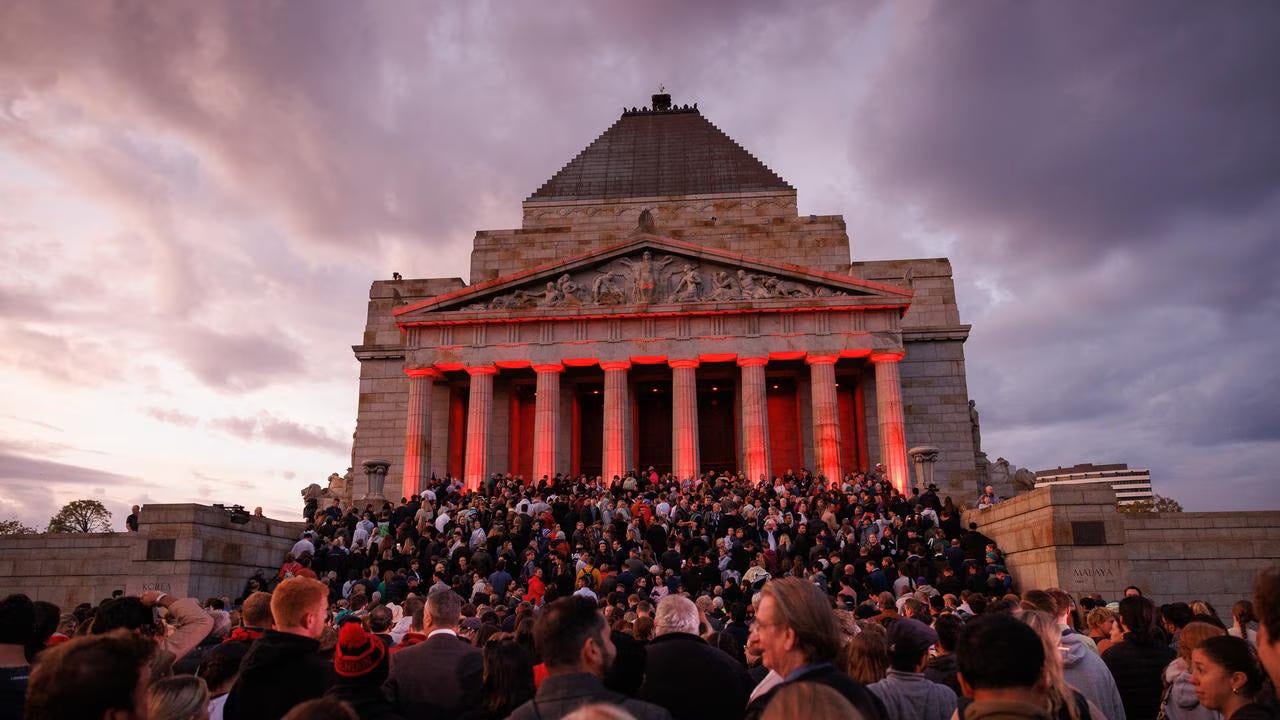
At the dawn of 25 April, thousands gather in solemn silence to honour the ANZAC spirit: the Australians and New Zealanders who fought and died believing they were defending their country.
In Sydney, this year as an Aboriginal began a Welcome to Country, a ripple of boos rose through the crowd. We saw similar scenes play out in Melbourne and Perth. To some people the booing may seem disrespectful. But this disruption at ANZAC dawn services is, at its core, about sovereignty. It is about competing national narratives, of who truly “owns” Australia’s story.
Sacrifice, Nationhood and Defence of Home
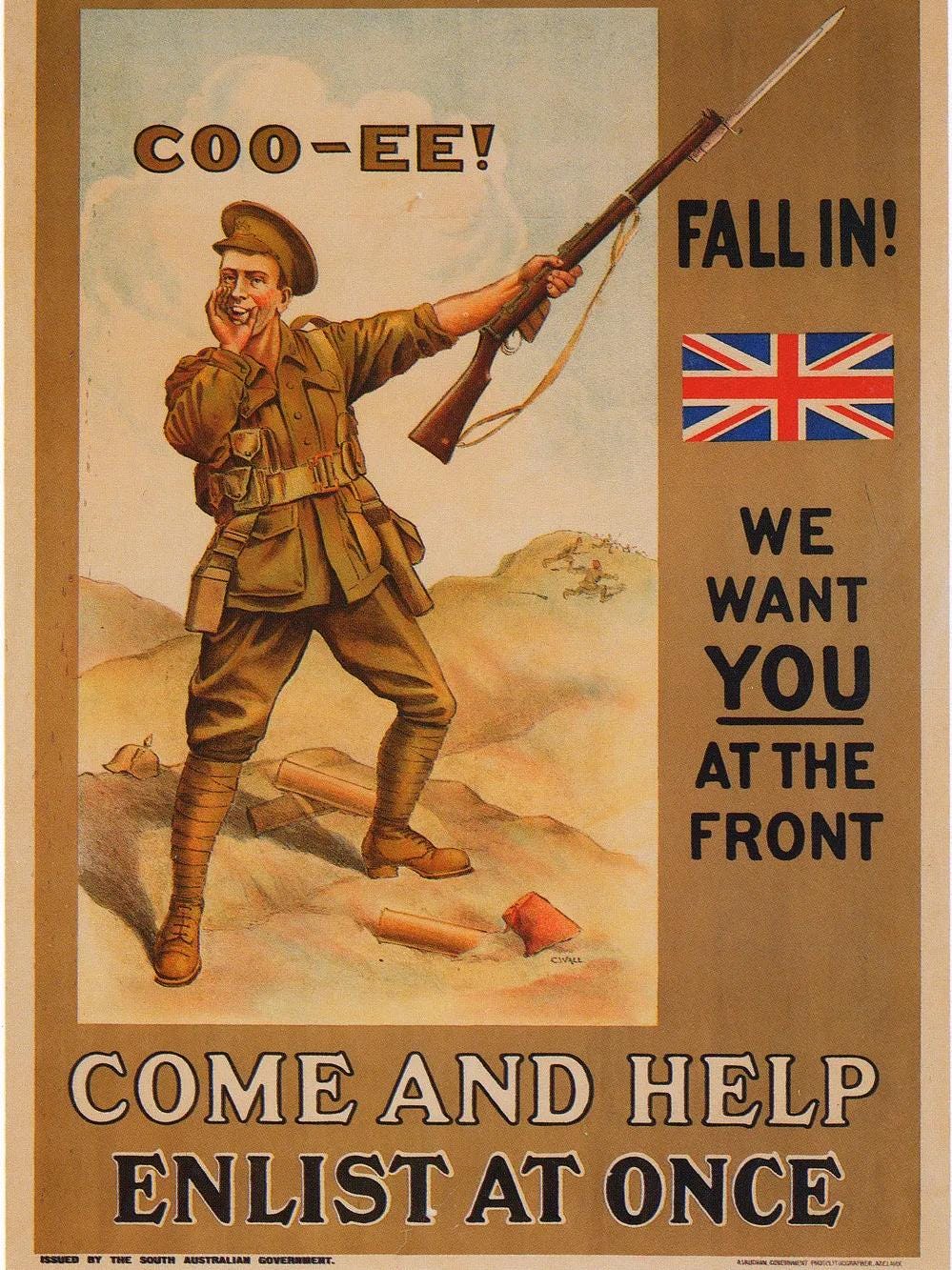
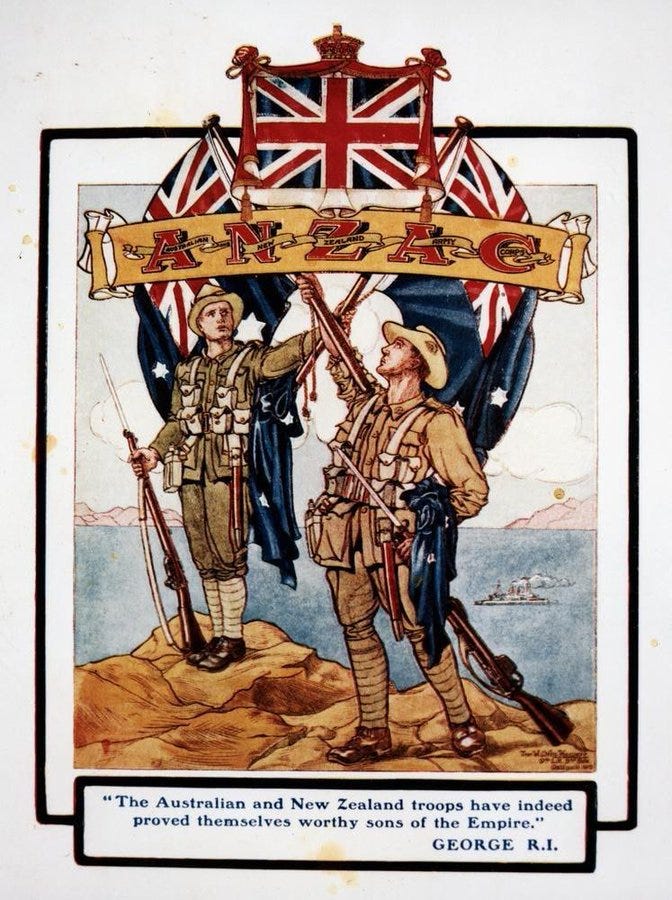
ANZAC Day commemorates a defining moment in Australia’s identity. It remembers the courage and sacrifice of the soldiers of the Australian and New Zealand Army Corps who landed at Gallipoli in 1915 and, by extension, all those who have served since. From early on, ANZAC valor was cast as a national myth: Billy Hughes, Australia’s wartime prime minister, famously declared in 1916 “Soldiers! Your deeds have won you a place in the Temple of Immortals!”, setting a tone that would endure.1 In the eyes of many contemporaries, ANZAC symbolised Australia’s coming of age on the world stage. As the RSL’s commemorative history notes, “the landing at Gallipoli was our coming of age as a sizeable force for good in the world”.2 Though the campaign failed militarily, it succeeded in forging a new national identity built on courage, mateship and sacrifice.
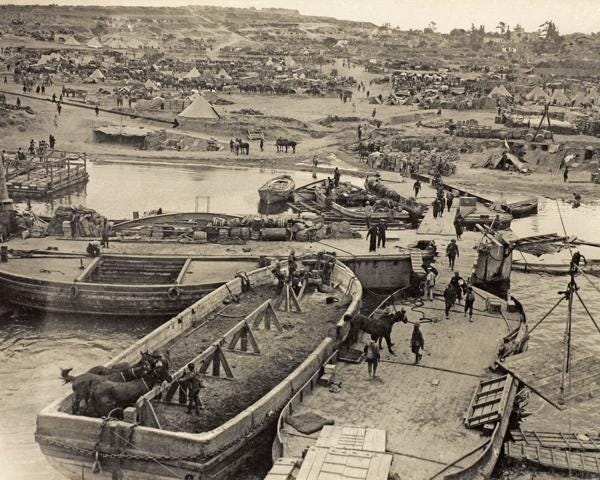
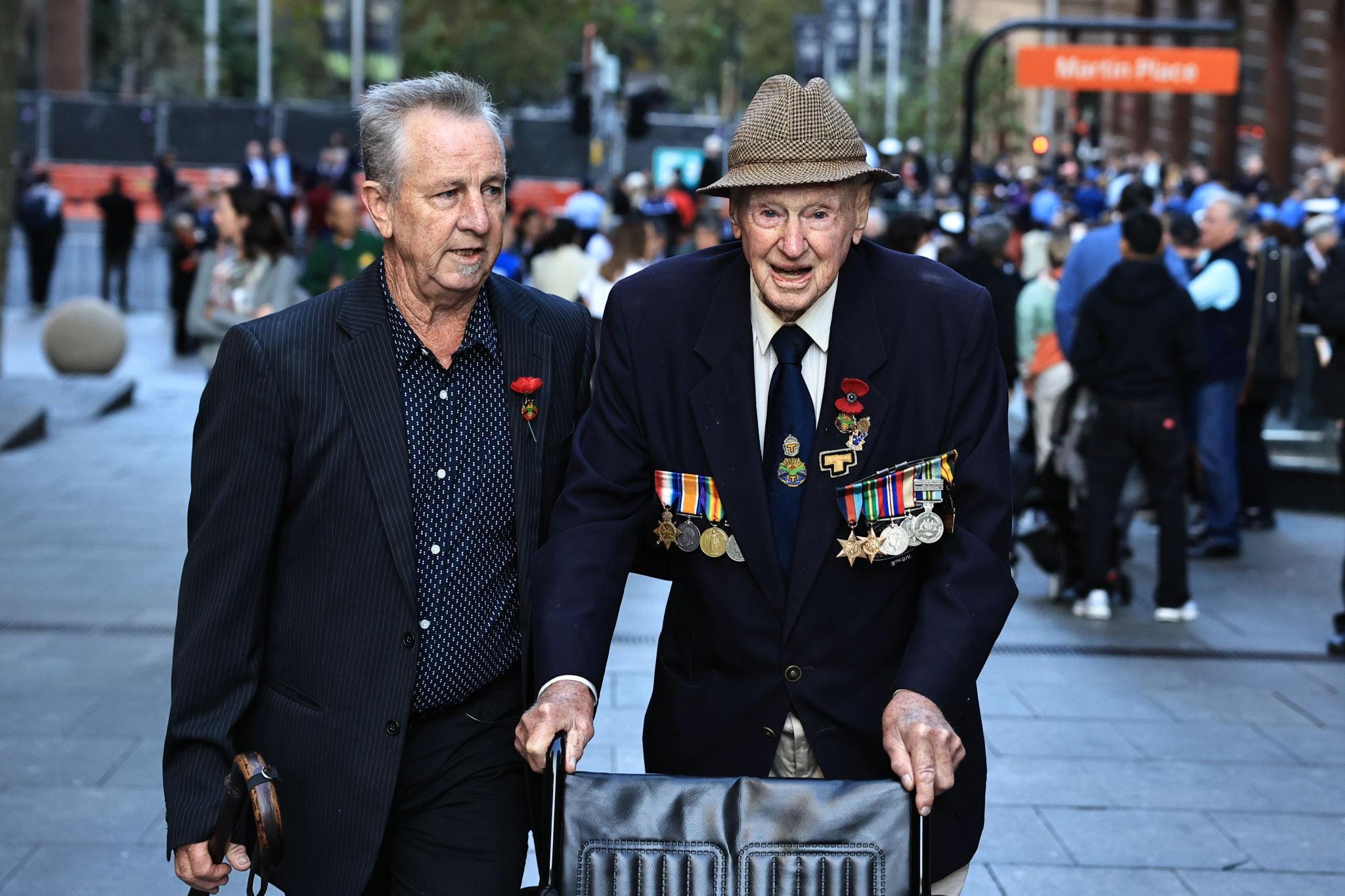
By 1918 over 300,000 Australians had served overseas. Virtually all of them were drawn from the then-authorised population. Under the Defence Act and the prevailing “White Australia Policy”, only men “of substantially European descent” were permitted to enlist.34 Consequently, fewer than 1,000 of those serving in WWI were Indigenous Australians.5 In other words, about 99.7% of ANZACs were of European descent. When the soldiers marched off to battle, they overwhelmingly did so as members of the settler community, patriots who believed they were defending their homeland and its particular demographic. After the Armistice, they were celebrated as Australian heroes who had fought for Australia. In decades that followed, ANZAC Day became a ritualised celebration of those values: courage under fire, loyalty to mates, and defence of the national home.
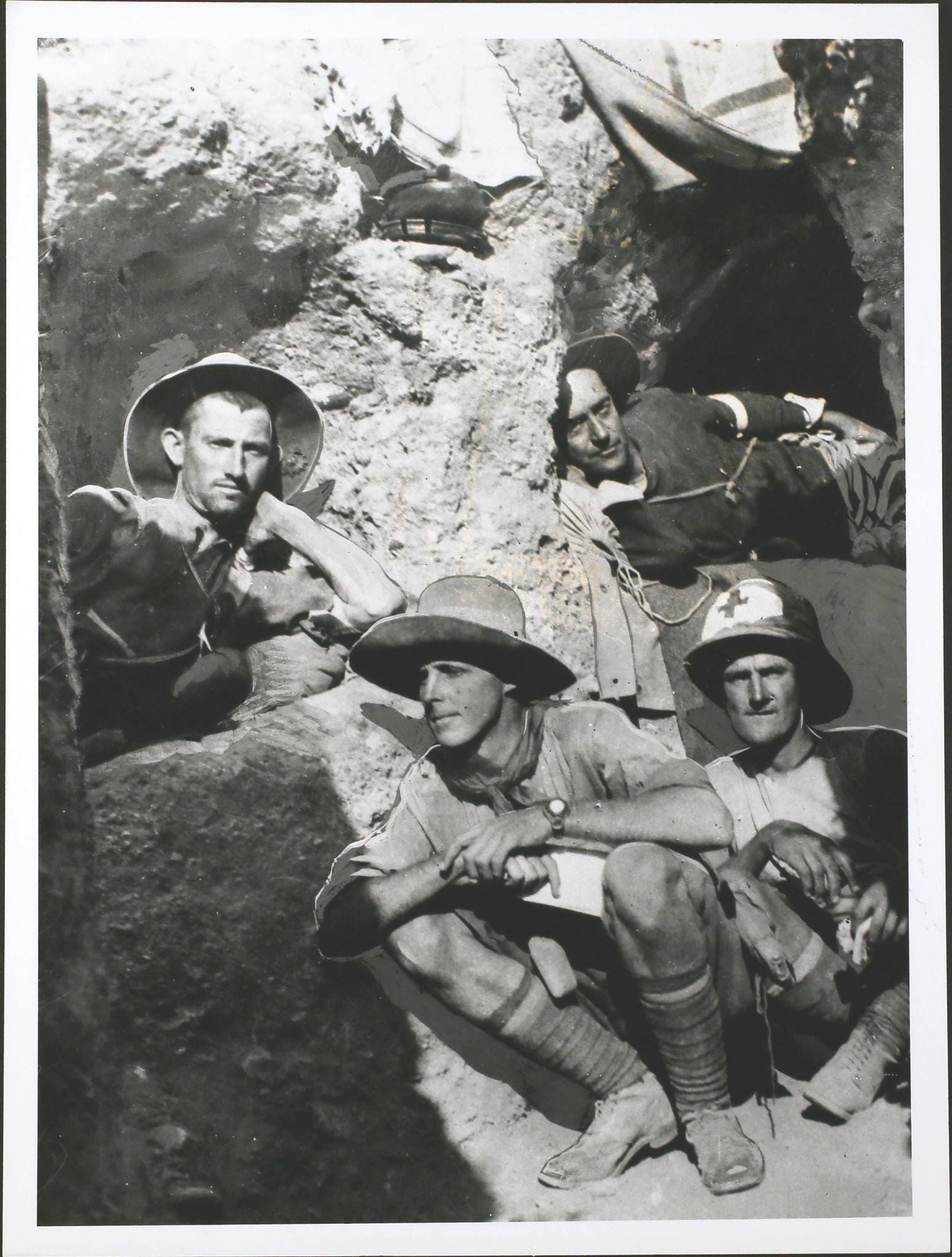
The ethos of ANZAC Day is captured in RSL literature: “Thousands of men set off to defend our national and individual core values… their ultimate sacrifice for their country underscored a powerful legacy”.6 The emphasis is unmistakable, those men laid down their lives for this country. The RSL’s commemorative statements continue this theme of national solidarity: ANZAC Day brings people together in “our respect for those who sacrificed their lives for our country’s benefit”.7 In other words, ANZAC Day unites Australians in gratitude that the nation they built remained free. It is a moment to honour the belief that Australia belongs to Australians, that it was worth defending from anyone who would threaten it.
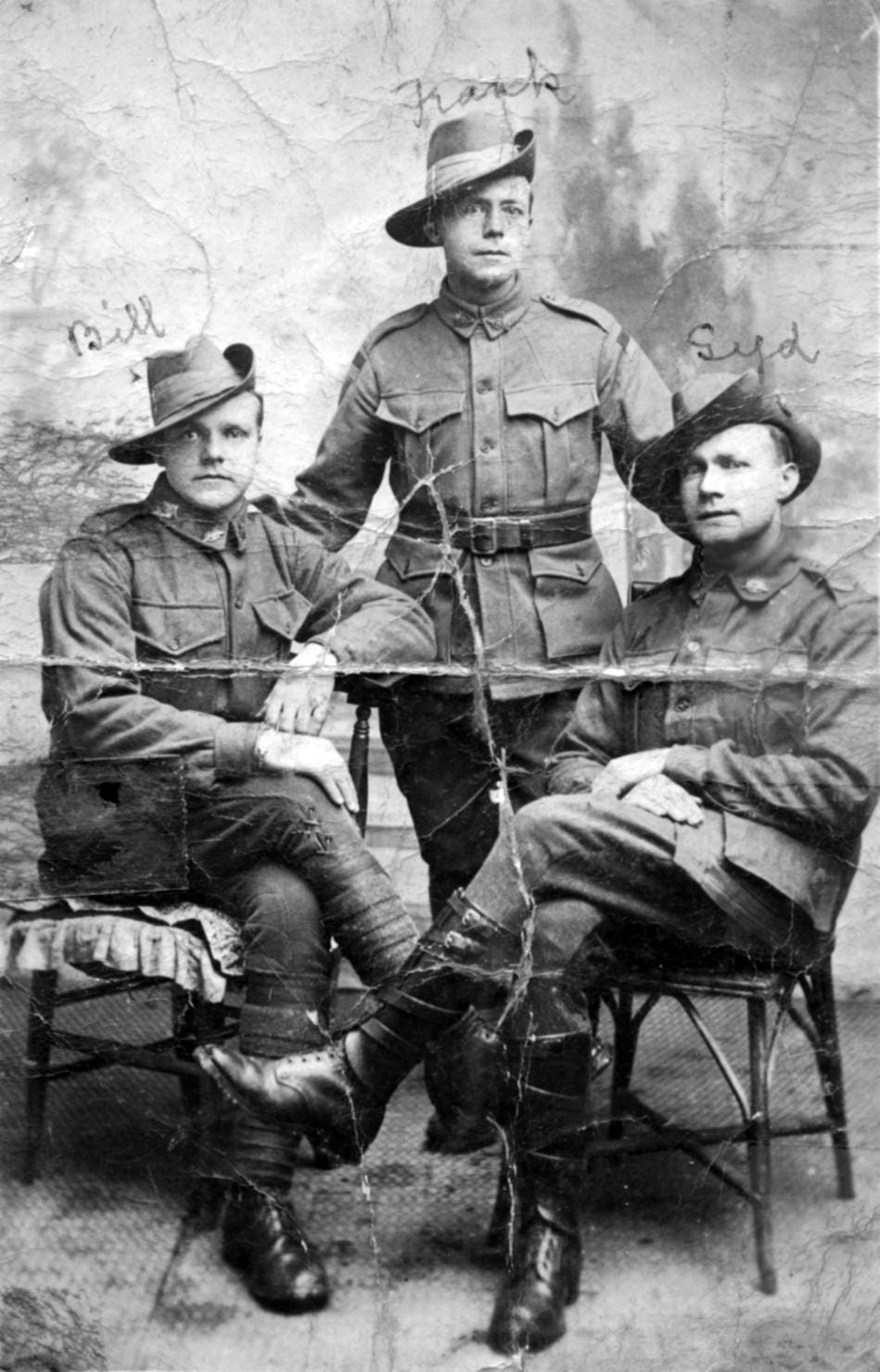
Importantly, the ANZAC story was born in an era of overt race-based policy. The White Australia Policy barred non-European immigration and shaped the prevailing national identity. The Returned and Services League itself fought to preserve White Australia into the mid-20th century. In short, the founding fathers of modern Australia, the men who fought in the trenches. did not conceive of Australia as a plural of nations, but as a single, unified homeland for the descendants of European settlers. They gave their lives believing they were defending their country.
Welcome to Country: Origins and Modern Meaning
By contrast, the Welcome to Country ceremony comes from a very different tradition. Its roots lie in pre‑colonial law and custom: Aboriginal clans each had defined territories or “countries.” When strangers (even from other Aboriginal tribes) entered a clan’s land, a ritual was performed “to determine whether the travellers were peaceful and then to show that the travellers were welcome” (If they were not deemed peaceful, lets just say the aftermath was not pretty).8 Anthropologists note that in many Aboriginal cultures a smoking ceremony or other ritual would accompany this welcome, so that the guest tribe could move about without fear of hostility. In this sense, the original Welcome to Country was a permission rite, a way of granting safe passage across tribal lands.
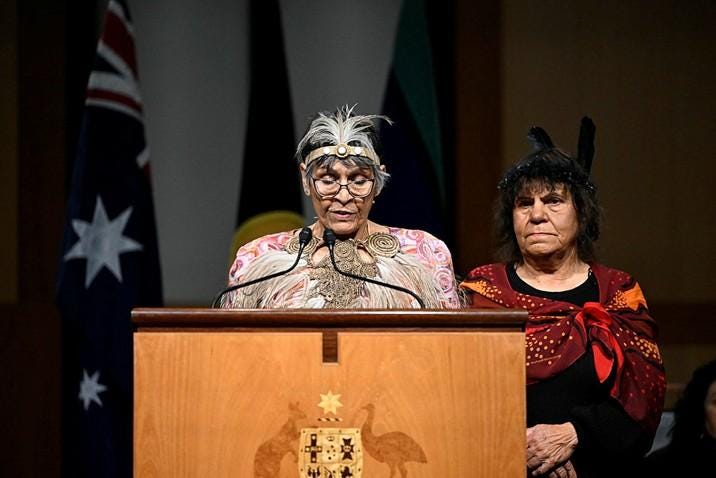
The modern Welcome to Country differs though. It is a relatively recent innovation (first practised in the 1970s) serving as a public land acknowledgment at official events. Its stated purpose is to show respect for the “cultural significance of the surrounding area” to the descendants of its original inhabitants. In practice, it usually involves an Indigenous elder acknowledging that an event (in this case, a dawn service) is being held on the lands of the Aboriginal or Torres Strait Islander people who are recognized as the “original owners”.9
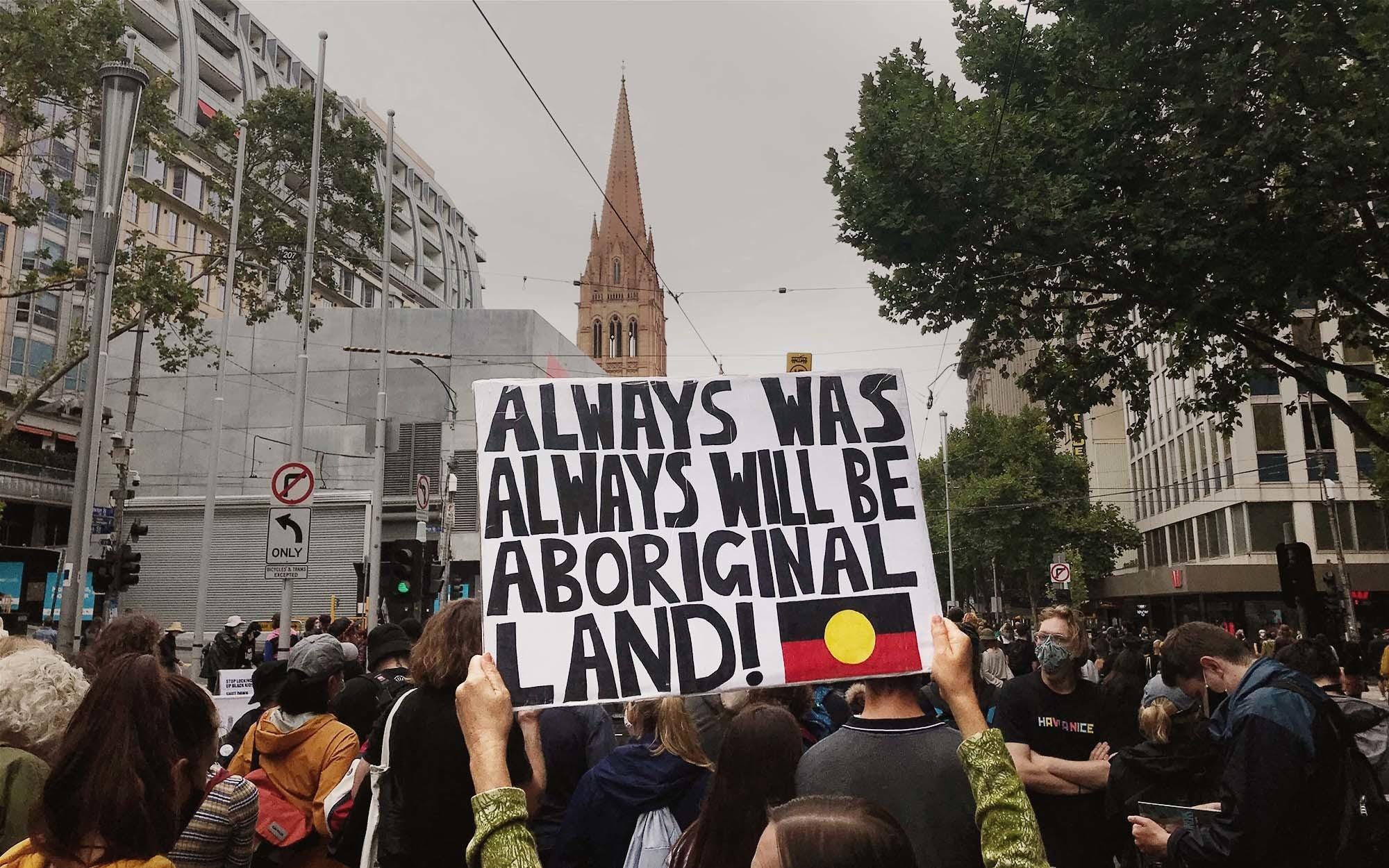
In contemporary Australia, a Welcome to Country is often accompanied by an assertion of ongoing Aboriginal ownership. Phrases such as “We acknowledge the Traditional Custodians” or slogans like “Always was, always will be Aboriginal land” frequently follow. These statements carry an unmistakable political charge. The iconic slogan “Always was, always will be Aboriginal land” encapsulates the idea that Aboriginal peoples have been on the continent for “more than 65,000 years” and that the sovereignty (in thier view) of the country has never been ceded.10 In other words, it challenges any notion that sovereignty automatically belongs to those of European descent. This sentiment comes from the land-rights movement itself. As the historian William Bates recalled hearing as a boy, white settlers “only borrowed [the land]… it always was, and always will be Aboriginal land”.11
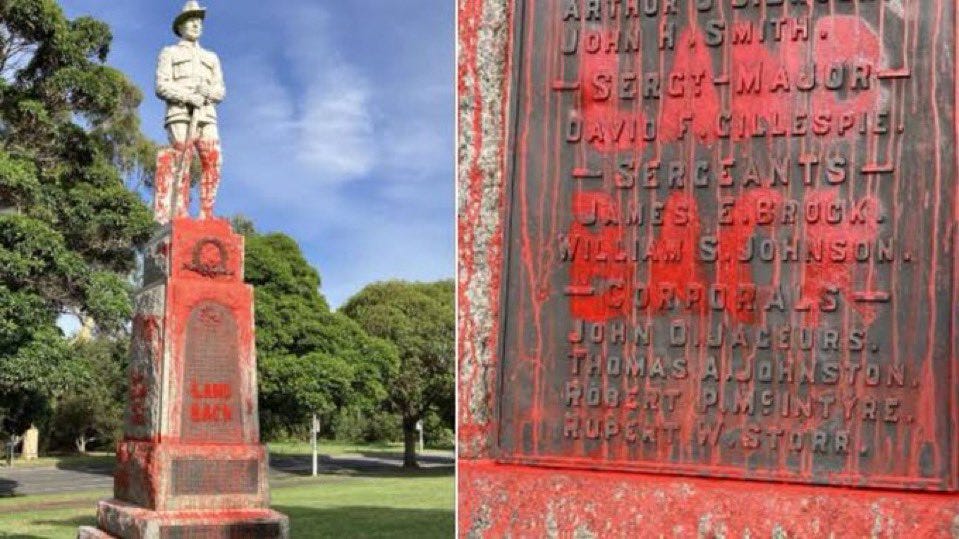
Similarly, the contemporary “Land Back” movement explicitly frames colonisation as illegal and demands the return of land to First Nations people.12 ANTAR (Australians for Native Title and Reconciliation) explains that Land Back is about “recognising and honouring First Nations Peoples’ enduring relationships to and with lands and waters” and aims to counter “settler colonial” dispossession.13 In short, modern interpretations of Welcome to Country come freighted with the idea that Australia was taken unlawfully and that true ownership remains with Indigenous custodians. Even if presented as an act of respect or reconciliation, it implicitly carries a message about sovereignty.
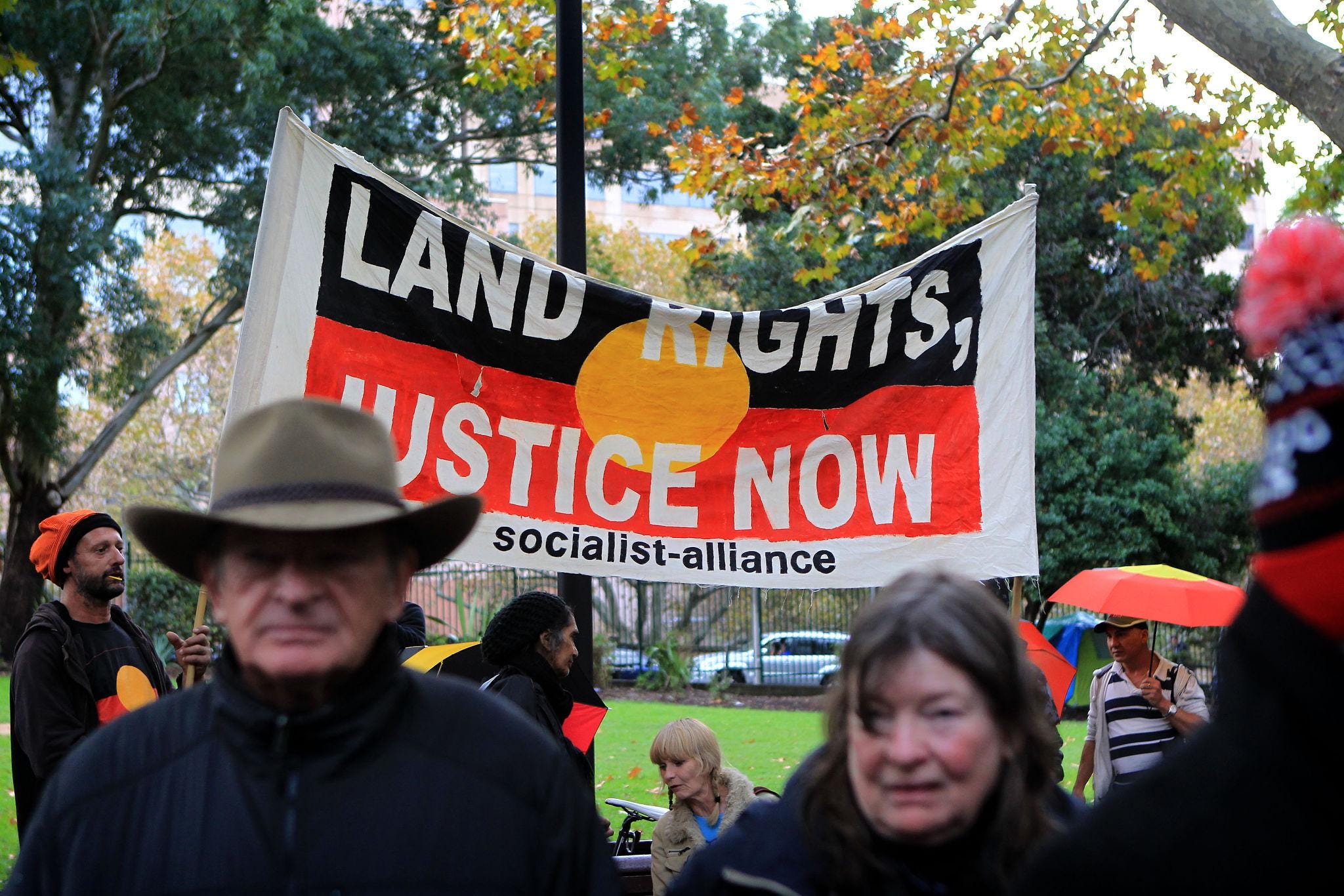
The ceremonial language has evolved accordingly. A traditional Welcome might have been a purely local protocol between tribes, today’s version typically addresses the whole nation, often recited by high-profile elders. In parliament, for example, a Welcome to Country now opens each session after a federal election, followed by the national anthems.14 But on ANZAC Day, a day specifically dedicated to past and present Australian soldiers, inserting this ritual is not historically or logically neutral. When an Aboriginal declares that Australians must “show respect to us as traditional owners, sovereign owners to this country”, it is not simply telling attendees to acknowledge culture, it is asserting that sovereignty lies with a different people.15
A Clash of National Narratives
Put plainly, the two ceremonies convey opposing national stories. ANZAC Day’s narrative is one of sacrifice: Australians are joined in honouring those who fought and died for their country (supermajority European), with the unspoken understanding that their country belonged to them and their descendants. Welcome to Country’s narrative (in its modern form) is one of layered sovereignty and signals to Australians that the land was never legally surrendered and that they’re guests in their own nation which their ancestors fought for.
These stories are impossible to reconcile within a single ritual. The image of Anzac soldiers fighting bravely for Australia is fundamentally at odds with an assertion that Australia remains Aboriginal land. The men at Gallipoli and beyond died believing this was their country to defend, not acting as guests or trespassers. Laying a wreath on the cenotaph and hearing “always was, always will be” sends mixed signals: are we saying we honour their sacrifice because we earned this land, or are we saying they fought on land that didn’t truly belong to them?
In practice, the tension is overt. On ANZAC Day we expect messages of national continuity (“Lest we forget”, “soldiers who gave us our freedoms” etc.). Welcome to Country inserts a narrative of fractured belonging and unextinguished Indigenous sovereignty. It frames Australians as if they are visitors in their own land, precisely the inverse of the traditional Anzac spirit. The slogans and phrases often used ,“Traditional Owners”, “our mob”, “First Nations”, “Country” as a living entity are reminders that behind the ceremony lies the notion of multiple nations across the continent. For many Australians steeped in the Anzac story, this can feel like an unwelcome reframing of what they’re there to commemorate.
The Dawn Service Controversy and Its Aftermath
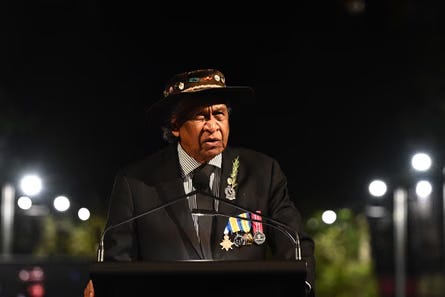
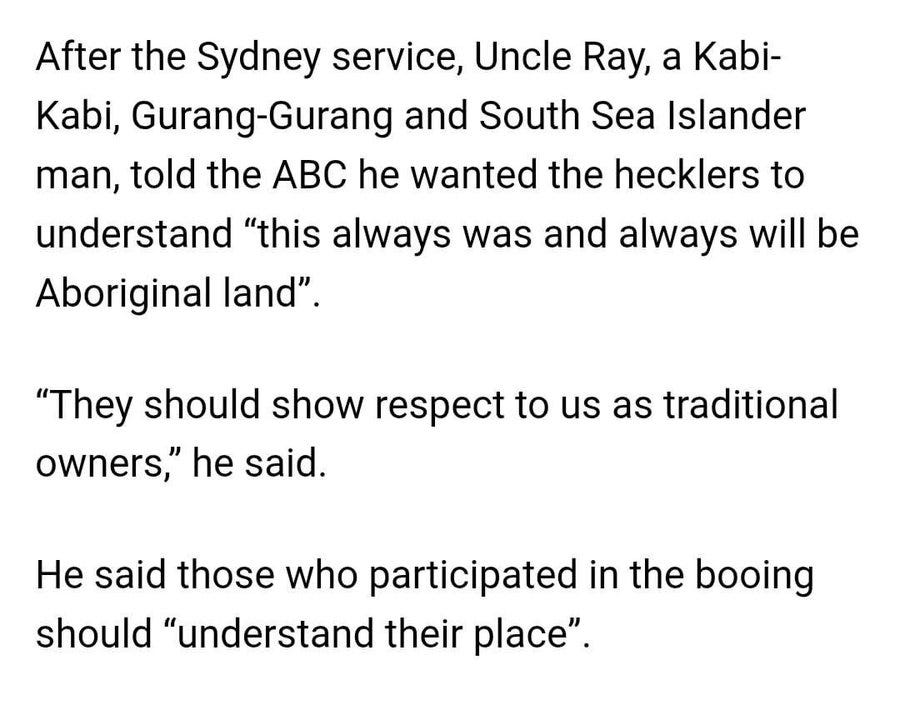
The friction between these meanings came to a head today at the Anzac Day dawn services. In Sydney’s Martin Place, Aboriginal elder Uncle Ray (Pastor Ray Minniecon) began his Welcome to Country as planned. Video and reports show that a section of the crowd reacted with jeers and boos.16 Uncle Ray later told ABC News that he had a message for the hecklers: “This always was and always will be Aboriginal land. They have to show that respect to that, to us as traditional owners, sovereign owners to this country”. His words made explicit what is often implicit: that the Welcome to Country carries an assertion of Aboriginal sovereignty.
Defence Minister Richard Marles termed the booing “deeply disrespectful,” insisting that acknowledgements of country are simply acts of respect that should never be heckled.17 Politicians from nearly all parties, including Prime Minister Albanese, condemned the disruptions.
Yet for the many, the Welcome itself was seen as the provocation. Some expressed that it was inappropriate for the ceremony’s tone. Last year former opposition leader Peter Dutton, for example, argued that significant events like the opening of parliament might warrant such rituals, but not Anzac Day: “Anzac Day is about our veterans… I think if you are listening to their sentiment… the majority view would be that they don’t want it on that day”.18 He cited an actual letter from an RSL sub-branch in Cairns, which implored a local MP to omit the Welcome: “In defence to our members’ wishes, we respectfully request that you refrain from including the welcome to country in your speech at our Anzac Day dawn service”. Those Australians did not see themselves as “guests” on Anzac Day at all, and believed the Welcome ceremony to be a modern addition that “has nothing to do with commemorating the war dead.”
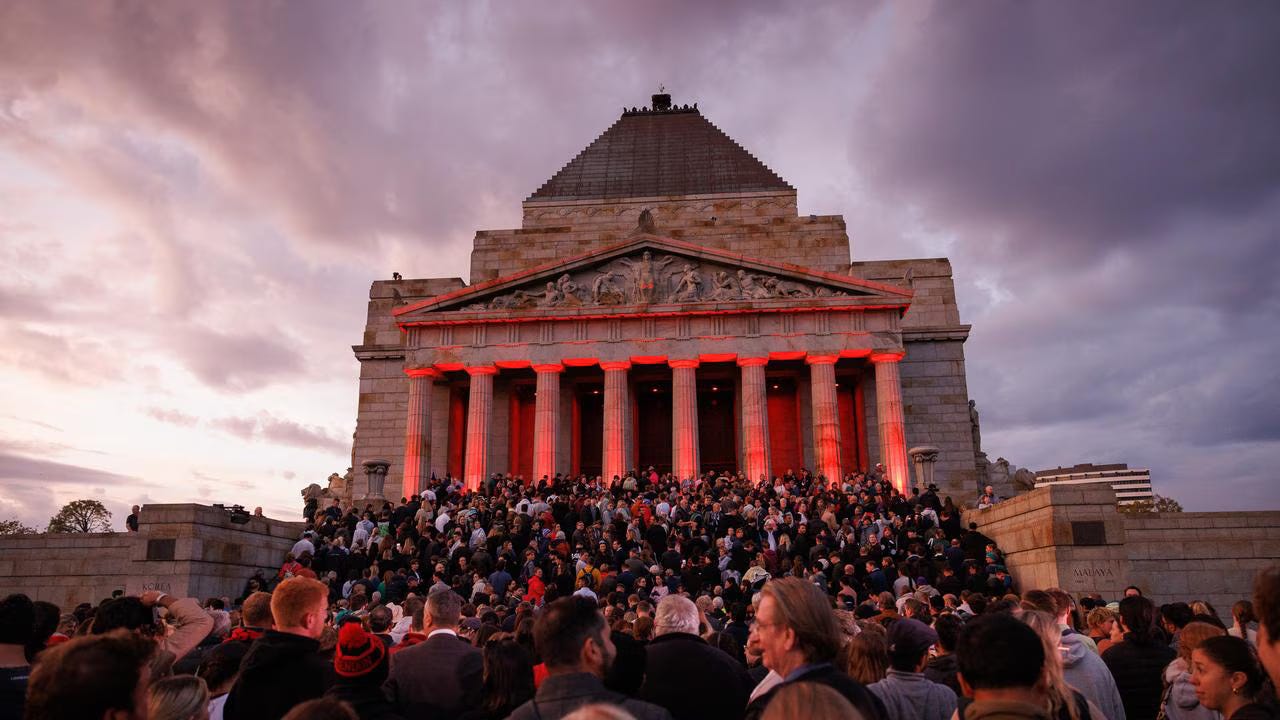
In short, what most liberal or left-wing critics call respect, the objectors see as politics. For them, a Welcome to Country on ANZAC Day is not a benign gesture but a political statement. It implicitly reframes Australians, including the descendants of ANZACs as outsiders on their own soil. Introducing it into the sacred stillness of dawn ceremonies is precisely what provoked the backlash.
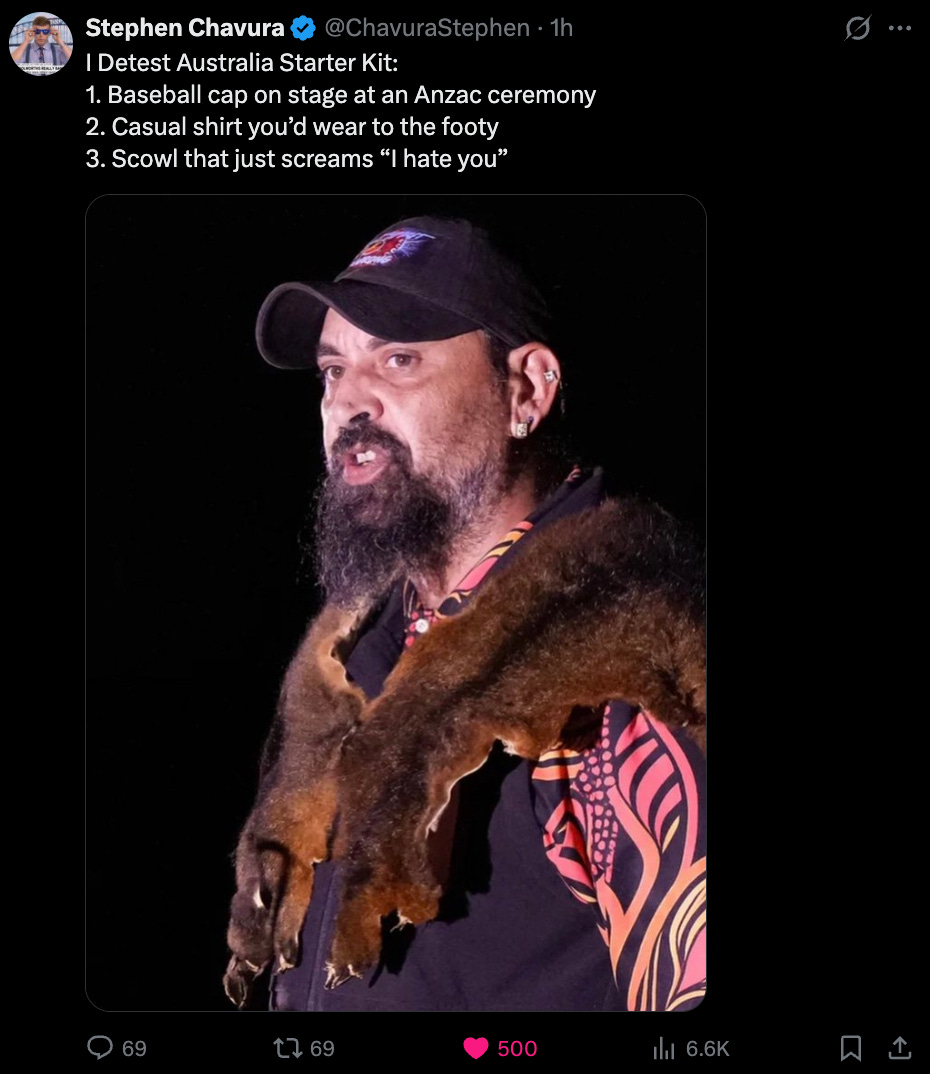
It is notable that some nationalist groups even organised online to boo the ceremonies. Indeed, media and official reports have highlighted that fact. But the core grievance expressed, that the Welcome to Country is a political imposition, is shared by many ordinary Australians and even some Aboriginal veterans.
It is telling that in the wake of the incident, major newspapers and opinion writers on the conservative side defended the booers’ stance as understandable. One columnist bluntly wrote that welcoming ANZAC veterans onto Aboriginal land was “insulting” to those who fought for this country. By contrast, opinion pieces in progressive outlets have continued to treat the protesters as the villains. What rarely gets acknowledged is the empirical fact: that the vast majority of those who served before the modern era believed they were fighting for an Australian nation that belonged to Australians. And indeed, in polls run by news outlets, large majorities of veterans said they do not support Welcome to Country at dawn services.
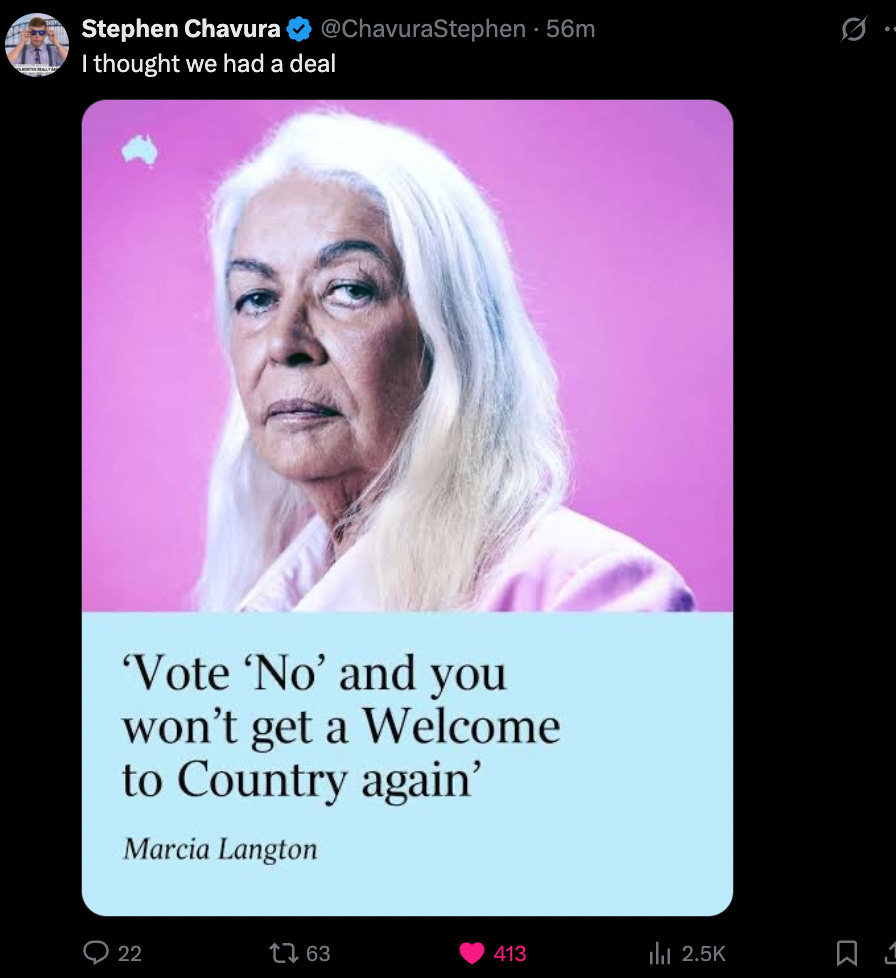
Whatever one thinks of the booing itself, the episode reveals reality: ANZAC Day and the Welcome to Country tell opposite stories. ANZAC Day tells us “this is our nation,” while the Welcome to Country says “this land’s ownership lies elsewhere.” You can celebrate one narrative or the other, but not both. As the RSL national president put it, 364 other days exist for making political statements; ANZAC Day should be reserved for remembrance.19
Conclusion
ANZAC Day is a sacred part of Australian national memory. It was consecrated by the sacrifice of those who believed Australia was their country to keep. For them, ownership of the land was a settled fact to be defended. To introduce into that solemn narrative the message that this very land “was never ceded” and remains Aboriginal territory introduces a dissonance.
Veterans and many Aussies see this as fundamentally alien to the ANZAC spirit. As one elderly ex-serviceman remarked, the day is meant to honour every person who gave us the country we live in, not to re-litigate whether they deserved it. When the emphasis shifts away from their sacrifice and toward modern political grievances, it is perceived as disrespectful.
For the men of 1915, the flag under which they fought was home. May we never forget their view of Australia as their nation; may we never lose sight of what they left for us: a free and shared land, defended at the cost of their lives.
https://celina101.substack.com/p/guests-in-their-own-country