
Heinrich Heine’s Revolution
A radical meditation on history and the right to live.
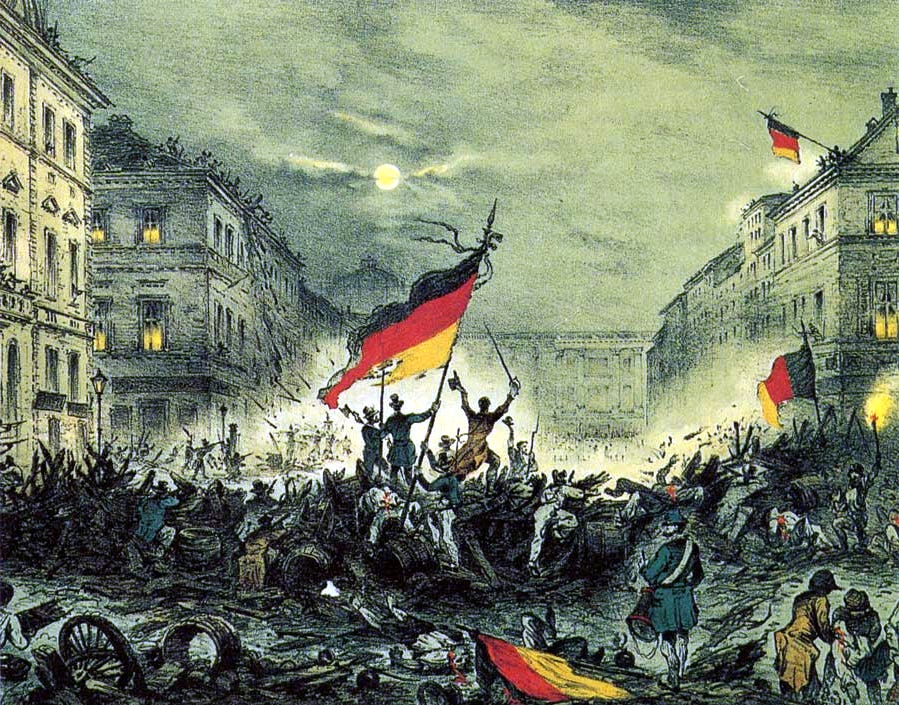
Germany’s greatest poet Heinrich Heine watched 1848 break open like a promise spoken too quickly. Streets filled and banners rose, yet beneath the noise he felt a thin pulse. The revolution spoke in the language of the nation and moral discipline. It praised virtue above life and restraint above force. Heine saw professors stepping into the place once held by princes. He saw sermons take the place of chains. Germany rose against authority while carrying authority inside its own speech. The revolt demanded liberty while enforcing obedience to inherited ideas shaped by fear. Heine understood that a revolution anxious about desire and material need would return to rule by managers and preachers. The year collapsed because it trusted symbols more than hunger and ideas more than flesh. Heine held to a harsher clarity: revolution lives only where life presses its right into the present and where bread outweighs banners.
Heine wrote from a position formed by law, custom, and exclusion rather than faith. Jewishness, for him, functioned as a civil mark imposed by German society, a condition shaped by regulation, suspicion, and conditional tolerance. He stood inside the German language and outside full belonging. This tension sharpened his irony and disciplined his clarity. He treated identity as pressure rather than essence. From this position, history appeared as something enacted upon living bodies. Power operated through habit, education, and sentiment. Thought carried consequence. Writing became a form of exposure, a means of forcing ideas into the open where they could no longer hide behind culture or piety.
Heine opens history like a wound that keeps repeating itself. One voice claims that everything returns. Peoples rise, blossom, and decay. Empires mature and sink. Revolutions flare and settle into new chains. This voice repeats that nothing changes, that every effort circles back to dust. Under its gaze, civilization earns a shrug. Freedom struggles prepare fresh masters. Passion burns bright and cools into fatigue. Individual lives shrink into ledgers of hope, pain, joy, and error, replayed endlessly across centuries. In Germany, historians and poets polished this mood into elegance. Their art softened resignation into culture. Their melancholy dressed obedience in beauty. Power admired this posture deeply.
Heine shows how authority learned to cultivate this temperament. Travel led minds towards ruins. Ruins whispered calm. Sermons taught patience and submission. Public fervor lost heat. Desire slowed. Political will sank into private reflection. Power thrived on stillness. It trusted growth close to the ground, subtle motion, quiet expansion. Heine compares this method to creeping vines spreading across soil. He leaves judgment to time itself, certain that history measures strength through consequence rather than intent.
Another voice rises, brighter and louder. This voice speaks of ascent. Mankind advances towards refinement and harmony. Heroes appear as steps in a vast stairway. The golden age waits ahead. Paradise calls for conquest through passion, love, and an awakened spirit. Knowledge offers fullness of life. In Germany, humanists and philosophers carried this vision with intensity. Reason shaped their politics. Ideal states shimmered before them. Heine honors their upward reach. He values their courage, their refusal of stillness, their trust in becoming.
Yet Heine presses deeper. Neither resignation nor radiant destiny fits the pulse of living experience. Human beings feel themselves as a presence, a weight, and a force. Existence resists reduction to instrument or sacrifice. Purpose and means arise as human markings etched into time. Creation carries its own end. Each moment stands complete. Life asserts itself as fact, demand, and flame. History flows through this assertion rather than above it.
From this ground, Heine names revolution. Revolution appears as life pressing its right against hardened time and inherited command. This struggle resists paralysis and illusion alike. The present claims value. The body claims bread. Life demands recognition here and now. Heine seals his vision through the words of Saint-Just: “Bread is the right of the people.” He holds this sentence as the clearest utterance of revolutionary truth, sharp enough to cut through centuries of submission.