
Homelessness Ain’t What It Was
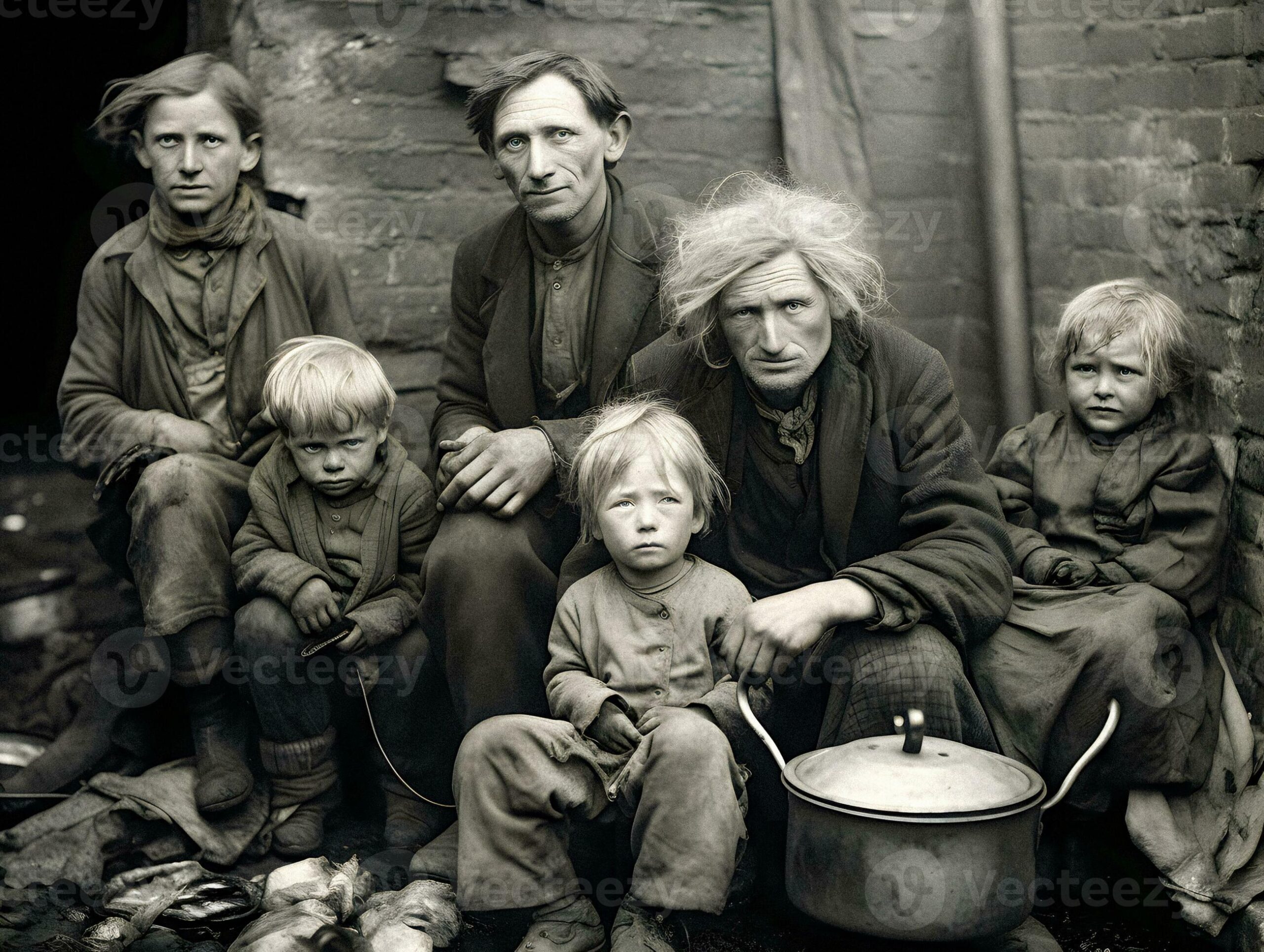
Homelessness first became a common topic in political conversations in the late 1970s. I was living in London at the time and had a drinking buddy who was a probation officer. He taught me a mnemonic of his profession that perfectly captured the phenomenon: “CATO 4321.”
The first half, “CATO,” gives you the four categories of homeless persons. “C” stands for “Crazy.” “A” stands for “Addicted” and also “Alcoholic.” “T” is for “Tramp,” the common British term for a person who likes being homeless. “O” is for “Out of luck.” The O category is normal citizens—not crazy, not addicted, not happy homeless—who have suffered some simultaneous major life catastrophes (health crisis, fired from job, marriage collapsed, bank foreclosed), leaving them … homeless.
The second part, “4321,” gives the proportions of each category in tenths. So four-tenths of the homeless are crazy, three-tenths are addicts, two-tenths are hobos by choice, and one-tenth are normies badly out of luck.
I sometimes still bring out my buddy’s little mnemonic when conversation turns to homelessness, but it hasn’t aged well. Whatever the case was in 1970s Britain, “CATO 4321” is at best a highly approximate description of homelessness in the Western world today.
For one thing, the “C” category and the “A” category have so much overlap that it hardly makes sense to treat them as separate. Progressives have encouraged the merger by recruiting both Cs and As into the blessed ranks of victimhood, pitiable souls oppressed by bourgeois society. I don’t know precisely the size of the overlap, but the number of categories needing consideration here is not two but three: the crazy nonaddicts, the sane addicts, and the crazy addicts.
And I am sure that those three groups today comprise more than 70 percent of the homeless population, while the Ts and Os have now dwindled to well below 20 and 10.
I seriously doubt there can be many Os, certainly not 10 percent. Simultaneous personal catastrophes do, of course, happen. To force a normal citizen into homelessness, however, the ruin must be dire indeed, with no relief from friends or relatives, no charities, churches, or municipal authorities offering a place he might, at least temporarily, call home. The world can be a cold place for sure, but in the West today, it is very rarely that cold.
The Ts are seriously in decline. This is a historically recent development. Happy homelessness was common well into the late 20th century. Roger Miller’s song “King of the Road” topped the country music charts in early 1965. Tramps were a common sight in England’s countryside during my 1950s childhood. In the late 1920s, George Orwell tried out the tramp lifestyle for himself and wrote about it at length in Down and Out in Paris and London.
Further back still, the Ts produced a much-loved poet: the Welshman W. H. Davies (1871-1940). The opening couplet of Davies’ 1911 poem “Leisure” used to be known by every literate Briton.
What is this life if, full of care,
We have no time to stand and stare?
As well as being a tramp, Davies was also a hobo who “rode the rails” in North America, although that adventure cost him a leg. Jumping on and off freight-train boxcars for cost-free personal transportation did not always work out well.
Along with the overall decline of the Ts, there has been a parallel drop in one of their practices that used also to be common among the working- and lower-middle-classes: hitchhiking. When I was a college student in the mid-1960s, it was common for British college students on summer vacation to hitchhike south across Europe to the Mediterranean beaches. I ticked that box myself as an undergraduate in 1964 while (I suppose) Roger Miller was working on his lyrics.
Not for me the humdrum Mediterranean, though. Ever the contrarian, I hitchhiked from the English Midlands east across Belgium, Germany, Austria, Hungary, and Romania to the Black Sea and back, carrying only a rucksack and a light bivouac tent. For those four weeks, I sampled the homeless lifestyle, much of it behind what was still the Iron Curtain. It seems incredible now, but I have the visa stamps in my old British passports to prove it. An adventure of that sort by a naive 19-year-old nowadays would be suicidal.
Why? What has happened in the Western world to bring the Ts close to extinction? Large-scale diversity, of course. Mass Third World immigration has produced the effect analyzed 20 years ago by Harvard political scientist Robert Putnam. He showed that you can’t have a high-trust society with mass diversity. (His paper on the subject was awarded a prize by a Swedish university, but the Swedes seem not to have taken its warning seriously.) Ts can only survive in a high-trust society. We no longer have high-trust societies.
https://chroniclesmagazine.org/columns/homelessness-aint-what-it-was