
How an Empire Fades
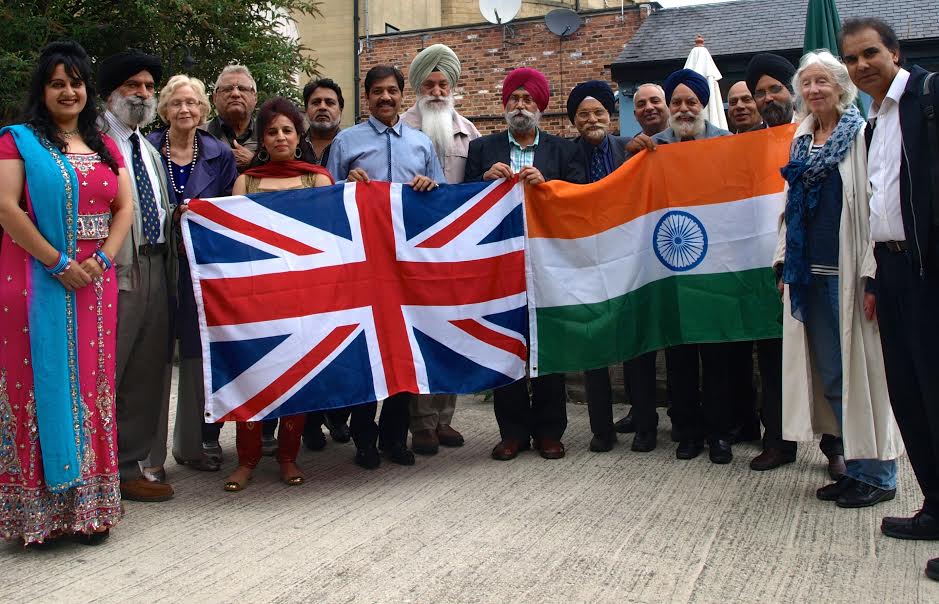
Britain’s cultural voice and its sovereign borders, once the proud expressions of a seafaring island nation, now pass, in some measure, through the hands of Indians.
Two years ago, I was hired by the British Council to teach English in Saigon, Vietnam.
Here was a royal-chartered body, a quango entwined with the Foreign Office, tasked with projecting Britain’s cultural soft power across the globe through education. I imagined crisp British voices, tidy classrooms, and eccentric linguistics boffins. Instead, from the very first email, I found myself corresponding with Indian staff at a shared services centre in Noida, whose replies were not always timely.
Today, the vast Indian conglomerate Tata helps run much of the British Council’s HR machinery. They are no doubt highly capable, yet one cannot suppress a pang. Britain’s soft power, that delicate instrument once wielded by Englishmen in linen suits, is now administered from the bustling city of Noida in Uttar Pradesh, northern India.
As I revealed in the EL Gazette, the British Council has quietly offshored more than 700 administrative roles in HR, finance, and IT, to its Noida shared services centre.
2010 appears to be a key year in this transition, marking the formal establishment of the shared services model prior to later transfer of functions to Tata Consultancy Services.
My own contract in Saigon proved short-lived. Family circumstances pulled me away soon after I reached the Far East, but the episode left a lingering disquiet.
I had sought to serve a truly British institution overseas. Instead, I had brushed against something stranger: the quiet eastward drift of the White Man’s administrative burden.
Noida lies a mere five-hour flight from Saigon, so while winding down my brief stint with the British Council, I began to probe. One image soon burned itself into my mind.
Beside the choking, horn-blaring frenzy of the Noida–Greater Noida Expressway stands the gleaming Advant Navis Business Park; a cool, sterile citadel of glass and steel rising like a mirage above the dust, noise, and teeming vitality of Uttar Pradesh.
Here, in climate-controlled cubicles, sit the Indian teams who now manage the British Council’s human resources, finances, and technology.
Not in London. Not even in Manchester. But here, in the pulsating heart of the subcontinent.
The Quiet Transfer of British Administration Eastward
I have long adored the Orient in all its exotic splendour. I have taught in Hanoi’s humid heat, volunteered with refugees along the misty Thailand-Burma border, rattled across southern China by slow train, and still count Kipling’s Kim among my favourite books.
Yet this offshoring fills me with unease. It evokes the old British East India Company’s reliance on clever native babus and munshis, only now the roles have subtly reversed. The clerks have moved upwards, and British institutions increasingly lean upon them.
Offshoring seems to have gathered pace after earlier scandals, including a 2009 Daily Telegraph exposé on MPs’ undeclared foreign junkets funded by the British Council. In May 2007, for instance, Derek Wyatt MP flew business class to India at a cost of £2,142. Ancient history now, but still underreported and concerning, given the British Council All-Party Parliamentary Group’s (APPG) influence on parliamentary decision-making.
Overlaps in APPG leadership compound this, with MPs Virendra Sharma and Navendu Mishra elected as vice-chairs of the British Council APPG in May 2023. As of 9th August 2023, Virendra Sharma was also a Vice Chair of the India (Trade & Investment) APPG, while Navendu Mishra was its Co-Chair, according to the UK Parliament Register of APPGs.
This happens to coincide with Tata’s 2023 appointment as preferred partner to initiate the transformation and phased transfer of services at the Noida Shared Services Centre.
As for how potential conflicts of interest are managed, the Foreign Office’s FoI records offer little internal insight, beyond stating that responsibility lies with external bodies.
At the top, in any case, British-Indian leaders have helped shape the British Council. Sanjay Patel served as Chief People Officer of the British Council until January 2026. Vijay Doshi is Chief Financial Officer (a role previously held by Bidesh Sarkar 2007-14) and Trustee Sushil Saluja chairs the Commercial Committee and sits on Finance and Nominations.
One cannot help but note the poetic symmetry: those once governed from distant Whitehall now guide, and outsource, the cultural apparatus of their erstwhile rulers.
Former Prime Minister Rishi Sunak himself visited the British Council’s New Delhi centre in 2023, perhaps sensing the shift.
From Cultural Diplomacy to the Gates of the Realm
If Britain’s cultural diplomacy has been quietly transferred eastward, one is bound to ask whether more state functions have followed.
 The answer came to me not in a policy paper, but amid the languid rhythms of Hanoi, as I helped my Vietnamese girlfriend navigate her UK tourist visa application there.
What should have been a simple bureaucratic exercise revealed a deeper transformation: even the work of British immigration has been transferred to India.
Applications are no longer lodged at the Embassy in the old colonial style. Instead, they pass through VFS Global; a company founded in Bombay in 2001, now headquartered in the UAE, led by Indian executives including Messrs Karkaria, Savla, Martyris, and Vyas. Hardly the stiff-upper-lip British outfit one might expect.
Furthermore, in 2018 UK Visas and Immigration (UKVI) consolidated much of its visa decision-making into a vast regional hub in New Delhi. No longer would applications from Southeast Asia drift through the lazy, tropical ease of Bangkok. Now they funnel into the frenetic, sweltering, clamorous capital of India.
The official statement from our Bangkok Embassy spoke blandly of “modernisation” and “regional hubs”; it can be read in full on the government’s website.
In the end, my girlfriend’s hopes of strolling through London’s parks, like my own earlier job application, flowed through Indian hands amid the dust and din of northern India. A far cry from the more delicate, incense-scented rhythms of Hanoi or Saigon.
Whether this is Foreign Office cost-cutting (as with British Council) or something closer to the outsourcing of sovereignty to cheaper Indian labour, I leave to the reader to judge.
Who Really Decides Who Enters Britain?
Back in England, the question still haunted me like a half-remembered whisper from the Raj: who truly holds the authority to grant or deny entry into the United Kingdom?
A handful of Home Office officials at the High Commission in New Delhi and the Deputy High Commission in Madras presumably still preside, evoking images of Conway in Hilton’s Lost Horizon; isolated guardians of order amid the exotic tumult.
But once VFS digitises the applications, how much of the grinding casework remains in Indian hands? Are we truly flying scores of British civil servants to sit in sweltering offices, or has the machinery itself been largely indigenised?
According to official government statistics, the workload is staggering. In 2024 alone, Indian nationals received 549,249 visitor visas. In the year to June 2025, another 431,725 study visas were issued. A vast, flowing tide of movement from the subcontinent, processed through channels that remain partially veiled.
FoI requests to the Home Office confirmed the New Delhi hub’s role in visitor visas, overseas domestic worker visas, and certain student categories.
Yet the department refused to disclose whether Indian nationals are authorised to make final grant or refusal decisions, citing Section 31 protections for immigration operations.
A request for staffing figures was similarly blocked under the cost exemption of Section 12(1).
The structure is officially acknowledged. What remains hidden is the precise locus of authority; that moment when an application turns into permission or rejection.
Fortunately, LinkedIn profiles of High Commission staff paint a telling picture.
Entry Clearance Assistants ostensibly process 65 applications a day, providing admin support to Entry Clearance Officers (ECOs) who decide whether to grant or refuse visas.
The staff on LinkedIn seem, by name and background, to be of Indian rather than British origin, though one would hope that the Entry Clearance Managers are at least British.
Then came the bombshell: buried deep in a report by the Independent Chief Inspector of Borders and Immigration on overseas decision-making centres, it states plainly:
“Most overseas visa sections employ a number of locally-based staff. These may be foreign nationals… Some may be ECO decision makers.”
There it is, laid bare: not just data entry or clerical support, but the reality that Entry Clearance Officers, who have the authority to grant UK visas, can be Indian nationals.
Thus, a quiet reversal is revealed. Britain’s cultural voice and its sovereign borders, once the proud expressions of a seafaring island nation, now pass, in some measure, through the hands of Indians.
From Noida to New Delhi, this is not simply outsourcing, but a recasting of how Britain sees, manages, and presents itself to the world.
The East has not merely returned the gaze. It has, in many practical respects, taken the pen.
https://www.americanthinker.com/articles/2026/05/how_an_empire_fades.html