
How Globalists Manipulated Hungary’s Election, and Plan to Crush Europe’s Conservative Nationalists
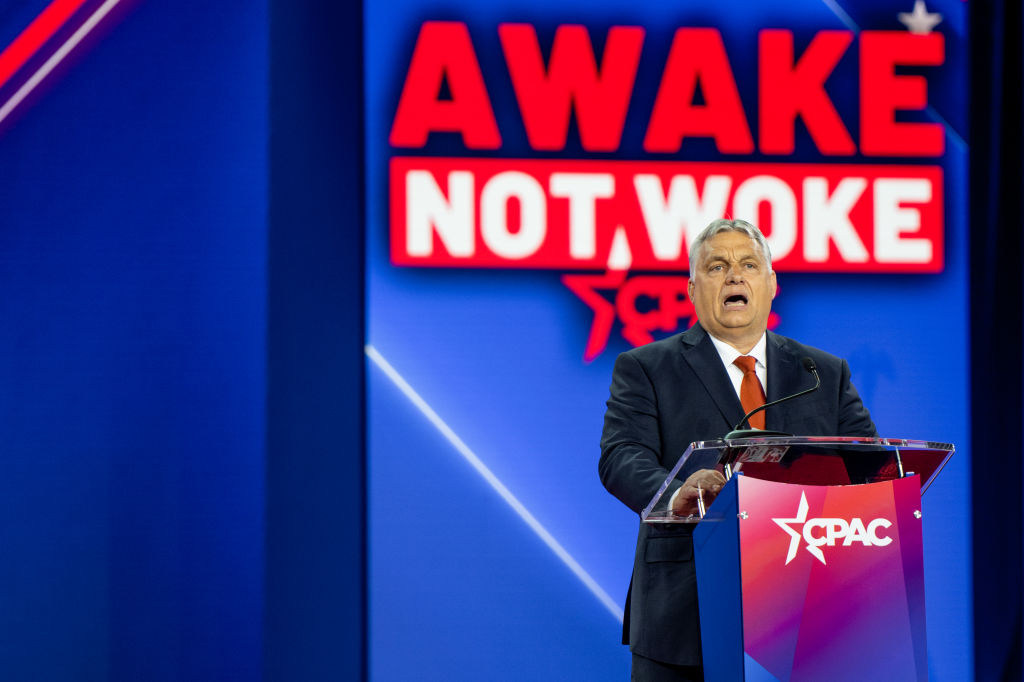
Far from the “victory for democracy” celebrated by Barack Obama and EU leaders, Péter Magyar’s election as prime minister of Hungary last month represents the success of a sophisticated system of electoral manipulation.
By using a coordinated strategy to undermine Hungary’s conservative nationalist leader, Viktor Orbán, and promote the pro-EU candidate, Magyar, globalists elites in Europe and the United States ensured a pro-Brussels victory in Hungary. They did so without the need to annul results, as was necessary in Romania, or to bar candidates outright, as was done in Romania and France.
On election day in Hungary, the casting of ballots was free and fair. One of us (Anna Wellisz) co-chaired an independent monitoring mission of nearly 100 observers and can attest to the procedural integrity at the polls. Yet procedural fairness on a single day does not define the full process. Years of external pressure, largely from outside Hungary, shaped the outcome.
A system that buries one candidate’s arguments while boosting those of the other cannot be called fair, regardless of clean polling mechanics. Mysterious resources from outside Hungary transformed Magyar, the pro-EU candidate, into a social-media star, despite legal bans on foreign funding and digital political ads. Meanwhile, EU officials and Western journalists unironically warned of “foreign interference” from Russia while ignoring their own massive influence operation.
The campaign against Viktor Orbán spanned more than a decade. It included relentless anti-Orbán media coverage across the Atlantic, public shaming over Hungary’s use of the national veto in the EU Council, and a stream of politicized rulings from the EU Court of Justice and Court of Human Rights on matters beyond their proper jurisdiction. Selective leaks from Western intelligence services further undermined the populist candidate—a tactic now routine in both Europe and the United States.
More potent was raw financial coercion levied against Hungary. Citing “the rule-of-law,” the EU withheld COVID relief, defense loans, scholarships, and imposed daily €1 million fines for rejecting migrant quotas. These measures totaled roughly €35 billion (US$41 billion) in financial penalties—about 15 percent of Hungary’s GDP for a nation of 9 million. Compounding the pressure, Ukraine’s anti-Orbán government cut energy supplies to Budapest, destabilizing its economy ahead of the vote. Brussels repeatedly signaled that Hungary’s financial woes would end only if voters chose the pro-EU candidate.
Such tactics had been used before with mixed success. What distinguished Hungary’s election was the full deployment of the EU’s Digital Services Act (DSA), the bloc’s legalized censorship regime. The DSA empowers “trusted flaggers” and EU-funded fact-checkers—overwhelmingly from left-leaning nonprofits—to amplify, downgrade, or suppress content. In Hungary, where Facebook dominates news consumption for about two-thirds of the population, the platform complied with DSA operatives’ demands. Their “Rapid Response System” worked overtime to combat “misinformation,” defined broadly as anything objectionable to the EU Commission. The result: relative newcomer Péter Magyar achieved higher engagement than any other politician on the platform.
Obama and EU Commission President Ursula von der Leyen were quick to hail the result as a democratic triumph. Obama explicitly linked it to Poland’s 2023 election. “The victory of the opposition in Hungary yesterday, like the Polish election in 2023, is a victory for democracy,” he posted on X. Yet financial blackmail, lawfare, censorship, and selective leaks stretch anyone’s legitimate definition of democracy.
The parallel with Poland is instructive, as the techniques used in Hungary were first tested there in 2023, and what happened in Poland since then offers a preview of what awaits Hungary under Magyar. In just over two years since Donald Tusk took power in Poland, his administration has pursued a lawless campaign against the opposition. Tusk, who vowed to rule “with an iron broom,” has openly admitted that some of his actions may not be “strictly legal” but are nonetheless necessary to implement what he calls his “militant democracy.” Some of his key measures include:
- The forceful takeover of public television, radio, the Polish Press Agency, and regional stations, followed by purges of critics.
- Illegal appointments of a new national prosecutor and purges of prosecution services, defying rulings of the Polish Constitutional Tribunal and Supreme Court.
- Manipulation of courts through shortened terms for presidents and installation of political allies to enable selective prosecutions.
- Blocking public funding to the Law and Justice Party (PiS) during the 2025 presidential campaign, severely disadvantaging the opposition. PiS candidate Karol Nawrocki still won the popular vote.
- Arrests and detentions of opponents under conditions amounting to torture, including the case of an elderly woman who died of a heart attack after questioning without access to counsel.
The most targeted figures are former Justice Minister Zbigniew Ziobro and his deputy Marcin Romanowski, who led PiS’ reforms of Poland’s judiciary. Their efforts sought to restore democratic accountability to a court system still dominated by Communist-era holdovers. Both men received political asylum in Budapest—an unprecedented step in EU history. Magyar promptly promised to extradite them to Poland, where they cannot hope for a fair trial. Ziobro, battling advanced larynx cancer, is unlikely to survive imprisonment.
Notably, Tusk’s government has not charged the pair with embezzlement or personal enrichment. Instead, it accuses them of “deriving personal satisfaction” from awarding grants to Christian and conservative organizations aiding crime victims—citing their Catholic faith as evidence. Interpol rejected a Red Notice, deeming the charges politically motivated. The real offense was challenging the liberal monopoly on justice and public funding while prioritizing the Polish Constitution over EU diktats.
Brussels attacked Law and Justice not for breaking the rule of law, but for asserting national sovereignty and judicial independence. Tusk led those fights from his position as the EU council president and the head of the European People’s Party (EPP). Since returning to power, he has pursued personal vengeance against the conservative opposition. Members of his coalition threatened to kidnap Ziobro and Romanowski and bring them back to Poland “in the trunk of a car.” That may not be necessary as Magyar promised to extradite them on day one. Should that happen, it would signal that no safe haven remains for conservatives in the EU.
For Americans who think this has nothing to do with us, keep in mind that 23 U.S. non-profits, funded by taxpayer dollars through United States Aid for International Development (USAID) and the National Endowment for Democracy (NED), participated in creating Europe’s digital censorship regime.
It would be unconscionable for the United States to stand passively on the sidelines and wash our hands of a problem we helped create.