
How the ADL Invented the ‘Hate Crime,’ Leading to the Conviction of Innocent Men
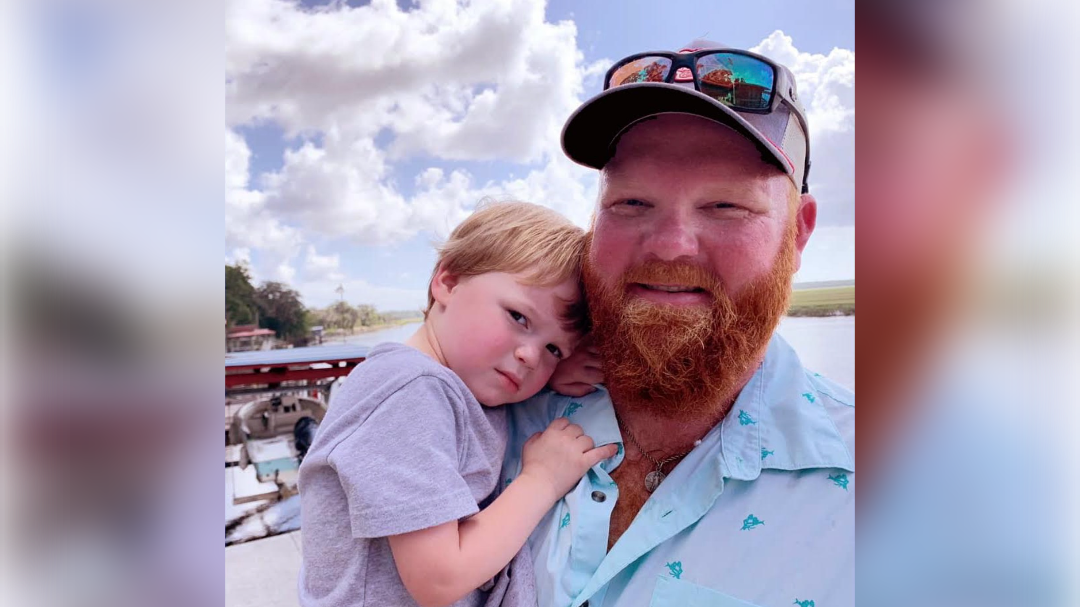
A reexamination of the 2020 Ahmaud Arbery case.
In December, my cover feature in Chronicles, “The Anti-Defamation League: Thuggery Under Cover of Fighting Anti-Semitism,” showed how the ADL’s claim that it fights anti-Semitism has been a cover for its larger political agenda of smearing and demonizing conservatives.
That political agenda, and the various tactics the ADL used to achieve it, stretches back through the organization’s 113-year history. In this follow-up article, I want to focus on the ADL’s role in inventing a relatively new tool, the “hate crime,” and its use in one particular case: the Ahmaud Arbery case in Georgia.
That the ADL’s real focus is anti-conservatism, rather than anti-Semitism, was further confirmed just a day after my December Chronicles feature, when the news site Legal Insurrection published an article by Mark Javitch, a San Francisco-area attorney who has provided pro bono representation to victims of anti-Semitism. The headline, “ADL’s ‘Legal Action Network’ Is Hindering Real Legal Action Against Growing Antisemitism,” says it all.
“From its lack of public litigation record, it appears that the ADL counsels people away from legal action, preventing legitimate claims from reaching lawyers capable of litigating,” Javitch wrote.
As I noted in December, the ADL’s recent refocus to its stated mission of combating anti-Semitism was a strategic shift following Charlie Kirk’s Sept. 10 assassination, in reaction to condemnation from the FBI and conservative media. This latest switch came after conservatives called attention to the fact that the ADL had included Kirk’s organization, Turning Point USA, in its “Glossary of Extremism and Hate,” propaganda of the sort that the FBI alleges influenced the alleged assassination of Kirk by Tyler Robinson.
That smear against Kirk and Turning Point is just standard operating procedure for the ADL. Indeed, as I pointed out, even though it was founded in 1913 on a mission to stop anti-Semitism, from its inception it has focused on attacking American conservatives and right-wingers, anti-Semitic or not. The ADL ramped up this agenda before and during World War II, aiding President Franklin Roosevelt’s efforts to smear anti-interventionists as “Fifth Columnists” and secret Nazis in order to get the U.S. involved in the war in Europe. The ADL’s efforts to tie standard conservative views to anti-Semitism continued after the war, and they included illegal spying operations.
In the 1980s, according to the organization’s own history posted online, the ADL championed a “model hate crimes statute,” which led 46 states and the District of Columbia to adopt laws drafted by ADL staff. The U.S. Supreme Court unanimously upheld “the penalty-enhancement approach” for so-called hate crimes in which the perpetrator’s motives were hatred based on race, sex, or other identifiable group characteristics. The standard was set by “the ADL’s model statute in Wisconsin v. Mitchell, a landmark 1993 decision” by the Supreme Court, according to the ADL’s website.
This invention of the concept of the “hate crime” may be the most devastating legacy of the ADL. In practice, the “hate crime” laws the ADL championed go after its longtime target group: white conservatives who support the Constitution—especially the Second Amendment—and who believe in defending their homes and neighborhoods. These people are outside the left’s officially designated racial and sexual victim groups, and so their motivations for using firearms for self-defense face extra scrutiny in courts of law. Their social media posts and public or even private statements are fair game, no matter how tenuously connected to the crimes of which they are accused. The thought crimes they end up being accused of—especially during periods of ginned-up hysteria such as around the time of George Floyd’s death—could come from a novel by Franz Kafka.
Meanwhile, black criminals who explicitly target their victims on the basis of race soon disappear from the public view—if their motivations are ever revealed. But if you are a white male who killed a black person in self-defense—as Travis McMichael did to Ahmaud Arbery on Feb. 23, 2020—then any of your past statements, even if they are presented falsely, will be brought into the courtroom to convict you of the crime of “hate.” This “penalty-enhancement” will earn you life imprisonment without the possibility of parole.
Even those with only secondary involvement in a hate-crime case, as were Travis’s father, Greg, and his neighbor, “Roddie” Bryan, will be scrutinized in a similar manner and face similar draconian punishments.
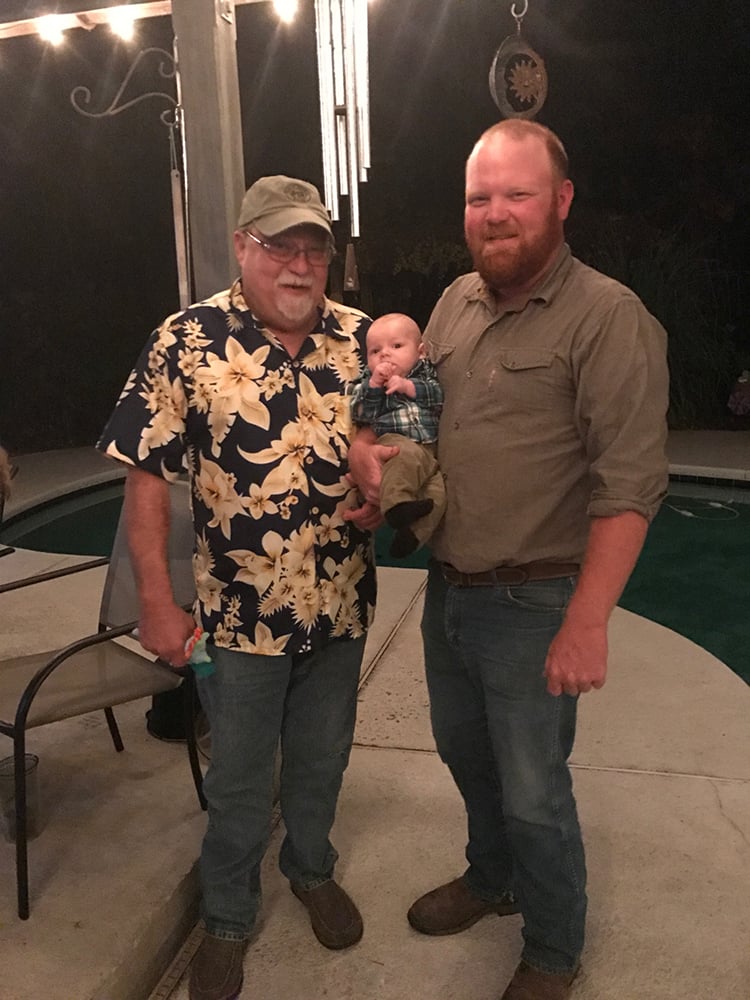
(photo courtesy of the McMichael family)
The Ahmaud Arbery incident took place in the Satilla Shores neighborhood of Brunswick, Georgia. Both McMichaels are retired military men with law enforcement training. Greg served in the Navy, and his son served in the Coast Guard; Greg is a retired chief investigator for the Glynn County district attorney’s office, and Travis received extensive law enforcement training in the Coast Guard’s Basic Boarding Officer Course. These two men, both highly qualified in law enforcement, attempted first to monitor, and then to make a citizen’s arrest, of a suspected perpetrator of a string of crimes in their neighborhood. They followed 25-year-old Ahmaud Arbery, a multiple felon on probation, as he ran from a neighbor’s house under construction, where he previously had been captured four times at night by surveillance footage.
From the summer of 2019 to Feb. 23, 2020, the neighborhood had been on high alert due to recent burglaries in the neighborhood. Security systems were installed, a neighborhood-watch Facebook page was created, and a witness later testified that children were afraid to play outdoors after Arbery was spotted in the neighborhood. On that February afternoon, Greg saw Arbery running past his house and recognized him as the burglary suspect from the earlier surveillance footage. He called out to Travis, and they both armed themselves and pursued Arbery in Travis’s truck.
Neighbor Roddie Bryan, who was a stranger to the McMichaels, followed them while recording on his phone. The McMichaels stopped their truck in front of Arbery twice and yelled at him to stop running. Instead of fleeing into an open yard or down a wide and shallow ditch, Arbery charged at Travis McMichael, who was standing in front of his pickup truck holding his shotgun in a diagonal “port arms” position against his chest, as he had been trained to do to de-escalate a situation.
The moment Arbery went after Travis and tried to grab his shotgun, a life-and-death struggle ensued, much like the one George Zimmerman faced when he was attacked by Trayvon Martin.
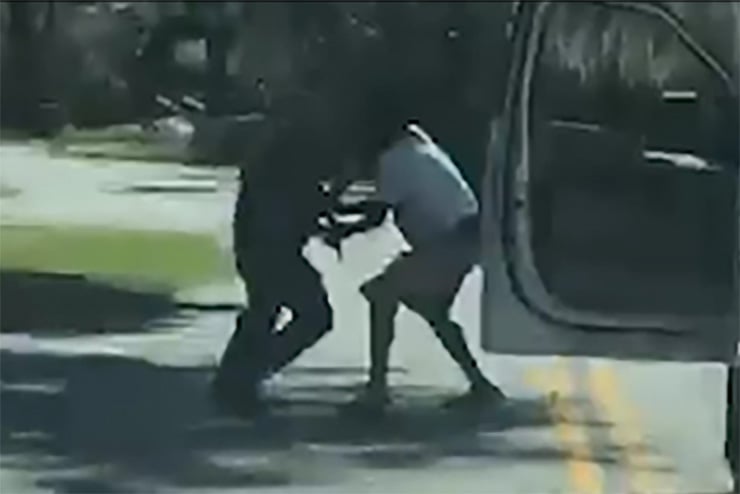
But the McMichaels were not as lucky as Zimmerman, who was acquitted and then exonerated by a Department of Justice review. The American justice system had become more woke in the intervening eight years.
In November 2021, Travis and Greg McMichael were convicted of felony murder (Travis was convicted of an additional charge of malice murder), aggravated assault, false imprisonment, criminal intent to commit a felony, and (in 2022) violating federal hate crime laws. Since then, the McMichaels have sat in isolation cells in two different Georgia prisons. In November, their federal hate crime convictions were upheld by the United States Court of Appeals for the Eleventh Circuit in Georgia, which dwelt on the few occasions that Travis and Bryan had used the “n” word on social media or text messages, without regard to context, and otherwise interpreted their non-racial statements about crime into coded racial animus against blacks.
In general, the mainstream media accounts of the incident portrayed it as three racist white Southerners who, in the words of the Associated Press, “killed the running Black man with a shotgun” because of “pent-up racial anger.” This narrative obscures Arbery’s criminal record, the criminal activity in the neighborhood, and the reasonable actions the men took to prevent criminal activity and to exercise their right of self-defense.
These facts are true, regardless of what the men said on social media or in text messages. None of the three men had been accused of having physically harmed or denied blacks their civil rights. The government’s case against the McMichaels rested on Facebook posts, comments, memes, and the false memory of witnesses who barely knew the men. Statements were scrutinized out-of-context. Many of the indicting statements had nothing to do with race, but with “vigilantism” and animus towards criminals.
The “background” section of the appellate court’s decision gave the common media narrative of Ahmaud Arbery as an avid “jogger” going for a run in the McMichaels’ neighborhood. The McMichaels’ defense attempted to introduce evidence from police sources of Arbery’s many confrontations with police, prowling, theft, and burglary. The defense team interviewed convenience store witnesses who said that Arbery was known as the “jogger” for his habit of “running up in front of convenience stores, going through stretching motions,” entering the store to seize items, and then fleeing with the merchandise. But records about Arbery’s past were not allowed at the trial, as the judge ruled that they were irrelevant and unfairly prejudicial.
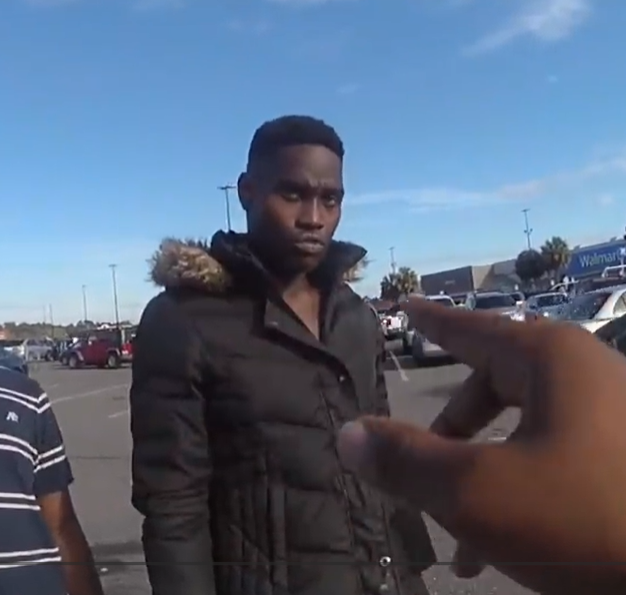
Arbery was on probation at the time of the incident. He was allowed to violate probation by smoking marijuana instead of taking prescribed medication for his schizoaffective disorder. While violating such terms of probation, Arbery also had numerous police reports from both black and white residents regarding his snooping, trespassing, shoplifting, suspected gang recruitment of minors, fighting, and threats against police officers. Jurors heard none of this.
While Arbery’s criminal past was kept from jurors, the McMichaels’ passing comments had the glare of an inquisitor’s spotlight cast on them.
The first falsehood comes in a footnote in the appellate court ruling regarding Travis and Greg’s statement about recognizing “Arbery as the same person they had seen on camera at the construction site” (the construction site was at the home of Larry English, who lived out of town and who had been advised by a police officer to call on Greg McMichael because of his police background). Others, like neighbor Diego Perez, had also recognized Arbery from footage taken by his home security camera. Amidst Arbery’s four nighttime prowlings, a white couple was seen once looking around in the daytime. They seemed to be taking the kind of “looky-loo” that prosecutor Linda Danikowski said Arbery was taking (at night). In another footnote, the appellate judges claim that “none of Arbery’s visits were criminal trespass because he had never been (a) told to leave the property or (b) given notice that access to the property was forbidden.

What is left out there is that Arbery ran away when he noticed someone spotting him, so there was no chance to tell him to “leave the property.” The fact that he ran, rather than engaging in friendly conversation about, say, the architecture (as one would expect from someone taking an innocent “looky-loo”), indicates that he likely knew he was trespassing.
The judges continued:
Further, the government put on evidence—Travis and Gregory’s own willingness to trespass—that undermined their claim that preventing Arbery from trespassing is what fueled their pursuit. Travis posted a video on Facebook showing himself smacking down a no-trespassing sign so that he could hunt on private property. He also posted a video of him and Gregory talking about hunting on private property.
But Travis never had a chance to explain to the jury that the video was one of his spoofs on hunting and fishing shows. I spoke with Travis’s mother, Leigh McMichael, and she explained to me that Travis was on land he had rented for hunting. He had put up the “No Trespassing” sign as a prop for a humorous video. Leigh McMichael showed me one of Travis’s spoof hunting videos. No one seeing it could have taken anything said or done in it seriously.
Section B of the decision, “Criminal and suspicious activity in Satilla Shores before February 23, 2020,” indicts Travis and Greg for stating that “they recognized Arbery as the same person they had seen on camera at the construction site.” It notes that Travis had the audacity to comment on a July 1, 2019, post on the neighborhood Facebook page about the burglarizing of several cars, writing “Arm up.” There was, of course, nothing illegal or racist about that statement. But the judges implied that there was something nefarious about Travis advocating that the neighbors take precautions to defend themselves against criminal activity. One suspects they would have viewed with suspicion any statement Travis could have made, other than advocating sitting passively sitting by while the neighborhood experienced a crime wave.
Indeed, an observation that should have demonstrated the nonracial motives of Travis and Greg was instead loaded on as further evidence against them. This was about a “‘hobo camp’ under the Fancy Creek bridge near the neighborhood.” As a footnote explains, “Gregory also called the non-emergency police line to alert the police that he saw someone who appeared to be homeless under the Fancy Creek bridge and that the man may be responsible for recent automobile break-ins in the area. The officer who investigated the report testified that the man ‘appeared to be Caucasian.’”
So here was evidence that the McMichaels confronted potential criminals without regard to race. The audio recording of the call was played for the jury. But what was left out is the fact that Travis and Greg had confronted the white hobo in the same way as they attempted to do to Arbery. They went to the hobo camp with Travis armed with a concealed weapon, and asked him about the break-ins!
However, the difference was that the man, who was fishing, did not run away or charge at the men with a wild look, or attempt to wrest Travis’s gun away, as Arbery had done. Instead, according to Travis’s testimony in the court transcript, the man was friendly and let the McMichaels look around the camp to confirm that he had not stolen anything. When they found nothing, they left him alone.
After surveillance videos showed a white man and woman walking around the English property on Nov. 17 and Arbery walking around on Nov. 18, Travis, according to the appellate judges, made the statements, “They find him?” and “They are starting to play with fire!” These nonracial statements were interpreted with others as evidence of racial malice and cited in support of denying the McMichaels’ appeal.
The judges’ decision states that another post from the neighborhood group on Dec. 8 indicated that several guns had been stolen from a truck. Surveillance video captured a white male suspect. On Jan. 1, 2020, Travis made a police report about a gun being stolen from his truck.
Of course, there was no evidence technically linking Arbery to the crimes—just that he had visited the construction site at night four times without “disturbing” anything (not that a compulsive thief would ever case a house for a future theft!). The judges’ claim that he was not “linked to any of the other criminal activity in the neighborhood” is misleading. His long rap sheet of crimes in adjacent areas had been left out, and many of the crimes in Satilla Shores have remained unsolved.
Then comes the part that might make one feel like the cockroach in Kafka’s Metamorphosis: “Defendants’ previous comments,” which “tend[ed] to show that each of the defendants held longstanding prejudice toward black people and supported vigilante justice.” As a footnote explained, the magistrate judge had denied the McMichaels’ motion to exclude this evidence because it was “plainly relevant [under Federal Rule of Evidence 404(b)] to determine whether Defendants acted with racial animus during the events forming the basis of the charges against them.” We can thank the ADL for this!
The first example of “previous comments” is a response that Travis made to a video sent on Facebook of “a black man playing a joke on a white man, to which Travis responded, ‘I’d kill that fucking n[*****].” Actually, the “joke” was not funny to the white man, who was sitting at a dining counter and had a plate of food dumped on his head by the black man. Travis also replied “F[***] Yes.” to a Facebook message showing “a white man dressed up as Trayvon Martin—painted in black face, holding Skittles and a Snapple, with a red splotch in the middle of his hoodie—with a comment that this man was “The winner of Halloween 2016.’” There were four other examples of Travis’s use of the “n” word in social media replies and text messages.
But did Travis use that word with Arbery? Roddie Bryan, probably hoping to avoid punishment, claimed that Travis, as he looked down at the dying Arbery, said, “f[******] n[*****].” But this was never entered into evidence, because, as Jack Cashill explained in his 2025 piece in The American Spectator (“Woke Justice at Its Most Horrifying—the Ahmaud Arbery Case”), the recording with the 911 dispatcher when the slur was allegedly made proved that he did not say it.
Travis also called black people “savages.” As the judges admit, one occasion was in response to “a video of a black woman stealing a purse from an elderly white woman’s shopping cart.” Another was in reference to a video “of two black people assaulting two white people.” Presumably, the assailants should have been treated with more respect. Travis also used the word in response to videos of black gang members beating up a white kid and a black married couple attacking the owner of a restaurant and her 15-year-old daughter in a dispute about refund for food served too cold. The mother suffered a broken nose and two black eyes; her daughter had a concussion and a black eye.
Travis’s comment that if the “savages attacked my family, I would beat those monkeys to death” and that he “would have the same remorse putting them down as [he] would a rabid coon” is considered out of bounds. Angry, racist language against white people by black people is good but white men are guilty of hate if they are angered at the sight of white women and children being beaten up by black men.
Indeed, the court even interpreted the desire to protect family and home as “vigilantism.” Travis’s response to a Facebook post about a home invasion, that he kept his “home shotgun loaded with high brass #5’s” and that thieves were “vermin,” was interpreted by the judges as further evidence of his racism.
The evidence of “racial animus” against Travis’s father, Greg, was even more tenuous. The judges claim that he had said in response to news about the death of a civil rights leader, “‘I wish that guy had been in the ground years ago’ and that ‘[a]ll these blacks are nothing but trouble: I wish they would all die’” before proceeding to “rant against black people.” This anecdote, however, came from a woman who had met Greg briefly in 2015, when, as part of his work as an investigator, he had given her a ride to the airport. The witness, according to a local news station, volunteered her testimony after learning about the case in the news.
Similarly, a “former neighbor” who “testified that, during a conversation, Gregory referred to one of his former tenants as a ‘walrus’ because she was ‘big and black’” and that he would cut off her air conditioning when she was late for her rent, was based on a confused memory. It turns out that the race of the tenant in question was wrong—as was the animal. Greg was discussing a fat white tenant, and he was not talking about walruses, but about his rental property as a “habitat for huge manatees.” Attempted corrections to such falsehoods, however, were not admitted by the court. Further evidence of Greg’s racism was a “meme on Facebook” he shared about descendants of white Irish slaves who did not “[bitch] about how the world owes them a living” even though their forebears “were treated worse than any race in the US.”
Evidence of “Gregory’s support for vigilantism” included two memes on his Facebook page. One was of a woman holding a baby and a shotgun with a caption stating, “A gun in the hand is worth more than the entire police force on the phone.” Another one showed a white man pointing a handgun with a caption about felons needing to fear potential victims. Greg also commented on a post about a stolen surfboard, about catching “the sorry SOB” (most likely to be a white surfer) because in Georgia, “We still hang horse and board thieves.”
As for Bryan, there were a few similar instances presented as evidence of his racist intent—keep in mind, he was convicted of murder and other charges for following and filming Arbery’s shooting—but the rest of the decision dealt with the issue of whether the streets of Satilla were public or private. They were determined to be public, hence the charges against the men of depriving Arbery of his civil rights in a public area.
Yet, in the midst of the strained accounts of name-calling, the appellate judges admitted, “After Arbery ran around the passenger side of [Travis’s] truck, Arbery ran at Travis to grab the shotgun.” Even if all the statements about the McMichaels’ name-calling and racism were true, this admission should have rendered the name-calling moot. The judges, however, acted as if Travis, given his racist thoughts demonstrated in his Facebook posts and private text messages, should have allowed Arbery to kill him.
Furthermore, exculpatory evidence that showed Travis and Greg lacked racist motivation was not allowed. This included the commendations Travis received from the Coast Guard, at least one of which—his Sept. 18, 2013, performance evaluation—praised him because he
has never judged an individual, on or off duty, by their race, sex, ethnic background, religion, political views, marital status, weight, food choices, or taste of music and has never tolerated someone who has.
Nor did the court take into account Travis’s record of saving a number of black people from drowning, beginning when he was 17 years old. Among those not called to testify (or perhaps afraid to, given the threatening atmosphere created during the trial, when armed protesters demonstrated outside the courthouse) were the black men with whom Travis associated in the Coast Guard (including a black roommate and a close friend for whom Travis’s mother baked pecan tarts), black state and federal employees who knew Travis and Greg, and Travis’s black friends from high school, who had been welcomed into the McMichael home.
After the McMichaels and Bryan were railroaded by the courts during the George Floyd-induced racial panic of 2020 and 2021, the ADL “welcomed” the draconian punishment they received and thanked Biden administration Attorney General Merrick Garland and the Biden FBI for their work on the case. Any who opposed the sentencing, the ADL said, were just “White Supremacists.” And while the ADL made much over the name-calling the McMichaels were said to have done, they did not concern themselves with the threatening mail and intimidating visits from Black Lives Matter protesters that Leigh McMichael has received, while her husband and son wile away the years in prison.
What happened to the McMichaels could happen to anybody. It could even happen to ADL-supporting Jews who attempt to defend themselves, sometimes with arms. They, too, would have the ADL to thank.