
If NATO Dies, Do We Really Have to Mourn?
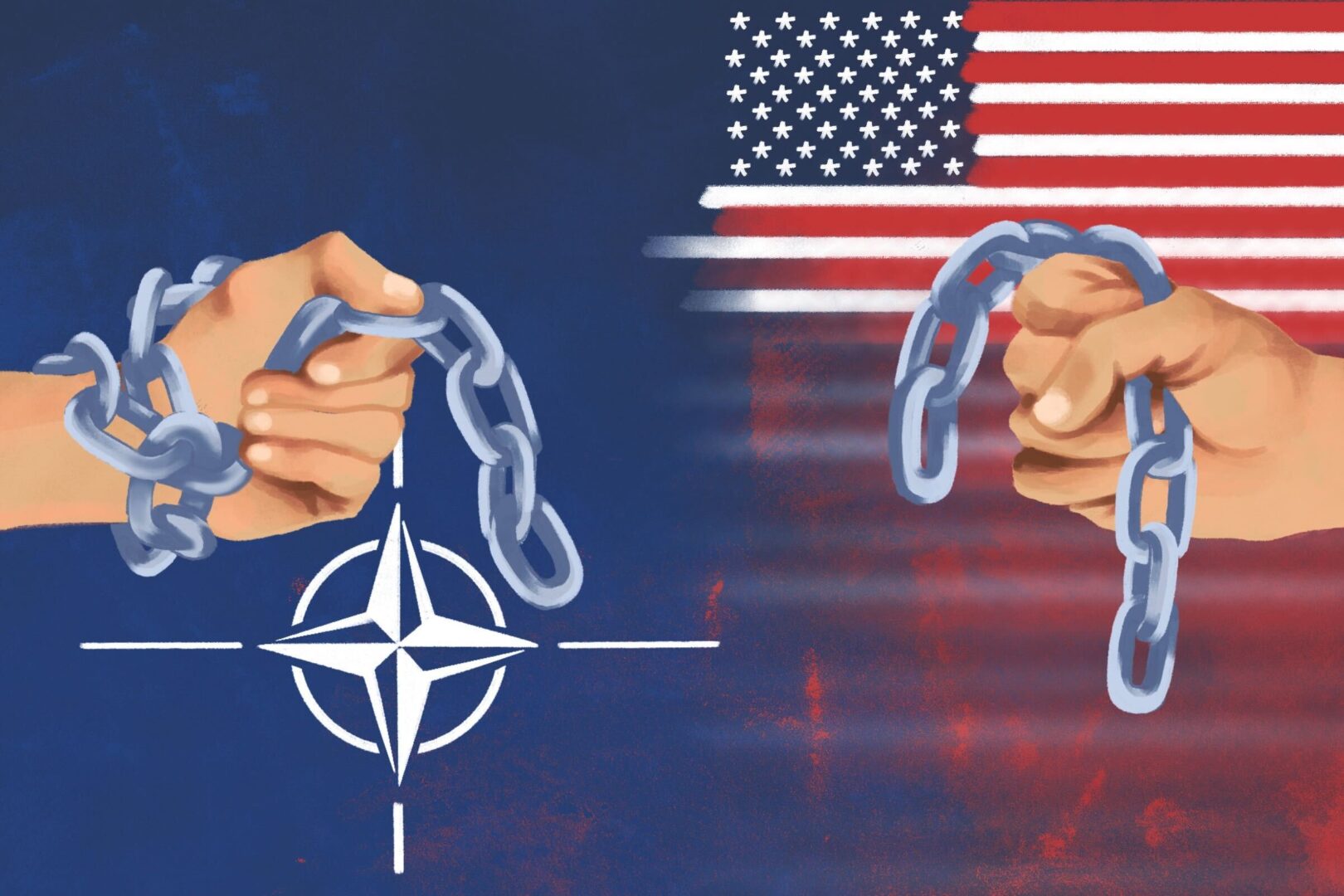
Donald Trump’s Greenland-gobbling may mean the end of the Atlanticist dream, which should have ended with the fall of communism.
The New York Times wonders what Donald Trump taking over Greenland would mean for NATO:
Over the past year, President Trump has pushed NATO with threats and coercion to make divisive changes. Now he is threatening to seize control of Greenland, potentially with military force, which has heightened concerns that he will destroy the trans-Atlantic security alliance…
There is widespread public support in the United States for the alliance, which was created after World War II to deter the Soviet Union. If the president tried to thwart NATO by controlling Greenland, “I think Congress will stop him,” said Senator Tim Kaine, Democrat of Virginia.
NATO is history’s most expensive self-licking ice cream cone. Proponents spent much of the last three decades taking bold, often destructive policy actions to convince taxpayers of member nations the alliance needs to keep existing. We’ve redrawn the world map multiple times and even invented new forms of war just to give it something to do. It’s madness, but few have been willing to say so.
Now we’re told the issue with Trump possibly occupying Greenland isn’t that it might be crazy or bad for Greenland, but that it might hurt the “trans-Atlantic security alliance.” Unless it’s the good part? A brief history of the mad policy gambits undertaken to save NATO since the Soviet collapse:
The Times is right that NATO has “widespread public support” in the United States, though the favorability gap (60%-37%) is due mostly to positive feelings among Democrats, who used to have opposite feelings. Why any American should care about NATO is a more elusive question. The ostensible reason for the alliance ended decades ago with the collapse of the Soviet Union, while the real reasons for maintaining NATO have rarely been articulated, and for good reason. If the world grasped the true dynamics of the Atlanticist dream, the citizens of member countries would demand it be taken behind a shed and shot.
Most people assume NATO was created as a bulwark against Soviet expansion, in response to events like the 1948 communist takeover of Czechoslovakia. In reality NATO always had a multi-layered mission centered around America’s belief that a combination of bureaucracy and money could not only help keep Europeans from killing each other, but save the U.S. from having to go in later and clean up. The First Secretary-General of NATO, Lord Hastings Ismay, is credited with a famous quote: NATO existed to “keep the Americans in, the Russians out and the Germans down.”
Former RAND Corporation National Security Analyst Ben Schwarz explains that in addition to the broader concept of using the NATO alliance structure to prevent the resurfacing of Euro-nationalist passions, the United States saw the alliance as a lever through which it could regulate European influence globally.
“The United States has always had a schizophrenic relationship with Europe, in that it has wanted a degree of unity in Western Europe because it thought that that was necessary for both European economic recovery and for the world economy,” Schwarz says. “But it also wanted to make sure that Europe didn’t develop into an independent power.”
An ascendant but not fully independent Europe was part of America’s interest, while Europe’s included massive security subsidies that enabled financing of cradle-to-grave social programming of the sort not offered to American citizens, who’d be lampooned for failing to demand such benefits. Europeans via NATO also won cheap guarantees against intramural conflicts and a resurgent Germany. One could perhaps justify all these goals during the Cold War, but once the Berlin Wall fell, it seemed inevitable someone would point out that transnational bureaucracies that exist for reasons other than their stated missions tend not to do well.
One of the few people who saw NATO’s burgeoning internal contradictions soon after communism’s fall is Schwarz, who was still at RAND in 1994 when wrote the controversial essay, “NATO at the Crossroads: Reexamining America’s Role in Europe.”
Most of the Foreign Policy establishment then was already pounding the table for eastward NATO expansion as a means of protecting against a possible Russian resurgence, but Schwarz reminded readers that NATO was never just about containing Soviets but all those other things, and expansion might just mean switching one cover story for another:
While containing the Soviet Union is obviously no longer relevant, NATO still serves its other, usually unstated, purpose — pacifying relations among the states of Western Europe. Since, however, it is politically difficult to justify publicly the alliance on this ground, those who propose that NATO’s responsibilities be extended eastward freely acknowledge that one of their primary purposes is to find a new, acceptable rationale for preserving the alliance.
I first read Schwarz’s piece after he and Christopher Layne wrote a Harpers cover story a few years ago called “Why Are We In Ukraine?” I remember thinking, “That can’t be right.” No way could there have been Western officials willing to ‘freely acknowledge’ that expanding NATO to the Baltics or Poland was a new rationale for maintaining an otherwise obsolete bureaucracy. A Russia resident during that time, I was sure I’d remember an idea that crazy. But Schwarz was right.
If you go back, you’ll see “expansionists” rallied under the lunatic slogan “Expand or Die,” with everyone from Zbignew Brzezinski to Henry Kissinger worrying that unless NATO successfully argued for eastward expansion, it would cease to exist, and if NATO ceased to exist, we couldn’t have eastward expansion. The idea was untenable.
As Kissinger put it in a Washington Post piece called Expand NATO Now, a failure to expand would sooner or later create a vacuum of influence between Germany and Russia, which could “imperil the very existence of NATO as a meaningful institution.”
Today Schwarz pooh-poohs the idea that his writings were predictive. “I don’t know if ‘prophetic’ is the right word,” he says. “It was so obvious.”
Eastward expansion would not be the last time American officials would justify a major foreign policy initiative or even a military engagement to reaffirm the importance of NATO. Before we went into Bosnia, the former head of the NSA William Odom explained that a NATO operation was necessary because “only a strong NATO with the U.S. centrally involved can prevent Western Europe from drifting into national parochialism.”
In a flash NATO went from a traditional alliance that prevented attacks on member states from outsiders to a policing organization with infinity possible missions. Its assertion of new authority in hindsight was humorously Trumpian, not that many cared at the time. After publishing a new transatlantic agenda in 1996 NATO was now empowered to fight crime, stop “drug-trafficking and terrorism,” address the needs of “displaced persons,” and help with “development” and “humanitarian assistance.”
Before we knew it, Bill Clinton was on national television announcing “humanitarian” air strikes in Serbia not just to prevent the crisis from pushing “refugees across borders,” but to keep Serbian intransigence from undermining “the credibility of NATO on which stability in Europe and our own credibility depend.”
One could go on, as NATO’s mission was reimagined again and again over the years, notably after 9/11 when Article 5 of the NATO treaty obligating member nations to fight was invoked or the first time, then again in 2010 when we learned that NATO wasn’t just a military alliance, but a “political community.” NATO’s mission grew so unwieldy that by the time Trump arrived, it was nearly impossible to say what it was. Was this a military alliance spreading an America-dominated “political community” around the world by force, or a Euro-American “political community” building a separate governance structure around the world outside the purview of nation-states, even ones as big as the U.S.?
About Greenland: the situation is viewed with panic for some obvious appropriate reasons, and some that are ironic, given that part of Trump’s stated rationale fits the mindset of old Cold Warriors and even some within the current version of NATO, who’ve long said the U.S. needs to have a more aggressive position in that part of the world (this viewpoint came up a lot in the early Russiagate period). Secretary-General Mark Rutte of the Netherlands was outspoken in saying a U.S. annexation would be less worrisome than “a risk that the Russians and the Chinese will be more active” in the Arctic.
“It’s hard to imagine any other president having this Greenland policy,” said Schwarz, “but if for some crazy reason Obama was doing what Trump was, the reaction wouldn’t be the same.” If some other president tried to militarily occupy the Danes’ territory in more a de facto than de jure fashion, with less of a Goodfellas vibe, Europe might have shrugged, as it did in a thousand other incidents. But it’s Trump, which means NATO may indeed finally crack and sink. Do we have to mourn?