
Iran’s Determination to Break Out from the Panopticon of Western 360° Containment
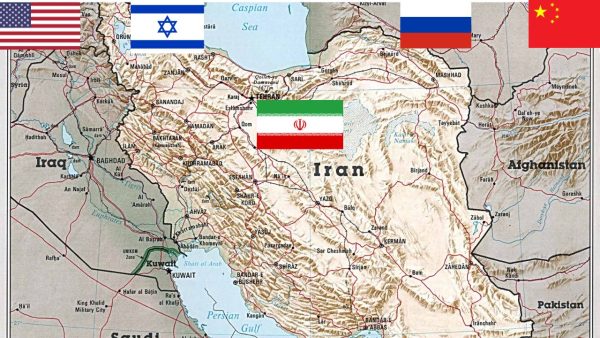
The temporary cessation of hostilities across West Asia very much hangs in the balance. Originally, there was to be a cessation of military actions across “all fronts” including Lebanon — that being one of the ten Iranian preconditions to negotiations towards a permanent ceasefire. Trump duly affirmed that Iran’s 10-point framework provided a “workable basis” to begin direct negotiations with Iran.
For Iran, the points were seen as pre-conditions, rather than starting points from which negotiations would flow.
CBS has reported that Trump had been told that Iran’s terms, that he accepted on Thursday, would apply to the Middle East region as a whole — and he agreed that would include Lebanon. Mediators reported that the ceasefire would include Lebanon, and Pakistani Prime Minister Shehbaz Sharif’s announcement included it. Foreign Minister Araghchi also confirmed that Lebanon was included.
Trump’s position however reversed itself following a phone call from Netanyahu. According to Israeli correspondent, Ronan Bergman, writing in Yediot Ahoronot, Netanyahu suddenly and belatedly exploded the situation: In Israel, both echelons — military and political — were instructed to prove that there was no ceasefire for Hizbullah by mounting a huge attack on crowded residential neighbourhoods in Lebanon – killing and wounding over 1,000 persons, largely civilians.
And at the same time as the attacks on Lebanon were taking place, Israel announced that it sought to open a political initiative – direct talks with the Lebanese government centred on the disarmament of Hizbullah and on Lebanon’s normalisation with Israel – in order to buttress Netanyahu’s demand “for a short window of time for additional attacks against Hezbollah, before the Americans try to roll the same spirit of calm to Lebanon”, Anna Barsky writes in Ma’ariv. “Assessments in Israel speak of a partial American understanding of this need; but this is by no means assured”.
Alon Ben David, a prominent Israeli military correspondent, noted that Netanyahu’s initiative might result in civil war in Lebanon, adding in parenthesis that ‘this had always been the objective’.
The Iranian equation however, runs counter to the ‘revised’ US position that Lebanon was never integral to the ‘all fronts’ demand. For Tehran, it is ‘ceasefire for all, or ceasefire for no one’. It is that simple.
Will the negotiations take place? Only if Trump is capable of imposing a veto on Netanyahu’s thirst for further rounds of blanket bombing in Lebanon. Has Trump effective agency to control Netanyahu — who (together with some Gulf states reportedly) still wants Trump “to go all the way, until the overthrow of the evil regime”, Ronen Bergman emphasises.
Yet the US reality is stark:
“The US has lost its naval presence and military bases in the Persian Gulf region; its entire inventory of stand-off munitions has been nearly exhausted, along with its air defences, which have been proven woefully ineffective”.
“This is what decisive strategic defeat looks like”.
As Ben Rhodes, former US Deputy National Security Advisor, put it:
“It’s hard to lose a war this short: this comprehensively”.
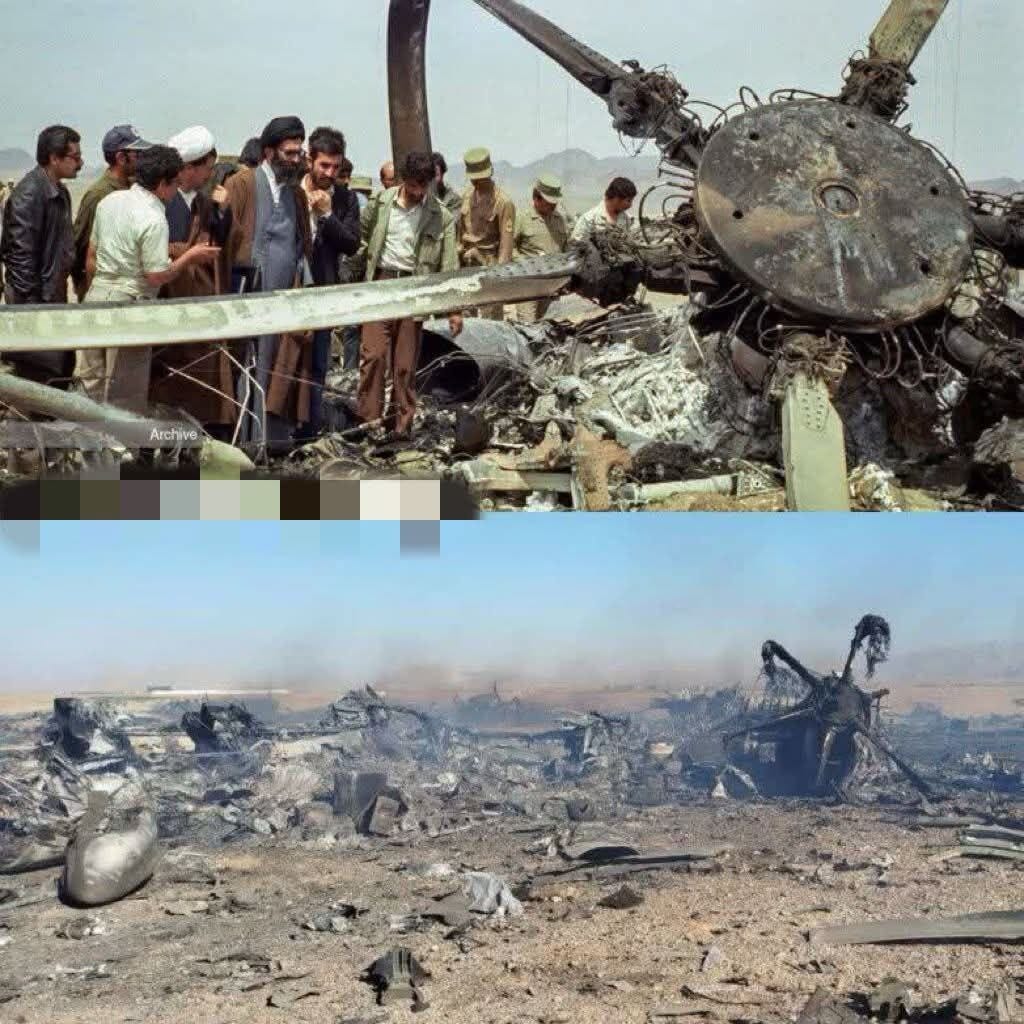
Source: Lebanese journalist Marwa Osman, Telegram — Tabas, 1980; Isfahan, 2026
What took Trump from a Tuesday night posting that “a whole civilization will die tonight”, to acquiesce a few hours later to negotiations on the basis of Iran’s 10-point plan, is for conjecture. But perhaps the juxtaposed images of the crashed helicopter from President Carter’s ill-fated attempt to rescue US hostages from Iran in 1980, together with the wreckage of US aircraft near Isfahan from the abandoned Saturday (4 April) attempt to seize enriched uranium from a tunnel at Isfahan, tells its story.
As one commentator notes, the only thing missing from the later 1980 scene is the presence of the assassinated Supreme Leader, Ali Khamenei.
President Carter, of course, became the political casualty from that event.
Let us recall too, that this current war was launched by a snap strike to kill the Supreme Leader, Ali Khamanei – and was expected to be a short war of days’ duration only. The NY Times report of the 11 February 2026 meeting at which Netanyahu persuaded Trump to join with an assault on Iran confirms that “the President appeared to think it would be a very quick war … (and) at no point during the deliberations did the Chairman [General Caine] directly tell the President that war with Iran was a terrible idea … [General Caine] would constantly ask, “And then what? But Mr. Trump would often seem to hear only what he wanted to hear”.
And what Trump chose to hear at the 11 February briefing dovetailed closely with Netanyahu’s own deep longings: “Iran stood apart” for Trump, as for Netanyahu. “He [Trump] regarded Iran as a uniquely dangerous adversary and was willing to take great risks to [fulfil] his desire to dismantle the Iranian theocracy”, the NY Times reported.
Neither Trump nor Netanyahu — despite the three-hour official briefing on 11 February — at all anticipated the strong Iranian response of immediate attacks on US bases in the Gulf that swiftly ensued upon the killing of the Supreme Leader, though this prospect had been clearly prefigured in earlier Iranian warnings.
The entire 11 February strike plan that was green-lighted in the White House Situation Room meeting hinged on decapitation strikes, stand-off air bombardment, and a visceral (rather than evidence-based) conviction that an internal uprising surely would follow — one that would topple the state.
It is no surprise then, that Trump should now be desperately seeking an exit from the Israeli débacle that was set for him. Like Carter, he is on the rocks politically, as well as militarily. But any meaningful off-ramp will require of him to make major concessions — concessions that will grate painfully with his rancorous feelings toward Iran and Iranians.
It seems likely that if negotiations do proceed, they will not produce an agreement. Iran is engaged in exploding a 70 year-old paradigm through forcing — by threat of economic and market pain — a US acquiesce to Iran’s ‘release’ from the panopticon of US and Israeli repression. Will this involve more pain and death (more war), or less? That is the question.
https://conflictsforum.substack.com/p/irans-determination-to-breakout-from