
Is the U.S.-Iran Deal the End of Unipolarity?
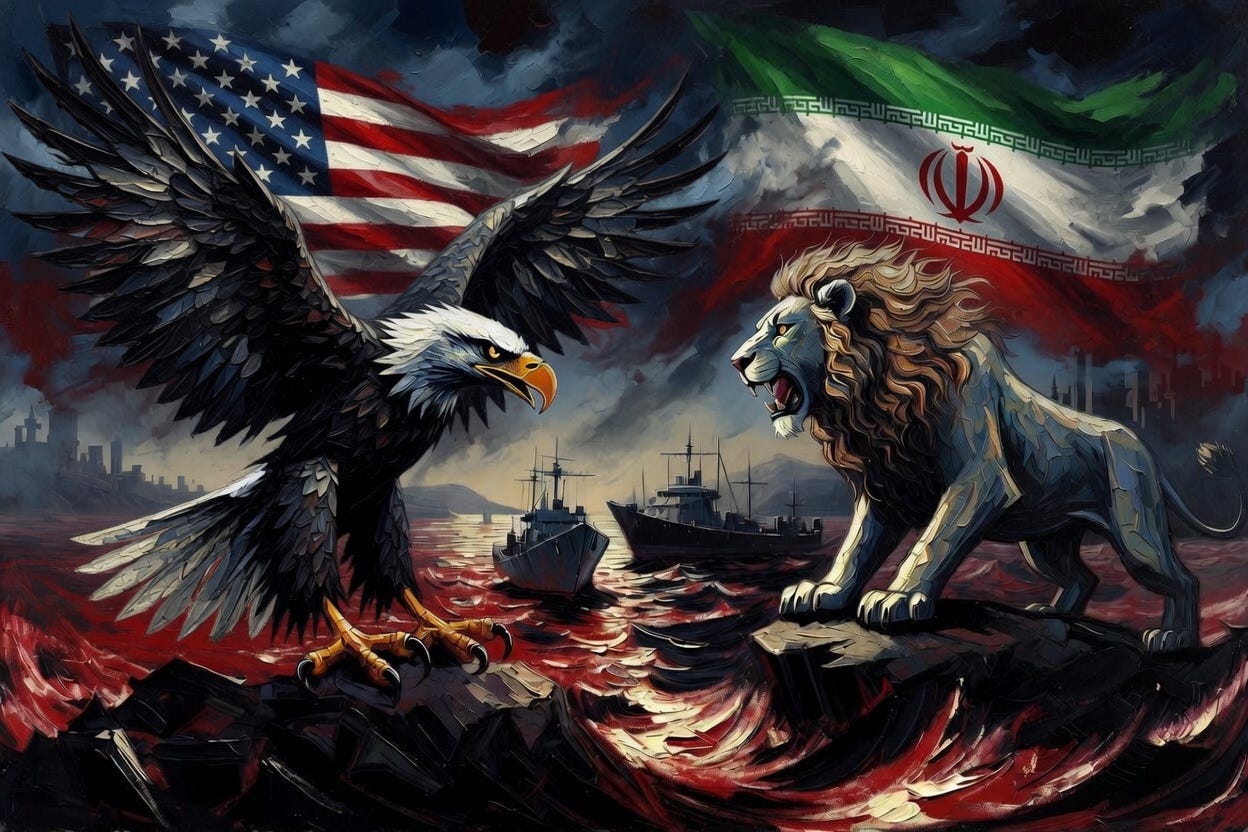
President Trump’s rhetoric towards Iran has moved with startling speed from the language of destruction to the language of reconciliation. At one moment, he spoke in terms that suggested the complete ruin of the Islamic Republic. At another, he painted a vision of peace stretching into the future, accompanied by promises of prosperity on a grand scale. Now Washington and Tehran intend to sign a Memorandum of Understanding on Friday. Such documents possess symbolic value and diplomatic significance while lacking binding legal force. This particular agreement appears unusually concise. Iran’s Foreign Minister, Abbas Araghchi, stated in an interview with the Mehr News Agency on Saturday that the text itself amounted to fewer than two pages. The fate of nations may hinge upon documents shorter than an ordinary newspaper article.
The limited size of the text suggests that many key matters remain unsettled. Officials speak of urgent steps to be taken immediately, among them the restoration of open navigation through the Strait of Hormuz. Yet the available information points to continuing ambiguity. Iranian media have presented a picture in which American restrictions on Iranian ports along the Persian Gulf would disappear while Iran, working alongside Oman, would continue exercising oversight in the area and receive substantial revenue through maritime fees. Trump appears to describe a very different outcome. In comments to The New York Times on Sunday, he declared that one of the central achievements of the agreement would be the establishment of a permanently toll-free Strait of Hormuz. An agreement described in incompatible ways by its signatories resembles an ancient text translated into rival tongues, each version serving a different destiny. Diplomacy lives within this realm of shifting symbols and strategic silences, where states wage battles through language.
The concept of Darwinian multipolarity offers a framework for understanding such events. The emerging world order resembles a civilizational ecosystem in which great powers adapt to changing circumstances, preserve their distinct identities, and compete for influence across regions and continents. The end of unipolar dominance does not herald an age of universal cooperation. It marks the return of history in its oldest form: a contest among civilizations possessing different traditions, values, and strategic interests. Just as species endure through adaptation within changing environments, civilizations persist through resilience, innovation, demographic vitality, and cultural cohesion. Multipolarity in this sense operates according to evolutionary pressures. States rise, decline, transform, and reassert themselves. Peace remains possible, though it arises through equilibrium among powers rather than through dreams of a single universal model imposed upon mankind.
The actual contents of the proposed agreement remain largely hidden from public view. Araghchi announced that the text would become available after the planned signing on Friday. Even this assurance invites caution. Reports issued by the Mehr News Agency presented what were described as fourteen key points of the MoU. These points diverge sharply from statements issued by the American president and members of his circle. Several of the claims attributed to the agreement strain credibility. Point Five reportedly envisions an American withdrawal from the region surrounding Iran. Point Six allegedly calls for the removal of all sanctions absent reciprocal concessions. Point Seven proposes an American reconstruction effort in Iran valued at no less than 300 billion U.S. dollars. Such provisions would constitute a geopolitical transformation of historic scale.
The more plausible explanation appears straightforward. The fourteen points seem to represent an Iranian proposal transmitted to American negotiators on May 2 through Pakistani mediators. To imagine that the United States accepted the Iranian package in its full form is to mistake desire for reality and propaganda for statecraft. Empires move like ancient beasts across history: they bargain, threaten, retreat, and advance, yet they rarely surrender strategic advantage in exchange for words written upon fragile sheets of paper. Yet official narratives often shape public perception. Within Iran, segments of the population have spent weeks hearing accounts describing the recent conflict as a battlefield victory, a triumph, and proof of their nation’s arrival as a superpower. Against this backdrop, belief in an exceptionally favorable agreement becomes easier to understand. A small number of demonstrations have emerged opposing rapprochement with the United States.
The central question remains unresolved: can this arrangement produce lasting peace? History offers many examples of agreements that provided temporary stability while leaving deeper rivalries intact. Great powers seldom abandon strategic interests through signatures alone. They pause, reposition, negotiate, and prepare for the next phase of competition. Within the framework of Darwinian multipolarity, peace comes through balance among civilizations capable of defending their interests while recognizing the strength of others. Such an order may prove more durable than ideological universalism because it reflects the plural realities of the world rather than abstract visions of a single political destiny.
For Trump, the immediate calculation may be simpler. The preservation of stability through the American midterm elections on November 3 could itself represent a significant political success. Statesmen often pursue peace for reasons both grand and practical. Some seek enduring settlements. Others seek time. The international system frequently rewards those who understand the difference.
https://www.eurosiberia.net/p/is-the-us-iran-deal-the-end-of-unipolarity