
Marx, Jews, and Liberalism
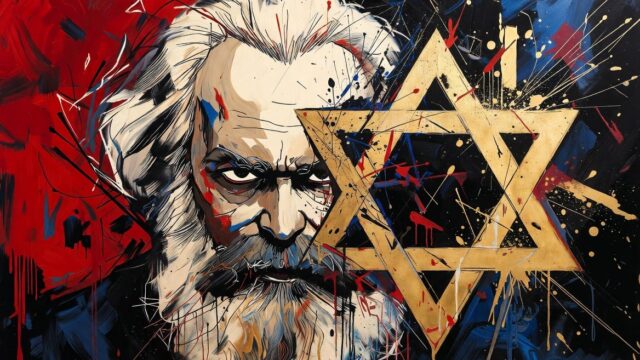
From rights to emancipation.
Karl Marx begins his examination of the Jewish Question by attacking a belief that had become common in nineteenth-century Europe: the belief that political rights alone could solve the deeper problems of human life. Many Jews sought equal standing within Christian states. Liberals demanded constitutions, voting rights, legal protections, and freedom of worship. Marx regarded these demands as understandable, yet incomplete. He argued that a man may receive political rights and still remain trapped within structures that shape his life from above. A Christian state could grant rights to Jews while preserving the conditions that made Jews appear as outsiders in the first place. The problem therefore extended far beyond relations between Christians and Jews. It reached into the foundations of modern politics itself. Marx asks a simple question in plain language: what kind of freedom exists when the state proclaims equality while society remains divided by wealth, power, status, and inherited loyalties? The Jewish Question becomes the doorway into a much larger investigation concerning the meaning of human emancipation.
Marx rejects the idea that one religious community should seek favor from another. He sees a trap in that arrangement. If Christians possess authority and Jews ask to be admitted into the existing order, then the structure itself remains untouched. One group stands inside the gate and another stands outside. The debate concerns admission rather than transformation. Marx therefore turns his attention away from theology and towards power. He argues that both rulers and petitioners become participants in the same system. The rulers defend their privileges while the petitioners seek inclusion within those privileges. Neither side asks whether the arrangement itself deserves to survive. In this sense, Marx treats political emancipation as something limited. It can remove legal barriers, yet it leaves untouched the deeper forces that shape society. A man may gain rights on paper while remaining subject to economic pressures, inherited hierarchies, and social divisions. Freedom becomes a legal status rather than a living reality.
Religion occupies an important place in this analysis, although Marx approaches it differently from many of his contemporaries. He does not spend his energy attacking particular creeds. Instead, he examines the relationship between religion and the state. A government that defines itself through a specific faith inevitably divides the population into categories of belonging. Some stand closer to authority while others remain further away. Marx argues that a truly modern state attempts to escape this problem by separating itself from religious institutions. Yet he also observes that this separation solves only part of the problem. The state may become secular while society remains deeply religious. Laws may cease speaking in theological language, although citizens continue to carry their beliefs into every aspect of daily life. The result is a peculiar dual existence. Public life follows one set of rules while private life follows another. The division remains even after formal religious privilege disappears.
The example that attracts Marx’s attention is the United States. He regards America as one of the most advanced examples of political emancipation available in his time. The state refrains from establishing a national church. Religious groups enjoy broad freedom. Different faiths coexist under the same constitutional framework. Many observers viewed this arrangement as the final answer to religious conflict. Marx disagrees. He notes that religion remains powerful throughout American society. Churches flourish. Religious identities persist. Citizens carry their convictions into their social relationships and political behavior. The state has withdrawn from religion, yet religion continues to influence the people who compose the state. Political emancipation therefore creates a new situation rather than a final solution. The government becomes neutral while society remains fragmented into countless communities, traditions, and interests. Tolerance replaces persecution, although deeper forms of separation survive.
This observation leads Marx to one of his central distinctions. Political emancipation and human emancipation are not the same thing. Political emancipation concerns the relationship between individuals and the state. Human emancipation concerns the whole structure of social life. A constitution may guarantee equality before the law while economic and social realities produce immense differences in power. A worker and a wealthy industrialist may possess identical voting rights, yet their ability to influence events remains vastly different. Marx believes liberal societies often mistake the first achievement for the second. They celebrate legal equality and assume the work is complete. Marx insists that the deeper task still lies ahead. Human beings remain divided by class, property, and social position. The law recognizes them as equals while daily life constantly reminds them of their inequalities.
The language of rights occupies a central place in this criticism. Liberal thinkers present rights as the highest achievement of modern civilization. Marx examines them carefully and arrives at a harsher conclusion. Many rights, he argues, describe individuals as isolated units rather than members of a larger community. The right to property protects ownership. The right to conscience protects private belief. The right to pursue one’s interests protects personal autonomy. Each right has practical value. Yet Marx notices that all of them assume separation. The individual appears as a self-contained figure whose primary concern is defending his own sphere against intrusion. Society becomes an arrangement of protected compartments. The citizen enjoys security, although genuine solidarity remains elusive. Rights protect individuals. They do little to overcome the fragmentation of modern life.
For Marx, the rise of bourgeois society intensifies this tendency. Economic life encourages competition, accumulation, and private interest. Individuals encounter one another increasingly through contracts, transactions, and market relationships. Political institutions mirror this reality. Governments defend property and regulate exchange. Public life becomes tied to economic activity. Citizens speak of liberty while measuring success through acquisition. Marx sees a contradiction here. Liberal society praises universal values, yet daily life revolves around private advantage. Human beings appear connected through law while remaining separated through economic interests. The promise of collective life fades behind a network of competing ambitions. Freedom becomes associated with independence from others rather than participation in a common project.
The great revolutions of the modern era illustrate this contradiction. The French Revolution proclaimed universal rights and citizenship. Monarchs lost authority. Ancient privileges collapsed. A new political order emerged. Marx acknowledges the historical significance of these achievements. Yet he observes that the revolutionary state often replaced older forms of authority with new abstractions. Citizens became formally equal while material inequalities persisted. Political language celebrated humanity while social divisions continued to shape everyday existence. The revolution transformed institutions more rapidly than it transformed society. As a result, a gap emerged between political ideals and lived reality. Modern governments spoke in the name of the people while economic life followed its own logic.
Religion also changes under these conditions. In older societies, it often served as a public framework that organized communal life. In modern liberal societies, it increasingly becomes a private matter. Faith survives, although its social role shifts. Churches remain active, yet religion enters the realm of personal choice. Marx sees this development as another form of fragmentation. Spiritual life retreats into the private sphere while politics occupies the public sphere. The individual learns to live in two worlds at once. One world concerns citizenship, law, and government. The other concerns belief, identity, and meaning. Liberal society treats this separation as normal. Marx treats it as evidence of an unresolved contradiction within modern life.
One of the most striking features of Marx’s argument is that it steadily expands beyond its original subject. The Jewish Question begins as a debate concerning a specific minority within European society. It evolves into a broader examination of modern citizenship itself. The Jew becomes an example of a larger condition. Every individual in modern society experiences some form of division between public and private existence. Every citizen participates in institutions that proclaim equality while navigating social structures that produce inequality. The problem ceases to belong to one religious community. It becomes the problem of modern man.
An intriguing episode from Marx’s own life illustrates how deeply he engaged with questions of social transformation. During the 1840s, after facing censorship, political pressure, and exile in Europe, Marx explored the possibility of emigrating to the United States. Historians have uncovered evidence suggesting that Texas appeared among the destinations under consideration. At that time, Texas represented a frontier society associated with land, expansion, and opportunity. The image carries a certain irony. The man who would become the most famous critic of capitalism considered relocation to a region closely associated with private property, entrepreneurial ambition, and frontier individualism. Whether Marx seriously intended to settle there remains debated. Yet the episode reveals something important. Marx understood that social systems are historical rather than eternal. He looked beyond established European structures and contemplated entirely different environments. The fact that Texas entered the discussion reminds us that even revolutionary thinkers often stand at crossroads where several futures remain possible.
As Marx’s analysis develops, he arrives at a conclusion that reaches far beyond legal reform. Human emancipation requires more than constitutions, elections, and declarations of rights. These measures possess value, yet they address only part of the problem. The deeper challenge concerns the organization of society itself. As long as individuals experience life through divisions between public and private, citizen and believer, worker and owner, legal equality and material inequality, the promise of freedom remains incomplete. Political emancipation creates conditions for progress. It does not guarantee fulfillment.
This argument explains why Marx continues to attract attention long after the controversies of nineteenth-century Europe have faded. The specific circumstances have changed. The underlying questions remain. Modern societies still wrestle with tensions between individual rights and collective purpose, between economic freedom and social cohesion, between private identity and public citizenship. Debates concerning religion, culture, and belonging continue to shape political life across the world. Marx’s essay endures because it addresses these broader questions beneath the immediate dispute. The Jewish Question becomes a study of modern society itself.
Marx ultimately presents freedom as something larger than legal recognition. A government may grant rights. Courts may enforce equality. Constitutions may proclaim universal principles. Yet Marx insists that genuine emancipation requires a transformation of social life that reaches beyond formal institutions. Human beings must cease existing as fragmented figures divided between competing roles and loyalties. The goal is a condition in which public life, economic life, and personal life form part of a coherent whole. Whether one agrees with Marx’s proposed solutions or rejects them entirely, the force of his argument lies in the scale of the question he raises. He asks whether freedom means admission into an existing order or the creation of an entirely different one. More than a century and a half later, that question still hangs over the modern world.