
Megyn Kelly and the Influencer Business
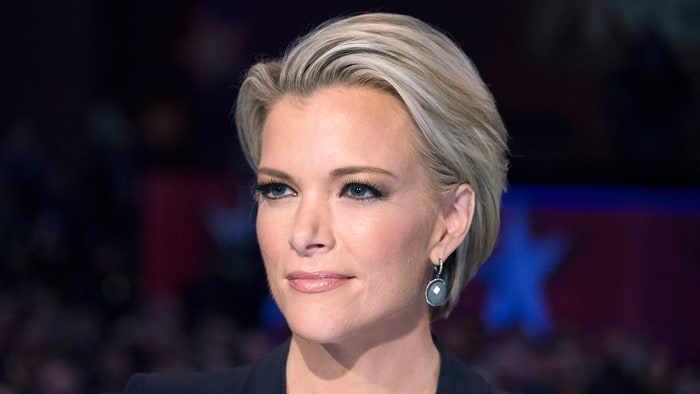
A decade ago, Megyn Kelly was the NeverTrump starlet. Her war with Donald Trump in the 2016 primary made her one of the few good conservatives in the eyes of the mainstream media. The then-Fox News host further burnished her respectability by helping to oust Roger Ailes from the network over sexual improprieties, marking her as a MeToo pioneer.
Kelly has a very different reputation today. She’s now seen as one of the chief purveyors of conspiracy theories in popular discourse, as illustrated in comments she made last week. During an interview with Tucker Carlson, Kelly strongly defended Candace Owens and her assertions that Israel killed Charlie Kirk. While Kelly claims to believe the official story around Kirk’s murder, she thinks it’s right to ask Owens’s insane questions about the assassination. She’s abandoned her old “moderate” conservatism in favor of the amorphous populism of the influencer circuit.
Her new politics reveals much about the nature of influencer media. Kelly’s politics are driven by her audience. The same goes for many independent content creators. They are running businesses and aim to please customers. Their viewpoints naturally follow from this mindset. The new media environment is far more democratic than the old one. Influencers instantly learn what their audience thinks of their content through replies and comments. They can even “ratio” a take they hate in just a few minutes. Influencers adjust accordingly and rarely ever go against their audience.
Kelly exemplifies this.
A review of Kelly’s career reveals she likely has no real beliefs. At Fox, she was your average pre-Trump conservative. She assailed Obama, radical Islam, big government, and all the other usual enemies of the Tea Party.. She suddenly discovered a more moderate streak during her battle with Trump when she realized this made her a more attractive hire to mainstream media outlets. Fox’s liberal competitors and the major networks all began courting Kelly in 2016. She left FNC for NBC in 2017.
At NBC, she transformed herself into a standard liberal. Her new views were illustrated in a 2017 interview with Alex Jones. This conversation was worlds apart from her current defense of Candace Owens. In a “solemn and scolding tone” (the words of the New York Times), Kelly lectured the InfoWars host about the danger of his conspiracy theories and how he shouldn’t ask certain questions. It’s hard to believe that someone who seems so eager to defend dumber and more reckless conspiracy theories would take such a morally righteous opinion against Jones. But such were the requirements of fitting in at a liberal network.
Her NBC foray turned out to be a disaster, capping off with Kelly making a hilarious defense of blackface. She was fired after one year, putting a potential humiliating cap on a once promising media career. However, her friend Ben Shapiro made a daring suggestion for her in unemployment: she should go into podcasting. Despite her fear “that she wouldn’t be able to find an audience in digital media,” she took the plunge and built a large audience on YouTube and other platforms.
She did this in the early 2020s by emulating the politics of Shapiro and other conservative podcasters. Gone were her lectures about conspiracy theories and attempts to look respectable to liberals. Now she delivered tirades against DEI, transgenders, and open borders. Additionally, unlike many of the leading of the conservative podcasters who jumped on the Ron DeSantis bandwagon, she thought the Florida governor had no shot against the 45th president in the 2024 primary. Her instincts turned out correct.
But the shape of conservative podcasting is different from what it was like just a few years ago. Shapiro is hemorrhaging subscribers, as are many of the more traditional conservatives. The biggest names in the space are now Tucker Carlson and Candace Owens. Most of the rising stars are conspiratorial populists whose political orientation can change from week to week. Ian Carroll is the current model to gain a huge audience.
Kelly, noticing the way the wind is blowing, has adjusted accordingly. She now talks about demonic possession, UFOs, crank health advice, and other topics that seem to draw in an online audience. Kelly recognizes Candace as someone with a huge following and she wants a piece of it. Hence, her strange stance on the Kirk shooting. It’s not like she needs to worry about Rupert Murdoch shutting her down anymore. She apparently doesn’t even have to worry about TPUSA disinviting her from speaking, as she was one of the main attractions at the last AmFest. She now feels primarily beholden to her online audience and tailors her opinions to suit them.
Kelly is not completely an independent content creator. Her show is broadcast by SiriusXM, which gives her access to traditional media consumers. But she seems to care far more about chasing the shiny podcaster audience instead.
When observers wonder what’s gotten into Kelly and other prominent podcasters, it’s often thought that they are suddenly going off the deep end on their own. But it’s more likely a rational calculation on what their audience wants to hear.
It’s a different world in alternative media compared to the traditional institutions. The audience is anti-establishment and wants to question mainstream narratives. This is often a good thing. While the mainstream media spread lies about George Floyd, Trayvon Martin, the COVID lockdowns, gender transitions, and a whole host of other topics, independent media was there to correct the record. The failures of the mainstream media and the decline in public trust have created a large audience for alternative voices. This hunger has been a tremendous benefit for the Right. It helped Trump win in 2024 and allowed right-wing ideas to go mainstream.
However, it comes with downsides. You can end up with an audience that wants to maximize entertainment above all considerations and will refuse to believe basic facts about life. They want influencers to offer wild theories for why things that happen and won’t be covered by the mainstream media. Some influencers stick to facts and logic, and offer solid arguments for immigration restriction and race realism. But that stuff is often too boring and too harsh for much of the audience. They prefer magical thinking that imagines the world is ruled by extraterrestrial creatures or Satanic pedophiles. They crave drama and plot twists, not data proving immigration ruins nations. In spite of the audience’s professed skepticism, many of them prove to be the most gullible people on planet Earth. As long as influencers present their idiotic notions as something the “elites” don’t want to know, their “freethinking” listeners will gobble up without hesitation.
So we get endless theories about how Charlie Kirk was killed by a cabal of villainous actors based on dreams, poor reading comprehension, and dubious sourcing. It’s what the audience seems to want, along with speculation about UFOs, chemtrails, and the shape of the Earth.
Traditional media doesn’t touch these subjects, often because they’re retarded. But they’re all lumped in with things the press refuses to cover, which include politically incorrect facts–such as racial crime data–and batshit nonsense. It’s left to alternative media to cover these topics, and discernment on what to cover leaves much to be desired.
People tune to alternative media to get stories and perspectives they wouldn’t get from the establishment. Kelly can’t do the same Fox News routine when Fox already exists. They have to offer something different, and the most popular choice are conspiracy theories. They’re both more entertaining and more inclusive than logically coherent Rightism.
The new media space is incredibly democratic. The sole value is popularity. If you get a huge audience for your crackpot theories, that makes you worthy of being heard and respected. There is no other assessment besides engagement metrics. It’s a ruthless competition to gain as much attention as possible. There’s no oversight to determine whether the content is connected to reality or makes any sense. What matters is pleasing the audience. That’s it. With traditional media, there are at least other standards.. There are no other values that matter in alternative media. It’s true populism in that it gives the people what they want, and what they want is inherently good.
The big influencers are running a business. They are obsessing over engagement metrics just like any entrepreneur would over sales data. If they lose subscribers, that threatens the enterprise and their livelihood. They’re not going to take that risk. Everything is done to maximize their audience and ensure they keep them listening.
Kelly, with her mercenary spirit and natural talent, is perfectly suited for the new media environment. Figures who came from the old media sphere, like Bill O’Reilly, who didn’t adjust for the new media environment are completely irrelevant. Kelly stays relevant through the insane clown populism of the influencer sphere. Few would pay attention if she stuck to either her Fox News conservative or NBC liberal schtick.
There’s no real way to control this, for both good and bad. The new media environment is still better than a traditional media monopoly and the woke sphere of the 2010s. This is due to the greater freedom from censorship and deplatforming. But it’s still obviously bad that lies and idiocy spread with no consequence. Duplicitous influencers being sued for defamation is probably the only way to curtail the worst excesses. We’ll see what happens from Brigitte Macron’s legal case against Candace Owens.
This is the information world we now live in. All we can do is make the best of it and ignore the charlatans.
https://www.highly-respected.com/p/megyn-kelly-and-the-influencer-business