
Norman Podhoretz: ‘My Negro Problem and Ours’
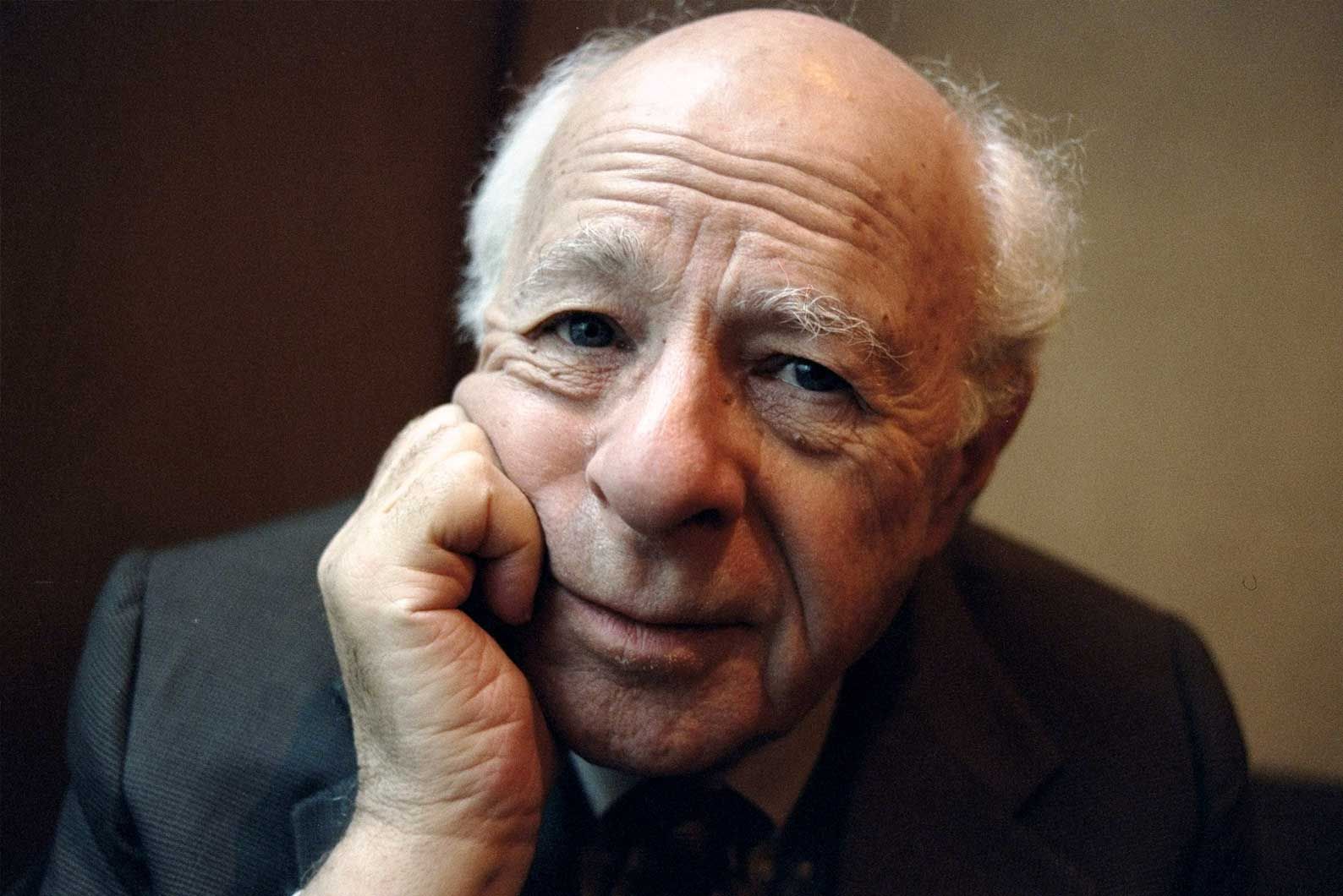
There was a recent post on The Unz Review by Jose Alberto Nino, End of an Era: Norman Podhoretz and the Much-to-be-Hoped-For Decline of Neoconservative Power.
Indeed, for the “much-to-be-hoped-for” part! Podhoretz, who died this past December at the age of 95, is widely acknowledged as the godfather of Neoconservatism. In his post, Nino makes note of Podhoretz’s “journey from the working class streets of Brooklyn to the commanding heights of American intellectual life [that] mirrored the broader fracturing of the American Left during the Cold War, when former progressives (including many Jewish Trotskyists, e.g. David Horowitz) found themselves “mugged by reality” and remade themselves as champions of military interventionism and unflinching support for Israel.
As editor-in-chief for Commentary, Podhoretz turned the magazine into an intellectual force, a subversive playbook for mostly newly minted Jewish neoconservatives who, after WWII, would usurp control over the Republican party and take command of U.S foreign policy. That policy would eventually give tiny Israel unprecedently massive foreign aid, military support, foreign intelligence collaborations, and an unrestricted, aggressive lobbying access that has enabled it to capture the executive and legislative branches of the U.S. government with large campaign contributions. One can only recollect with profound disgust Israeli Prime Minister, Benjamin Netanyahu’s address to a joint session of Congress in July 2024 where he received 47 standing ovations from the trained seals elected to represent American interests.
Commentary was founded in 1944 by two Jewish intellectuals from New York, Daniel Bell, and Lionel Trilling, who was Podhoretz’s mentor at Columbia University. Commentary’s readership target was the “very liberal Jewish community” whose denizens were hawkish on the moral primacy of Israel. Its circulation never exceeded 30,000 and its subscription income makes up a small part of its income, most of which comes from Jewish deep pockets like the American Jewish Committee, the Tina and Steven Price Charitable Foundation, and the Jewish Communal Fund.
Of particular note in the Nino post is a reference to an extremely controversial piece Podhoretz published in Commentary, “My Negro Problem and Ours.” The “My” of course refers to Podhoretz; the “Our”. . . well to where he goes with this, Norman proves himself to be an obscurantist writer of the highest rank.
The year of publication was 1963, when “negro” was still the polite word for a black person, and the U.S. was about 85 percent white (two years before the Hart-Celler Immigration and Nationality Act of 1965 would open the flood gates of third-world, non-white immigration). The cultural revolution of the 1960s was about to explode, and drifting out of the wake of that explosion was the “civil rights” movement, fomented and led by Jewish lawyers and activists using the “oppressed negro” as a righteous moral force with which to permanently stain white Americans as oppressors.
Jewish activists, including the culturally Marxist, Jewish subversive Frankfurt gang, would help turn Podhoretz’s personal “my negro problem” into a growing intractable “our” problem for all of white America, permanently on the hook for something called “white privilege.” Or, as Barack Obama would put it near the end of his “race healing” presidency: “Racism. We [white people] are not cured of it.” “Racism,” it turns out, is a permanent “malignancy” for which there is no incentive for blacks to discover a “cure.” “Racism,” to switch metaphors, would provide the moral “lever” with which the white “expropriators,” to use the revolutionary language of Jewish Karl Marx, would remain in a protracted process of being “expropriated.”
Podhoretz’s lengthy essay is both autobiographical and confessional. It bears careful reading as it betrays a cognitive dissonance seemingly unique to Jewish intellectual elites that still holds sixty years later.
On one hand, Jewish interaction with and direct observation of negro behavior confirms the reality of race realism—lower average intelligence, impulse control, and a proneness to aggressive behavior as essential genetic components of African descendants. On the other hand, Jewish intellectuals espouse an oppressor-oppressed ideology which places their tribe, a chosen people, at the pinnacle of victimhood, while at the same time attributing the failure of negros to achieve standards of success attained by other groups to the innate malevolence of whites. Don’t forget, as well: in that frightful bundle of white malevolence is “antisemitism” which is always and forever on the rise. Its corollary is the increasing constriction of what can be said about Jews that is not in conformity with the religious tenets of Holocaustanity, as described in Norman Finkelstein’s book, The Holocaust_Industry. Negros and Jews comprised what would be a growing taxonomy of victim groups whose members were regularly and systematically oppressed by whites. While tensions between blacks and Jews have waxed and waned over the decades, blacks have proved useful for guilt-leveraging whites in order to manipulate them to serve Jewish interests. Podhoretz notes in his essay on his older sister’s early embrace of that ideology:
During the early years of the war [WWII], when my older sister joined a left-wing youth organization, I remember my astonishment at hearing her passionately denounce my father for thinking that Jews were worse off than Negroes.
“My Negro Problem” begins with Podhoretz recalling two ideas he encountered as a young child of first-generation Jewish immigrant parents growing up in Brooklyn; all Jews were rich and that all Negros were persecuted. Both these ideas were contradicted by the entirety of Podhoretz’s personal childhood experience. “[S]o for a long time I was puzzled to think that Jews were supposed to be rich when the only Jews I knew were poor, and that Negroes were supposed to be persecuted when it was the Negroes who were doing the only persecuting I knew about—and doing it, moreover, to me.”
“My negro problem,” that is, the 1963 version of it as revealed by a Jewish intellectual’s candid boyhood reminiscences, was about the negro children he encountered in the racially-mixed neighborhood where he went to school. Of particular note in his experiences were negro limitations for higher learning and a proclivity for physical aggression which he experienced personally over the years, being beaten-up, robbed, intimidated, and bullied. From these he confesses to a lingering “hatred” he carries to the moment he wrote the article. Even in the less dangerous times of 1963 for being open about your “negro feelings,” it was quite a show of Jewish chutzpah!
As an eight-year-old:
A week later, some of us are swatting flies on the playground’s inadequate little ball field. A gang of Negro kids, pretty much our own age, enter from the other side and order us out of the park. We refuse, proudly and indignantly, with superb masculine fervor. There is a fight, they win, and we retreat, half whimpering, half with bravado. My first nauseating experience of cowardice. And my first appalled realization that there are people in the world who do not seem to be afraid of anything, who act as though they have nothing to lose. Thereafter the playground becomes a battleground, sometimes quiet, sometimes the scene of athletic competition between Them and Us. But rocks are thrown as often as baseballs. Gradually we abandon the place and use the streets instead. The streets are safer, though we do not admit this to ourselves. We are not, after all, sissies—that most dreaded epithet of an American boyhood.
At this early age, Podhoretz realizes that black kids are tougher, more aggressive, and less fearful than Jewish kids. A short-time later, Podhoretz experiences a blind-sided physical assault from a black boy he knows, Quentin, whom he had walked away from after a verbal confrontation:
I turn to walk back into the building, the corner of my eye catches the motion of the bat his little brother has handed him. I try to duck, but the bat crashes colored lights into my head. . . The next thing I know, my mother and sister are standing over me, both of them hysterical. My sister—she who was later to join the “progressive” youth organization—is shouting for the police and screaming imprecations at those dirty little black bastards [dramatic cognitive dissonance on display]. They take me upstairs, the doctor comes, the police come. I tell them that the boy who did it was a stranger, that he had been trying to get money from me. They do not believe me, but I am too scared to give them Quentin’s name. When I return to school a few days later, Quentin avoids my eyes. He knows that I have not squealed, and he is ashamed. I try to feel proud, but in my heart I know that it was fear of what his friends might do to me that had kept me silent, and not the code of the street.
Podhoretz also recounts how as his schooling moved into the higher grades, fewer and fewer blacks would be found in the advanced classes:
In the last three or four years of the elementary school from which we have just graduated, each grade had been divided into three classes, according to “intelligence.” (In the earlier grades the divisions had either been arbitrary or else unrecognized by us as having anything to do with brains.) These divisions by IQ, or however it was arranged, had resulted in a preponderance of Jews in the “1” classes and a corresponding preponderance of Negroes in the “3’s”, with the Italians split unevenly along the spectrum. At least a few Negroes had always made the “l’s,” just as there had always been a few Jewish kids among the “3’s” and more among the “2’s” (where Italians dominated). But the junior high’s rapid-advance class of which I am now a member is overwhelmingly Jewish and entirely white—except for a shy lonely Negro girl with light skin and reddish hair.
The obvious point that Podhoretz declines to make is that, since both the blacks and Jews in his neighborhood were poor, black academic underperformance and Jewish success had nothing to do with poverty. He typically hedges with “These divisions by IQ, or however it was arranged. . . ” giving himself some distance from those “racists” who affirm that intelligence is distributed unevenly in the races.
In reflecting on his childhood experience, Podhoretz makes a profound distinction between the neighborhood ethnic conflicts involving Jewish, Irish, and Italian kids, as compared with the blacks:
But we, the kids, who all spoke Yiddish or Italian at home, were Americans, or New Yorkers, or Brooklyn boys: we shared a culture, the culture of the street, and at least for a while this culture proved to be more powerful than the opposing cultures of the home. . . Why, why should it have been so different as between the Negroes and us?
Ponder for a moment this question: the highly hermeneutically skilled Podhoretz is about to pull a Talmudic fast one on his readers.
How was it borne in upon us so early, white and black alike, that we were enemies beyond any possibility of reconciliation? Why did we hate one another so?
But who exactly is the “we”? To figure that out, we need to pose, what Podhoretz, with the black-white binary equation, artfully dodges; the “Jewish Question.” How do the Jews figure into this reciprocity of racial hatred?
Halfway through his “negro problem” Podhoretz finishes his recollection of his childhood experience with negro persecution, and, well. . . one might begin to sense where the reader is being led by theses uncensored childhood vignettes of race realism.
Now an adult, here is where he proves himself to be the Talmudic whiz-kid who, from the Brooklyn Jewish ghetto, rose to the top of America’s intellectual-influencer class.
From Columbia College: “In celebration of a 50-year editorial career, Norman Podhoretz. . . has been awarded the Presidential Medal of Freedom, the highest honor awarded to a civilian by the commander in chief.” The year was 2004, and the commander in chief was George W. Bush. Only a cynic would surmise that the award was a payoff for Podhoretz’s help in crafting of neoconservative rationale for the U.S. toppling of Saddam Hussein in Iraq, further involving the U.S. in the destabilizing of the Middle East in the interest of Israel.
Earlier in his successful adulthood:
And what about me? What kind of feelings do I have about Negroes today [1963]? What happened to me, from Brooklyn, who grew up fearing and envying and hating Negroes? Now that Brooklyn is behind me, do I fear them and envy them and hate them still? The answer is yes, but not in the same proportions and certainly not in the same way.
“The answer is yes, but not in the same proportions and certainly not in the same way.” Here is Podhoretz, the Talmudist, brazenly calculating the “proportions” and the altered shape of the “hatred” he still embraces. Here he gives himself away as a slippery, protean double dealer, posing as a contemporary moral authority on American race relations.
No longer a poor boy from the Brooklyn Jewish ghetto, Podhoretz is wealthy and a member of the power-elite.
He still encounters negros on the street of his posh, upper west side of Manhattan neighborhood. “I pass a group of Negroes standing in front of a bar or sauntering down the street. I know now, as I did not know when I was a child, that power is on my side, that the police are working for me and not for them.”
The negro is still the alien “other” for Podhoretz, but he no longer fears them as he did as a child. His older sister was right all along.
Podhoretz labors valiantly to affirm that mutual racial hatred is the crux of the American negro problem, and it is back to the deliberately ambiguous “we.”
“We [sic] have it on the authority of James Baldwin that all Negroes hate whites.” Again, who is the “we” that would accept the “authority” of James Baldwin on race relations? I seriously doubt that all blacks hate whites, but it was likely large enough numbers combined with self-loathing whites to put us into the George Floyd era and the assault on white heritage with removing statues and renaming institutions.
But what do we make of this? “I am trying to suggest that on their side all whites—all American whites, that is—are sick in their feelings about Negroes.” So, is Podhoretz just one of all these whites who harbor “sick feelings” about negroes? How do American Jews fit into this picture?

Like those Mosquito fogger trucks from the 1950s and 1960s that blew out thick white clouds of DDT as they drove through the streets, here is where Podhoretz lays down a thick smog of contemporary guilt-laden, early 1960s white liberal introspections on American race relations that obscures Jewish activism. The moral goal of “racial integration” as the solution to the black-white hatred problem for Podhoretz was a looming, intractable problem:
I could call upon the psychologists who have spoken of the guilt that white Americans feel toward Negroes and that turns into hatred for lack of acknowledging itself as guilt. These are plausible answers and certainly there is truth in them.
White Americans are so psychically poisoned, as Podhoretz wants to argue, that they cannot embrace integration with blacks:
I am convinced that we white Americans are—for whatever reason, it no longer matters—so twisted and sick in our feelings about Negroes that I despair of the present push toward integration. (Italics added.)
Keep in mind this is 1963. “Integration” is, in 2026, no longer in the race relations lexicon of Americans, black or white. For whites, “integration” back then meant that blacks would achieve acceptance in white society with the expectation that their skin color would no longer prevent them being able to compete fairly, with the same rules for everyone, for the same opportunities for better lives as whites. But this was never what would satisfy blacks. The black intellectual elite “discovered” and widely promulgated an ideology that made “whiteness” a permanent malign obstacle to black betterment. It is now an ideology broadly embraced by blacks and liberal whites that has been assiduously promoted by every pillar of the American establishment. Its practical tenets are ruthlessly enforced by law and societal pressure. Sixty years later, it is obvious that “integration” was never a seriously achievable goal. Whatever efforts whites made in the direction of “equality,” affirmative action, poverty programs, forced bussing, policing of speech, etc. were failures that blacks interpreted as the invincible nature of white racism.
Once again, Podhoretz resorts to the “we” to convince the reader that whites are so innately iniquitous that he contemplates “despair” about the future of integration. Neither the “integration” that he sees that whites are passively resisting nor the “equality” that blacks want “now” in 1963 America are realizable goals. Podhoretz persists in what increasingly appears to be a disingenuous self-flagellation. Out of this he envisions a “solution” that ultimately leads not to some ideal of whites and blacks living in an integrated state of racial equality, but to the gradual effacement of white people.
But first, more on his hatred for the negro—the adult rendition:
The hatred I still feel for Negroes is the hardest of all the old feelings to face or admit, and it is the most hidden and the most overlarded by the conscious attitudes into which I have succeeded in willing myself. It no longer has, as for me it once did, any cause or justification (except, perhaps, that I am constantly being denied my right to an honest expression of the things I earned the right as a child to feel).
Here in the confession of his continuing “hatred problem” is where Podhoretz executes an astonishing non-sequitur that he imagines will get him off the hook and solve the problem of seemingly intractable mutual white-black hatred. For this he needs the black wisdom of James Baldwin:
Baldwin’s message is and always has been simple. It is this: “Color is not a human or personal reality; it is a political reality.” And Baldwin’s demand is correspondingly simple: color must be forgotten, lest we all be smited with a vengeance “that does not really depend on, and cannot really be executed by, any person or organization, and that cannot be prevented by any police force or army: historical vengeance, a cosmic vengeance based on the law that we recognize when we say, ‘Whatever goes up must come down.’”
“Color,” of course is a “human” and “personal” reality. The politicizing of it is a twentieth-century turn, the success of which is monumentally and grotesquely evident in every significant feature of American society—law, education, corporations, entertainment, etc.
I think I know why the Jews once wished to survive (though I am less certain as to why we still do): they not only believed that God had given them no choice, but they were tied to a memory of past glory and a dream of imminent redemption.
I have no idea what to make of this other than the injection of more verbal smog to confuse the hapless reader about how Jews figure in hate-ridden American race-relations.
From that, whatever we can make of it, to black Americans:
What does the American Negro have that might correspond to this? His past is a stigma, his color is a stigma, and his vision of the future is the hope of erasing the stigma by making color irrelevant, by making it disappear as a fact of consciousness.
Could there be a more stunningly, blatantly false estimation of what the “hope” of black Americans would be for the future resolution of racial conflict? “Color” over the ensuing decades would become increasingly relevant. What is sought to “disappear” is not color but the color “whiteness” as it is euphemized in the abstraction, meaning the disappearance of white people in practice.
Podhoretz affirms his hope for the disappearance of color. . . But.
I cannot see how it will ever be realized unless color does in fact disappear: and that means not integration, it means assimilation, it means—let the brutal word come out—miscegenation. What I am saying, however, is that in my opinion the Negro problem can be solved in this country in no other way.
It is highly doubtful if Norman Podhoretz really believed this. He confessed personal revulsion with the observation of it:
How, then, do I know that this hatred [of the negro] has never entirely disappeared? I know it from the insane rage that can stir in me at the thought of Negro anti-Semitism; I know it from the disgusting prurience that can stir in me at the sight of a mixed couple. . . If I were to be asked today whether I would like a daughter of mine “to marry one,” I would have to answer: “No, I wouldn’t like it at all.” I would rail and rave and rant and tear my hair. And then I hope I would have the courage to curse myself for raving and ranting, and to give her my blessing.
Make of that what you will. Sixty years later, the Podhoretz progeny give no evidence of blessing them with miscegenation. His son John who now is Commentary’s editor-in-chief is an arch-Zionist and runs the magazine as a propaganda arm for Israel.
As far as Podhoretz’s professed hope for miscegenation and the disappearance of color, American Jewish efforts have moved in another direction using legislation, NGOs, and Hollywood produced propaganda disguised as entertainment: the effacement of whites though aggressive advocacy of non-white immigration and the tarnish of bigotry on whites who resist. Some evidence of success by numbers in America’s four largest cities:
Percentage of whites non-Hispanic (2020 census)
Houston 23.69%
Los Angles 28.88%
New York City 30.89
Chicago: 31.45%
For an article that covers the extensive the role of American Jews in non-white immigration advocacy I recommend A Brief History of Jews Pushing for Non-White Immigration in America. Excerpts:
1965 Hart-Cellar Act, also known as the Immigration and Nationality Act of 1965, changed the face of America forever. Jewish people played a large part in shaping this legislation. Emanuel Cellar was a long-serving Jewish Congressman from New York City, representing Brooklyn and beyond. Herbert Lehman, the Jewish governor of New York State, is credited as the reason for the 1965 legislation. Dr. Rebecca Kobrin, a professor of American Jewish history at Columbia, states, “Lehman pushed and bankrolled the legislation. He did not get to see it passed — but he got it passed.” He was so adamant in getting this passed, “because the quota system passed in 1924 did not reflect American values. . . America was almost 90% White at the time the Act was signed into law. . . Jews still continue being at the forefront of flooding America with non-Whites to this very day. At a Jewish “rally for refugees,” a HIAS representative boasted about how Jews from all across Judaism agree that the United States should be flooded with immigrants.
Last week Hebrew Immigrant Aid Society (HIAS) organized a letter signed by over 1,200 rabbis. Can you imagine getting 1,200 rabbis to agree on one thing? But agree they did. And what they agreed was to ask our elected officials not to halt or even to limit the United States refugee admissions program. And it’s not just HIAS, it’s Jewish organizations of all kinds, across the spectrum of Judaism, are issuing statements in support of refugees. These have included the Orthodox Union of Rabbis, the US holocaust memorial museum, and so many Jewish organizations that you heard are co-sponsors of this event.”
The death of Norman Podhoretz last December at 95 years of age would seem to affirm a line of lyrics from the rock group, Old Maiden, “Only the good die young, all the evil seem to live forever.”
Post Script: Podhoretz in 2013 published, “‘My Negro Problem-and Ours’ at 50,” tediously long, self-serving and, as I said above, the subversive work of a slippery, protean double dealer. The last paragraph says it all:
Almost from the day it was published, I have felt that it no longer belonged to me and that I had no right to tamper with it, let alone to kill it off. All the more is this the case now that it has survived to the ripe old age of 50.
https://counter-currents.com/2026/01/my-negro-problem-and-ours