
Nowadays Nothing Works Like It Used To
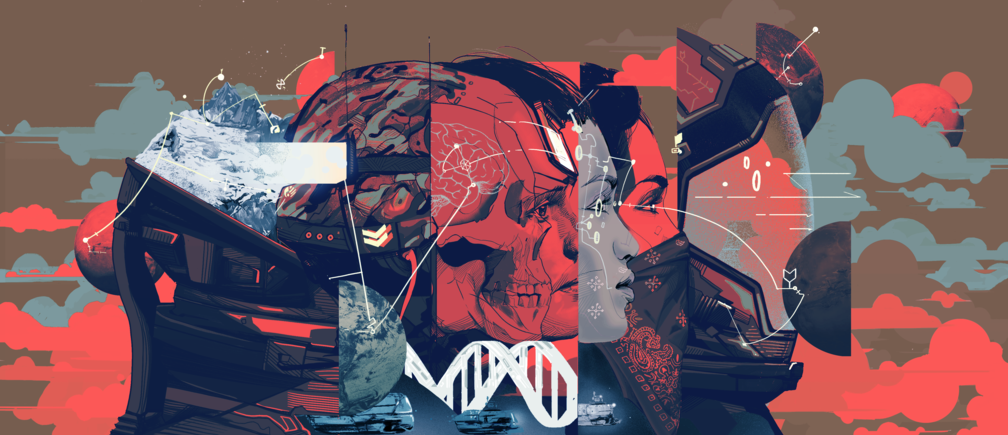
We live in a world where war no longer knows borders or truces. It is no longer an isolated event, bounded by fronts and ceasefires, but a perpetual and widespread condition, an endless war that permeates every domain of contemporary life—from the digital trenches of cyberspace to economic and information conflicts and wars for narratives and influence. This situation did not arise out of nowhere: it is the result of an exhausted international system, an order based on assumptions that are now fragile and inadequate for the multipolar reality of the 21st century.
Contemporary warfare, as we know, is no longer waged solely with conventional weapons. It is a hybrid war, comprised of propaganda, information manipulation, supply chain control, financial pressure, and technological dominance. Every crisis—from Ukraine to the Middle East, from Africa to the Pacific—reflects a broader struggle for control over spheres of influence and strategic resources. But what makes this struggle “endless” is the lack of a clear goal, of a point at which a winner can achieve victory over a loser. Everything is changeable, everything is reversible, writes Lorenzo Maria Pacin .
Hybrid warfare, with its ubiquitous nature, obliterates the distinction between peace and conflict. Economic sanctions, cyberattacks, disinformation campaigns, currency wars, the strategic use of energy or food—everything becomes a weapon. There is no time for diplomacy anymore, because competition is constant. In this permanent state, even civilians, consumers, and the public have unwittingly become targets and combatants.
One of the typical tools the West has used to maintain control over the international system is sanctions. Their logic was based on the concept of economic pressure as a substitute for war. Punishment to deter. Weakening to extract political concessions. But sanctions, as we all too well know, no longer work.
And one of the most horrific things, if we may say so, is that there seems to be no respite in all of this. Perception is key, just as in torture, which is intensified or relaxed depending on the effects on the tortured. It is a sadistic game of global violence, in which a few cannibalize the peace of the many, and the balance of the world is sacrificed on the altar of the interests of hidden oligarchies.
Roads that work, roads that fail
In a globalized world fragmented into power blocs, economies are seeking alternative paths. Russia trades with China, Iran strengthens itself through parallel networks, and so-called “non-aligned” countries exploit tensions between powers to gain autonomy. Sanctions often lead not to isolation but to the sanctioned countries developing new internal capabilities, new alliances, and alternative supply chains. This demonstrates that universal coercive measures no longer exist: there is no way, or perhaps no will, to truly resolve conflicts through defeat or surrender.
This failure is also that of deterrence. For decades, peace in the Western world was based on the principle of mutual fear: nuclear war as taboo, military intervention as a last resort. Today, deterrence no longer commands respect, but calculation, with global actors constantly pushing boundaries and red lines, knowing that the superpowers hesitate for fear of the political, economic, and human costs of a radical decision. The messages of “determination” from Western leaders are lost in the void of an order that is no longer shared.
The “rules-based order” the United States and Europe talk about has become empty rhetoric. That system, which emerged in the aftermath of World War II, when Western dominance of the world was total, assumed implicit agreement with American leadership and its values: liberal democracy, free trade, “humanitarian” interventionism, and the supremacy of multilateral institutions under Western influence. But that time is over, and the problem is that none of them had considered an “after,” so they are desperately trying to keep alive the rotting carcass of that old world, which they keep telling us is the best possible world, but which in reality resembles a monster.
The rules that were supposed to guarantee stability are now seen by many countries as instruments to be applied selectively at will. When the West violates the rules it itself enforces—bombing countries without a UN mandate, supporting coups, imposing unilateral sanctions, manipulating entire generations—the legitimacy of that order disappears. The system slowly dies, buried beneath its own contradictions.
While the West debates “values” and “defending democracy,” the rest of the world is pragmatically organizing itself around new axes of cooperation, using the language of economic realism, technological autonomy, and the sovereignty of civilizations. New financial institutions, new military alliances, and new energy and trade corridors are emerging. It’s a profound realignment in which Western criteria and levers of power no longer prevail.
Of course, this new multipolar world is not yet stable: it is turbulent and full of contradictions, but it represents the end of an era and the beginning of another, a transition that requires time and patience. No single state still has the power to impose global rules on its own. Power relations are reflected in local equilibriums, the rules of which are still being worked out. The corpses of old empires must be transformed into new ground on which something else can be built.
Multipolarity also means that there is no longer a single geopolitical truth, but that each pole of power has its own narrative, its own political and economic model to propose. China presents itself as an alternative to Western liberalism; Russia claims to defend values and spaces; India, Latin America, and Africa seek a place that is no longer subordinate, but plays a leading role in their own history. In this context, Europe seems lost: too small to assert itself alone, too dependent on the United States to form an independent front, too entrenched in its own convictions, struggling to save itself by turning to the wrong side.
While the multipolar order may not automatically bring justice or peace, it is a response to the global weariness of the West’s universal pretensions. It is the return of politics, in the most realistic sense of the word: the struggle for survival and influence within a system without armed referees, a system willing to change the rules at will and falsify the results. The world is tired of all this.
We live in an era where there are no longer clear winners. Every conflict creates new dependencies, new wounds, new vulnerabilities, and therefore an endless war is also a war of attrition, of the inability to conceive of alternatives. Sanctions, alliances, and solemn declarations are no longer sufficient and will become increasingly ineffective, because there is no place in the new world for those who still wish to impose the remnants of the old world.
What remains of Europe, of the collective West? It’s no longer a question of who’s right, but who can endure.
https://www.frontnieuws.com/vandaag-de-dag-werkt-niets-meer-zoals-vroeger