
One Nation’s Rise in Australia: Discontent’s Containment
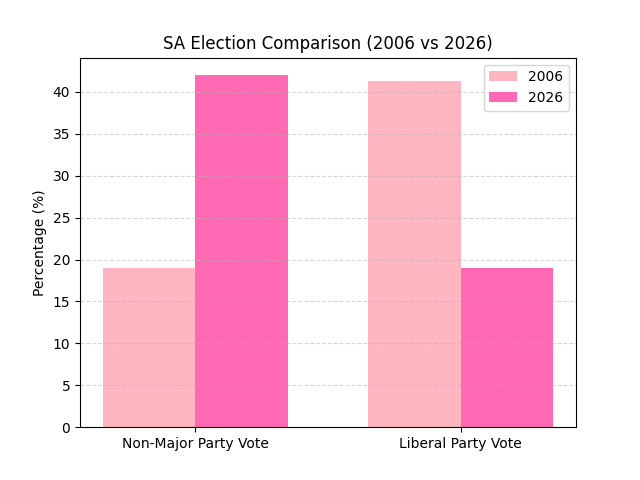
The political landscape of Australia is currently experiencing a subterranean tremor, one that threatens to permanently alter the topography of the nation’s post-war two-party settlement. The March 2026 South Australian state election served as the most dramatic surface manifestation of this seismic shift to date.1 In an outcome that defied historical precedent and bewildered orthodox political commentators, the incumbent Labor government secured a landslide victory, yet the defining narrative of the election was not the triumph of the centre-left, but the catastrophic fracturing of the political right. The South Australian Liberal Party suffered an electoral humiliation of historic proportions, witnessing its primary vote collapse to a 19.0%, rendering it functionally uncompetitive in vast swathes of the state, particularly within urban and metropolitan centers.2
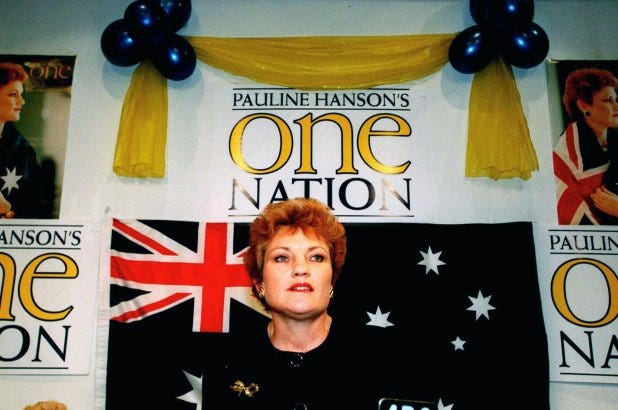
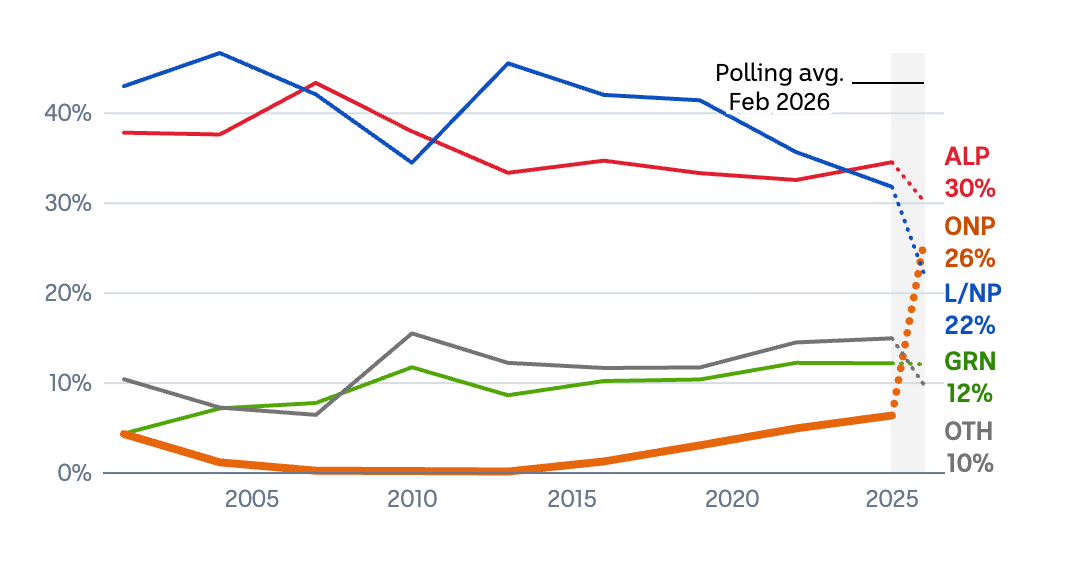
Ascending rapidly to fill this ideological and electoral vacuum was Pauline Hanson’s One Nation, a right-wing populist party that, after nearly three decades of highly erratic political fortunes, captured 22.1% of the primary vote, effectively usurping the Liberal Party as the second-most popular political force in the state by raw vote share.3 This state-level insurgency mirrors a broader, hardening federal trend. Opinion polling throughout the latter half of 2025 and early 2026 has consistently shown One Nation’s national primary vote surging to record highs, frequently matching or even exceeding the primary support of the federal Liberal-National Coalition.4
For the conservative establishment, this rapid realignment is a source of existential dread, threatening to relegate the legacy parties of the centre-right to a permanent minority. For the progressive left, it is a cause for intense moral panic, often reflexively dismissed as a resurgence of latent national bigotry. Yet, a serious appraisal of this phenomenon requires looking far beyond the immediate partisan hysteria and the simplistic caricatures offered by mainstream commentary. The central question that must be asked is not only why One Nation is rising in the polls, but what this rise actually signifies for the structural integrity of Australian democracy and the future of conservative political thought.
The thesis of this analysis is threefold. First, the resurgence of One Nation is less a vindication of Pauline Hanson’s specific political vision and more a symptom of a vast, growing reservoir of structural discontent among the Australian electorate, a discontent rooted firmly in acute material realities such as the housing crisis, infrastructure strain, and the significant cultural and economic tensions stemming from historically unprecedented levels of mass immigration. Second, despite accurately identifying the sources of this public malaise, One Nation is fundamentally incapable of acting as a credible vehicle for translating these legitimate grievances into coherent, constructive political outcomes. Its institutional shallowness, ideological opportunism, and structural reliance on a rigid cult of personality preclude it from serious governance. Third, and most crucially, One Nation currently functions not as a revolutionary force, but as a systemic containment mechanism. By absorbing the energies of a frustrated, anti-establishment voting bloc and safely funnelling their preferences back to the Coalition via the mechanics of the preferential voting system, One Nation provides voters with the cathartic illusion of rebellion while ultimately preserving the very political establishment it claims to despise.
The Protest Vote Thesis and the Collapse of Majoritarian Trust
To truly understand the One Nation phenomenon, we must first diagnose the broader collapse of institutional trust within Western democracies, of which Australia is merely a localised, albeit distinct, iteration. For decades, the Australian political settlement was defined by a highly stable duopoly, with the Australian Labor Party (ALP) and the Liberal-National Coalition absorbing the vast majority of the primary vote and trading executive power based on minor, marginal fluctuations in the political centre. This era of majoritarian consensus is now definitively over.
The 2026 South Australian election provided stark empirical confirmation of a trend that has been building momentum across several electoral cycles. At the close of counting, the non-major party vote stood at a record high of 42%. To place this figure in its proper historical context, the non-major party vote at the 2006 South Australian election was approximately 19%.5 This systemic haemorrhaging of primary support from the legacy parties is not confined to the state level. Federal polling indicates that nearly half of the electorate is now habitually parking its primary vote with minor parties or independents.6
This shift is driven by a significant and protracted pessimism regarding the trajectory of the nation. In recent surveys conducted by RedBridge Group and Accent Research, 55% of Australian voters expressed the belief that the country is heading in the wrong direction.7 More alarmingly, only 20% of respondents believe the next generation will have a better life than their parents, while a clear majority of 55% believe the next generation will inherit a quality of life markedly worse than their predecessors.8 This intergenerational despair is a toxic corrosive to the incumbent political order. When the fundamental promise of the post-war liberal democratic consensus that diligent labor guarantees upward mobility, secure property ownership, and a stable community is perceived to have been broken, voters inevitably begin to search for political alternatives outside the orthodox parameters.
It is a significant analytical error to interpret a vote for One Nation strictly as a wholesale endorsement of Pauline Hanson’s idiosyncratic worldview or the party’s disparate, often contradictory policy manifesto. Rather, for a significant plurality of its supporters, casting a ballot for One Nation constitutes a tactical protest vote, a distress flare fired into the halls of parliament to signal extreme dissatisfaction with the political managerial class.
In the lead-up to the South Australian election, detailed polling revealed that 52% of One Nation voters cited feeling “unrepresented” by the major parties as their primary motivation for supporting the insurgent group.9 Tellingly, only 10% of those surveyed cited the party’s actual policy platform as their main reason for support.10 This data underscores a vital reality, One Nation is acting as a political release valve. It offers a permission structure for voters who feel abandoned by the cosmopolitan, culturally progressive drift of the Labor party and the technocratic, rhetorically hollow inertia of the Liberal party.
The nature of this protest is further evidenced by its geographical and demographic spread. While One Nation thoroughly cannibalised the conservative base in regional and outer-suburban areas, reducing the Liberal party to an uncompetitive rump in seats it once considered safe, it also made striking incursions into traditional Labor heartlands. In working-class, industrial electorates such as Elizabeth and Mawson, the Labor vote collapsed, with One Nation securing primary votes of 32% and 26% respectively, representing massive double-digit swings against the incumbent government.11 These voters are not natural ideological conservatives, they are the traditional working class who perceive that the political left has abandoned their material interests in favour of elite cultural pre-occupations. By voting for One Nation, they are demanding, viscerally, to be heard by an establishment they view as deaf to their struggles.
The Material Engine of Discontent: Immigration, Housing, and Infrastructure
If the protest vote is the psychological mechanism driving the current realignment, the acute material pressures of modern Australian life provide the combustible fuel. It is entirely impossible to analyse the rise of One Nation without squarely addressing the central axis of contemporary Australian political anxiety: the intersection of mass immigration, housing unaffordability, and the severe strain on public infrastructure.
Australia is currently enduring a housing crisis of unprecedented severity. The psychological and economic foundations of the nation have long been built upon the accessibility of homeownership, the so-called “great Australian dream.” Today, that dream has metastasised into a source of social resentment and generational division.
Recent data illustrates a level of frustration rarely seen in wealthy, developed economies. In 2024, satisfaction with the availability of good, affordable housing in Australia collapsed to a record low of 22%, while dissatisfaction soared to an unprecedented 76%.12 The house price-to-income ratio has nearly doubled over the past two decades, with the average home now costing almost nine times the average household income.13 Renters are trapped in a highly pressurised market, and a growing cohort of young Australians report that they no longer believe that working hard and saving money will be sufficient to secure property.14 This economic exclusion breeds intense political alienation. When the state fails to secure the basic material foundations required for family formation and social stability, the electorate inevitably turns against the political establishment that oversaw the decline.
The role of immigration in this crisis cannot be overstated, nor can it be ignored without severe political consequences. Following the reopening of international borders post-COVID-19, Australia experienced a historic surge in net overseas migration, which peaked at approximately 536,000 in the 2022–2023 period.15 In the twelve months leading to January 2026, net permanent and long-term arrivals reached a record-breaking 494,540.16
The public intuitively understands the fundamental laws of supply and demand. Housing supply has manifestly failed to keep pace with this rapid population influx. Approvals for new housing have frequently fallen even as arrival numbers have broken historical records. Consequently, public opinion has hardened significantly against the prevailing bipartisan consensus on mass migration.
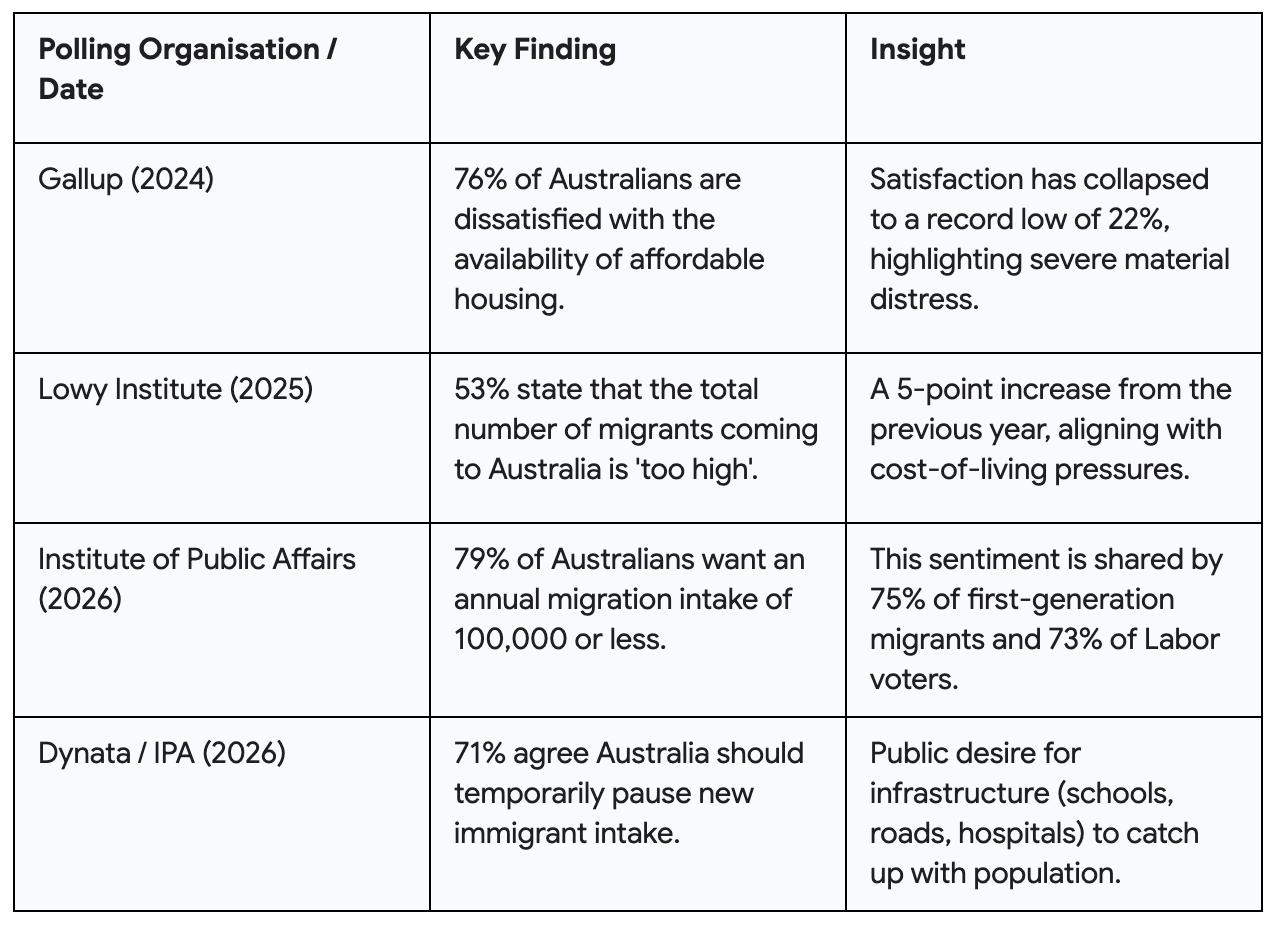
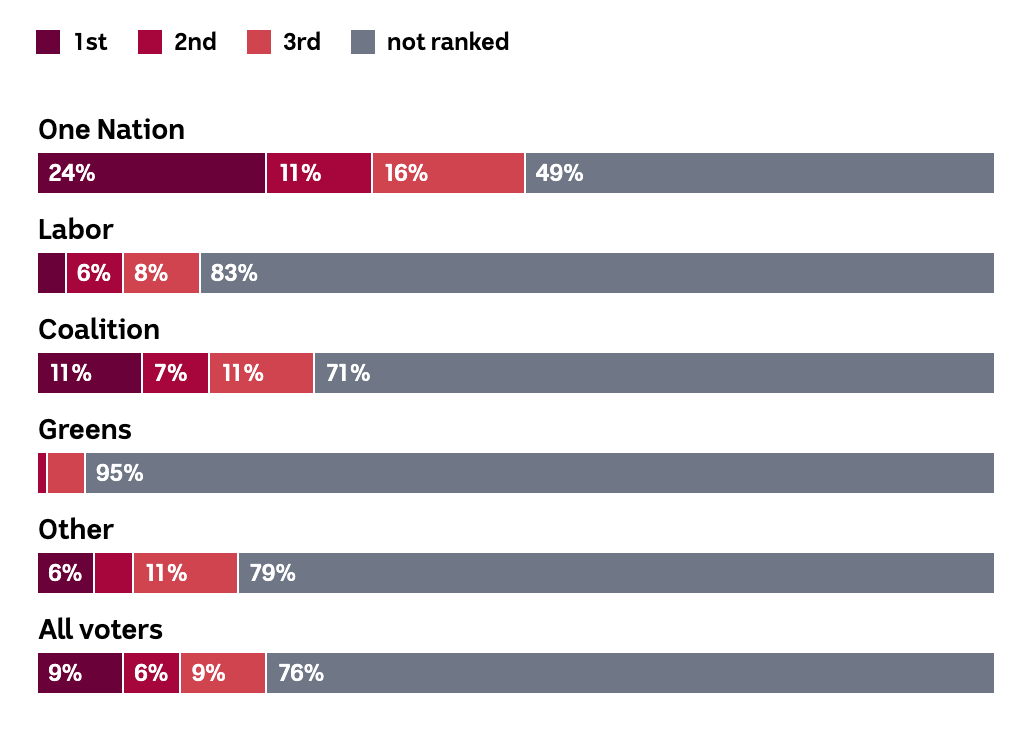
As detailed in the Table, polling conducted in early 2026 revealed that an overwhelming 79% of Australians desire an annual migration intake of 100,000 or less, a drastic reduction from the status quo established by successive Labor and Liberal governments. Furthermore, 71% of the public agreed that Australia should temporarily pause its intake of new immigrants until adequate economic and social infrastructure can be built.
Herein lies the true source of One Nation’s contemporary electoral strength. While the major parties have traditionally treated high immigration as an unquestionable economic imperative, viewing population growth as a primary lever for sustaining GDP growth while obfuscating its impact on per-capita living standards, One Nation has explicitly linked the cultural and the material.17 The party directly attributes the housing shortage, wage stagnation, and infrastructure bottlenecks to the government’s migration policies.18
When the political establishment refuses to acknowledge a reality that citizens experience daily in the form of exorbitant rents, congested roads, strained healthcare facilities and changing demographics those citizens will flock to the only political entity willing to state the obvious. One Nation does not need to possess a sophisticated, peer-reviewed macroeconomic framework; it simply needs to be the only party willing to point at the elephant in the room. As commentators have noted, One Nation’s policy of demanding severe cuts to immigration successfully links the cultural anxieties of a changing nation with the immediate material hardships of the working and middle classes.19
However, articulating a problem is not synonymous with possessing the capacity to govern or solve it. This is the tragic paradox of the modern populist voter in Australia: they have correctly identified the source of their material pain, but in their desperation, they have placed their faith in a political vehicle structurally incapable of delivering relief.
Ideological Incoherence and the Opportunism of Grievance
To look at One Nation as a serious ideological movement is to fundamentally misunderstand its nature. Unlike classical conservative movements, such as the “One Nation Conservatism” championed by Benjamin Disraeli in 19th-century Britain, which sought to unify disparate social classes through constructive social reform, institutional stewardship, and a shared national destiny, Pauline Hanson’s One Nation lacks a coherent philosophical core.20 It is not an ideological vanguard guided by a fixed set of principles; it is a reactionary sponge, designed to absorb whatever ambient grievances are prevalent in the culture at any given moment.
The history of One Nation is defined by its extreme ideological elasticity. When the party first burst onto the political scene following Hanson’s election as the Member for Oxley in 1996, its rhetoric was heavily focused on the perceived threat of Asian immigration and vocal opposition to welfare programs specific to Aborginals.21 Hanson infamously warned in her maiden parliamentary speech that Australia was in danger of being “swamped by Asians”.22
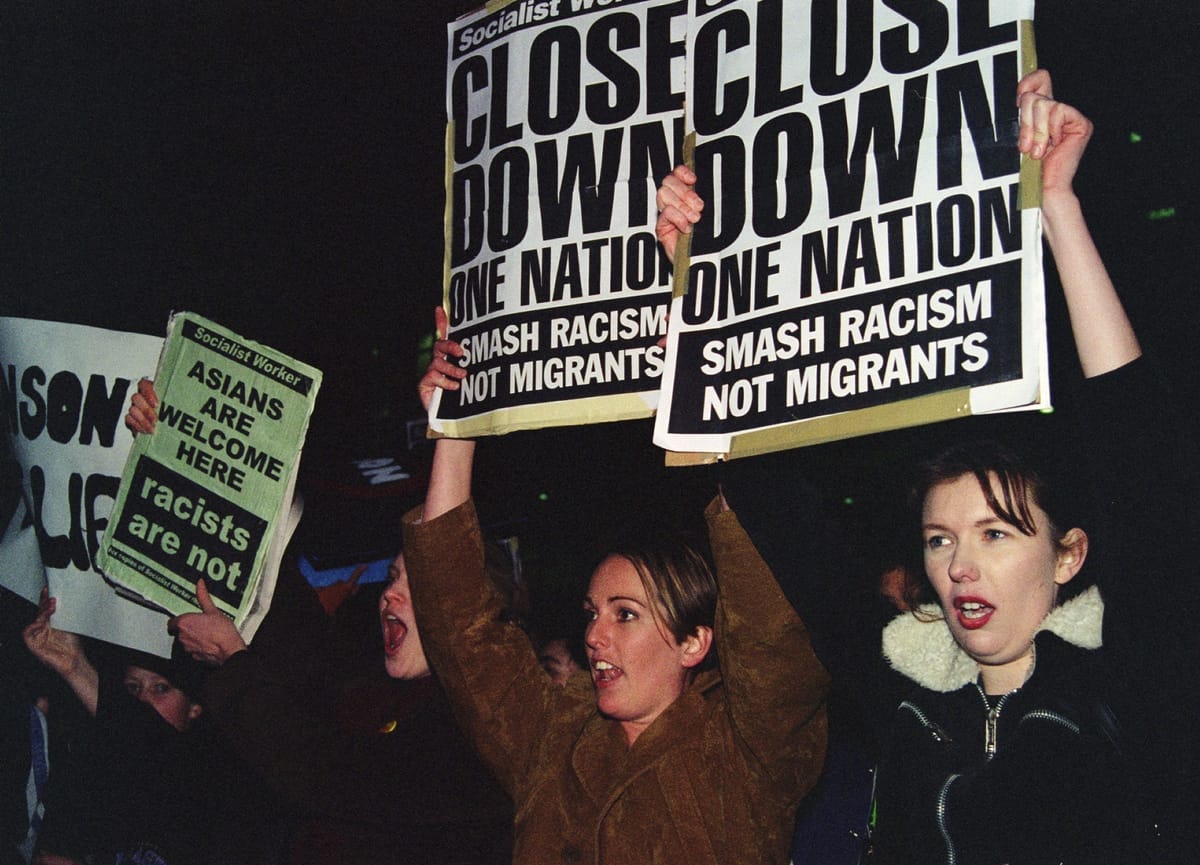
Yet, by the time of the party’s unexpected political resurgence in 2016, the geopolitical and cultural landscape had shifted. The target of One Nation’s populist ire seamlessly transitioned from Asian immigrants to Muslims. In the shadow of global terrorism and the Syrian refugee crisis, Hanson re-entered the Senate demanding a Royal Commission into Islam, calling for a total ban on Muslim immigration, and executing highly publicised theatrical stunts, such as wearing a burqa into the Senate chamber to demand its prohibition.23
By the 2020s, the party’s platform had morphed yet again. While anti-immigration sentiment remained a reliable baseline, One Nation expanded its repertoire to capture the widespread disaffection stemming from the COVID-19 pandemic and the subsequent economic fallout. The party heavily courted the “freedom” movement, vocally opposing vaccine mandates, pandemic lockdowns, and the perceived influence of international bodies like the World Health Organisation and the World Economic Forum.24 Simultaneously, they enthusiastically embraced the imported American culture wars regarding gender identity, pushing back against the “gender affirmation” model, the use of puberty blockers for minors, and the participation of biological males in women’s sports.25
This constant recalibration reveals an inherent opportunism. One Nation does not operate from a bedrock of settled conservative or nationalist principles. Instead, it engages in what can be termed the opportunism of grievance. It acts as a political weather vane, identifying an out-group or a source of intense public anxiety and directing political fire toward it for maximum electoral leverage.
While the party advocates for the defense of “Australian values” and demands that migrants strictly assimilate, it has historically struggled to define what those values actually entail beyond a nostalgic, poorly defined longing for a socially homogenous past. The party operates heavily on a framework of negative definition: it knows exactly what it is against (globalism, multiculturalism, “woke” elites, the United Nations, the World Health Organisation), but it struggles immensely to articulate a positive, unifying vision of what it is actually for.
This ideological incoherence ensures that One Nation remains fundamentally a party of protest. A movement built entirely on the shifting sands of grievance can disrupt, agitate, and punish the establishment, but it cannot construct the intellectual or policy architecture required to govern a complex, modern nation-state. It replaces the difficult work of policy formulation with the easy catharsis of perpetual outrage.
The Structural Failure of a Personality Cult
The tragedy of the Australian populist right is that the legitimate concerns of the working and middle classes have been captured by an organisation that is institutionally hollow. One Nation is not a political party in the traditional, democratic sense; it is a franchised personality cult, wholly dependent on the brand, the charisma, and the absolute authority of Pauline Hanson.
Since its inception in 1997, One Nation has been plagued by catastrophic internal dysfunction, vicious factional warfare, and a perpetually revolving door of parliamentary representatives. The party achieved a spectacular breakthrough at the 1998 Queensland state election, winning 11 seats and sending shockwaves through the political establishment, only to see its parliamentary wing disintegrate entirely due to defections, resignations, and internal disputes within a single electoral term.
This pattern of self-immolation has repeated itself endlessly over the subsequent decades. The party structure is brutally autocratic. Hanson’s position was formally entrenched in the party’s constitution in 2018, granting her the title of president for as long as she desires and the sole, unilateral authority to choose her successor.26 Any parliamentarian, candidate, or staffer who challenges the central leadership, questions the party’s strategic direction, or develops an independent political base is invariably purged, disendorsed, or forced to resign. Recent years have seen the departure or expulsion of numerous elected officials across state and federal parliaments, including Western Australian MP Ben Dawkins and Queensland MP Stephen Andrew. Former party insiders and candidates have publicly characterised the internal mechanics of the organisation as a “brutal dictatorship”.27
The recent recruitment of high-profile conservative defectors, such as former Liberal senator Cory Bernardi to lead the South Australian ticket and former National Party leader Barnaby Joyce, was intended to signal to the electorate that One Nation had finally matured into a credible governing force. Yet, importing prominent figures does not cure deep-seated institutional rot. A party that cannot tolerate internal dissent, foster collective leadership, or maintain stable administrative structures is inherently unstable.
The lack of institutional depth inevitably translates into a deficit in political competence. Because the party lacks a rigorous, professionalised vetting process or a grounded policy apparatus, it is frequently embarrassed by its own candidates. This was glaringly evident during the 2026 South Australian election. Just days before the vote, it was revealed that Aoi Baxter (also known as Trent Baxter), the One Nation candidate for the electorate of Adelaide, had an outstanding arrest warrant in a British court regarding charges of sexual touching without consent.28 Rather than demonstrating administrative competence or transparency, the party scrambled defensively, quietly removing his profile from their website and banning the public broadcaster (the ABC) from their election night event in retaliation for reporting the facts.29
When a political entity is structured purely as a vehicle for the perpetual re-election and brand maintenance of a single individual, it cannot build the intellectual, administrative, or parliamentary depth required to enact structural change. It is, by design, doomed to remain a fringe agitator, perpetually collapsing under the weight of its own internal contradictions.
The Containment Mechanism: Controlled Opposition in Practice
If One Nation is ideologically incoherent, structurally dysfunctional, and incapable of wielding executive power, how does one explain its enduring presence and its recent, dramatic electoral surges? To understand this paradox, we must move beyond the fiery rhetoric of the party and examine its functional role within the cold mechanics of the Australian electoral system.
Viewed through the lens of political realpolitik, Pauline Hanson’s One Nation operates as a highly effective mechanism of controlled opposition. It exists to absorb the nationalist, anti-immigration, and anti-establishment energies of the electorate, safely containing them in a silo where they can be effectively neutralised, preventing a genuine, systemic threat to the prevailing duopoly from taking root.
The engine of this containment strategy is Australia’s unique system of compulsory preferential voting. In a First-Past-The-Post (FPTP) electoral system, such as those utilised in the United Kingdom or the United States, a populist insurgency capturing 20% to 22% of the vote would completely decimate the incumbent conservative party. It would lead to a catastrophic loss of seats for the establishment, forcing an immediate, structural shift to the right to survive (as seen with the influence of Reform UK on the Conservative Party, or the MAGA movement’s capture of the Republican Party). In Australia, however, the establishment relies on the mandatory flow of preferences to maintain its equilibrium.
Analysis by the Australian Electoral Commission and leading psephologists confirms that in the 2025 federal poll, a staggering 74.5% of One Nation preferences flowed directly to the Coalition.30 In Queensland, the spiritual home of Hansonism, the flow of One Nation preferences to the Liberal National Party (LNP) in the 2024 state election was an almost identical 74.3%. This figure of approximately 75% has established itself as the new “default flow” from the populist right back to the conservative establishment.31
However, the 2026 South Australian state election complicates this picture in a way that interstate commentators have largely failed to grasp. One Nation instructed its voters to number its candidate first and then complete the ballot in their own order of preference, rather than rigidly directing preferences to the Coalition. In practice, this loosened discipline produced highly variable flows. In key electorates such as Badcoe and Giles, where the Liberal Party ran Indian candidates, the Liberal primary vote effectively collapsed, with large numbers of voters moving directly or indirectly to Labor via One Nation preference pathways.
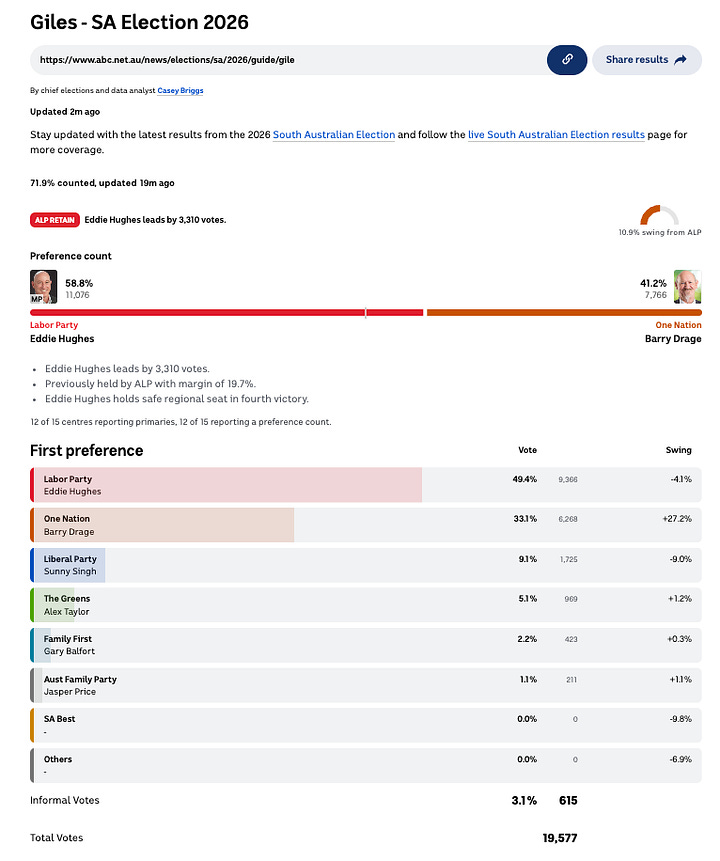
Preference flows from One Nation voters played a significant role in inflating Labor’s two-party-preferred margin across the state. This was not simply an anomaly, but a reflection of a deeper sociological reality: a substantial portion of One Nation’s base in South Australia are working-class, culturally disaffected voters who would historically have been aligned with Labor. When given greater discretion over their preferences, many of these voters did not “return home” to the Coalition, but instead contributed to Labor victories.
This carries an uncomfortable implication for the Coalition and its satellite commentators. The assumption that One Nation voters constitute a reliable reserve of right-wing preference flows is, at best, only conditionally true. In certain electoral contexts, particularly where candidate selection or local dynamics disrupt tribal loyalties, these voters can just as easily become a conduit for Labor victories. Coalition strategists would do well to recognise that they are not dealing with a disciplined ideological bloc, but with a volatile, protest-driven electorate whose preferences cannot always be safely banked.
Yet even this apparent deviation ultimately reinforces the broader structural argument. Whether preferences flow to the Coalition or, under certain conditions, to Labor, the essential function of One Nation remains unchanged: it fragments, redirects, and ultimately dissipates anti-establishment sentiment within the existing system, rather than allowing it to consolidate into a coherent and electorally decisive force.
This statistical reality exposes the central illusion of the One Nation project. A working-class voter in the outer suburbs, furious over the cost of rent, the strain on local infrastructure, and the cultural alienation of mass migration, enters the polling booth determined to punish the major parties. They cast their first preference for One Nation, experiencing a moment of democratic catharsis. They feel they have “sent a message” and struck a blow against the elite.
However, because One Nation rarely secures enough primary votes to finish in the top two candidates (and is often out-resourced on the ground), their candidate is eliminated during the preference distribution. The voter’s subsequent preferences, whether guided by a how-to-vote card or exercised more freely are then activated within the system’s machinery. The ballot ultimately returns to one of the two major parties.
The structural outcome is brilliant in its cynicism: the duopoly retains its dominance, the underlying economic and demographic trajectory remains largely undisturbed, and the aggrieved voter returns home, pacified by the belief that they have participated in a populist revolt.
In this sense, One Nation acts as a vital safety valve for the political elite. It captures the political heat that might otherwise fuel a disciplined, intellectually rigorous, and genuinely disruptive conservative movement, and vents it harmlessly into the ether. It provides the aesthetic of a populist rebellion without posing any actual structural danger to the architecture of the state.
The Hanson Problem: A Barrier to Conservative Renewal
The ultimate tragedy of the One Nation phenomenon is the chilling effect it has on the intellectual and political development of the Australian right. Pauline Hanson is actively preventing the emergence of a credible, rigorous alternative.
In moments of profound national crisis, such as a severe degradation of living standards, acute housing shortages, and the fraying of social cohesion, the electorate yearns for serious statesmen. They require leaders who can articulate a coherent nationalist philosophy, diagnose economic failures with precision, and present a disciplined, actionable policy agenda that can be implemented through the machinery of government.
Pauline Hanson has consistently demonstrated over thirty years that she is not a statesman; she is a political provocateur. Her reliance on theatrical stunts from wearing a burqa into the Senate chamber to moving highly provocative motions designed solely to generate social media engagement and outrage, fundamentally degrades the seriousness of the very issues she claims to champion.
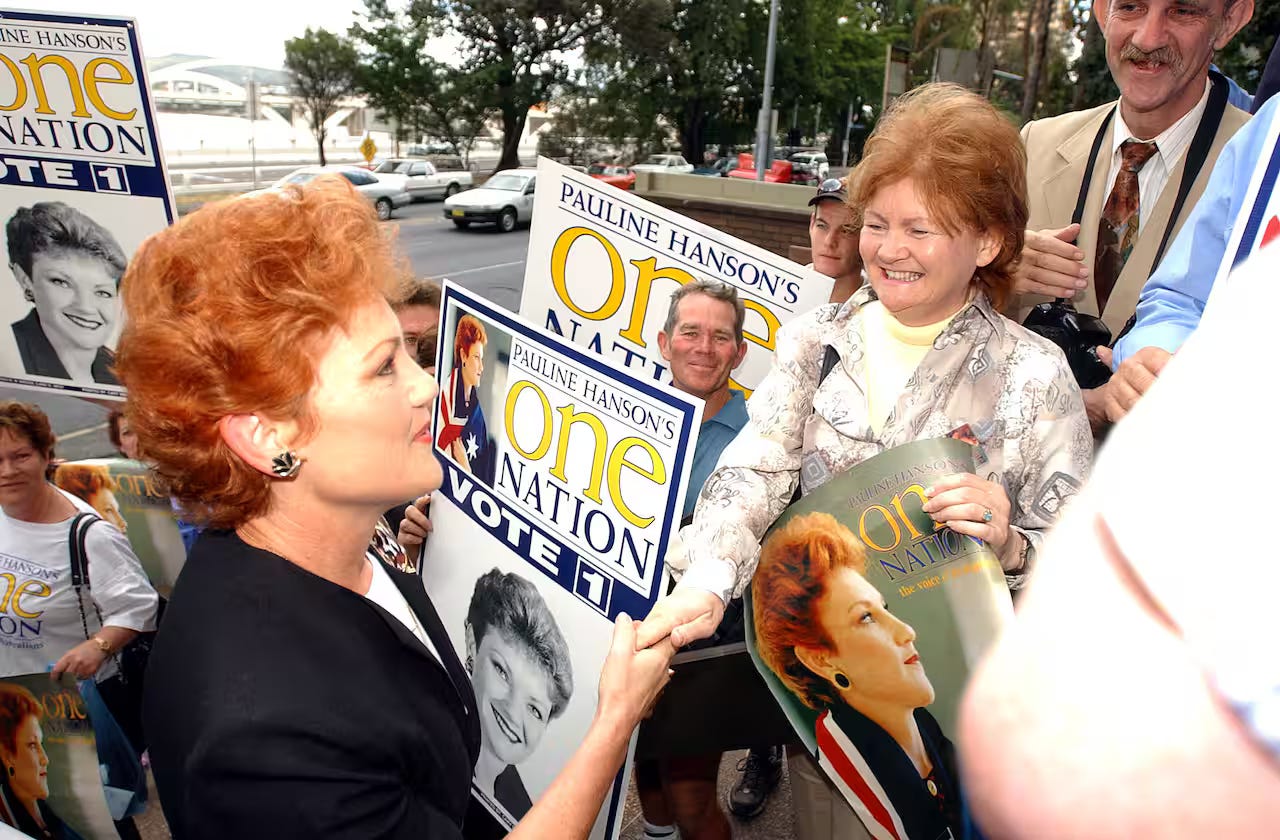
When the de facto leader of the nationalist right behaves in a manner that the broader public views as erratic, undisciplined, or overtly offensive, she toxifies the underlying policy platform. Legitimate, necessary debates regarding the macroeconomic impact of immigration, the preservation of national sovereignty and demographics, and the protection of civil liberties become inextricably linked to Hanson’s deeply flawed personal brand. Moderate, middle-class voters who share these material concerns are consequently repelled, fearing the social stigma and intellectual poverty associated with endorsing Hansonism.
This is the core of the “Hanson Problem.” As long as she maintains a monopoly on the right-wing populist space, a more serious, intellectually robust, and strategically disciplined political movement cannot take root. She occupies the precise political terrain that, in other jurisdictions, has given rise to highly organised and electorally successful nationalist parties capable of actually wielding executive power or forcing profound, lasting policy concessions from the centre.
The rhetoric deployed during the 2026 South Australian election perfectly encapsulates this limitation. Basking in the glow of a historic 22.1% primary vote, Hanson did not outline a visionary legislative agenda for the state, nor did she articulate a comprehensive plan to utilize her newly acquired upper-house leverage to force the Labor government to address the housing crisis. Instead, she gleefully warned the Labor Premier that she was leaving “landmines” in the parliament that would “explode”.32
This is the language of an agitator, a saboteur revelling in the prospect of disruption for its own sake, not a leader preparing for the sober responsibilities of governance. By prioritising the maintenance of her own brand and the performance of perpetual outrage over the hard, unglamorous work of institutional party-building, Hanson ensures that the populist right in Australia remains politically impotent. She gathers the forgotten, frustrated people of Australia under her banner, only to lead them endlessly in circles.
Conclusion: The Latent Realignment
The 2026 South Australian election and the surging federal polls must not be dismissed by the political establishment as a only momentary spasm of reactionary anger. The data is unequivocal: a vast and growing segment of the Australian public is alienated from the political consensus of the last three decades. The material pain of the housing crisis, the erosion of real wages, and the rapid, undemocratic transformation of the nation’s demographics have created a highly combustible political environment.
One Nation’s ability to capture over 20% of the primary vote in a major state election demonstrates that the stigma previously associated with supporting the populist right is rapidly fading. Voters are increasingly willing to cross the Rubicon of political respectability to register their desperation and force the establishment to acknowledge their decline in living standards.
Yet, One Nation is an entirely inadequate vessel for this historical moment. Hobbled by intense ideological incoherence, crippled by structural authoritarianism, and functioning effectively as a preferential containment mechanism that ultimately protects the Coalition, the party cannot deliver the systemic changes its supporters desperately crave.
The rise of One Nation is a glaring, flashing warning signal to the Australian political class. It indicates a latent political realignment of immense power that has not yet found its proper form. The danger for the Australian political establishment is not that Pauline Hanson will ever hold executive power; her own institutional failings guarantee she will not. The true danger lies over the horizon. The real question that must haunt the corridors of Canberra is not whether One Nation will succeed, but what rougher, more disciplined, and uncompromising political force will inevitably emerge to replace it when it finally, and inevitably, fails.
https://celina101.substack.com/p/one-nations-rise-discontents-containment