
RFK Jr. Accuses Congress of ‘Decades of Failed Policy’
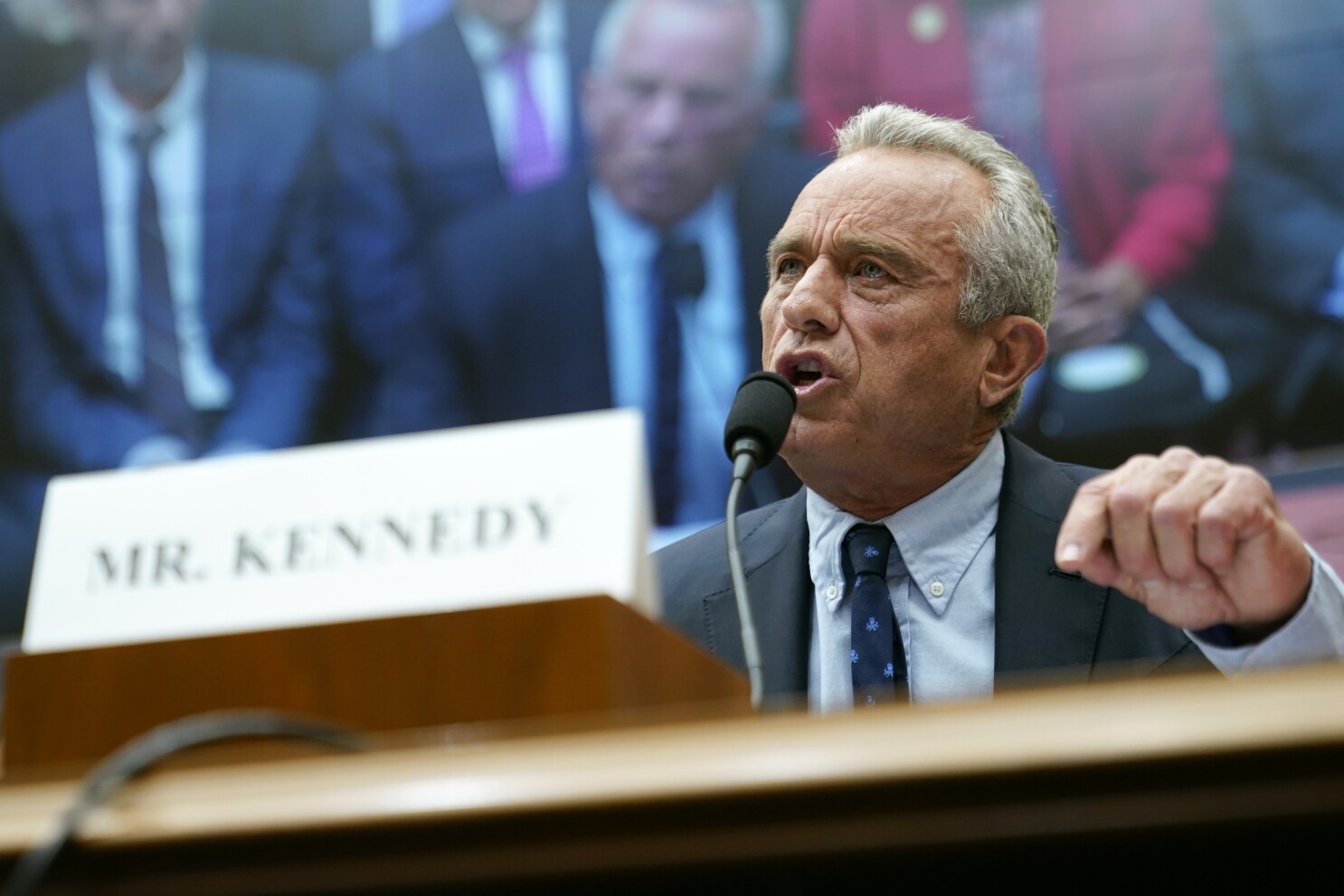
U.S. Health Secretary Robert F. Kennedy Jr. used his first Capitol Hill appearance of the year to defend sweeping changes at his agency, arguing that they mark a break from “decades of failed policy.”
Lawmakers from both parties pressed him on vaccines, budget cuts and the direction of federal health policy.
Testifying April 16 before the House Ways and Means Committee on the administration’s fiscal year 2027 budget, Kennedy framed his agenda around chronic disease and what he called systemic failures in public health.
The hearing was the first of seven he is scheduled to attend across congressional committees over the next week.
“Our children are the sickest generation in modern history, and decades of failed policy, captured agencies and profit-driven systems have caused it,” Kennedy said in his opening remarks. “Parents across the country demanded change, and we are delivering it.”
The proposed budget would allocate $111 billion to the U.S. Department of Health and Human Services (HHS), a 12.5% cut from current levels. The budget includes a $5 billion reduction in funding for the National Institutes of Health.
“I’m not happy about the cuts,” Kennedy said. “Nobody wants to make the cuts … but we got a $39 trillion debt.”
Lawmakers from both parties questioned how the reductions would affect rural hospitals, seniors, maternal care and anti-fraud efforts.
Throughout the hearing, discussion repeatedly returned to vaccines, chronic illness, disease prevention and trust in the public health system.
‘Parents can assess the risk themselves, true informed consent’
Kennedy didn’t mention vaccines in his opening remarks, though many of the most contentious moments of the hearing revolved around the topic.
Asked whether the measles vaccine could have saved a child in Texas who died in a recent outbreak, he said, “It’s possible, certainly.”
But he pushed back on claims that his policies are endangering the public.
Rep. Linda Sanchez (D-Calif.) accused Kennedy of promoting “disproven theories” linking childhood vaccines to adverse effects such as autism and death.
She also projected that measles cases could reach “a whopping 6,400 cases” by the end of 2026, and blamed Kennedy’s “anti-vaccine actions” for the “dramatic increases” in preventable diseases.
“As a mother, this horrifies me,” she said.
“You’ve got a lot of misinformation there,” Kennedy said. “Let me respond to the misstatements that you’ve made.”
Sanchez cut him off. “No, you have other opportunities. I have limited time,” she said.
That dynamic repeated itself throughout the hearing, with lawmakers giving Kennedy little or no opportunity to address their claims. At one point, Kennedy contrasted those exchanges with a lawmaker who allowed him to answer at length.
“I appreciate you very much for actually giving me an opportunity to answer your question, which none of your colleagues have done,” Kennedy said. “They’ve all shut me up and they’ve talked about science, but science is about debate.”
Kennedy also defended changes to vaccine recommendations, including hepatitis B guidance for newborns.
“Hepatitis B is a terrible disease,” Kennedy said. “But babies are not at risk. They essentially have zero risk.” Vaccination remains available and covered, he added. “Parents can assess the risk themselves, true informed consent.”
Democratic lawmakers repeatedly cited rising measles cases and warned that scaling back public health messaging could lead to more preventable illness and death.
Rep. Mike Thompson (D-Calif.) accused Kennedy of “undermining safe and effective vaccines” with dangerous conspiracy theories. “This is not just about policy differences, it’s about whether this department is going to protect the health of the American people or put them at greater risk,” he said.
“You’re overruling doctors, scientists and public health experts across our country,” Thompson said, noting that Kennedy does not hold a medical or public health degree.
“Twenty-four of the 26 HHS secretaries have not had medical degrees,” Kennedy said.
‘We have the highest chronic disease burden in the world’
Kennedy repeatedly steered the conversation back to chronic illness, arguing it poses the country’s greatest — and most overlooked — health threat.
“We have the highest chronic disease burden in the world,” he said. “Ninety percent of the … 3 million people who die in this country die of chronic disease and nobody’s paying attention to this.”
He went further, criticizing lawmakers for failing to address the issue. “And all of these members have ignored this for as long as they’ve been in office,” he said. “This is the real threat to American health.”
Kennedy argued that chronic conditions — not infectious diseases alone — are the primary drivers of mortality in the U.S. He pointed to COVID-19 as an example.
“During COVID, we had the highest death rate of any country in the world,” he said.
According to Kennedy, the Centers for Disease Control and Prevention (CDC) attributed that to the nation’s underlying health. “They say, ‘It’s because we are the sickest population,’” he said.
“The average American who died from COVID had 3.8 chronic diseases,” he added. “What was killing them? COVID or the chronic disease?”
‘We’ve got to start with food’
That framing underpins a broader push to reorient federal health priorities toward prevention, particularly through changes to food policy and environmental exposure.
“There’s nobody at this agency who is not committed to the idea that food is medicine,” Kennedy said. “We’ve got to start with food.”
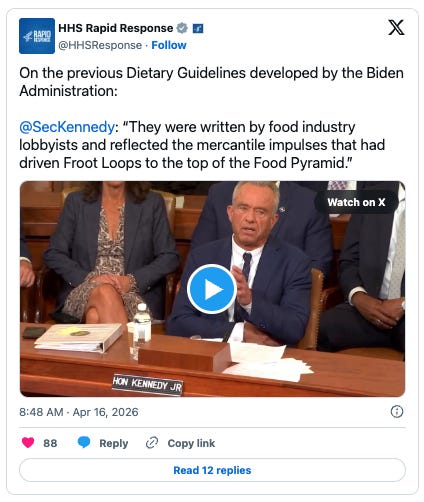
He said he inherited “453 pages” of dietary guidelines from the Biden administration. He called the rules “incomprehensible,” arguing they were shaped by industry influence that “drove Froot Loops to the top of the food pyramid.”
“Froot Loops isn’t even a food, it’s just poison,” he said.
He described efforts to embed nutrition more deeply into medical training, hospitals and community health centers, calling food “the central focus of healing and prevention.”
Rep. Aaron Bean (R-Fla.) pointed to early signs of that shift. “Great things are happening. You’ve elevated the talk about let’s get healthy,” he said.
Bean cited a visit to a Jacksonville food production facility where company leaders said “we’re changing all our ingredients” and would “voluntarily remove red dyes” to match European standards.
He added that “medical schools have voluntarily said, ‘Let’s change our curriculum and let’s add nutrition and let physicians say that food is medicine.’ You did that.”
A key regulatory target is the so-called “generally recognized as safe,” or GRAS, loophole, which allows companies to self-certify certain food ingredients as safe.
Kennedy said HHS has finalized steps to close the loophole and is advancing those changes through the interagency process. He also urged Congress to go further and codify stricter standards.
“The GRAS loophole has been hijacked by the food industry,” he said. “We need to really make sure that any ingredient in our food is safety tested first.”
He contrasted U.S. standards with Europe. “We have 10,000 ingredients in our food. In Europe, they only have 400,” he said. “Most of those have never been safety tested. We don’t even have a list of them.”
Kennedy also said regulators are taking steps to remove petroleum-based food colorings from food and medicine. The dyes have been linked to cancer, hyperactivity and other serious health risks. They’ve long gone largely unchecked and unlabeled.
Rep. Gwen Moore (D-Wis.) welcomed that focus. “I just want to thank you for pointing out stuff like the dyes and stuff in food and … looking at the food pyramid,” she said. “I think that that’s been a very helpful discussion in terms of your making America healthy again.”
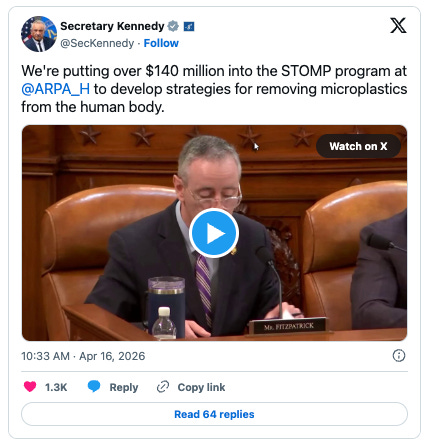
Kennedy also pointed to growing concerns about environmental contaminants, including microplastics and PFAS in food and drinking water, calling their rapid accumulation in the human body “an existential crisis.”
“The average American has a teaspoonful of microplastics in his brain. … That couldn’t be a good thing,” he said, adding that his agency will continue research and pursue stronger regulation.
Lies ‘destroyed the confidence … in the healthcare system’
Kennedy also questioned the role of the pharmaceutical industry in shaping public health policy and called for greater transparency and stricter scientific standards.
“The industry is so powerful,” he said. “They own Congress. They own the media.”
He defended recent U.S. Food and Drug Administration decisions to reject certain drugs as insufficiently tested and called for “gold standard science.”
On COVID-era policies, Kennedy struck a critical tone, arguing that government responses caused harm.
“We made a lot of mistakes with the countermeasures during the COVID pandemic, including shutting down the schools, shutting down businesses,” he said. “Those things kill people … and we are not going to do that under my watch.”
Some lawmakers echoed concerns about trust in public health institutions.
Rep. Gregory F. Murphy (R-N.C.) criticized former federal officials.
“I think we ought to talk a little bit about the arrogance of a fellow named Anthony Fauci who came and lied to Congress, lied to the American people,” he said. “And, in my opinion, destroyed the confidence of the American public in the healthcare system.”
Kennedy framed his agenda as a break from past approaches.
“We are ending the era of federal policies that fueled the chronic disease epidemic and replacing them with policies that put the health of Americans first,” he said.
But lawmakers repeatedly returned to the legacy of the Kennedy family, with Larson pointing to the “deep and incredible influence that the president of the U.S. … had on generations of people.”
Several suggested that Kennedy’s positions — particularly on vaccines — fell short of that standard.
“I think you can appreciate how deeply concerned people are about this and how the contrast between what your uncle and the president of the U.S. said in his beliefs and yours with respect to vaccinations,” Larson said.
Kennedy, in turn, invoked his uncle directly. “As my uncle, President John F. Kennedy said, progress is a nice word, change is its motivator and change has its enemies,” he said.