
Stairway to Hell: The Ritual That Destroyed Led Zeppelin
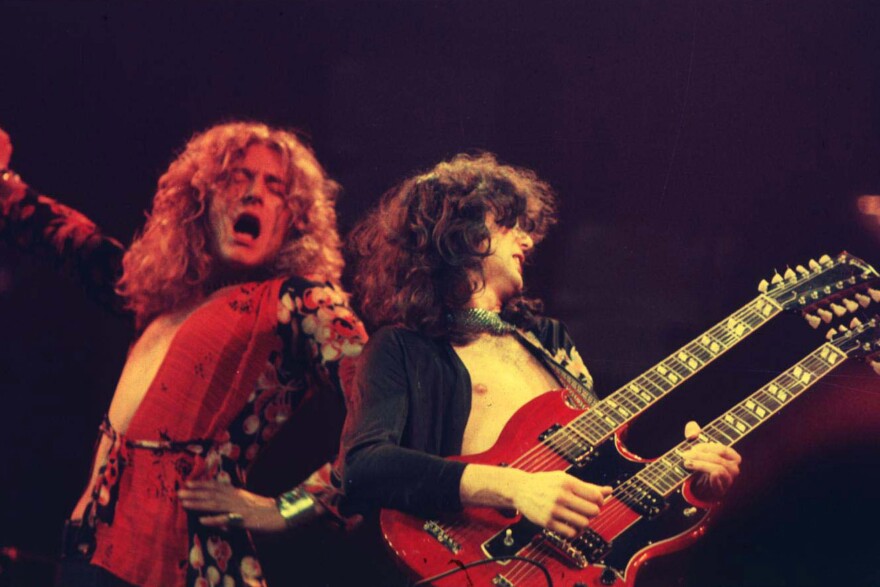
Jimmy Page’s Dangerous Game with Demons.
Growing up in the middle of nowhere USA, my parents would crack open a few beers and light up a joint when the mood struck. That’s when the Led Zeppelin records came out. Five-year-old me sat on the carpet, impressed by the wild guitar riffs but agitated by the blues-soaked wailing. (Sesame Street was more my thing at that age.)
Years later, stuck in a small town perpetually frozen thirty years in the past, I heard Zeppelin a dozen times a day on local radio. You can’t escape “Kashmir” and “Stairway to Heaven” when you’re surrounded by people who think 1975 was last week. Eventually something strange happened. Stockholm syndrome by FM radio.
I started to like it.
What I didn’t know then, what none of us knew, was that Jimmy Page wasn’t just playing music. According to some researchers and longtime fans, he was performing rituals. On stage. In the studio. At his home on the shores of Loch Ness where Aleister Crowley once tried to summon demons.
And then people started dying.
When Musicians Sell Their Souls
The idea of trading your soul for musical genius is old. Really old. It goes back at least to the 1500s, to a German scholar named Johann Georg Faust who supposedly made a deal with the devil for infinite knowledge. The legend says Faust lived large for years, indulging every desire, until the bill came due. He died in what witnesses described as a laboratory explosion. Others claimed the devil came personally to collect.
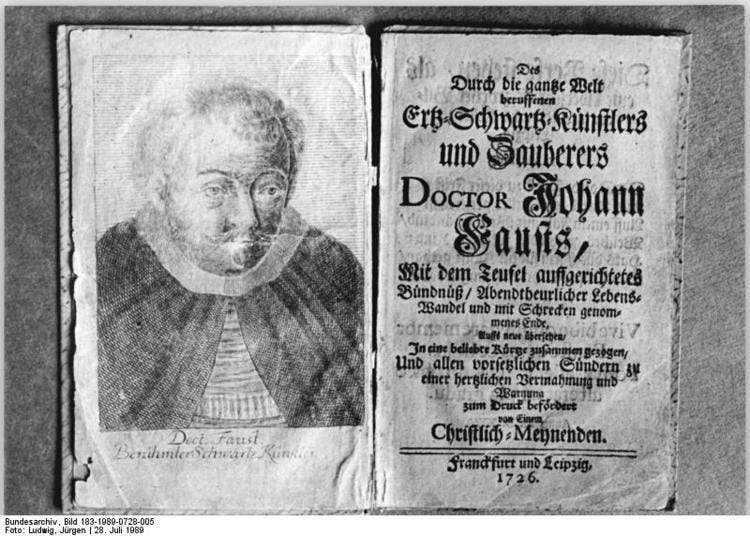
The story became so famous that playwright and polymath Johann Wolfgang von Goethe turned it into a play. But here’s what matters: the core idea that you can trade eternal damnation for temporal power never went away. It just kept showing up in different forms, different centuries, always connected to music.
There’s a reason for that. According to the Book of Ezekiel, Lucifer was created with musical instruments built into his very being. He was heaven’s choirmaster before the fall. The morning star. The most beautiful of angels. Music and the demonic have been tangled together since before humans existed, if you believe the text.
In 1713, Italian composer Giuseppe Tartini woke up sweating from a dream. In it, the devil had appeared and offered to serve him in exchange for his soul. Tartini, curious, handed over his violin. The devil played a solo so beautiful and technically perfect that Tartini wept. When he woke, he frantically tried to recreate what he’d heard. The result was the Devil’s Trill Sonata, a piece so difficult that it seemed impossible. Here’s the thing: Tartini had only been playing violin for three years.
Three years, and suddenly he’s composing pieces that trained virtuosos struggled with.
Centuries later, Robert Plant would tell interviewers that “Stairway to Heaven” came to him in a dream. The song wrote itself, he said. Just appeared fully formed.
You starting to see a pattern?
The Crossroads
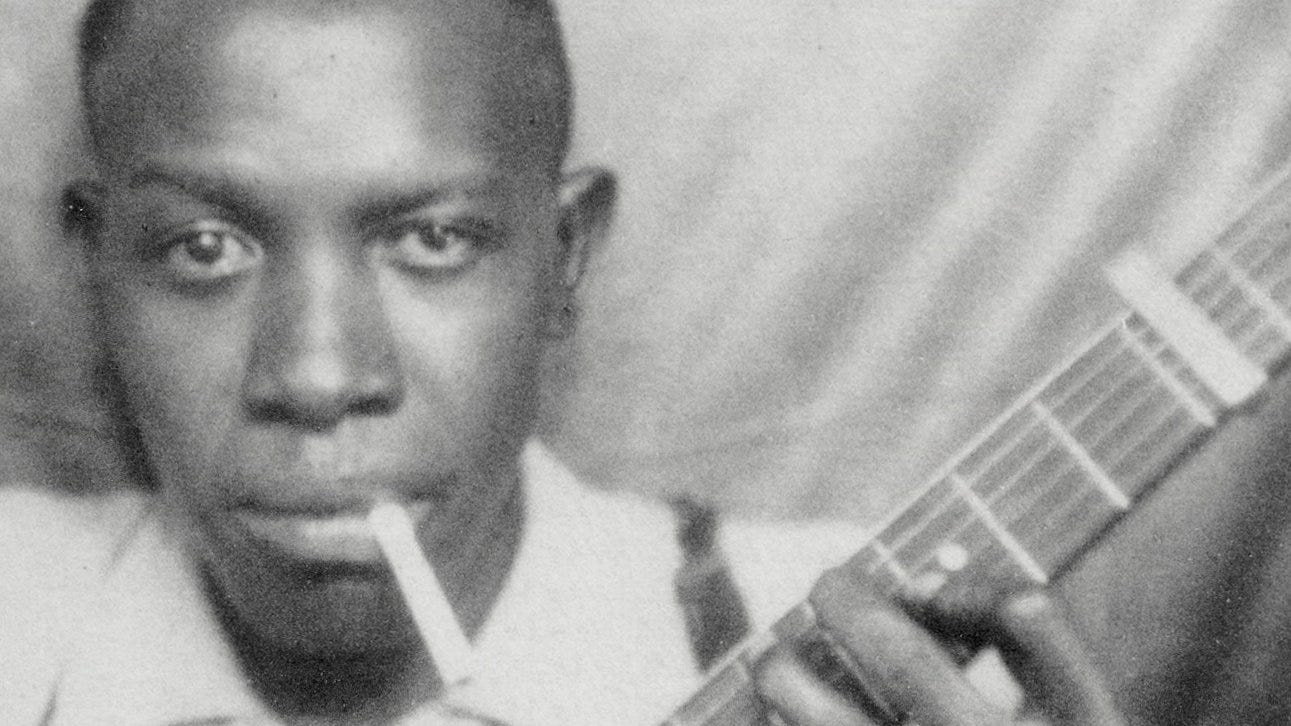
Robert Johnson was a terrible guitarist. Everyone who heard him play in the Mississippi Delta in the 1920s said the same thing: the kid had no rhythm, no feel, no blues. He was awful.
Then he disappeared.
When Johnson came back months later, he could play like his hands were possessed. The transformation was so complete, so impossible, that other musicians started spreading a story. Johnson had gone to the crossroads at midnight. Met the devil there, or something like the devil. Traded his soul for the ability to play guitar like no one had ever heard.
The crossroads legend is older than Christianity in the American South. It comes from West African spiritual traditions brought over during the slave trade. In those traditions, the crossroads is where the physical world and spiritual world meet. It’s guarded by Papa Legba, a trickster spirit who’s not exactly good or evil. He’s a doorway. You approach him with respect, ask for guidance, maybe make an offering.
But when that African spiritual framework collided with Christian devil mythology, something got twisted. The helpful trickster became Satan. The request for wisdom became a soul transaction.
Here’s what’s interesting: Robert Johnson might have been practicing actual voodoo, asking Papa Legba for help, and doing it right. But everyone around him, steeped in Christian culture, interpreted it as devil worship. They spread the story. It became legend.
Johnson died at twenty-seven. Poisoned whiskey from a jealous husband. He died on his hands and knees, bleeding from the mouth.
Now imagine you’re a young British guitarist in the 1960s, reading about Robert Johnson, hearing the legend, not understanding the cultural and spiritual context. You just hear: go to the crossroads, make a deal, get everything you want.
What happens when you recreate a ritual but you don’t understand what you’re actually summoning?
Led Zeppelin built their sound on the blues. They covered Johnson’s “Traveling Riverside Blues.” They lifted directly from his songs for “The Lemon Song” and “Trampled Underfoot.” In 1998, decades later, Page and Plant flew to Mississippi to pay tribute at the graves of dead bluesmen.
The British rock invasion of the 1960s wasn’t just musical. It was spiritual. These young men were borrowing power they didn’t understand from traditions they couldn’t fully grasp. And one of them, Jimmy Page, was about to take it much, much further.
The Man Who Wouldn’t Stay Dead
By the time Jimmy Page discovered him, Aleister Crowley had been dead for years. But his influence was exploding.
Crowley called himself The Beast. He founded his own religion, claimed to speak with angels, said he could summon demons. Not stage magic. Not tricks for tourists. He meant actual demons. The kind that can tear reality apart if you’re not careful.
Born in 1875 to wealthy British parents, Crowley rejected Christianity completely and dove into the occult. He joined the Hermetic Order of the Golden Dawn, a secret society dedicated to ceremonial magic. Members included poet William Butler Yeats and Arthur Conan Doyle, the guy who created Sherlock Holmes. These weren’t fringe lunatics. These were respected intellectuals playing with ancient forces they claimed were real.
Crowley was brilliant. He was also cruel, domineering, and selfish. He destroyed the Golden Dawn through infighting and founded his own organization: Ordo Templi Orientis, usually called OTO. His headquarters in Sicily became famous for orgies, drugs, and rituals that terrified even his own followers.
His philosophy boiled down to one phrase: “Do What Thou Wilt.” It meant radical freedom. No rules. No limits. Do whatever feels good, whatever you desire, and don’t let anyone stop you.
Crowley died alone in a British boarding house in 1947. His last words were supposedly “Sometimes I hate myself.”
But twenty years later, in the 1960s, that “Do What Thou Wilt” philosophy exploded among young people. It was perfect for the counterculture. Reject your parents. Reject society. Reject all the rules. Sex, drugs, rock and roll. Do what you want.
For most teenagers, Crowley was a vibe. A poster. Fashion.
For Jimmy Page, it became something else.
An obsession that would consume his life for fifty years.
A Guitar Appears from Nowhere
James Patrick Page was born in 1944 in West London. His father worked at a plastic coating plant. His mother was a doctor’s secretary. Normal family. Normal childhood.
Until age eight, when he found a guitar in a cupboard.
Nobody knew where it came from. Not his parents. Not their friends. It was just there one day. “As if by magic,” Page would say later, and maybe he was being poetic. Or maybe he already sensed something.
He taught himself to play. Barely took lessons. By his teens, he was good enough to do session work, playing guitar on records for other artists. He jammed with the Rolling Stones. With Eric Clapton. He was becoming part of that elite circle of British musicians who were reinventing American blues for white audiences.
At fifteen, he found a book in a shop: Aleister Crowley’s “Magic in Theory and Practice.”
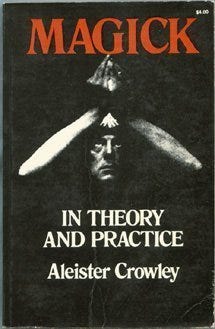
Page read it and everything clicked. “Yes, that’s it, my thing. I found it,” he’d say years later.
Think about that. Fifteen years old. Most kids that age are trying to figure out who they are. Page decided he was an occultist. A magician. Someone who would study dark forces and try to harness them.
By the time Led Zeppelin formed in 1968, Page was deep into it. He talked about magic in interviews, which was unusual. Most musicians kept that stuff private. Page didn’t care. He wanted people to know.
“You cannot ignore evil if you study the supernatural as I do,” he told one journalist. “I have many books on the subject and I’ve also attended a number of séances. I want to go on studying it.”
He did and according to some accounts, he dragged his bandmates into it with him.
The Ritual
This is where the story gets murky because nobody will confirm it on record. But longtime Zeppelin fans and occult researchers have pieced together what allegedly happened.
Sometime after the band formed, Page proposed a ritual. A serious one. The kind that would guarantee their success, make them the biggest band in the world, set them up for life. But there were conditions. They couldn’t speak about it afterward. That was part of the deal.
In occult practice, this isn’t unusual. Certain rituals require absolute secrecy. Speaking about them breaks the spell or invites consequences.
The ritual Page allegedly wanted to perform involved summoning ancient entities. Not metaphorical forces. Actual beings from other planes of existence. This is advanced magic, the kind that requires years of study and preparation. Crowley wrote extensively about these practices. He also wrote about how dangerous they were if performed incorrectly.
According to the story, three members agreed: Page, Robert Plant, and John Bonham. John Paul Jones refused.
Almost immediately, strange things started happening. Plant was nearly killed in a car accident. Two weeks later, his Aston Martin fell on him while he was working underneath it, breaking several ribs. These weren’t minor incidents. These were brushes with death.
Maybe it was coincidence. Maybe it was the consequences of half-drunk musicians playing with forces they didn’t understand.
Or maybe something heard their call and answered.
A House Where Evil Lives
Page made a lot of money with Led Zeppelin. He spent much of it on Crowley.
First, he bought Boleskine House, Crowley’s former home on the shores of Loch Ness in Scotland. This wasn’t just any property. This was where Crowley performed what he called the Abramelin Operation, a six-month ritual designed to summon and bind demons to his will.

Crowley used a grimoire, a medieval book of magic, that his mentor had translated from French. The translation was supposedly poor, which meant Crowley might have been performing the ritual wrong. And things went very, very wrong.
During his time at Boleskine, Crowley’s housekeeper lost both her children. A ten-year-old daughter and a one-year-old son, dead within months of each other. No clear cause. Crowley also claimed that one of his workers went insane from what he witnessed and later tried to murder his own family.
Even Crowley, who rarely admitted fault, said things at Boleskine had gotten out of control. He abandoned the property.
The next owner, an army major, bought it in the 1960s. He shot himself within a year.
Then Page bought it.
Friends who visited Page at Boleskine described shadows that moved on their own at dusk. Servants quit immediately, all telling the same story: the house was evil. Pure, concentrated evil. Page owned it for twenty-two years but lived there less than three months total.
When he sold it in 1992, he said “bad vibes” ran through the place.
In 2015, new owners came back from grocery shopping to find the house engulfed in flames. The property had been empty. No electrical problems. No storm. The fire just started.
No one has ever explained how.
What was Page doing during those three months he actually stayed there? What was he trying to accomplish?
Magic on Vinyl
Page didn’t just study the occult privately. He made it part of Led Zeppelin’s identity.
He bought an occult bookstore in London called The Equinox, named after Crowley’s journal. He bought the Tower House, a building with a dark reputation for paranormal activity. He sent his girlfriend to California to hunt for Crowley artifacts. She came back with manuscripts, ritual tools, and Crowley’s actual robes.
Page had his own robes made for stage performances. Custom costumes covered in occult symbols. The most famous was the dragon suit: solid black, embroidered with his personal sigil, a massive Chinese dragon, and astrological symbols.
Occult practitioners who’ve examined photos say these weren’t costumes. They were ritual robes. Page was performing magic on stage every night in front of thousands of people, using their energy, their attention, as fuel for his workings.
On the vinyl of Led Zeppelin III, carved directly into the master with a stylus, are two phrases. Side one: “Do What Thou Wilt.” Side two: “So Mote It Be.”
The first phrase is pure Crowley. The second comes from Freemasonry and means “so may it be.” But here’s where it gets interesting. In Arabic, “mote” means death. Given Page’s obsession with Egyptian magic and eastern mysticism, “So Mote It Be” could translate to “so death it be.”
Either way, these phrases were spinning on millions of turntables simultaneously. William S. Burroughs, the author and occultist, believed in something called electrical magic: using modern technology to amplify and spread magical workings. A Crowley incantation playing in millions of homes at once? That’s electrical magic on an unprecedented scale.
Then came Led Zeppelin IV. No title. No band name on the cover. Just four symbols.
On the inner sleeve, four sigils. One for each member. Plant’s was the Feather of Ma’at, representing the Egyptian goddess of truth. Bonham’s was a simple drum pattern. Jones’s was a Celtic trinity symbol.
Page’s was different. “ZoSo.” Nobody knows for sure what it means. Some researchers trace it to “Le Dragon Rouge,” a medieval grimoire that contains explicit instructions for making pacts with demons.
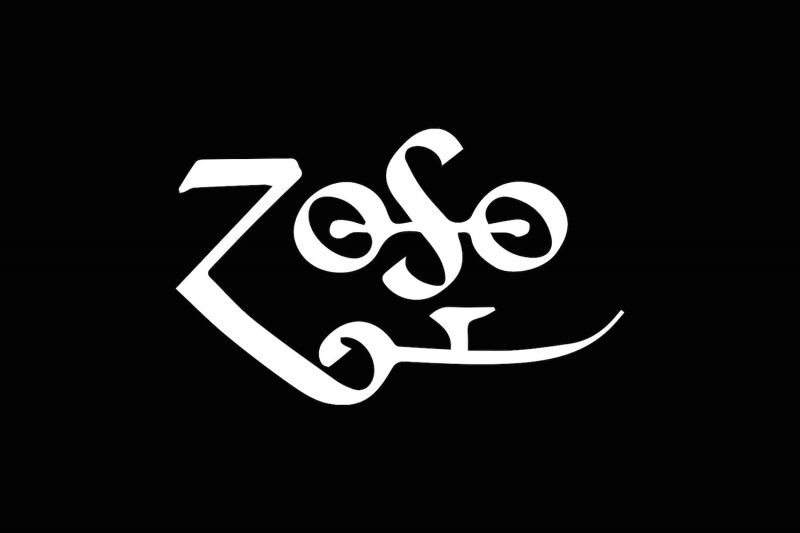
Page has refused to explain his sigil for fifty years. When asked, he says he’ll never tell anyone what it means. In chaos magic theory, speaking about a sigil after you’ve activated it destroys its power or causes it to backfire.
Plant says Page told him once, when Plant was drunk. By morning, Plant had forgotten. When he asked again sober, Page refused to repeat it.
Why? What power does that symbol hold that requires such absolute secrecy?
A Curse on Top of a Curse
Kenneth Anger was making underground films when he met Page at an auction. They were both bidding on Crowley memorabilia. Page outbid him. Instead of creating enmity, it sparked a friendship.
Anger asked Page to compose the soundtrack for his film “Lucifer Rising.” The title wasn’t metaphorical. Anger was a serious occultist who believed his films were rituals. By watching them, audiences participated in magical workings whether they knew it or not.
The production of “Lucifer Rising” was already cursed. The lead actor, Bobby Beausoleil, was a member of the Manson Family. When he quit and stole equipment, Anger created a magical talisman: Beausoleil’s image on one side, a toad on the other. Within a year, Beausoleil was in prison for life for murder.
Page agreed to do the music. But his heroin addiction was out of control. He’d be comatose for days. He missed deadlines. He finally delivered twenty minutes of music when Anger had paid for forty.
Anger was furious. Page was annoyed. The project collapsed.
Page evicted Anger from Boleskine House, where Anger had been living rent-free while working on the film.
Anger went to the press and publicly cursed Jimmy Page and Led Zeppelin.
“I put the curse of King Midas on them,” Anger said later. “If you’re greedy and just amass gold, you’ll get an illness.”
Everything fell apart after that.
Months after Anger’s curse, Plant drove off a cliff in Greece. His wife and children were in the car. Everyone survived but barely. Plant performed in a wheelchair for months.
Then laryngitis took his voice right before their biggest tour ever. Tickets had been selling at seventy-two thousand per day. The cancellation sparked riots. In Cincinnati, angry fans stormed the venue.
Two years later, eleven people would be trampled to death at that same venue during a Who concert.
When the tour finally started, a month late, chaos erupted backstage. A promoter’s staff member assaulted Peter Grant’s eleven-year-old son for taking a dressing room sign. Bonham kicked the guy away from the child. Later, Grant and two roadies beat the man badly enough that all four were arrested for felony assault. They nearly went to prison.
Shortly after, Plant got the call. His five-year-old son Karac was sick. Two hours later, another call. Karac was dead.
No medical explanation has ever been given. A healthy five-year-old doesn’t just die.
Plant vanished from public life. The tour was cancelled. The band spiraled into darkness.
The Final Death
Page was using heroin and cocaine daily, often passing out for hours. Bonham was drinking constantly, becoming violent and unpredictable.
On September 24, 1980, Bonham showed up to rehearsal at Page’s house drunk. Extremely drunk. They sent him upstairs to sleep it off. Someone checked on him, made sure he was on his side so he wouldn’t choke.
The next morning, John Bonham was dead at thirty-two.
Led Zeppelin released a brief statement: “We want it to be known that the loss of our dear friend and the deep respect we have for his family, together with the feeling of undivided harmony that we and our manager feel, have led us to decide that we can’t continue as we were.”
They disbanded immediately.
What Actually Happened?
Critics point out that Page survived. If there was a curse, why did he escape?
But did he escape? Page is alive, yes. Wealthy, yes. But he hasn’t written a significant song in forty years. The magic just stopped working. He’s tried. He’s formed new bands, released solo albums. Nothing connects. It’s like whatever he tapped into went away or turned off.
Kenneth Anger said it directly: “He can’t write songs anymore. I turned him into a statue of gold. He lost his mind.”
John Paul Jones, the one who allegedly refused to participate in the original ritual, is the only member who’s maintained a successful career. He’s produced albums, composed symphonies, collaborated with major artists.
The three who participated? Plant lost his son. Bonham is dead. Page lost his ability to create.
So what really happened? Did four young musicians perform a ritual they didn’t understand? Did they summon something that demanded payment? Did Kenneth Anger’s curse land on top of an already unstable magical working and cause the whole thing to collapse?
Or is this just the normal trajectory of a rock band that lived too hard and too fast?
The symbols are real. The rituals were documented. Boleskine House burned twice. Children died. A five-year-old boy died with no medical explanation.
Page himself admitted: “Magic does intrigue me. Magic of all kinds.”
What kind of magic was he practicing? And what was the real cost?
https://www.thewisewolf.club/p/stairway-to-hell-the-ritual-that-73c