
Stolen Land at the Grammys: How Hollywood Groupthink Threatens Democracy
Among the consolations of youth is the certainty with which one holds beliefs about the world. There is comfort in the conviction that one’s moral bearings are firmly set, that one’s understanding of complex questions is not only sincere but also correct. The world appears legible; right and wrong seem sharply drawn; doubt and nuance are dismissed as weakness or evasion.
There is rarely a single moment when these certainties collapse. They loosen instead through the slow accumulation of experience. Over time, one discovers that life resists easy judgments. Circumstances complicate principles. Good intentions collide with unintended consequences. Our friends betray us. The world proves denser, more conflicted, and less amenable to neat and tidy conclusions than youthful confidence would suggest.
This recognition of complexity, fallibility, and the limits of one’s own certainty is among the quiet achievements of maturity. It marks the point at which conviction learns restraint and moral seriousness acquires humility.
Yet much of our public culture now moves in precisely the opposite direction. It rewards juvenile certainty while punishing hesitation, qualification, or good-faith disagreements. Confidence is applauded regardless of depth; slogans substitute for argument; restraint is recast as moral failure.
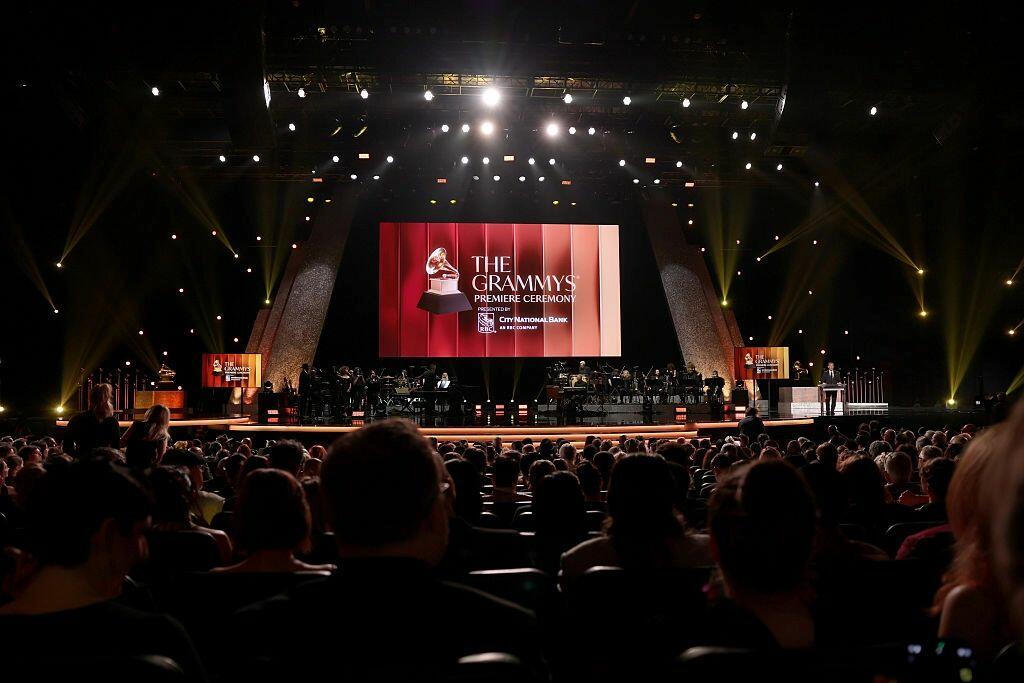
That inversion was on clear display at the recent Grammy Awards, when Billie Eilish declared to enthusiastic applause that “no one is illegal on stolen land.” It was left unspecified just whose land was being referenced, by whom it was stolen, and according to what historical or legal criteria that claim could be made.
The audience, however, needed no clarification. Eilish’s statement was rewarded exactly because it avoided complexity and invited no questions.
What was on display was not moral seriousness but a high school performance, an adolescent sense of righteousness delivered with absolute certainty and accepted as self-evident truth. One might charitably attribute such unthinking, categorical statements to Eilish’s youth. Alas, hers is a posture that we have come to expect from many of Hollywood’s men and women: confident, declarative, and curiously uninterested in the burdens of thought that genuine moral judgment requires.
This brings us to the core issue. The greatest threat to free expression today isn’t obvious censorship or government orders. Instead, it’s a more subtle and widespread force: cultural groupthink. This informal but influential system of rewards and punishments quietly limits the range of acceptable opinions, shaping what people feel allowed to say, what they hesitate to voice, and which questions are no longer asked.
Nowhere is this trend more evident than in modern celebrity culture. Hollywood and the broader entertainment sector have become models of ideological conformity, especially on divisive social and political topics. From climate change and gender issues to racial justice and international conflicts, Hollywood repeats the same messages, all delivered with youthful confidence. The same moral language, slogans, and conclusions are echoed with ritualistic consistency.
The Eilish episode was not an aberration but a symptom. It illustrated a broader pattern in which public speech functions less as a means of inquiry than as a test of ideological conformity. The cost of dissent is not a thoughtful and considered rebuttal. Rather, it takes the form of reputational damage through social media pile-ons, calls for boycotts, professional exclusion, or quiet blacklisting. Under such conditions, silence is often the rational choice. Most people have families to support and livelihoods to protect.
The greater danger lies in the lesson this celebrity culture teaches: that there is only one permissible way to think and speak about certain issues, and that deviation signals not error but moral failure. Political and social questions are reduced to dogma rather than debated. Once moralized in this way, disagreement becomes illegitimate by definition.
This logic now extends well beyond Hollywood. Similar patterns can be found in journalism, medicine, academia, corporate governance, and even the legal profession. Approved vocabularies narrow discussion; certain premises must be affirmed before conversation can begin; others may not be questioned at all. Arguments are no longer answered on their merits but dismissed as evidence of bad character or suspect motives.
The consequences for democratic culture are profound. Democracies do not depend on unanimity but on citizens who can weigh competing claims, tolerate uncertainty, and revise their views in light of evidence and argument. Groupthink undermines these capacities by rewarding conformity and punishing independent judgment. Over time, public discourse loses its corrective function. Errors persist not because they are persuasive, but because questioning them carries too high a cost.
When dialogue is replaced by dogma, democratic societies become brittle. They lose their ability to self-correct and grow more intolerant of internal differences. Public conversations turn into moral theater, where the goal is no longer understanding opposing views but performing virtue and condemning heresy. Speech persists only in its performative form, losing its role in testing ideas and correcting errors.
The defense of free speech, therefore, is not a defense of cruelty, indifference, or provocation for its own sake. It is a defense of intellectual diversity and the recognition that complex problems seldom have simple solutions; progress relies on the open debate of ideas. Democracies do not demand that citizens agree; they require honest argument, careful listening, and acceptance that disagreement is not a moral flaw but a civic essential.
It is a hard truth that others, who are just as committed, moral, or intelligent as we are, nonetheless see the world differently. The challenge is in accepting that our opponents are not simply ignorant or malicious but may have reached their conclusions through reasons as serious as our own. This common insight strips away the adolescent comfort of moral superiority. It forces us to face the possibility that we, too, may be wrong.
Such humility is rarely celebrated. But it is among the foundational virtues of democratic life. The alternative is a culture of silence and self-censorship, in which people say only what is safe and believe only what is approved. Such cultures may appear stable—even virtuous—but they are dangerously fragile. When reality intrudes, as it always does, societies that have lost the habit of open debate are poorly equipped to respond.
The strongest defense of democratic life is not enforced consensus but the courage to dissent, the patience to listen, and the willingness to engage in genuine dialogue, where we can change our minds.
Free speech, properly understood, is not a threat to democracy. It is its foundation.
https://www.zerohedge.com/political/stolen-land-grammys-how-hollywood-groupthink-threatens-democracy