
The Cold War Politics of Feminism
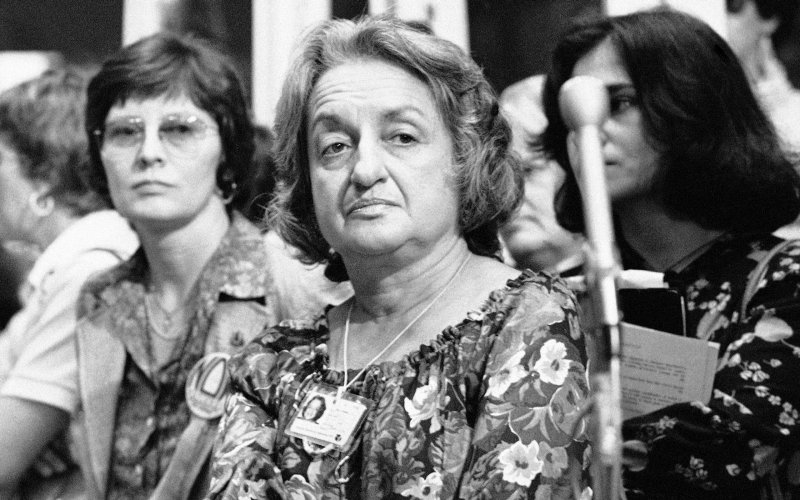
How intelligence networks, philanthropic foundations, and cultural institutions helped determine the dominant form of women’s liberation.
In the late 1960s, a series of investigative exposés dismantled the prevailing assumptions of the post-war American intellectual establishment. The initial rupture occurred in 1967 when Ramparts magazine, a prominent publication of the New Left, revealed that the National Student Association had been receiving secret subsidies from the Central Intelligence Agency (CIA).1 Within months, the investigative reporting of The New York Times and The Washington Post broadened the scandal, exposing a vast apparatus of cultural patronage.2
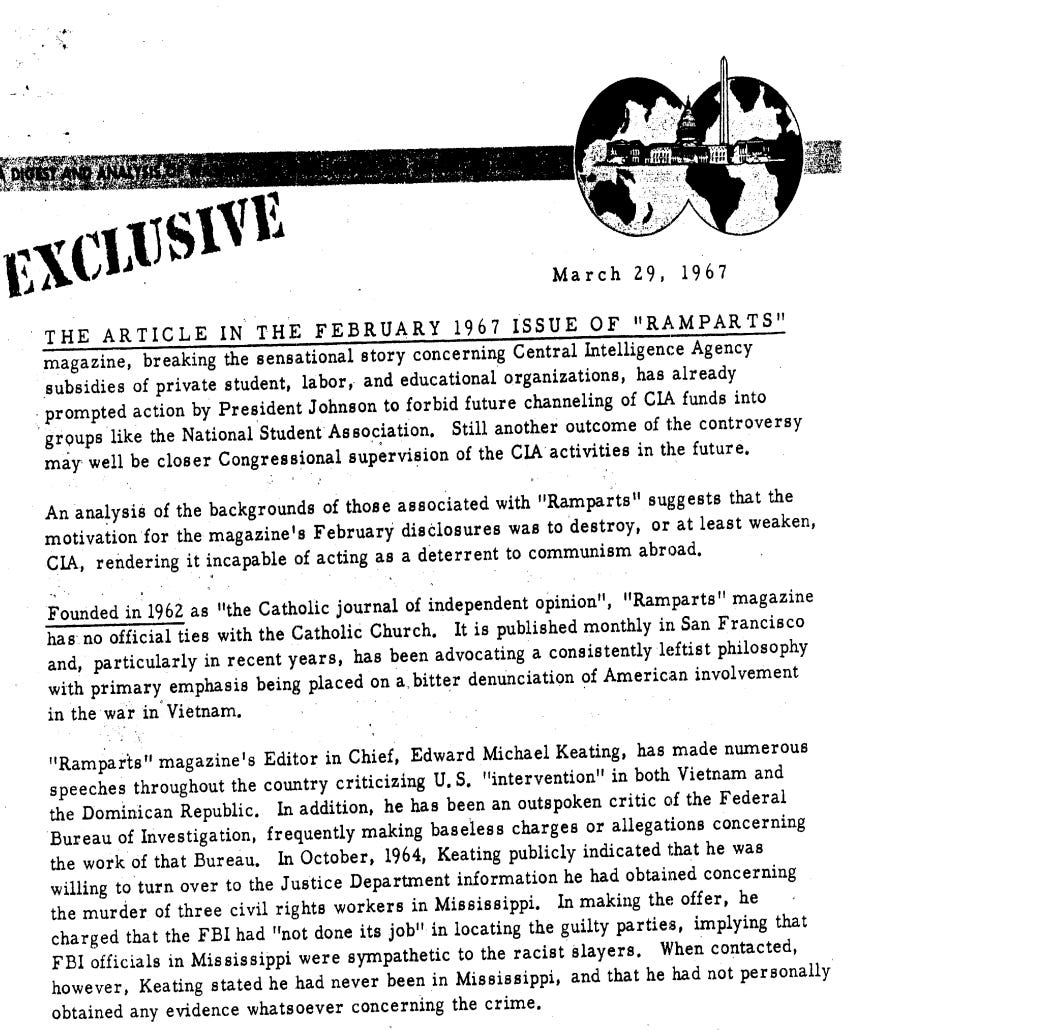
For nearly two decades, the American intelligence community had been covertly funding a sprawling array of civic, cultural, and intellectual organisations. Through an network of pass-through foundations, the CIA had subsidised literary magazines, student groups, labor unions, and academic conferences across the globe.3
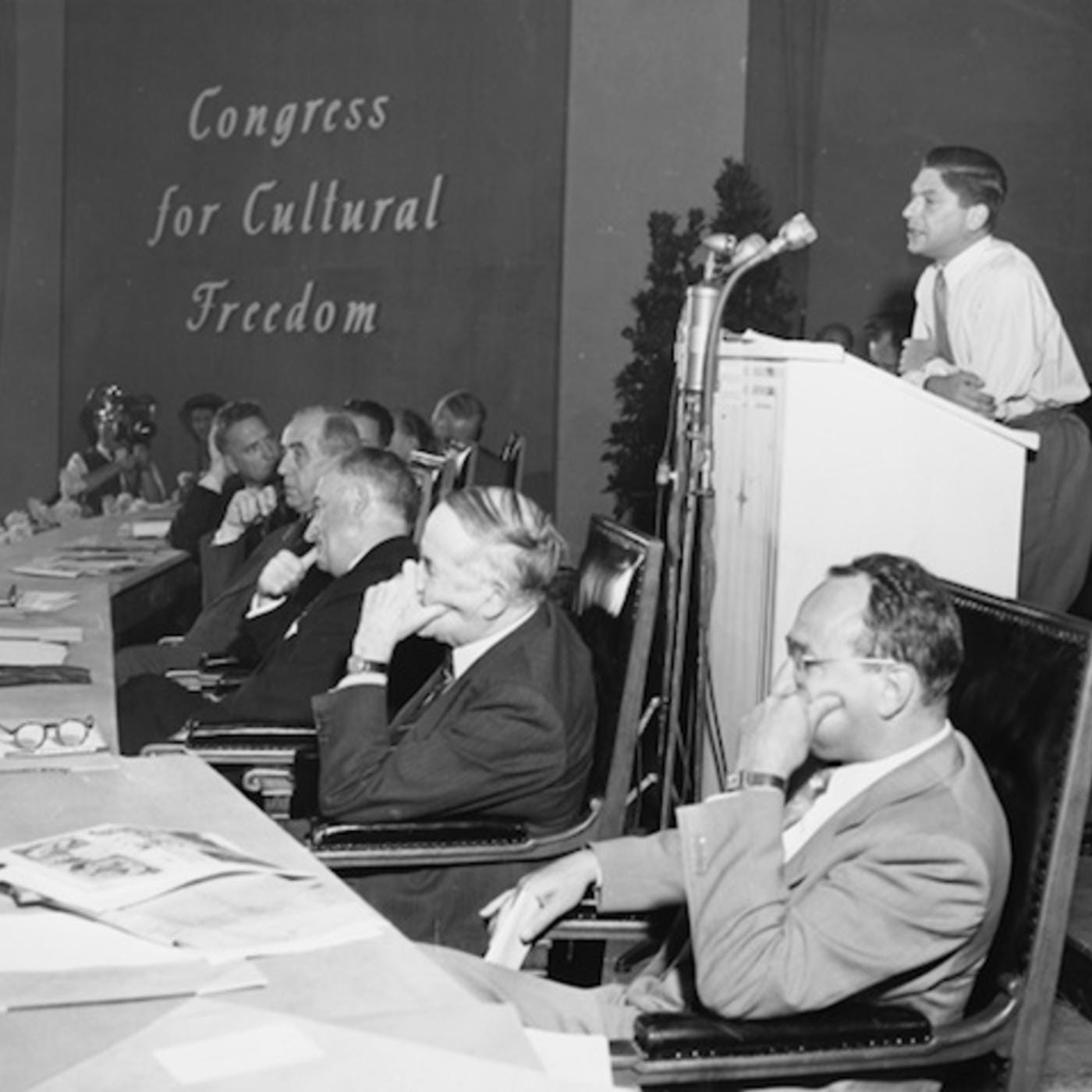
At the absolute center of this covert enterprise stood the Congress for Cultural Freedom (CCF), an international coalition of intellectuals, writers, and artists founded in West Berlin in 1950. The CCF was explicitly designed to mobilise the non-communist left against the ideological magnetism of the Soviet Union, steering the Western intelligentsia away from Marxism and toward an embrace of liberal democratic capitalism.4 However, the exposure of the CCF’s covert funding forced a lingering reckoning within the Western intellectual class. The central question that emerged from the wreckage of the 1960s revelations remains remarkably pertinent today: To what extent was the mid-century landscape of “cultural freedom” organically produced, and to what extent was it curated by the national security state?
This inquiry becomes particularly illuminating when applied to the social movements that defined the latter half of the twentieth century. Among the most transformative of these was the second-wave feminist movement, which radically reshaped Western domestic life, political economy, institutional norms, and cultural assumptions. The ascendancy of modern feminism is conventionally understood as a purely grassroots insurgency, an organic rebellion against patriarchal orthodoxies and structural inequalities.5
But were they?
The Congress for Cultural Freedom and the Cultural Cold War
Following the defeat of fascism, Marxism appeared to many as the logical philosophical heir to European intellectual history, promising an egalitarian future free from the crises of capitalism. To counter this prevailing sentiment, both the U.S. State Department and the CIA recognised that overt American propaganda, especially narratives touting free enterprise and consumerism would be swiftly rejected by European elites as crass imperialism. Instead, the United States required a proxy force of credible, independent-seeming intellectuals.
The Founding and Purpose of the CCF
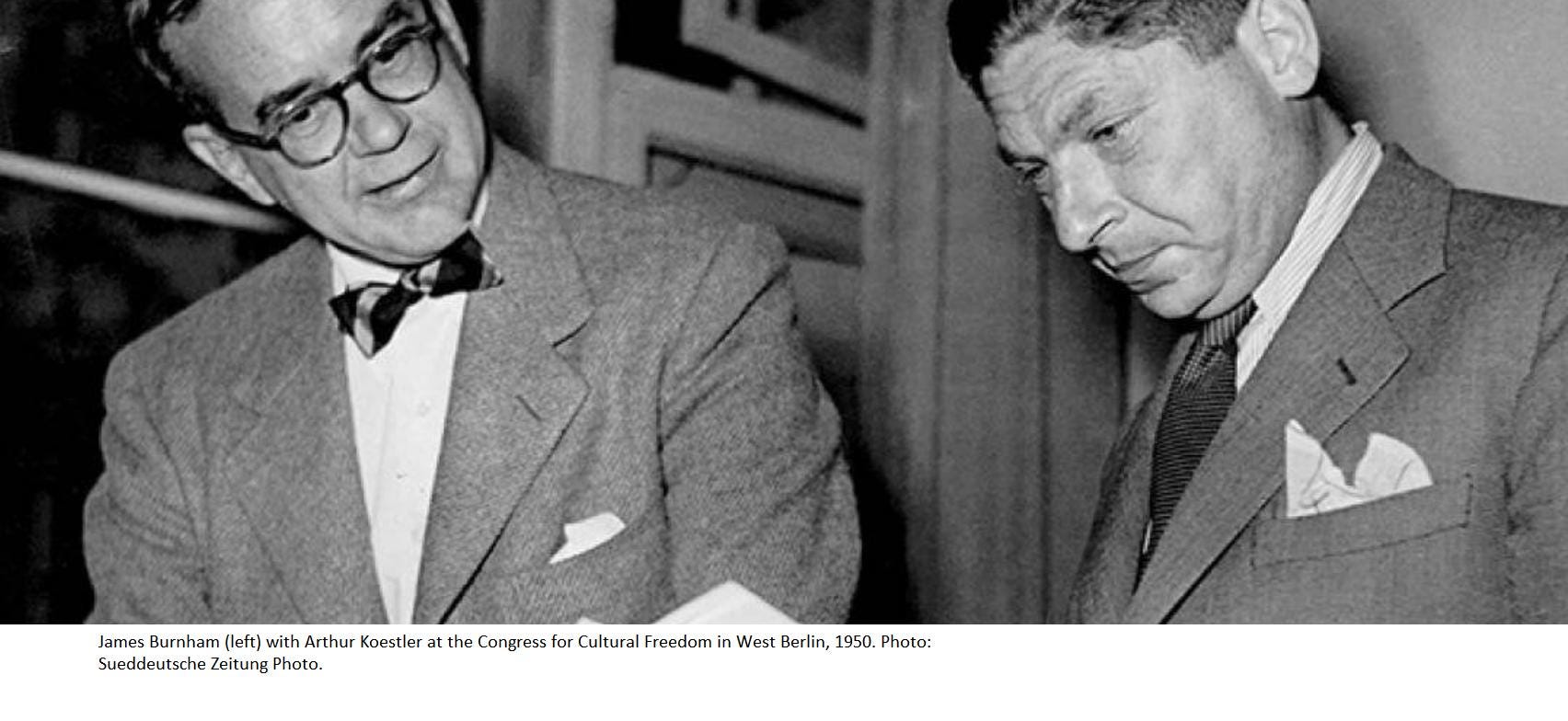
In June 1950, as geopolitical temperatures escalated, a coalition of prominent anti-communist intellectuals convened at the Titania Palace in West Berlin, an outpost of Western influence surrounded by the Soviet bloc.6 This inaugural conference, featuring intellectual heavyweights such as Arthur Koestler, Ignazio Silone, Sidney Hook, and James Burnham, culminated in a “Freedom Manifesto”.7 Drafted largely by Koestler, the manifesto sought to fundamentally redefine the global conflict. It argued that the primary division in post-war politics was no longer between capitalism and socialism, but between “relative freedom” and “total tyranny”.8

From this gathering emerged the Congress for Cultural Freedom, an organisation that, at its peak, operated in thirty-five countries, employed dozens of high-profile intellectuals, hosted high-society art exhibitions, and published over twenty prestigious magazines on six continents.9 The congress aimed to enlist intellectuals and opinion-makers from the non-communist left in a war of ideas, creating an intellectual wedge between Western progressives and Soviet communism.
As historian Frances Stonor Saunders details in The Cultural Cold War, the CIA built a “consortium” of intelligence personnel, political strategists, and corporate establishments to promote the idea of a pax Americana.10 This consortium actively recruited former radicals, Trotskyists, and leftist intellectuals who had become disillusioned with Stalinism, utilising their credibility to form an anti-communist vanguard.
The Role of Encounter and Intellectual Curation
The flagship enterprise of the CCF was Encounter, an Anglo-American intellectual journal founded in London in 1953.11 Initially edited by the British poet Stephen Spender and the American journalist Irving Kristol (who would later become a foundational figure in neoconservatism), the magazine was covertly funded by the CIA and British intelligence (MI6).12 Encounter quickly established itself as a central organ for the non-communist left, experiencing immense readership and influence under the subsequent editorship of Melvin J. Lasky.13
The editorial line of Encounter subtly but consistently promoted modernism, liberalism, and Western civilisational values while marginalising pro-Soviet or strictly Marxist intellectual traditions. Crucially, the magazine was rarely critical of American foreign policy, generally shaping its content to support the broader geopolitical interests of the United States. As critics later observed, the journal displayed great vigilance regarding oppression in the communist world, but largely maintained an “apathy and inconsequence” where oppression was non-communist or aligned with U.S. interests.14
The overarching cultural strategy executed by the CCF and its publications was conceptually unified: by aggressively promoting individualism, free expression, and social progress within a capitalist framework, the U.S. could effectively undermine the collectivist appeal of the Soviet bloc. The CCF did not only fight communism negatively, it constructed a positive, compelling vision of “the American proposition,” elevating a specific strain of liberal individualism that would soon intersect with emerging domestic social movements, including feminism.
The Rise of Second-Wave Feminism in Context
The first wave of feminism, culminating in the early twentieth century, was primarily concerned with explicit legal enfranchisement, property rights, and the fundamental right to vote. Following the Second World War, the West experienced a widespread retreat into domesticity, heavily promoted by post-war economic structures, suburban expansion, and cultural media.

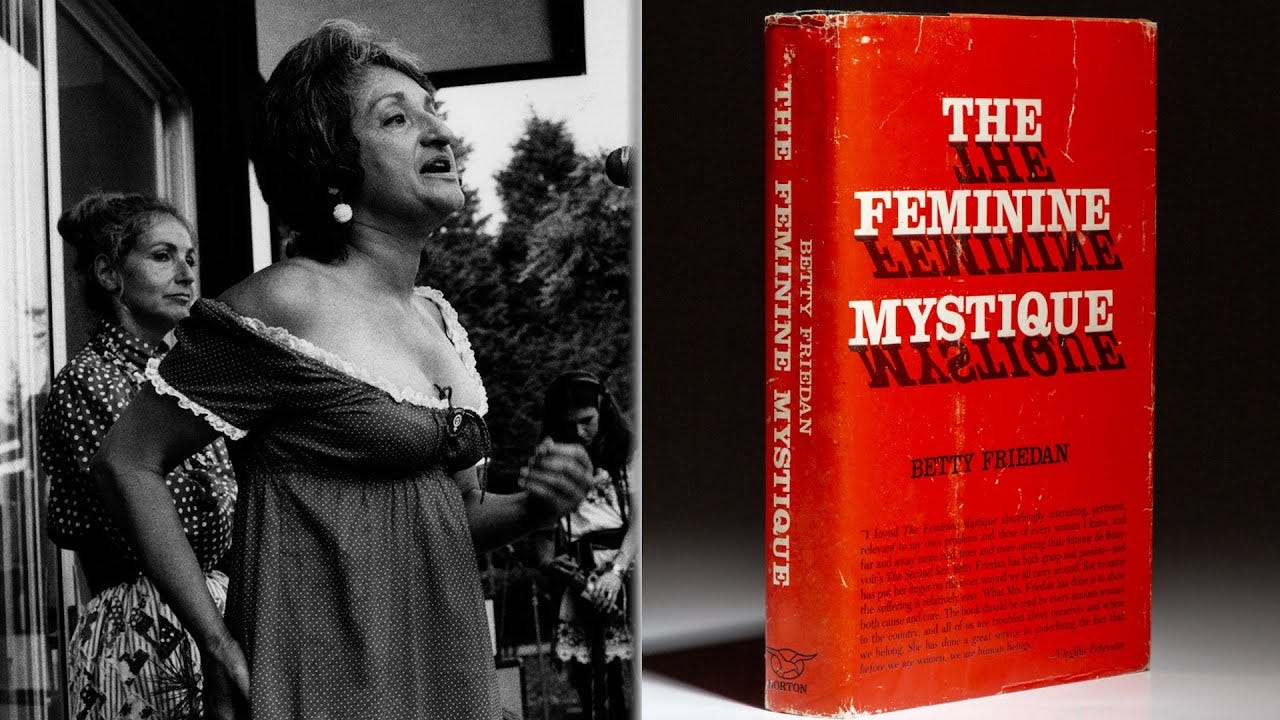
However, by the early 1960s, a demographic and psychological shift was underway. The catalyst is widely recognised as the 1963 publication of Betty Friedan’s The Feminine Mystique, which articulated “the problem that has no name”, the deep psychological dissatisfaction experienced by American middle-class housewives who were confined to domestic roles despite their education and capabilities.15 Friedan’s text helped ignite the second wave of American feminism, which expanded the movement’s focus to include workplace equality, abortions, and a radical restructuring of gender roles and societal expectations.16
The Intellectual Ecosystem of the Second Wave
Second-wave feminism developed within the precise intellectual ecosystem that Cold War cultural institutions had spent the previous decade cultivating. The ideological trajectory of key figures provides a window into this alignment. Betty Friedan, for instance, had a robust background in leftist labor journalism, having spent years as a writer for the UE News, the media organ for the radical United Electric, Radio, and Machine Workers of America.17 Yet, as the Cold War intensified and domestic anti-communism marginalised radical labor movements, Friedan’s focus shifted. She moved to the suburbs and eventually channeled her reformist energies into a framework more palatable to the American mainstream.
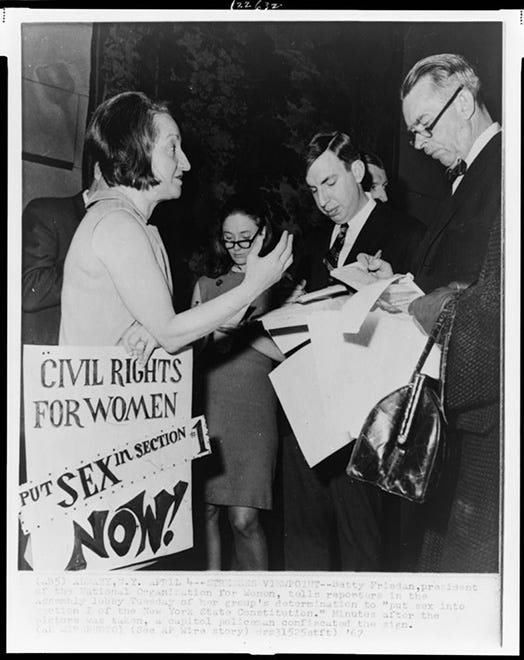
In 1966, Friedan co-founded the National Organisation for Women (NOW), an organisation explicitly aimed at bringing women into the “mainstream of American society now [in] fully equal partnership with men”.18 This was fundamentally an integrationist, liberal project, not a Marxist revolution aimed at overthrowing the capitalist state.
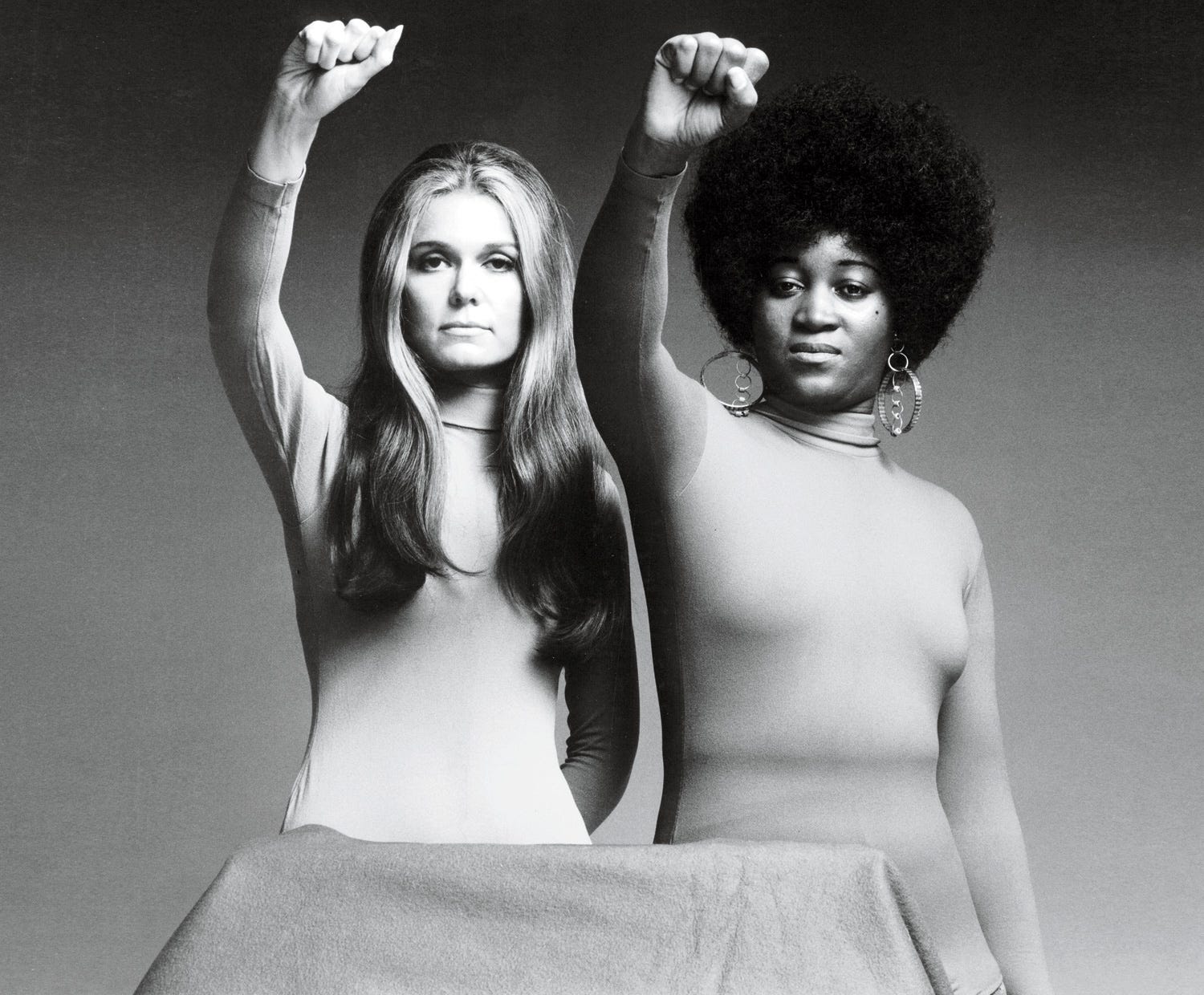
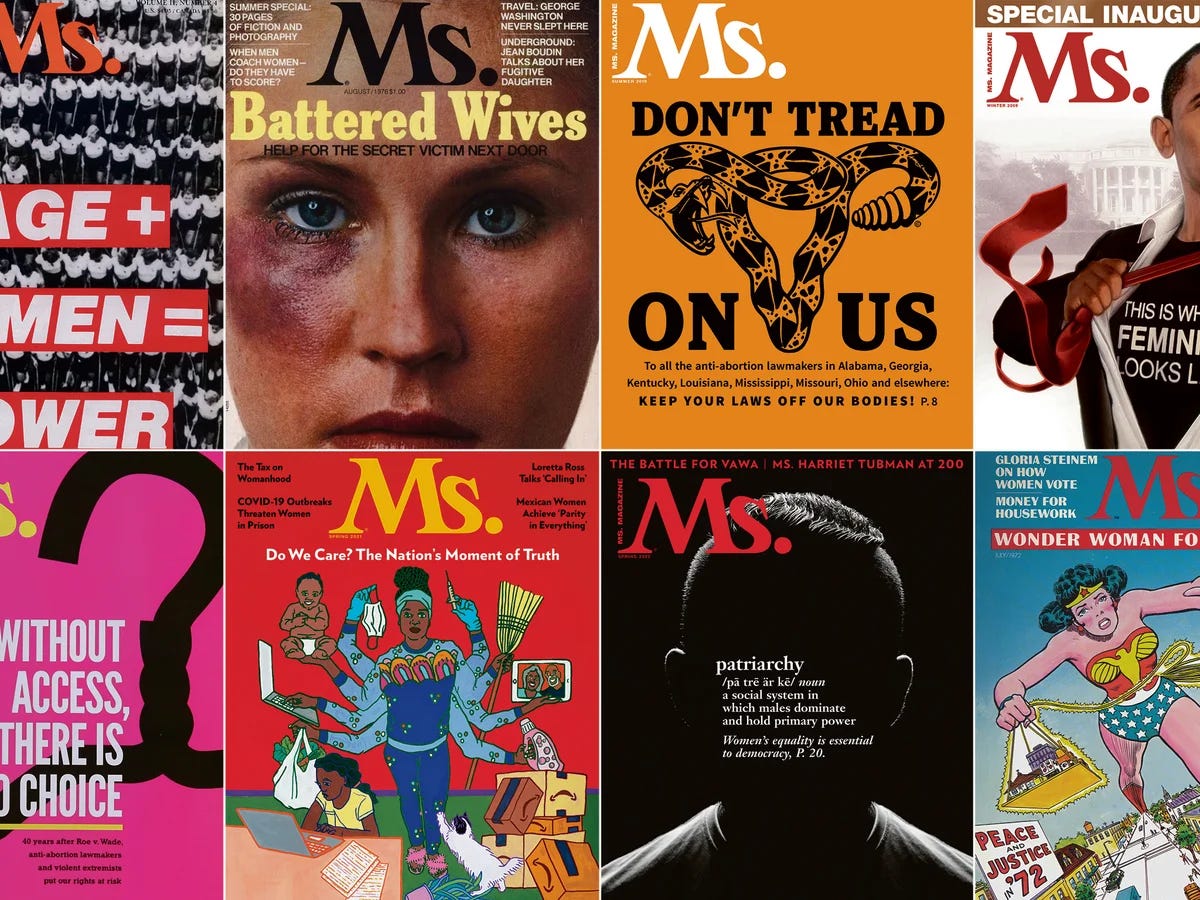
Simultaneously, a new generation of activists emerged embodied by figures like Gloria Steinem. Steinem, a charismatic and articulate journalist, became a central voice for liberal feminism, emphasising individual autonomy, self-determination, and identity politics.19 She co-founded the National Women’s Political Caucus in 1971 and launched Ms. magazine in 1972, focusing heavily on topics such as equal pay, political representation, and reproductive rights.16

While there were undeniably more radical, anti-capitalist, and Marxist factions within the broader feminist milieu, groups that sought to explicitly link the oppression of women to the structure of global capitalism, the strand of feminism that gained the most institutional traction, media visibility, and philanthropic support was decidedly liberal, individualistic, and reformist.20
Crucially, this form of liberal feminism aligned perfectly with the ideological contours championed by the CCF and the broader American cultural front. Both movements prioritised the autonomy of the individual against coercive traditional or hierarchical structures, and both framed the United States as an evolving society capable of internal reform and modernisation.21 There is no crude mechanism of invention here; the CIA did not “create” Betty Friedan, Gloria Steinem, or the National Organisation for Women. Rather, the intellectual environment fostered by U.S. soft power initiatives created a highly receptive atmosphere for movements that championed individual liberation, meritocracy, and legal equality over collective economic restructuring.
Gloria Steinem and Documented Intelligence Connections
The intersection between second-wave feminism and Cold War intelligence operations is most explicitly and undeniably documented in the early career of Gloria Steinem. Long before she co-founded Ms. magazine, became the public face of the women’s liberation movement, or sparred with conservative figures like Phyllis Schlafly, Steinem was actively engaged in the U.S. government’s covert efforts to counter Soviet influence among global youth.22
The Independent Research Service
In the late 1940s and 1950s, the Soviet Union and its satellite states heavily utilised international youth and student festivals to promote communist ideology, showcase socialist solidarity, and recruit future leaders from the developing world.23 Deeply fearful of the attraction of young people to socialism, the CIA established its presence on campuses and within student organisations early in the Cold War.24
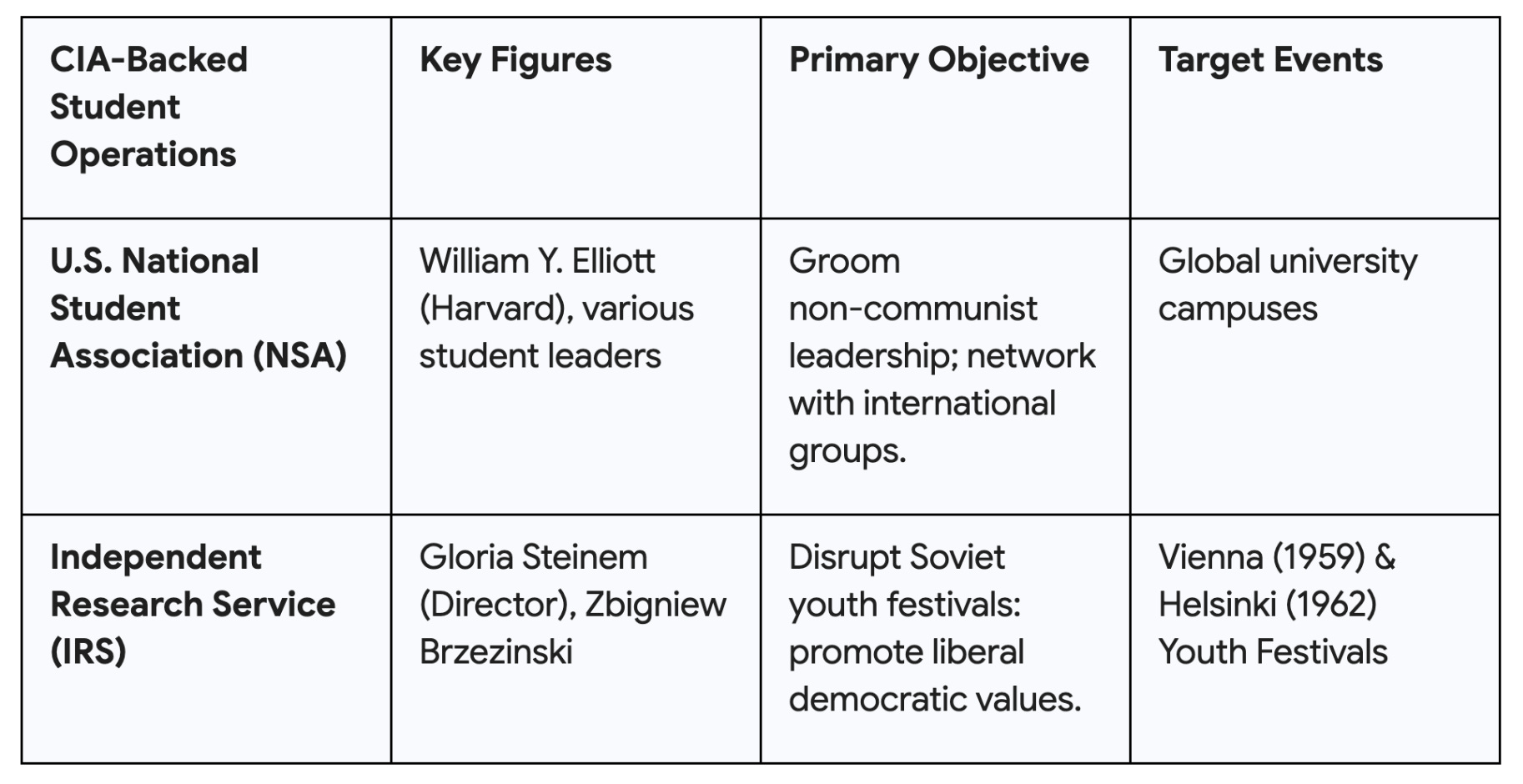
To directly counter the Soviet dominance of global youth festivals, the CIA established a front organisation in 1958 known as the Independent Research Service (IRS). Gloria Steinem, returning to the United States after spending two years in India as a Chester Bowles Asian Fellow, was hired as the director of this organisation.25
The IRS was tasked with recruiting, briefing, and funding non-communist American students to attend the 1959 World Youth Festival in Vienna and the 1962 Festival in Helsinki.26 The objective was to disrupt Soviet hegemony over these events, distribute counter-propaganda, articulate American democratic values, and present a progressive face of the United States to the Third World. The operation was secretly funded by the CIA through pass-through philanthropic entities; for instance, Internal Revenue Service files later revealed that the Independence Foundation funnelled $125,000 to the IRS in 1962 alone to finance the Helsinki expedition.27
Steinem’s Acknowledgment and Defence
When the CIA’s extensive funding of the National Student Association and the Independent Research Service was exposed by the press in 1967, Steinem did not obfuscate or retreat into denial. In interviews with The Washington Post and The New York Times, she openly acknowledged her collaboration, clarifying that she was a “witting” participant in the operation.28
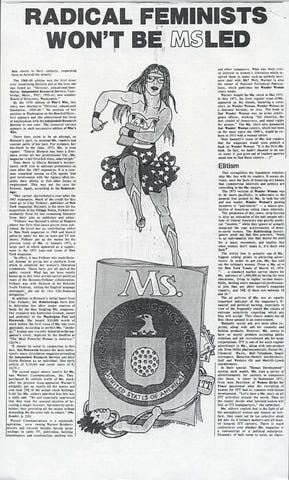
Her defence of the CIA provides an invaluable window into the mentality of liberal intellectuals during the Cold War. Steinem stated that the CIA agents she collaborated with were “liberal and farsighted and open to an exchange of ideas”.29 Pushing back against the media, she famously argued, “In my experience, the agency was completely different from its image; it was liberal, nonviolent and honorable”.30 She viewed the CIA as the only government entity with the “guts and foresight” to recognise the importance of youth and student affairs in the broader ideological conflict. Furthermore, she explicitly stated that she considered the CIA an ally in promoting U.S. government policy against communism during the early Cold War.31
Steinem’s involvement with the IRS occurred years before she emerged as a global feminist icon. Her brand of social revolution and the CIA’s geopolitical goals aligned. The U.S. government sought energetic, progressive representatives to counter Soviet revolutionary messaging, and Steinem leveraged federal underwriting to advance democratic and anti-authoritarian values on the global stage.
Why Feminism Mattered in the Cold War
So why were U.S. institutions, which were traditionally conservative, fiercely anti-radical, and heavily male-dominated , support, tolerate, and even promote feminist ideas as a strategic asset? The answer resides in the ideological dichotomy of the Cold War: the existential conflict between individualism and collectivism.
Undermining Collectivism
Western cultures, particularly the United States, have historically leaned toward individualism, drawing on the philosophies of Adam Smith and Alexis de Tocqueville to emphasise personal freedom, self-reliance, and democratic equality. The Soviet system, conversely, was built on an ethos of collectivism, focusing intensely on group needs, state control, and the strict subordination of the individual to the overarching class struggle.
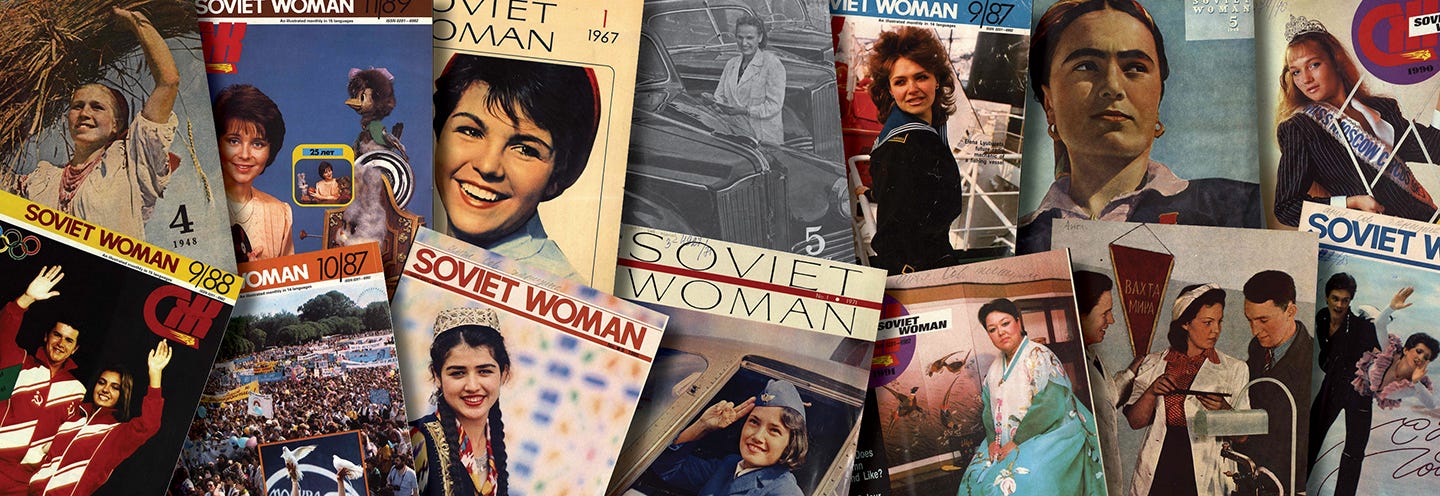
During the Cold War, the Soviet Union utilised its own gender ideology as a highly effective soft-power weapon. Through international organisations like the Women’s International Democratic Federation (WIDF), the Soviets championed the social rights of female workers on the global stage, highlighting state-mandated maternity leave, universal access to abortion, and the notably high representation of women in STEM fields and heavy industry.32 Soviet propaganda, disseminated through publications like Soviet Woman magazine, routinely accused the West of trapping women in domestic servitude and capitalist exploitation, positioning the USSR as the true emancipator of womanhood.33
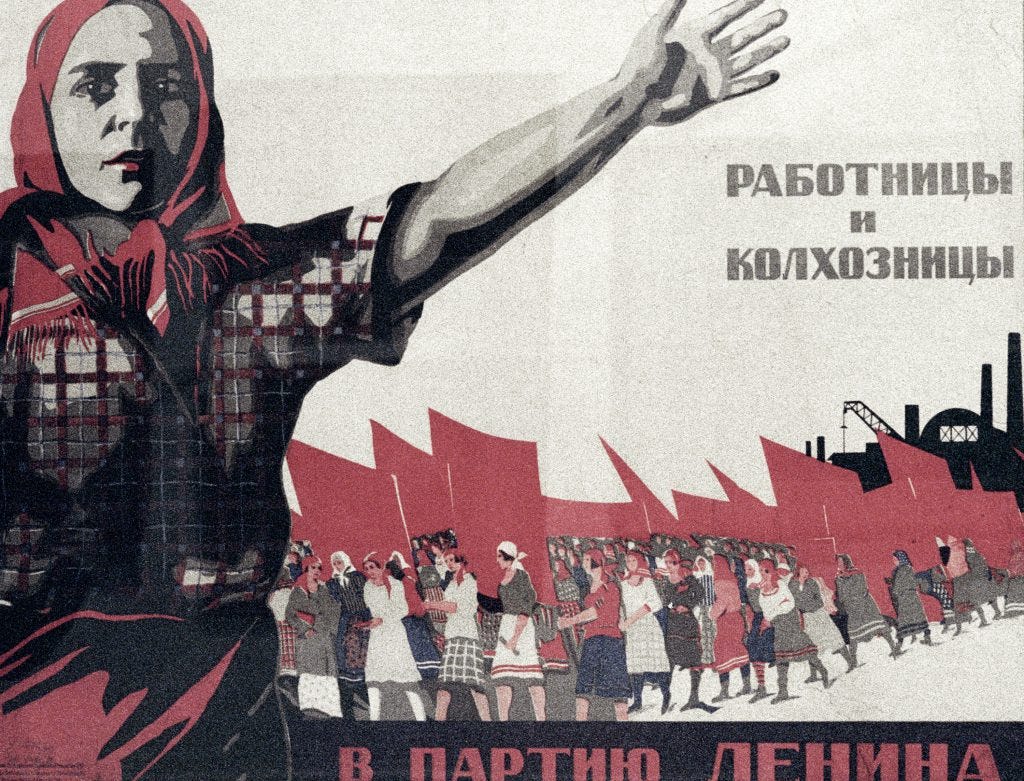
To counter this potent narrative, American soft power required a response that presented the United States not as a static, patriarchal society, but as a engine of freedom, modernity, and continuous social progress. Liberal feminism, which advocated for the dismantling of arbitrary barriers to individual achievement, served this purpose flawlessly. By promoting women’s rights strictly through the lens of individual choice, consumer empowerment, and equal opportunity within a free market, the U.S. could effectively counter Soviet critiques without adopting socialist economic models or threatening the capitalist order.
The “Kitchen Debate” and Soft Power
The confrontation between these gendered ideologies was famously crystallised in the July 1959 “Kitchen Debate” between U.S. Vice President Richard Nixon and Soviet Premier Nikita Khrushchev.34 Standing in a model American kitchen at the American National Exhibition in Moscow’s Sokolniki Park, the two leaders sparred over which system better served women. Nixon pointed to labor-saving domestic appliances, consumer choice, and the Whirlpool Miracle Kitchen as the ultimate liberators of women, effectively arguing that capitalism freed women from domestic drudgery. Khrushchev, in contrast, boasted of women building the Soviet state through productive labor in heavy industry.
As the 1960s progressed, however, the defence of consumer domesticity became intellectually and politically untenable for some. The U.S. required a more robust response to Soviet gender parity. The emergence of liberal feminism provided exactly that. It allowed American soft power to weaponise gender equality, demonstrating to the developing world that Western democracies could organically evolve to grant women access to the highest echelons of professional and political life without resorting to totalitarian coercion.
The Committee of Correspondence and International Strategy
The CIA actively cultivated this dynamic. In 1952, signficantly concerned by the success of the Soviet WIDF and its global peace campaigns which frequently accused the U.S. of militarism and the use of chemical weapons in Korea, the CIA helped establish the Committee of Correspondence (CofC).35 Initially operating under the temporary title of the “Anonymous Committee,” this women’s organisation was tasked with countering communist propaganda and promoting the “true nature of American women”.36
The CIA discreetly funnelled funds to the CofC, utilising methods to obscure the money trail, ensuring the organisation maintained a “private” facade. This allowed the Committee to influence international audiences who would have reflexively rejected overt government propaganda. By the 1960s, the CofC was dispatching field workers to Africa and Latin America, promoting an emergent model of internationalism based on grassroots empowerment and community development, a strategic precursor to modern feminist NGO work and USAID gender initiatives.
Foundations, NGOs, and the Diffusion of Ideas
By the late 1960s, the direct funding of cultural and civic groups by the CIA had become politically toxic following the Ramparts revelations and the subsequent congressional inquiries. Consequently, the strategic promotion of liberal, anti-communist ideals transitioned seamlessly out of the shadows of the intelligence community and into the overt capitalised philanthropic sector. The most significant, transformative actor in this transition was the Ford Foundation.
The Ford Foundation and Institutional Support
During the 1950s, the Ford Foundation had already worked closely with the CIA and the State Department, heavily subsidising the Congress for Cultural Freedom and funding international “area studies” to counter Soviet influence.37 However, as the Cold War evolved, the foundation’s immense capital, built from the massive profits of American industry was increasingly redirected toward domestic social issues that aligned with a broad, liberal modernisation theory.
In the 1970s, the Ford Foundation became the premier financial architect of the institutionalisation of the feminist movement. In 1973, recognising the societal shifts underway, Ford’s trustees approved an initial $2 million in reserve funds to explicitly explore opportunities to benefit women, by 1979, the foundation had spent an astounding $20 million in this area.38
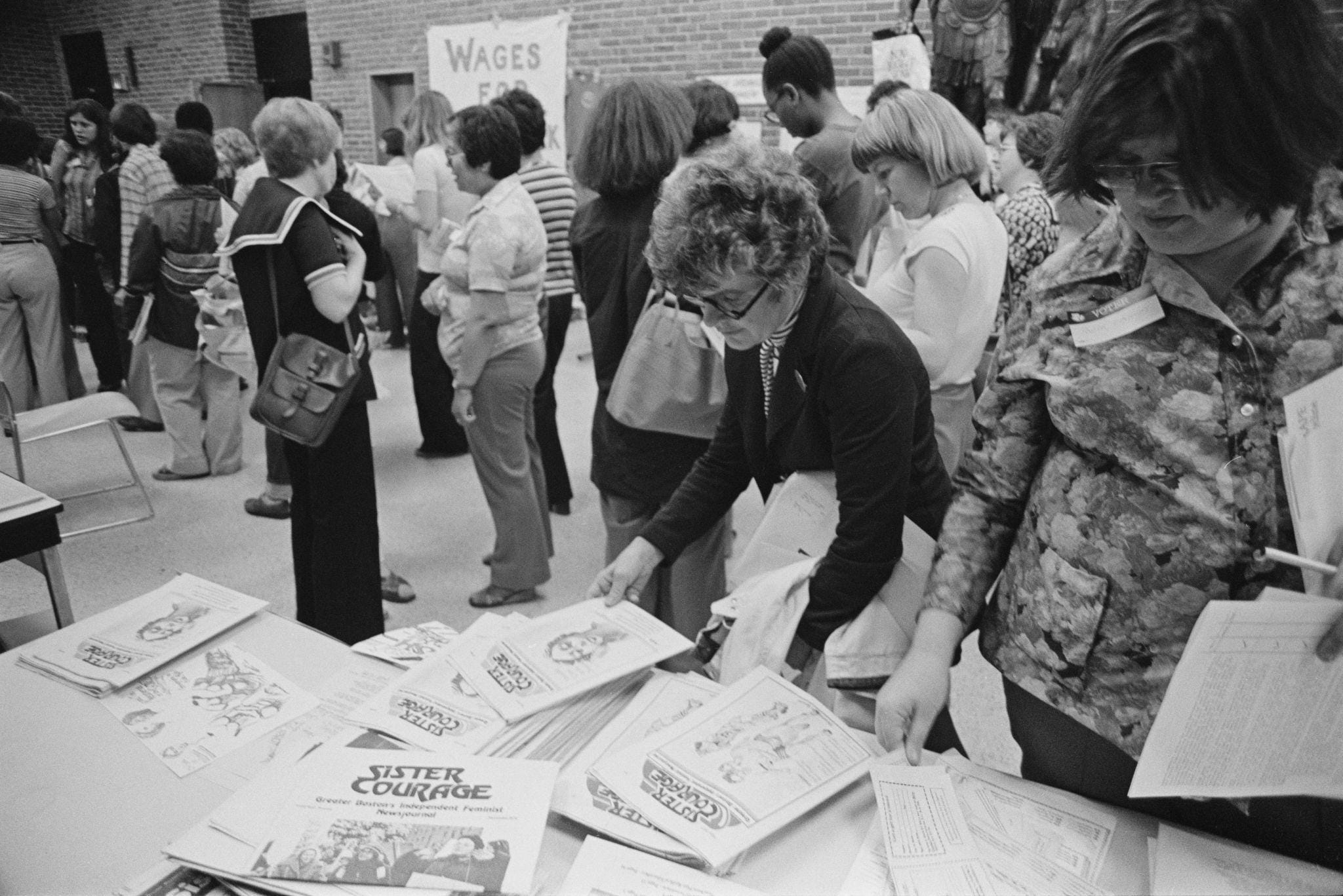
The scale of this philanthropic intervention cannot be overstated. The Ford Foundation provided critical funding to Gloria Steinem’s Ms. magazine, ensuring its survival and expansion as the primary commercial vehicle for second-wave feminist discourse.39 It heavily subsidised the creation of the National Women’s Studies Association, facilitating the rapid, nationwide growth of Women’s Studies departments in American universities. By collaborating with the Rockefeller Foundation and the Carnegie Corporation, Ford helped embed feminist curriculum into the mainstream of higher education, transforming it from a radical critique into an accepted academic discipline. Furthermore, Ford provided ongoing funding to the Ms. Foundation, the National Organisation for Women’s Legal Defence and Education Fund, and various international women’s health coalitions.40

Selection and Amplification
The role of these major foundations was not to dictate content through heavy-handed and direct control. Philanthropic influence operates far more subtly: through the mechanisms of selection, amplification, and the conferring of institutional prestige. During the fracturing of the women’s liberation movement in the late 1960s and early 1970s, there were intense, often bitter debates between radical, anti-capitalist feminists who viewed patriarchy as inextricably linked to class exploitation and liberal, reformist feminists.
Foundations like Ford inherently favoured the liberal and reformist wing. During a period of conservative backlash and calls for “law and order,” philanthropies sought to temper radicalism by channelling revolutionary energy into “constructive action”, legal battles, academic research, public policy centres, and legislative reform. By directing millions of dollars toward liberal organisations like NOW and Ms. magazine, while largely ignoring or starving radical, Marxist, or purely grassroots collectives, the philanthropic sector fundamentally shaped the trajectory of the movement. They ensured that the dominant strain of American feminism would seek integration into the corporate and democratic structures of the United States, rather than the overthrow of those structures.
What This Does and Does Not Mean
First and foremost, feminism was not “created,” “manufactured,” or “invented” by the Central Intelligence Agency, the Congress for Cultural Freedom, or the Ford Foundation. The demand for women’s emancipation does have organic roots in Western intellectual and social history, stretching back through the suffrage movements of the nineteenth century, the abolitionist struggles, and the Enlightenment philosophies that preceded them. The frustrations articulated by Betty Friedan and the grassroots activism mobilised by Gloria Steinem and others were authentic responses for some women.
However, recognising the authenticity of the grievance does not preclude examining the institutional forces that shaped its resolution. The historical evidence demonstrates that certain strands of feminism were legitimised, and heavily funded because they proved strategically useful within a broader Cold War framework.
Conclusion
The geopolitical conflict of the late twentieth century was characterised by the omnipresent threat of nuclear annihilation, but its most enduring victories were ultimately secured in the realm of culture and ideas. The Cold War did actively mapped the inner life of Western societies, influencing the literature that was read, the art that was celebrated, and the social movements that redefined human relations.
The history of the Congress for Cultural Freedom, the covert funding of the Independent Research Service, the tactical deployment of the Committee of Correspondence, and the massive philanthropic interventions of the 1970s collectively reveal the hidden architecture of cultural power. They demonstrate that the triumph of liberal individualism, including its feminist iterations, was not purely the result of a spontaneous, inevitable intellectual awakening. It was, at least in part, the product of a highly organised, staggeringly well-funded strategy designed to promote forms of freedom that were structurally aligned with Western capitalist interests.
The realisation that organisations and individuals dedicated to human liberation were simultaneously serving as instruments of statecraft is undeniably unsettling. It forces a reassessment of the presumed autonomy of civil society. The legacy of the Cultural Cold War suggests that the boundary between authentic cultural evolution and institutional influence is far more porous than modern democratic societies care to admit.
https://celina101.substack.com/p/the-cold-war-politics-of-feminism