
The Demise of Credentials

The value of sitting in classrooms and doing homework to prove one’s readiness to function in the “knowledge” economy has fallen off a cliff.
Back in 2013, I published The Nearly Free University and the Emerging Economy, which I subtitled The Revolution in Higher Education because the book proposed accrediting the student, not the institution, as technology had advanced to the point that the “factory model” of education in which “raw materials” (students) were fed into cookie-cutter processes and “stamped” educated was not just obsolete but counter-productive, what I now call Anti-Progress.
I first wrote about the “factory model” of education in 2005: Is Our Education System Based on a Factory Metaphor? (November 15, 2005).
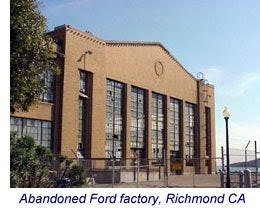
The model failed in two ways: 1) its artificial scarcity (diplomas / credentials) was exploited to increase costs that were funded by loading students with crushing debt and 2) the majority of students weren’t leaving college with the sort of education that they and the economy needed to function effectively. This was documented in the 2011 book Academically Adrift: Limited Learning on College Campuses.
That higher education costs have skyrocketed has been evident for over a decade:
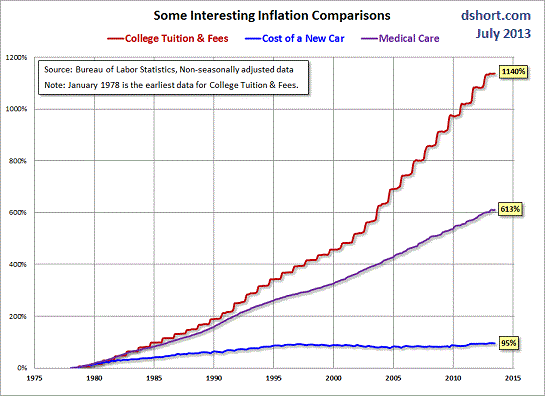
If we ask cui bono, to whose benefit, the answer is 1) college administrators:
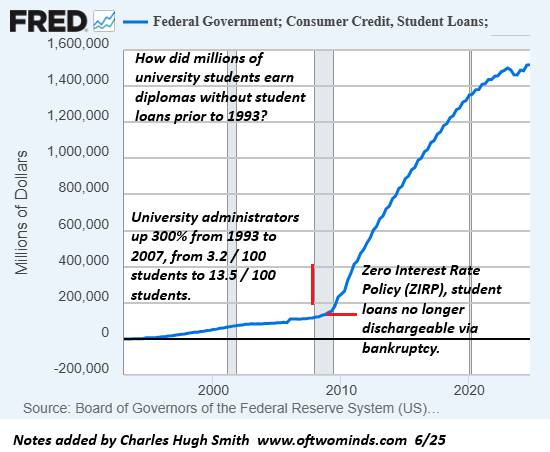
— and 2) the wealthy who own the securitized student loans as income-generating assets:
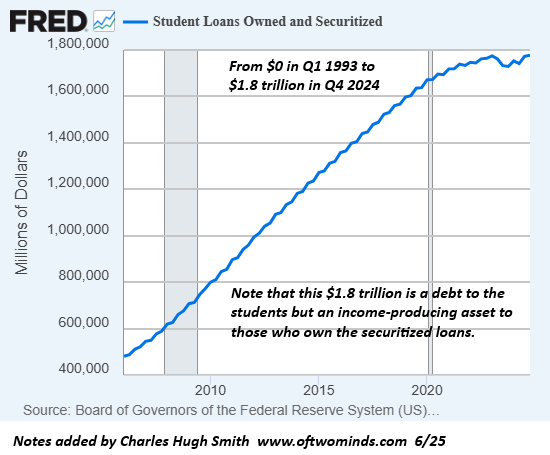
I discussed these failings in many posts, for example: Why the Higher Education System Is Unsustainable (September 18, 2013)
Higher Education: America’s Problem That Isn’t Being Solved (February 18, 2014)
Before the explosive rise of student loans (pre-1993), adults with university diplomas were a minority, roughly 20% of the adult working-age populace. Outside of fields such as medicine, the value of the credential wasn’t specific training (i.e. an apprenticeship with mentoring and field experience); the value was in demonstrating the ability to sit in a classroom and do homework for four years, processes which were assumed to prepare the college graduate for work in the burgeoning white-collar “knowledge economy” where facility with new processes and functioning in bureaucracies were more valuable than whatever was learned in the university classroom.
That students learned very little of value to employers was not a problem, as employers were expected to train their newly minted college-grad employees, whose core value to the employer was the ability to learn and function in a bureaucratic, hierarchical setting of the white-collar workplace–abilities proven by their gutsing out four or more years of college.
The value of sitting in classrooms and doing homework to prove one’s readiness to function in the “knowledge” economy has fallen off a cliff, but the higher education cartel continues piling on student debt because the status quo continues to grant scarcity value to credentials–even though the credential doesn’t actually prove the student learned anything of value–including the ability to learn challenging material on their own.
According to this research paper, They Don’t Read Very Well: A Study of the Reading Comprehension Skills of English Majors at Two Midwestern Universities–a study of English literature students at American universities found that they were unable to understand the first paragraph of Charles Dickens’s novel Bleak House, a book that was once regularly read by children.
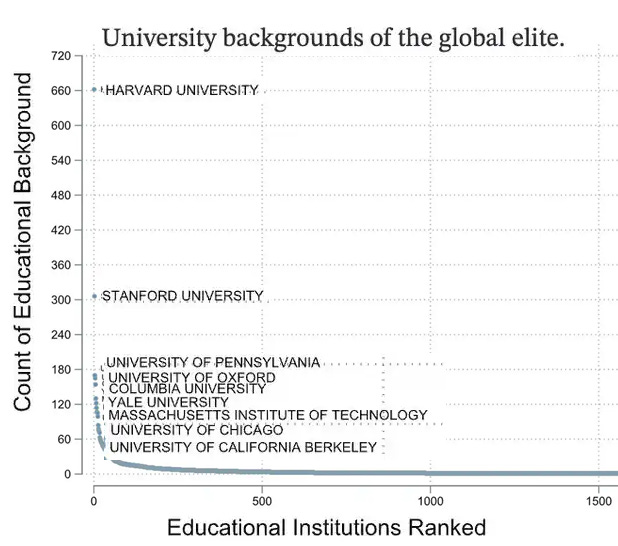
The decay of the scarcity value in higher education credentials has now reached the point of collapse, due to two dynamics: 1) credentials are now over-supplied, losing all scarcity value except in selected fields (medicine, high-level programming) and a handful of elite universities that supply the majority of the global economy’s top bureaucrats, and 2) the advent of free (or nearly free) AI chatbots / tools that can do students’ homework for them.
(A few public universities were in the top tier attended by global elites– University of Pennsylvania–Wharton School, UC-Berkeley and the University of Chicago–but the list is dominated by private institutions).
Obtaining credentials can now be gamed without bothering to actually learn anything. The student “learns” to game the system with AI-generated homework but not how to think or write, which are basically the same process: if you can’t write coherently, you can’t think coherently, either.
The obvious solution is to eliminate the stranglehold of institutions granting credentials by testing students’ actual knowledge and abilities—accrediting the student, not the institution. Never mind how many credits the student paid for; test each student in a stringently monitored series of exams with no digital tools allowed and all wi-fi electronically blocked.
If a student learned enough on YouTube and by reading to pass the exam, they are granted a credential for what they know, not what they paid an institution.
This leads to another conclusion: the student is much better prepared for the economy as it is by accrediting themselves: by documenting their completion of real-world projects that provide solid, non-gameable evidence that the student can learn new material on the fly and get real work done.
Put another way: knowledge isn’t just knowing; it’s doing. As Emerson wrote: “Do the thing and you shall have the power.” It is the doing that shows what one knows and what one has learned.
It’s not at all clear that the white-collar workplace that the higher education “factory” has processed students to qualify for will last any longer than the assembly-line factories of decades past. The entire process of education has to be revolutionized away from homework that can be gamed and credentials that provide little or no demonstrable evidence of what the student has mastered to a model in which learning is based on doing real work in the real world from Day One.
If a student shows me a credential that they “know” how to build a house, how can I tell if they gamed their homework and know virtually nothing of real-world value, or they actually know how to build a house?
The only way to know is give them a few basic hand tools and a pile of lumber and tell them to build a micro-house themselves, without any aids. Not later, now, today, without help and with no wasted motion.
The same can be said of programming, filing a legal document, preparing a healthy meal or managing complex processes. Show us by doing, not by waving a credential from an institution.
Peter Drucker described how entire swaths of economies are obsoleted and disappear. The institutions of higher education will either vanish or retool themselves on a model of accrediting the student, where the competition isn’t about getting into an elite institution, it’s about students acquiring mastery: accredit the student, not the institution.
https://charleshughsmith.substack.com/p/the-demise-of-credentials