
The EU Will Fail for the Same Reason as the Eastern Bloc
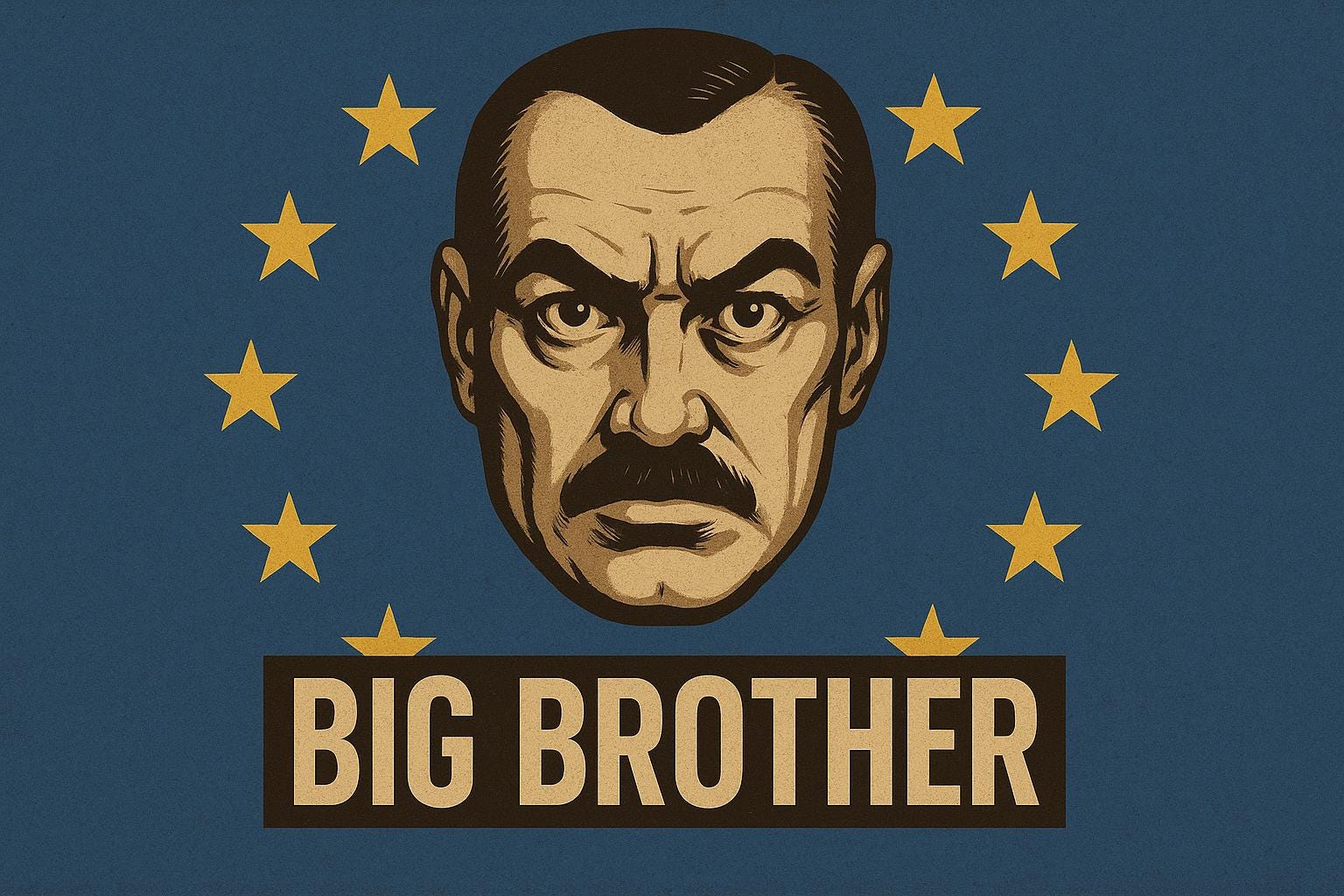
The last years of the Eastern Bloc bear striking parallels to the current situation in the EU. The Eastern Bloc ultimately collapsed due to the flaws in its own system – and the EU is now repeating the very mistakes that led to the Eastern Bloc’s downfall.
Of course, there were many reasons for the demise of the socialist Eastern Bloc, about which entire books could be written. The planned economy functioned only to a limited extent, and the senile leaders of the Soviet Union didn’t even fully grasp the approach of the Reagan administration, which, with a combination of artificially low oil prices and an arms race, simultaneously reduced government revenues and increased government expenditures, and therefore didn’t even consider workable responses.
The leaders of the socialist countries misunderstood the problems in their countries, were alienated from the common people, and believed the embellished success stories of their own propaganda and their apparatchiks, who often reported embellished data “upwards” instead of pointing out existing problems. The problems were getting worse, and the leaders of these countries barely noticed, until popular discontent erupted and swept the systems away, writes Thomas Röper .
All of this bears strong parallels with the current situation in the EU. For the leaders of the Eastern Bloc, their system came first, and in their attempts to save it, they no longer considered the people. Essentially the same thing is happening in the EU today.
The parallels become clear just how great they are when you look at them more closely and, for a better understanding, also take a look at history.
The good idea that didn’t work
Socialism (or communism) was a widespread and popular idea a hundred years ago, because workers and ordinary people around the world lived in abject poverty and were ruthlessly exploited. The idea of ending this exploitation and socializing the corporations fell on fertile ground.
The revolutionaries in the Soviet Union were idealists who wanted to improve the lives of the masses. They believed that with their revolution and socialism they were doing something good, something that the people would enthusiastically receive and support. After seizing power, Lenin issued decrees that granted the states of the Russian Empire de facto independence, believing that they—led by workers’ councils—would voluntarily participate in the new socialist model, as they would finally liberate the masses from oppression and exploitation. He even believed that a domestic secret service to control the population was no longer necessary, as the people had simply awaited their liberation and would enthusiastically join the movement.
However, Lenin and his people soon realized that things were not going well, and that not everyone was enthusiastic about the new system. For example, peasants were completely unwilling to give up their property to the community. The middle class, consisting of small business owners such as shopkeepers and the like, also refused to give up their small businesses in favor of state cooperatives. This resulted in “unexpected” resistance, which the revolutionaries had not anticipated.
Imposing their happiness on people
Thus, Lenin and his team soon re-established a domestic secret service to track down and neutralize the “enemies of the people.” They didn’t understand why their system wasn’t to everyone’s liking, but suspected that behind the resistance lay the machinations of the old forces (the so-called reactionaries), who, while a small minority, were well-organized and supported from abroad.
Even though that was not the reason for the resistance, Lenin and his followers had good reasons for this assumption, which was even confirmed in their worldview, because firstly, a civil war was raging against the forces that wanted to restore Tsarism, and secondly – what is little known in the West – British, French and American forces were also fighting in the civil war against the Bolsheviks, because they wanted to prevent the socialist system.
The reason for this was obvious: if the socialists in the Soviet Union succeeded in significantly improving the living standards of the masses, a revolution threatened Western countries that would sweep away the ruling class just as it had in Russia. This fear, too, was not unfounded, as after the First World War, communist parties gained widespread support throughout Europe, making the Soviet Union a global pariah for the first twenty years of its existence, with which almost no country maintained diplomatic relations.
All this reinforced the Soviet leadership’s worldview that malign foreign forces were fighting their revolution, which, according to them, only wanted the best for the people, with all means available. The conclusion, therefore, was that they were on the right track.
And the critics in their own country had to be forced against their will to be happy, and to maintain this system, the domestic secret service was necessary, which the leaders, however, did not see as an instrument of oppression. For them, it was not oppression, but the protection of the people from the “reactionaries.”
“I love all people”
That’s the problem with ideologies: just like religions, they have unequivocal rules of faith that you can’t criticize or question. They’re sacrosanct. Or put another way: ideologies exist according to the motto “what’s not allowed, can’t exist.”
That’s why the Soviet leadership couldn’t understand how anyone could oppose their system, because after all, the system only wanted the best for the people: equality, equal opportunities in education and careers, work for everyone, a secure future, no poverty, and the end of exploitation. Who could be against that? It had to be foreign provocateurs or the profiteers of the Tsarist era, because all “ordinary people” were supposed to be enthusiastic about the socialist idea.
That was the “way of thinking” of the Soviet elite. And this way of thinking prevented even the critics from being listened to.
The same “way of thinking” also existed among the leaders of the GDR. They, too, failed to grasp that they were oppressing the people. It consisted of men who, after the First World War, had fought for communism in Germany out of idealistic conviction. Many, for example, Erich Honecker, spent years in Nazi prisons for their ideals.
They, too, sincerely believed they were only doing good for the people. When Stasi chief Erich Mielke uttered the famous phrase, “I love all people,” after the fall of the Wall, he was ridiculed because the Stasi was considered the epitome of oppression and surveillance. But I am certain that Mielke was completely serious about this, because he believed his Stasi would guarantee people a life of equality, with equal opportunities for education and career, with work for everyone, with a secure future, and without poverty and exploitation. From Mielke’s perspective, the Stasi wasn’t monitoring or oppressing people, but protecting them from those who ultimately wanted to harm them.
The system issue
The problem with the socialist elites was that at some point they put the preservation of the system above the needs of the people. Originally, they only wanted the best for the people. They established their domestic intelligence agencies to combat those they perceived as harming the people. In their view, these were not instruments of oppression, but instruments of protection.
As a result, people inevitably fell out of the elites’ sights, and the system they had created, which they believed they had created for the people, became central to their considerations. Consequently, the preservation of the system became the central task, and no longer the well-being of the people.
And anyone who spoke out against these domestic intelligence agencies was suspect, because why would someone who has nothing to hide be against surveillance?
Does this statement sound familiar to you?
The parallels with the current West
Those of us who are older still remember 9/11 and the political debates of the time, arguing that the events of September 11, 2001, should not be used as a pretext to increase surveillance, because then those who wanted to oppose freedom would have already won. At the time, many voices in the Western mainstream still spoke out against increased surveillance.
Today, these voices have been largely silenced. Instead, surveillance—almost always under the guise of counterterrorism—has been vastly expanded. Since Edward Snowden, we’ve known that the American intelligence agency NSA spies on people not only in the US, but worldwide. The NSA can read chats in messengers, reads all emails, and generally collects so much data on people that it probably knows more about most of us than our own spouses. The Stasi, the epitome of surveillance in Germany today, couldn’t even dream of the information that Western intelligence agencies possess on people today.
The word “data protection”—a constant topic in the media before 2019—has largely disappeared from media and political discourse. Instead, a law is officially being drafted in the EU today that requires AI to read all chat messages, officially justifying the fight against child pornography. In Berlin, a bill has been introduced that would allow police to almost routinely enter homes secretly and install eavesdropping devices. In the UK, thousands of people are arrested annually for posting on social media. And so on, and so forth.
So-called fundamental rights such as the inviolability of the home, the confidentiality of telephone and mail, etc. now only exist on paper in the West.
Just as the Eastern Bloc countries did in their day, the EU justifies the mass surveillance of people and the increasingly radical suppression of dissent by stating that it poses a threat to the system.
Only the wording has changed, as the EU justifies all this by speaking of the need to protect “our common values,” while the Eastern Bloc justified surveillance and repression by arguing that it was a fight against “reactionary and counterrevolutionary forces.”
And both used the exact same argument: if you have nothing to hide, you can’t object to being monitored. After all, that’s only in the public’s interest. In other words: to protect against those who criticize the system and thus pose a threat to it.
When the preservation of the system becomes an end in itself
But whether the system still works for the people, or whether its primary purpose in existence has become self-preservation, is a question that the elites of the former Eastern Bloc have asked themselves just as little as the current elites in the EU.
This is where the Eastern Bloc failed: not because of the problems inherent in “actually existing socialism,” which became increasingly apparent in the 1980s – not least because of Reagan’s policies and the incompetence of the then elderly leaders of the Eastern Bloc countries – but because the Eastern Bloc elites, for ideological reasons, were unable to see these obvious weaknesses and problems of their system and therefore did not try to find solutions to the ever-accelerating systemic problems.
We see the same thing today in the EU. The “common values,” that is, the system, have long been more important than anything else. For these “values,” millions of people in Ukraine must die. For these values, people in the EU must be willing to forgo prosperity and social security, including pensions and free medical care. For these “values,” people must accept restrictions on their supposedly inviolable fundamental rights, such as the right to privacy and freedom of expression.
Meanwhile, people’s problems are increasing. Poverty among the elderly is accelerating, deindustrialization will lead to the impoverishment of broad segments of the population, and migration and ideological debates on topics like the energy transition, LGBTQ+ issues, and wokeness divide societies, fuel discord, and will sooner or later lead to unrest when impoverishment reaches a critical level.
But anyone who looks at the final declarations of EU summits will see that economic and social issues aren’t even on the agenda. Instead, it’s all about “protecting our values”—sometimes against Russia, sometimes against Trump, sometimes against China, sometimes against disinformation, and so on.
Maintaining its own system has become a goal in itself in the EU, while people’s problems are increasing exponentially, but no one in the European elites cares about that.
That’s exactly what ruined the Eastern Bloc. And that’s exactly what will ruin the EU. The question is no longer if, but only when.
And the next question will be what comes next.
https://www.frontnieuws.com/waarom-de-eu-om-dezelfde-reden-ten-onder-zal-gaan-als-het-oostblok