
The Great Energy World War
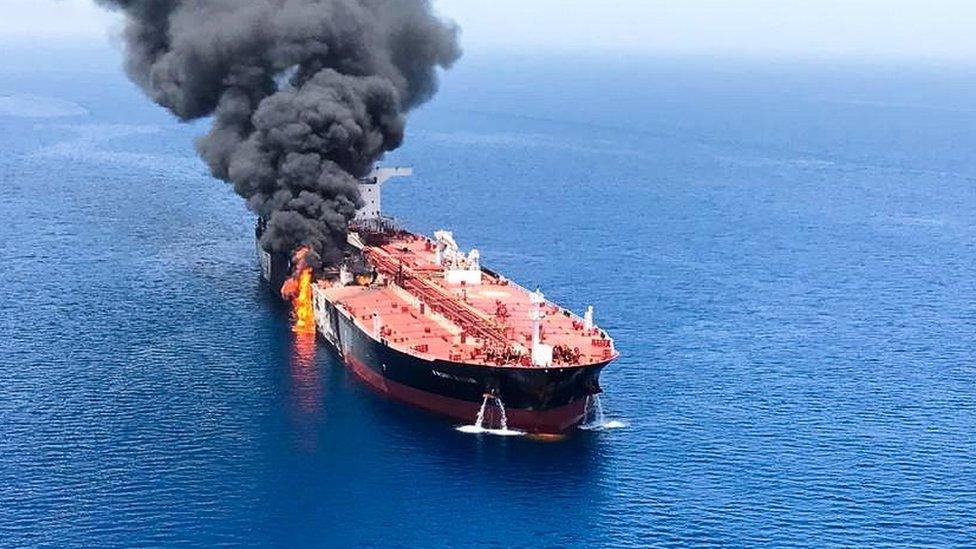
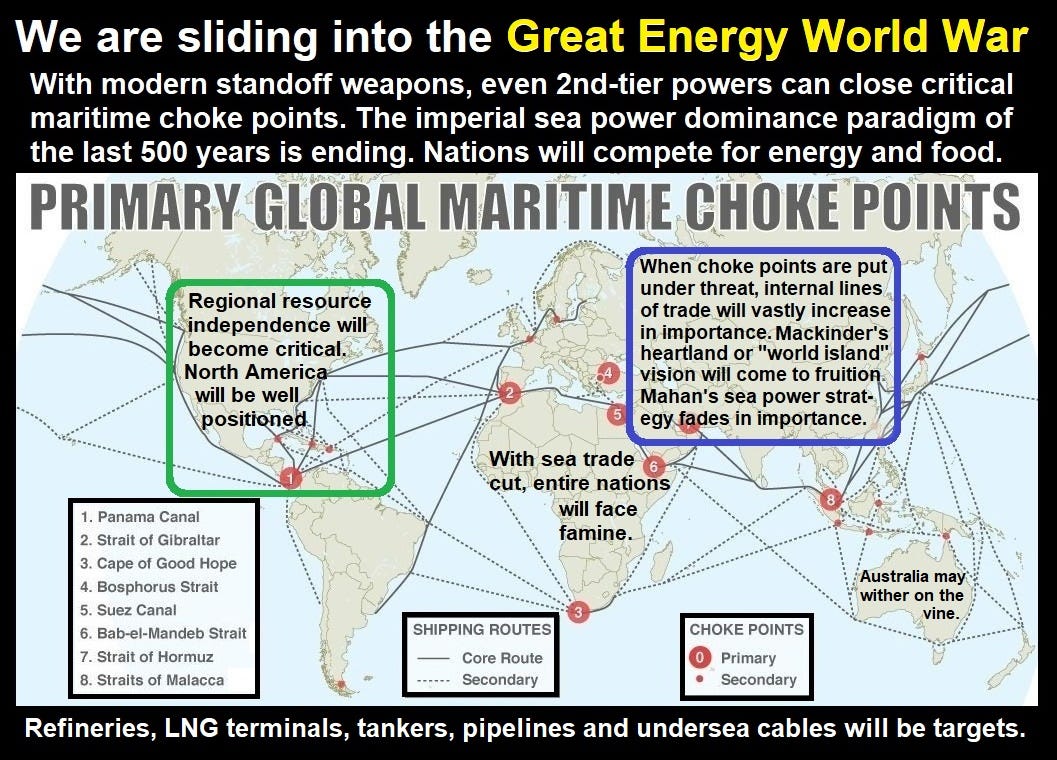
The sea power projection paradigm that allowed small European nations (and then the USA) to dominate and colonize the world is coming to an end. The world will never be the same, and the birth pains of the emerging next world order will be agonizing.
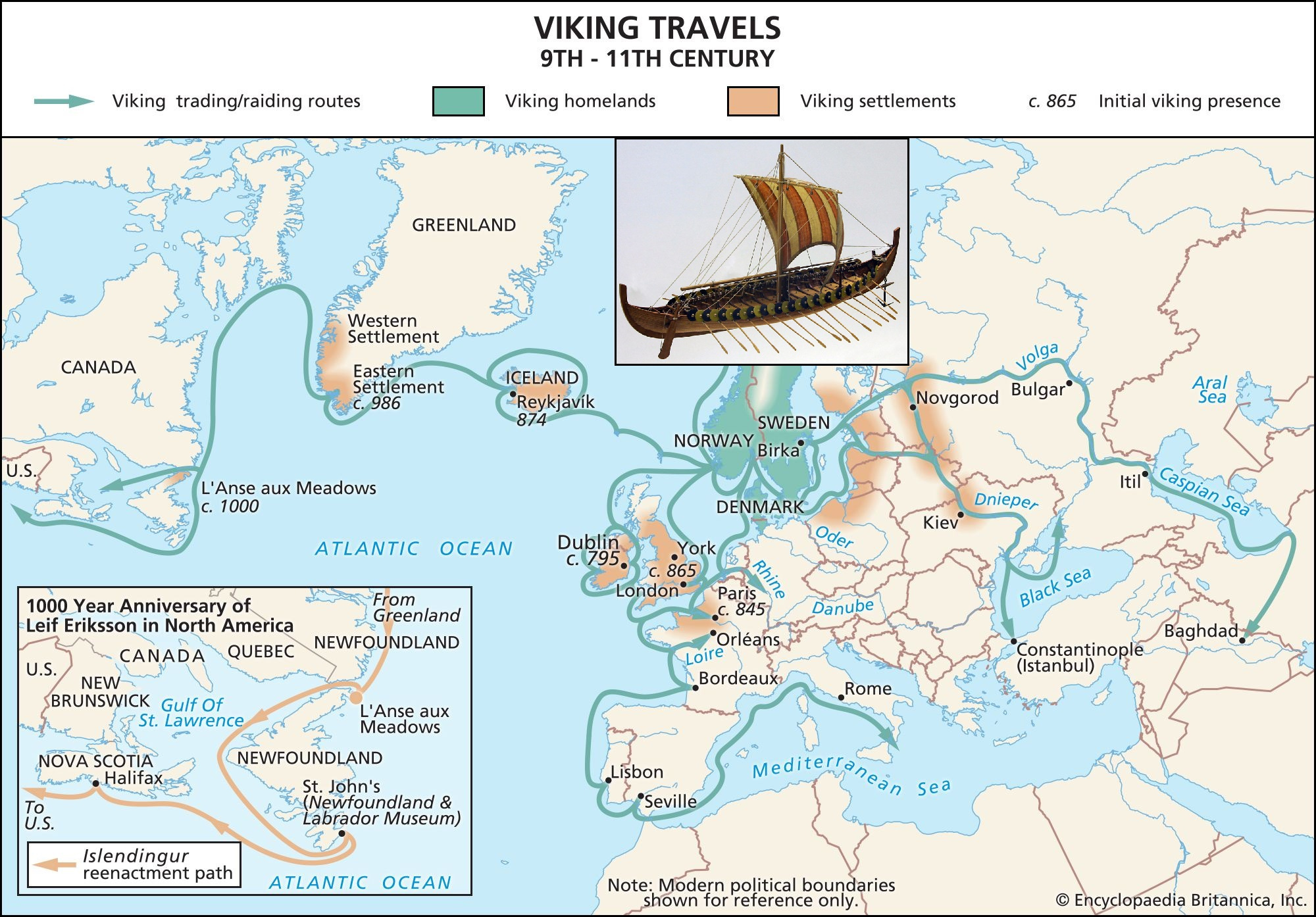
The Scandinavian Vikings did not have gunpowder or cannons, but they mastered ocean navigation, and were able to assemble massive fleets that could raid or even invade other nations with up to thousands of seafaring soldiers. This was a precursor of Europe’s model for global colonization through naval power and protected ocean trade.
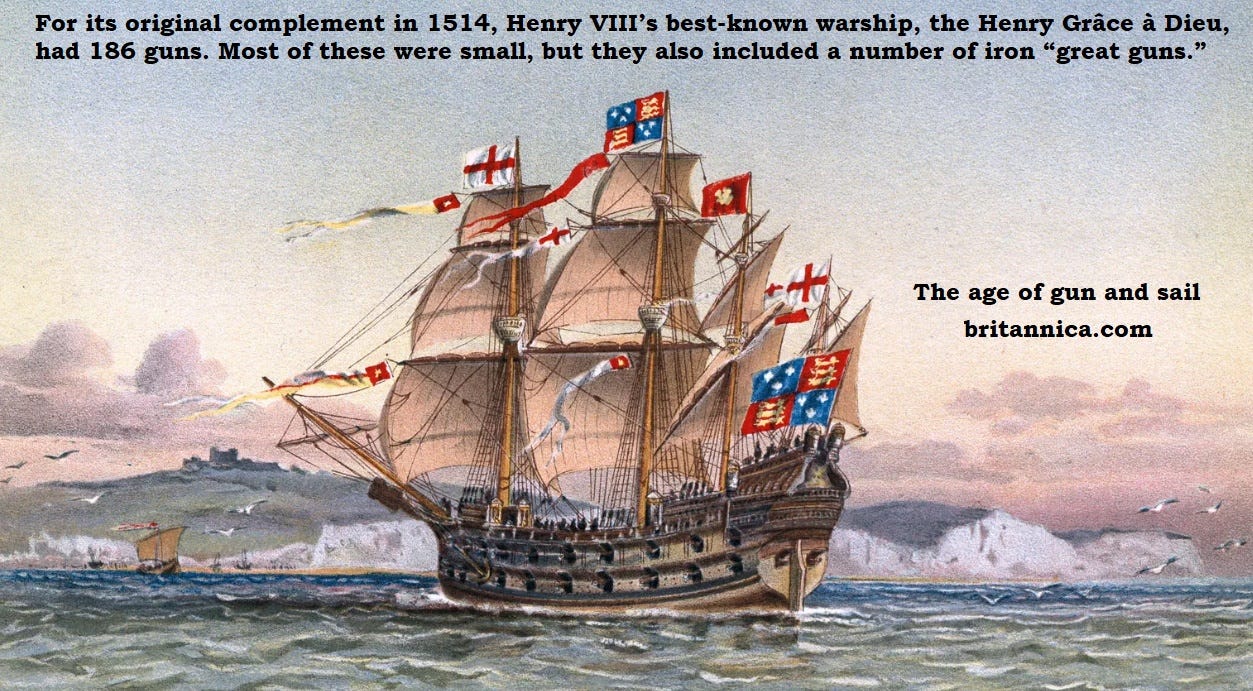
With the development of large ocean-crossing sailing ships mounted with cannons, the stage was set for the European colonization of much of the globe. Faced with overwhelming firepower, local principalities had no alternative but to submit to the demands of the emerging European sea powers.
Armed merchant ships, protected by their own nation’s warships, came to dominate much of the world between the 15th and 20th Centuries. European powers created their own colonies and established military bases within them for permanent forward area power projection.
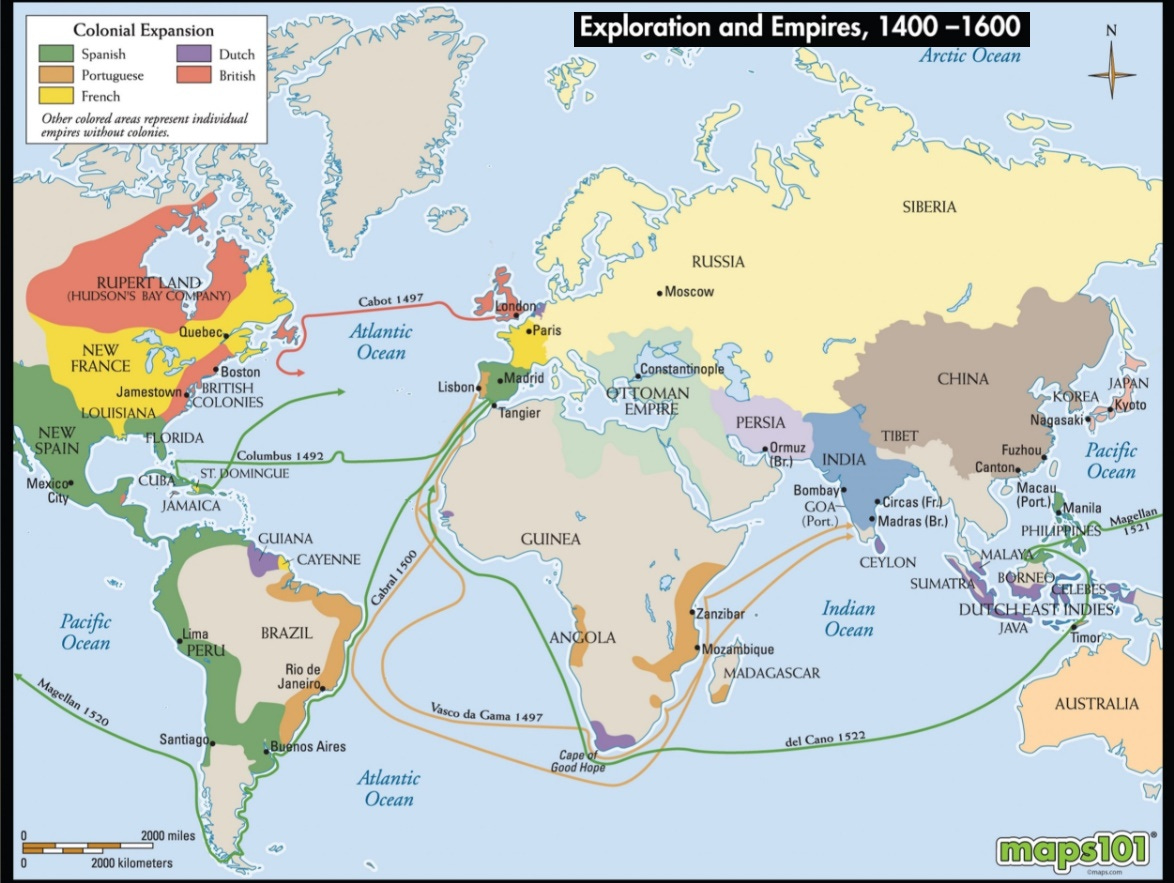
The magic formula for the European colonization of the world is not a mystery. It was based on mobile firepower, and a persistent long-range imperial vision.
European nations fought between themselves over their expansionist territorial goals, but they were rarely challenged by the inhabitants of the less technologically developed regions they dominated and colonized.
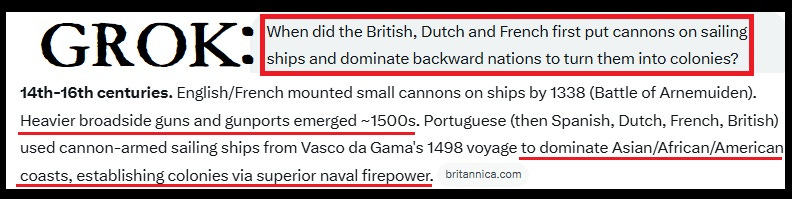
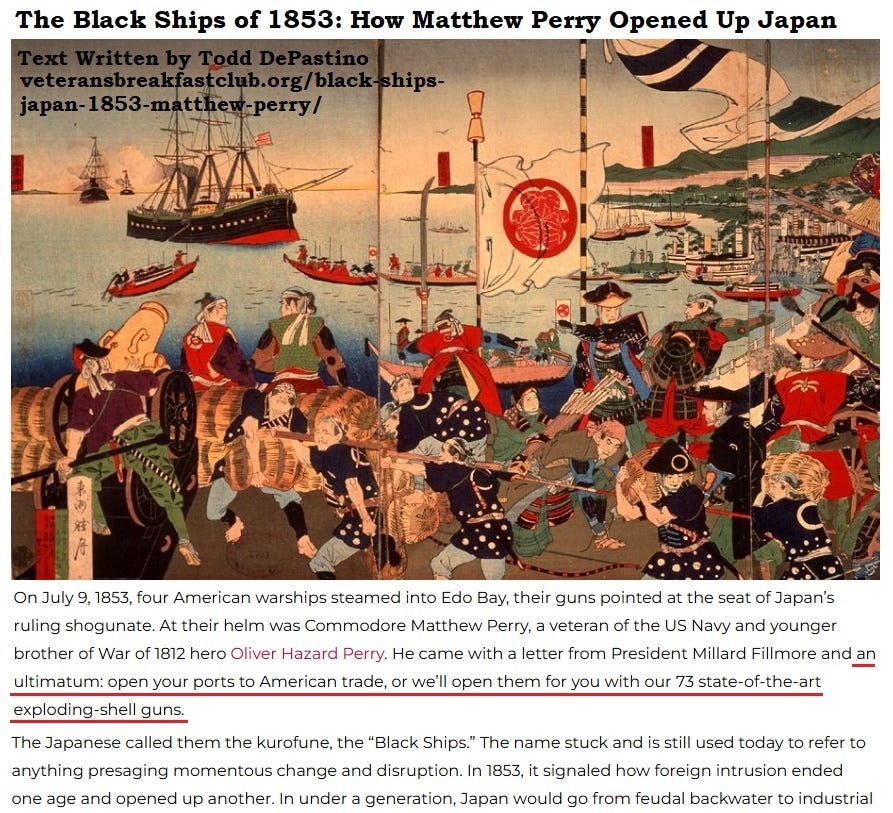
Some nations resisted colonization for centuries, but eventually even China and Japan surrendered to superior British and American sea-mobile firepower. Thus began the era of “gunboat diplomacy” and “unequal treaties” that were written and enforced at cannon point.
Just as the Vikings were able to project their power deep into Russia using rivers as their highways, the British and American navies were able to penetrate deep into China with their gunboats.
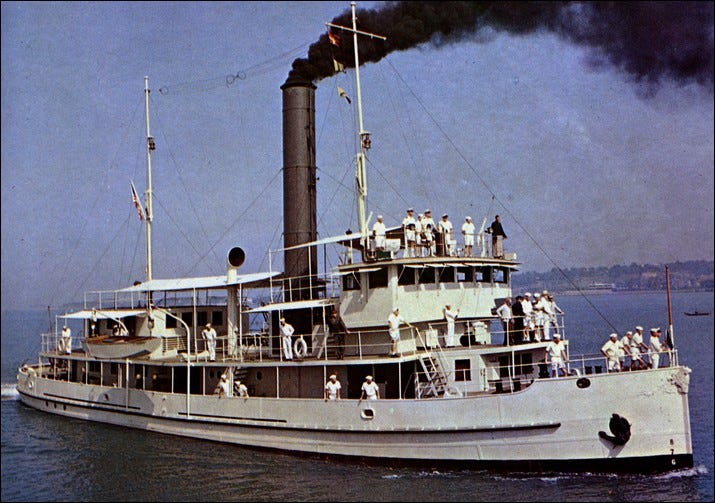
These penetrating branches of colonial domination were the first to be cut off as China began to reassert its nationalism in the first third of the 20th Century.
The 1966 film “The Sand Pebbles,” starring Steve McQueen as an American sailor on a US Navy gunboat trapped on the Yangtze River, captures this period extremely well, in my opinion.
In this clip from YouTube, the American gunboat The San Pablo attempts to breach a floating blockade of Chinese sampans joined across the river by a massive rope cable.
This period marks the retreat of European and American colonial dominance. European and American warships could still control the oceans and coasts of the world, but they could no longer penetrate deeply into colonial territory without risk.
Continuing the trend from the last US Navy gunship being driven out of the Yangtze River in 1926, the US Navy has been driven out of the Persian Gulf a century later in 2026. Iran has virtually no air force or navy left to challenge the US military, so how did this happen?
Iranian Shahed drones and ballistic missiles can now target American bases across the Persian Gulf. American sea and air power are not enough to dominate and control a major regional power like Iran.
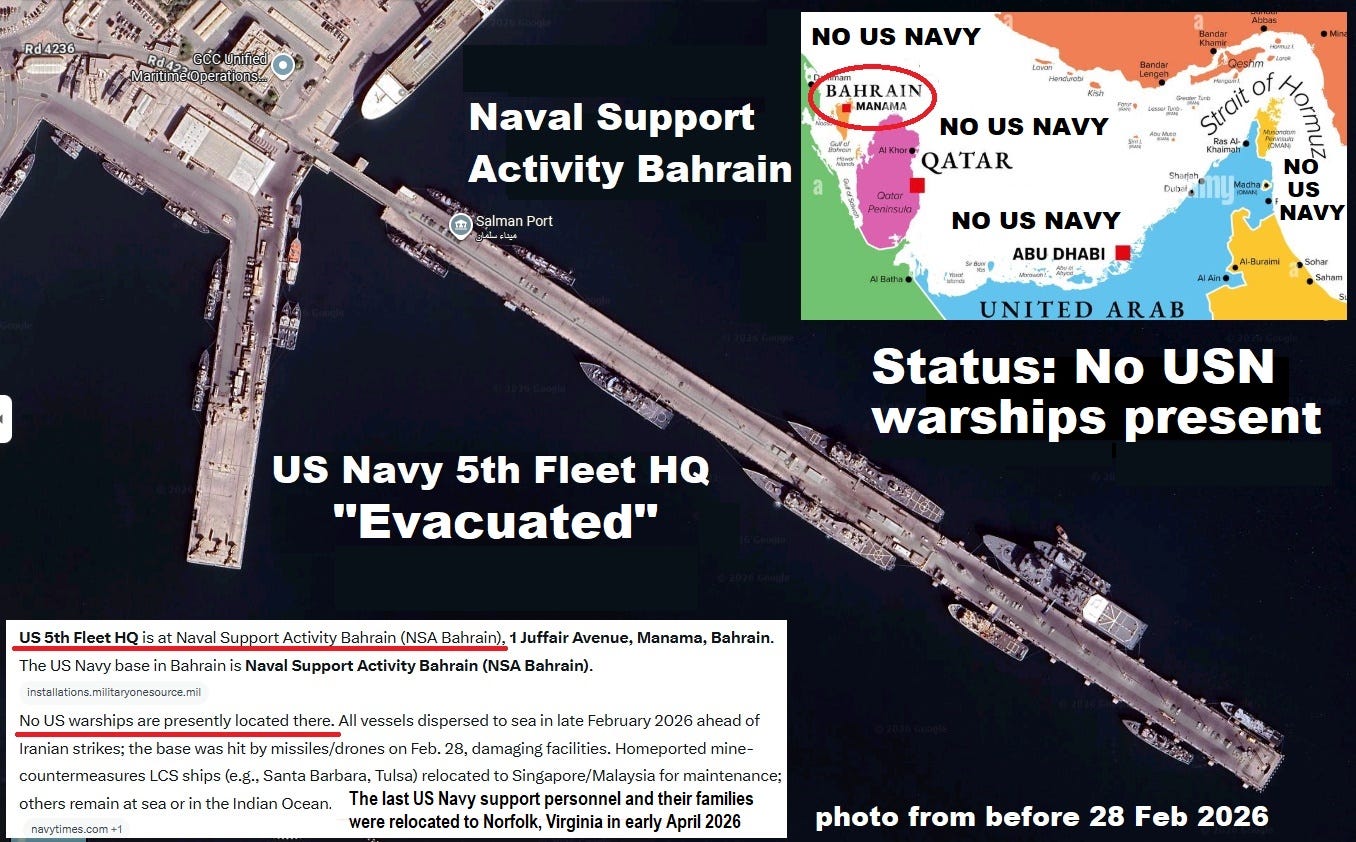
Naval Support Activity Bahrain was the home of the 5th Fleet, but it has been abandoned. The last US Navy warships exited the Persian Gulf shortly before our February 28 sneak-attacks on Iran, and they have not returned.
2023 marked the last time an American aircraft carrier (the Eisenhower) entered the Persian Gulf. Now, the best the US Navy can do is have a pair of destroyers briefly dash past the Strait of Hormuz, and right back out, during the brief safety window presented by JD Vance negotiating ceasefire terms with the Iranians in Islamabad.
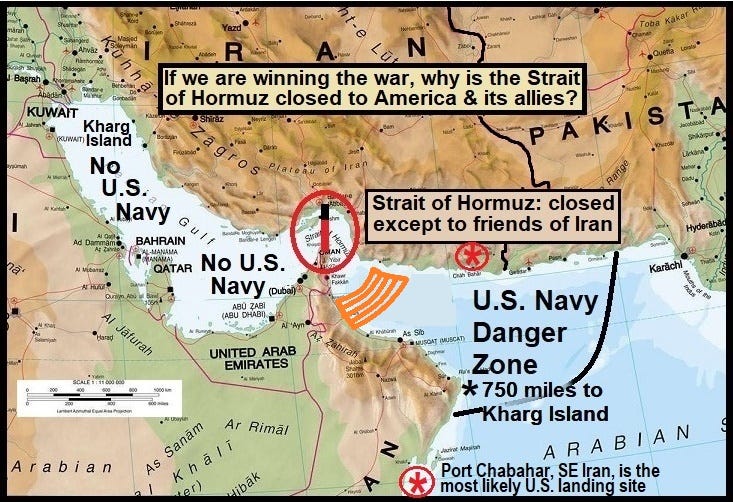
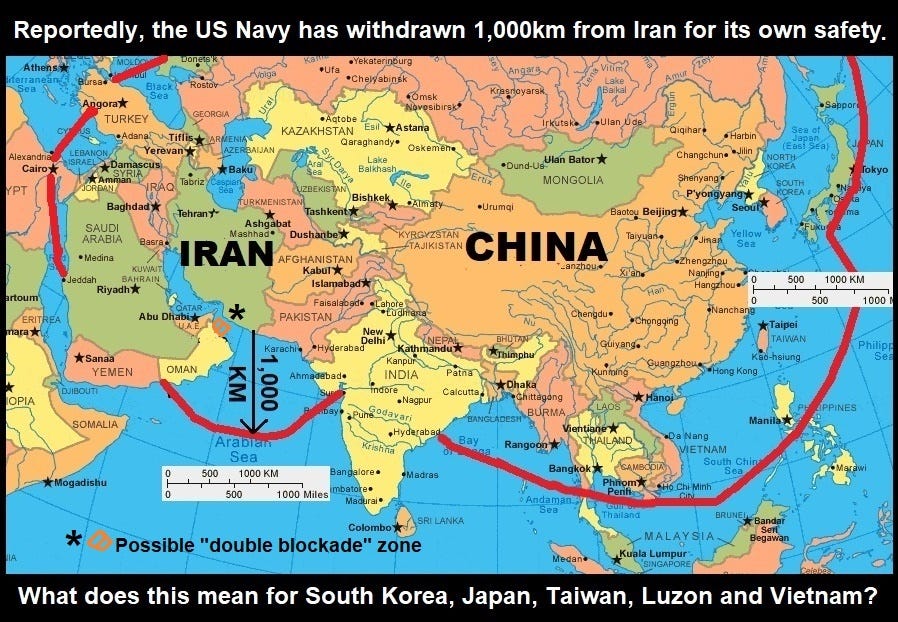
From February 28 until a few days ago, when President Trump announced the “double blockade” of the Persian Gulf, American warships have remained a reported 1,000 KM from Iranian territory, in order to stay out of effective missile range.
Now it’s being reported, with little or no geo-locational proof, that some US Navy warships have moved forward, closer to the Strait of Hormuz in the Gulf of Oman. This forward “double blockade” zone is notionally represented by the orange shaded area on the map.
The calculation must be that Iran will not fire on US warships during the 2-week ceasefire period, which expires on April 22nd. Even so, US warships are unlikely to enter Iranian territorial waters. Once the ceasefire expires, or is broken by either side in the conflict, these forward-located blockade ships will be put at immediate danger from Iranian anti-ship guided missiles.
The current standoff between the US Navy and Iran is a fascinating combination of the games of poker and “chicken.”
The USN aircraft carrier George H.W. Bush, CVN 77, recently opted to take the long way around Africa to reach the Indian Ocean to participate in Operation Epic Fury.
In my opinion, this is not only because of the risk presented by the Houthis in Yemen, but the greater danger of being struck by an Iranian ballistic missile while transiting the Suez Canal.
A slow-moving CVN in the canal would be as easy to hit with a ballistic missile as a stationary target. The necessary “lead” would be a trivial calculation. A barrage of missiles would be sent to arrive at the same time, like a “fan” of torpedoes fired by a submarine in WW2 to ensure a hit.
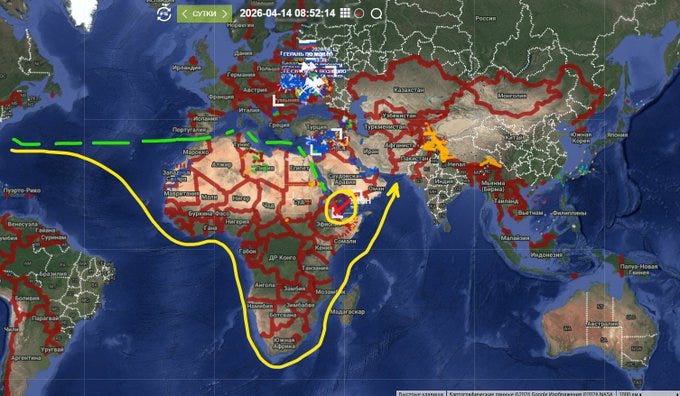
The consequences of an American nuclear aircraft carrier possibly being destroyed, and blocking the Suez Canal for at least months, are incalculable.
The Gerald Ford, CVN 78, transited the Suez Canal on March 5th. Since then, American risk calculations must have changed.
The red 1,000KM arc represents the demonstrated accurate range of Iranian ballistic missiles. Iran also has guided cruise missiles with a similar range. (ASGMs when they are fired across the water.) The US Navy appears to believe that while their warships are moving at speed, at a sufficient distance, they can’t be hit by a ballistic missile, but an aircraft carrier in the Suez Canal would be another matter.
The point of all the above is show that even the world’s most powerful navy must take into account the standoff weapons of a 2nd-tier regional power like Iran.
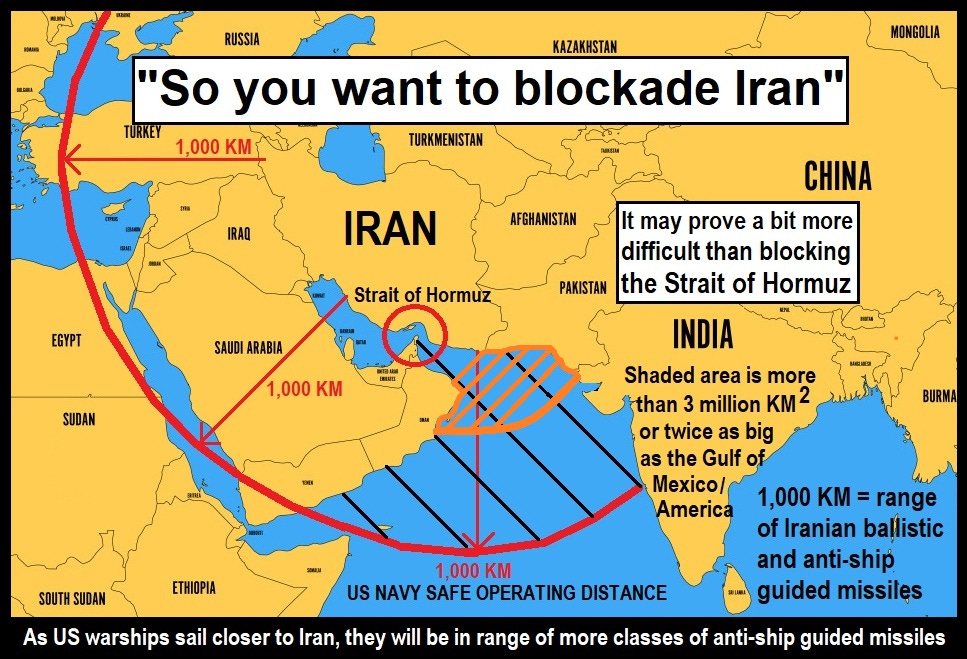
The rest of the world, and especially China and Russia, cannot have failed to notice that the US Navy is reluctant to operate nearer than 1,000KM from an enemy armed with effective ballistic missiles and ASGMs during a shooting war.
(The current US Navy secondary blockade reported in the Gulf of Oman is taking place during a 2-week ceasefire period.)
Our Asian allies in Japan and Korea have watched with alarm as we removed Patriot and THAD missile batteries located in those countries for their protection from China, to protect Israel instead.
If we can’t protect our Persian Gulf allies from Iranian land-based missiles and drones, what does this mean for Asia? Does anyone seriously believe that the US Navy can come to the rescue of Taiwan, South Korea or Japan from an attack by China, if it must stay 1,000 KM from 2nd-tier Iran? (Outside of the current ceasefire period, and secondary blockade.)
These countries and dozens of others from Ireland to Australia depend heavily on Persian Gulf oil and gas to sustain their economies and standards of living. Or even their ability to feed themselves. The war with Iran that began on February 28 threatens to upend longstanding alliances from Europe to Asia.
The longer this war continues, the greater the damage that will be done to the world economy. It could result in a global great depression that could outlast the current conflict, and send entire nations into famine and starvation.
And all resulting from an aggressive “war of choice,” that was begun with sneak-attack assassination missile strikes during ongoing negotiations. Strikes intended to “decapitate” the Iranian regime and lead to a popular uprising in three or four days.
History will record February 28, 2026, as the date of the worst and most consequential blunder in modern military and economic history. Another “date that will live in infamy.” It’s hard to find an equal during any historical period at all.
And this war of choice puts the final nail in the coffin of untrammeled Western power projection through sea power. Now, and in the future, sea lanes of communication can be cut by any 2nd or 3rd-tier power armed with standoff weapons that is occupying territory along a critical sea-lane choke point.
The proliferation of these standoff weapons seem to have settled the theoretical debate between Alfred Thayer Mahan and Halford Mackinder. Donald Trump has managed to upend a critical and longstanding American diplomatic imperative: prevent Russia and China from ever forming a lasting alliance.
The old “great game” meant using diplomacy and sea power to form and break temporary alliances between the West and nations on the periphery of Eurasia, with the goal of preventing the formation of a Eurasian superpower. Now we have managed to drive Russia, China and Iran into a coalition, which may be the nucleus of Mackinder’s “World Island.”
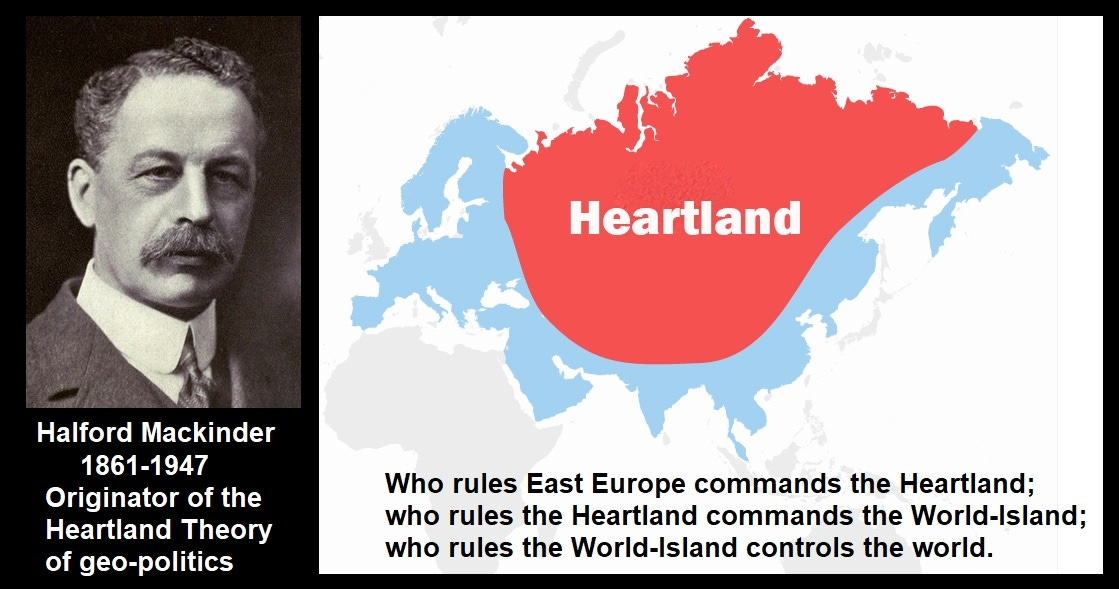
As sea lanes of trade are increasingly put at risk, internal land-based lines of communication will grow in importance, and Eurasia may come to dominate the globe, as Mackinder foresaw while the Tsars still ruled Russia.
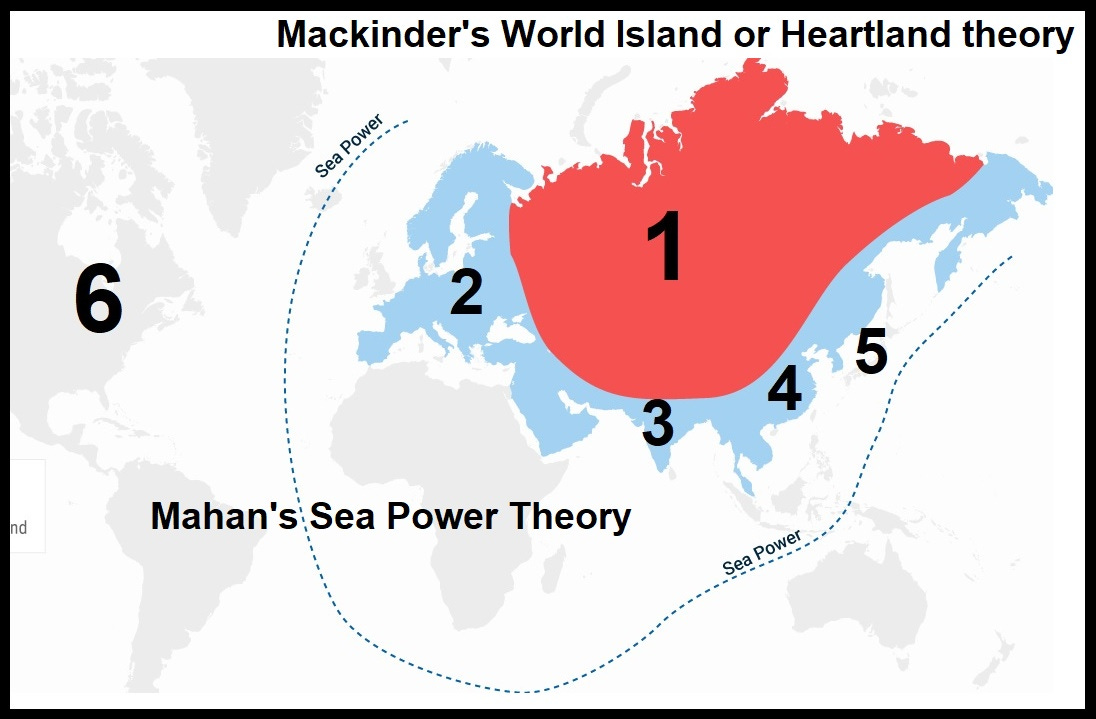
North America still has many advantages, but it’s anybody’s guess how the “next world order” will finally shake out.
In any case, it’s an almost certain bet that the world is in for a period of upheaval at least on the level of the World Wars and Great Depression of the 20th century.
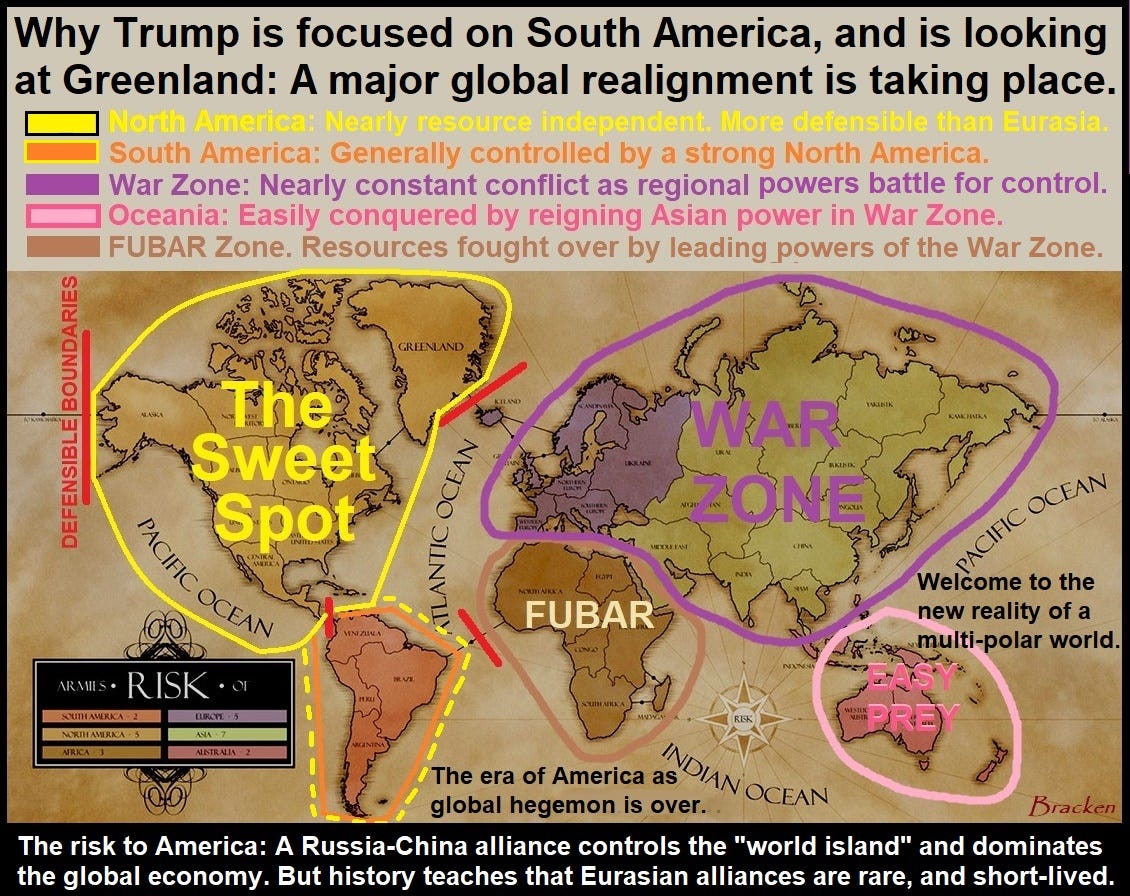
With the end of the 500-year-old Western sea power projection model, we are entering a period where every nation will have to fend for itself. With shipping supply chains collapsing, entire nations will run short of necessary quantities of petroleum products, LNG, fertilizer, and imported food. Entire nations may starve. Local and regional warlords may emerge who will threaten their neighbors with invasion.
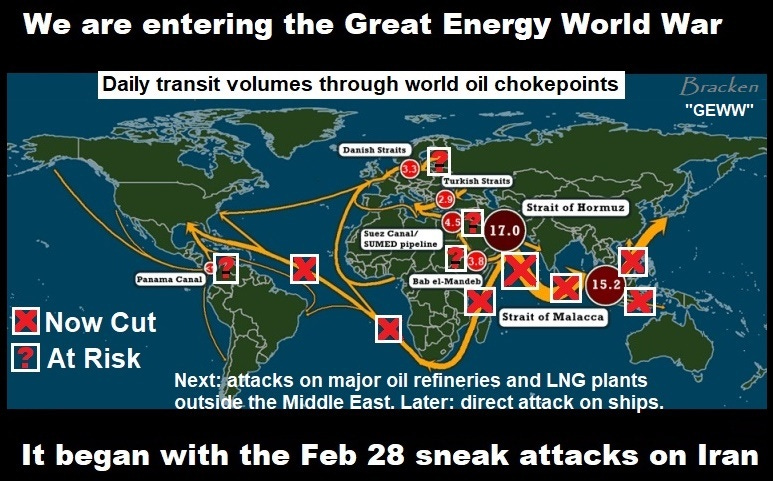
In other words, the status quo ante of Pax Americana is dying, and all bets are off.
The American sabotage of the Russia-to-Germany Nord Stream Pipeline was just an early and notable shot fired in the emerging Great Energy World War. It certainly won’t be the last, as the world witnesses a spate of mysteriously coincidental oil refinery and fertilizer plant fires, and undersea cable mishaps.
Many believe that after this period of chaos, a new globalist tyranny will be established, a digital control grid as discussed by Michael Yon, Masako Ganaha and Catherine Austin Fitts in this excellent video.
But who can really say what will emerge as the next world order? The globe might fragment into competing regions, nations, or even parts of former nations. We could even be entering a new Dark Age, as our current “just in time” global shipping supply chain models are broken, perhaps never to be reestablished in our lifetimes.
With broken shipping supply chains can come failed harvests, collapsed economies, revolutions, pandemics, famines and wars. The effective “carrying capacity” of Planet Earth could be reduced by billions. We could be facing a global cataclysm on the order of the Late Bronze Age Collapse. Your guess is as good as mine.
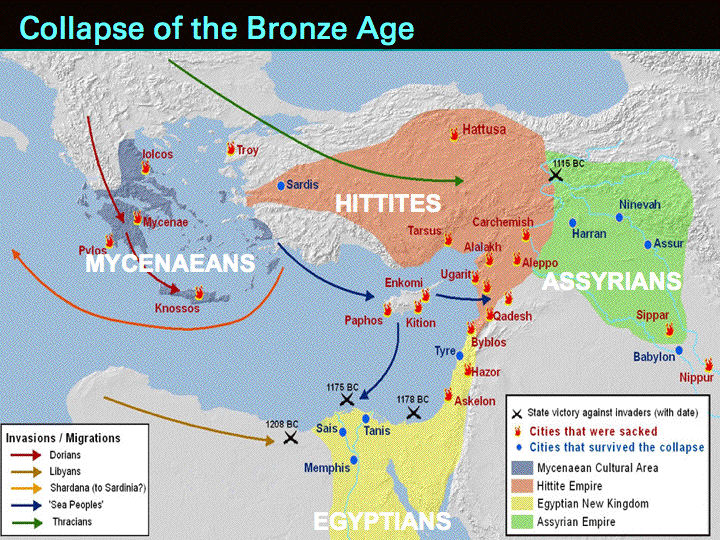
Either way, whether we will face a digital control grid, a new Dark Age, or some other unforeseen outcome, our world will never be the same. And the changes will have been driven by the development of inexpensive but effective standoff weapons that are neutralizing the naval sea power dominance model that Europe and later the USA have wielded for the last 500 years.
https://steelcutter.substack.com/p/the-great-energy-world-war