
The ‘Intelligence’ Branch Answers to No One
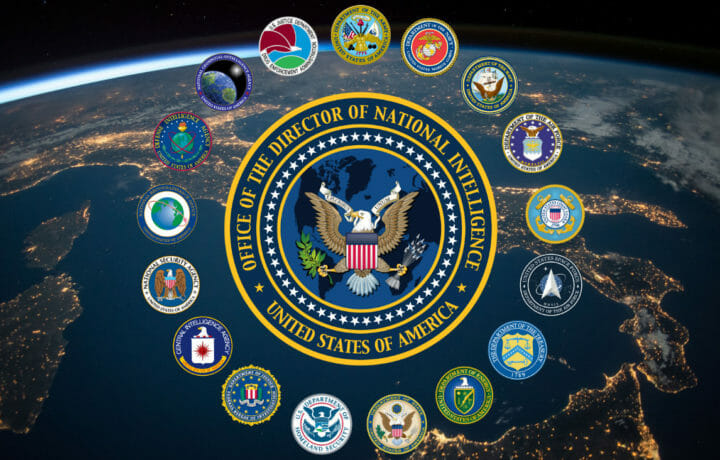
Can self-government exist alongside centralized intelligence agencies? Espionage agencies seek secrets and keep secrets. To the extent that they inform the public what they know, they decide which secrets can be disclosed. Now this may be the only way for a clandestine service to operate, but it certainly does not equip the public to make fully-informed decisions. When choosing which policies or representatives to support, voters know nothing of substance within the classified world.
Western nations that call themselves “democracies” try to obfuscate this issue by pretending two things: (1) that intelligence agencies work, at all times, for the public good and (2) that a small body of elected officials effectively supervise the work of government spies. These are comforting delusions.
In regard to the first delusion, a citizen need merely ask, “How do spies determine the public good?” Do spy agencies conduct operations that the general public would likely reject? Do the worldviews of intelligence officers affect how they pursue strategic objectives? If the answers to those questions are “yes,” then espionage agencies pursue what they perceive to be in the public’s best interests and not necessarily what the public would choose for itself. As much as secretive agencies may believe that they are in a better position to make those judgments, they are still substituting their own judgments for the public’s.
In regard to the second delusion, it is unreasonable to assume that a small number of elected representatives can exercise effective oversight of large, secretive agencies. When the activities of government agencies are hidden behind veils of classifications and compartmentalizations, elected officials often struggle to know where to look or what questions to ask. When black budgets give spy agencies authority to spend funds at their discretion, lawmakers’ “power of the purse” largely disappears. Effectively, intelligence services say, “Trust us,” and if a small number of lawmakers say, “We do,” then the public is expected to agree.
Because of the sensitive nature of their work, intelligence agencies are routinely portrayed in both the news media and pop culture as professional organizations filled with serious people. They are accorded tremendous respect because their mission directives involve life-and-death issues of national security. When covert agencies make their conclusions public, most of the public tends to accept those conclusions as true.
There’s something strange about that, isn’t there? The public understands that centralized intelligence agencies trade in secrets and lies. Citizens expect clandestine services to spread disinformation and propaganda if doing so serves their interests. However, when the very institutions that construct alternative realities manufactured from endless lies tell the public that something is true, the public is expected to believe them.
The number of lies that the CIA has told the public since its formation in 1947 is vast. In recent years, though, two stand out: (1) Former CIA director John Brennan conspired with other Intelligence Community officials to frame President Trump as a Russian spy. (2) Fifty-one prominent Intelligence officials worked to discredit true reporting with regards to Hunter Biden’s criminally damning “laptop from Hell” by insinuating that the contents of the laptop were part of a Russian disinformation operation. In the former instance, members of the Intelligence Community actively led an effort to sabotage a legitimately elected president and induce his resignation or removal from office. In the latter instance, members of the Intelligence Community actively undermined a presidential election by helping to censor truth and spread lies.
Both of these egregious offenses occurred simultaneously to the Intelligence Community’s widespread efforts to spy on elected officials, political candidates, and American voters with total disregard for the Fourth Amendment’s requirements for particularized warrants issued after first establishing probable cause that a crime has been committed. America’s spy agencies unlawfully targeted Americans, influenced elections, and arguably engaged in an attempted coup d’état against President Trump and his administration.
These are significant issues that should command Americans’ attention. Instead, Democrat politicians and news organizations are busy encouraging insubordination among military servicemembers and claiming that attacks on narcoterrorists amount to “war crimes.” Rather than recognizing that Intelligence Community lies have recently been weaponized to spy on Americans and undermine elections, complicit officials and media institutions are trying to distract Americans with new “narratives” meant to sabotage the Trump administration once again. The Intelligence Community’s ongoing efforts to subvert the presidency constitute a national emergency.
Institutional capture exists when a small body of actors pursue their own personal interests instead of advancing the institution’s intended purpose. This deleterious phenomenon occurs regularly in bureaucracies. When government regulators in the public health sector, for instance, advance the interests of pharmaceutical and food production companies in exchange for promises of future employment, external companies are said to have “captured” the very regulatory bodies meant to investigate them and safeguard the public. When foreign governments donate large sums of money to the family foundations of U.S. lawmakers, corrupt members of the House and Senate become de facto employees of foreign nations.
The only way to combat such forms of corruption is for outside public interest groups and vigilant citizens to keep an eye on the flow of money between external groups and government actors. Although it often takes a great deal of time to recognize the presence of bad government actors, mandatory disclosure rules provide valuable evidence that parts of the government no longer work for the people.
How are Americans supposed to police similar institutional capture when it concerns Intelligence agencies? The names of workers are kept secret. Budgets are kept secret. Mission objectives are kept secret. Ongoing relationships with private companies and foreign nations are kept secret. Because so much of the espionage world operates under a “need to know” umbrella, it is nearly impossible for Americans to separate the bad actors from the good. The “Intelligence Branch” of the federal government — both all-powerful and completely absent from the Constitution’s explicit design — operates as if it were above the law because it largely answers to no one.
However one might value the work of our spy agencies, surely their capacity to subvert the constitutional order whenever they see fit undermines any traditional notion of self-government. The fact that they undermined both the 2016 and 2020 elections without receiving so much as a slap on the wrist reveals who holds the real power in this country.
While Democrats call President Trump a “tyrant,” real tyranny cloaks itself in Top Secret classifications and national security directives. When spies spread lies to manipulate the American people and cover up evidence of their own crimes, they don’t work as “public servants.” They are “masters” over Intelligence fiefdoms. There’s nothing “democratic” about that.
https://www.americanthinker.com/articles/2025/12/the_intelligence_branch_answers_to_no_one.html