
The Invention of Windrush
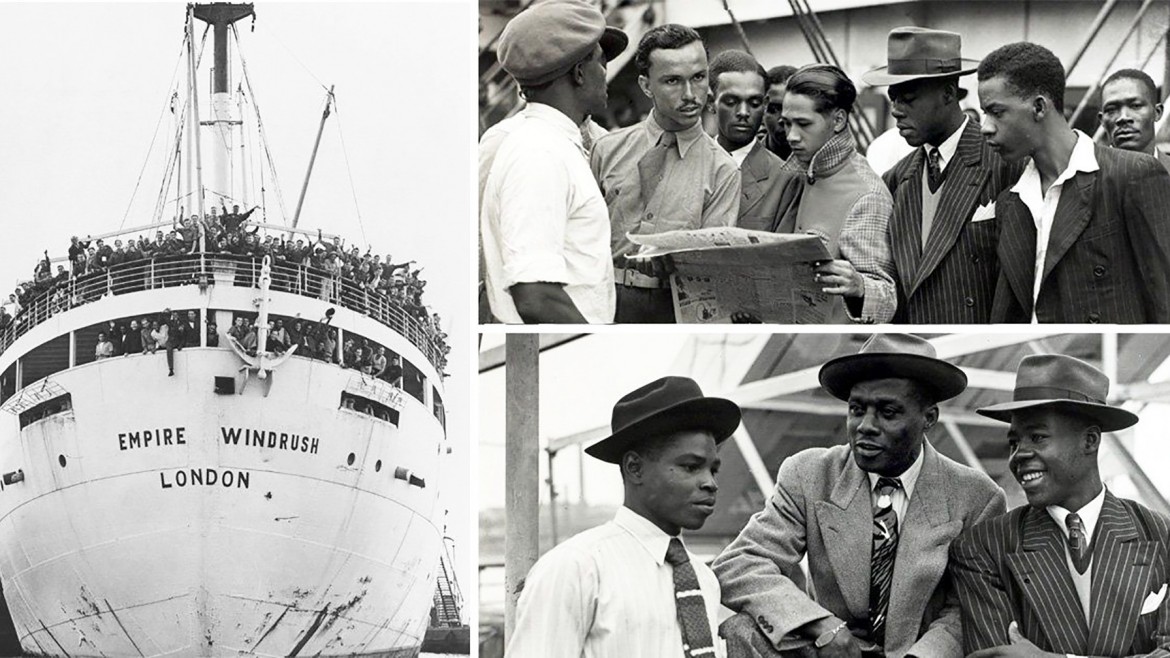
In June 1948 the HMT Empire Windrush arrived at Tilbury carrying over 800 Caribbean passengers. Today this moment is often hailed beginning of modern multicultural Britain, the founding “origin story” of a tolerant, diverse cosmopolitan nation. Yet a deep dive into the archives shows a very different picture. The British Nationality Act of 1948 (passed just weeks after Windrush set sail) did create a universal status (“Citizen of the UK and Colonies”) that legally allowed colonial subjects to live in Britain. But as one colonial minister emphasised, this was meant to reaffirm an older imperial principle, that a subject could declare Civis Britannicus sum (“I am a British citizen”) regardless of colour and was not expected to trigger mass non-white immigration.1 In fact, Attlee’s government and senior civil servants were privately anxious about non-white migration, seeing Windrush as an “incursion” to be managed. Contemporary cabinet papers and correspondence reveal that Windrush was essentially an accident of imperial law and circumstance.
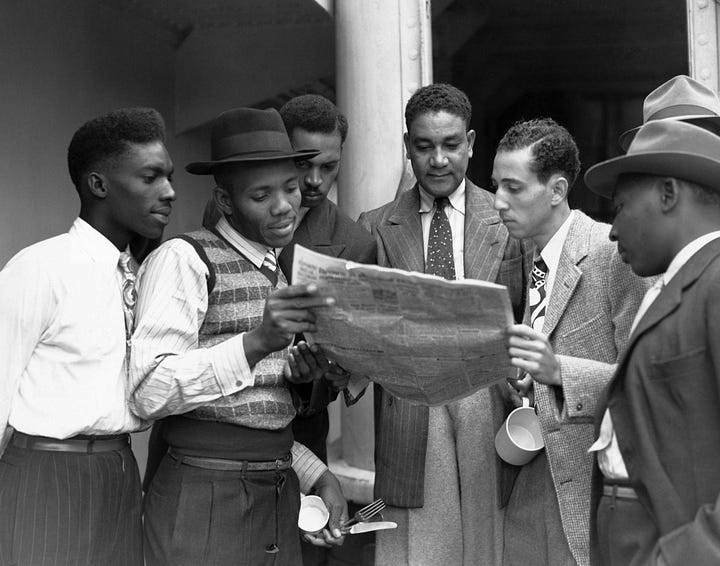
Imperial Citizenship and the 1948 Act
The post-war British state’s conception of citizenship was still shaped by empire. In theory, as Lord Palmerston had put it, every British subject “in whatever land he may be” could count on England’s protection.2 The 1948 British Nationality Act (BNA) codified this idea by creating two categories: Citizens of the UK & Colonies (CUKC) for the “non white” Commonwealth and Citizens of Independent Commonwealth Countries (CICC) for the white Dominions. As a Home Office historian notes, the Act was largely a reaction to Canada’s new Citizenship Act and was intended to preserve loyalty to the Crown and the Commonwealth.3 In practice, BNA 1948 did not fundamentally alter migration rules: colonial subjects remained British subjects with the right to enter the UK, as they had before. Critics at the time even pointed out that this laid the groundwork for subjects of a newly independent non-white India, Pakistan and African colonies to become CUKCs, but that eventuality was not central to the legislators’ intent.4 As David Olusoga and others have observed, no one in 1948 “imagined that black and brown people from Asia, Africa and the West Indies would use their rights under this act to come and settle in Britain.” The law was conceived primarily for white Commonwealth citizens like the populations of Canada and Australia, with the assumption that the British Empire’s non-white subjects, without the resources or need would not make the journey.5 In short, the legal framework of imperial citizenship was nominally open, but the political expectation was that few colonials would exercise the right to relocate.
Attlee’s Government
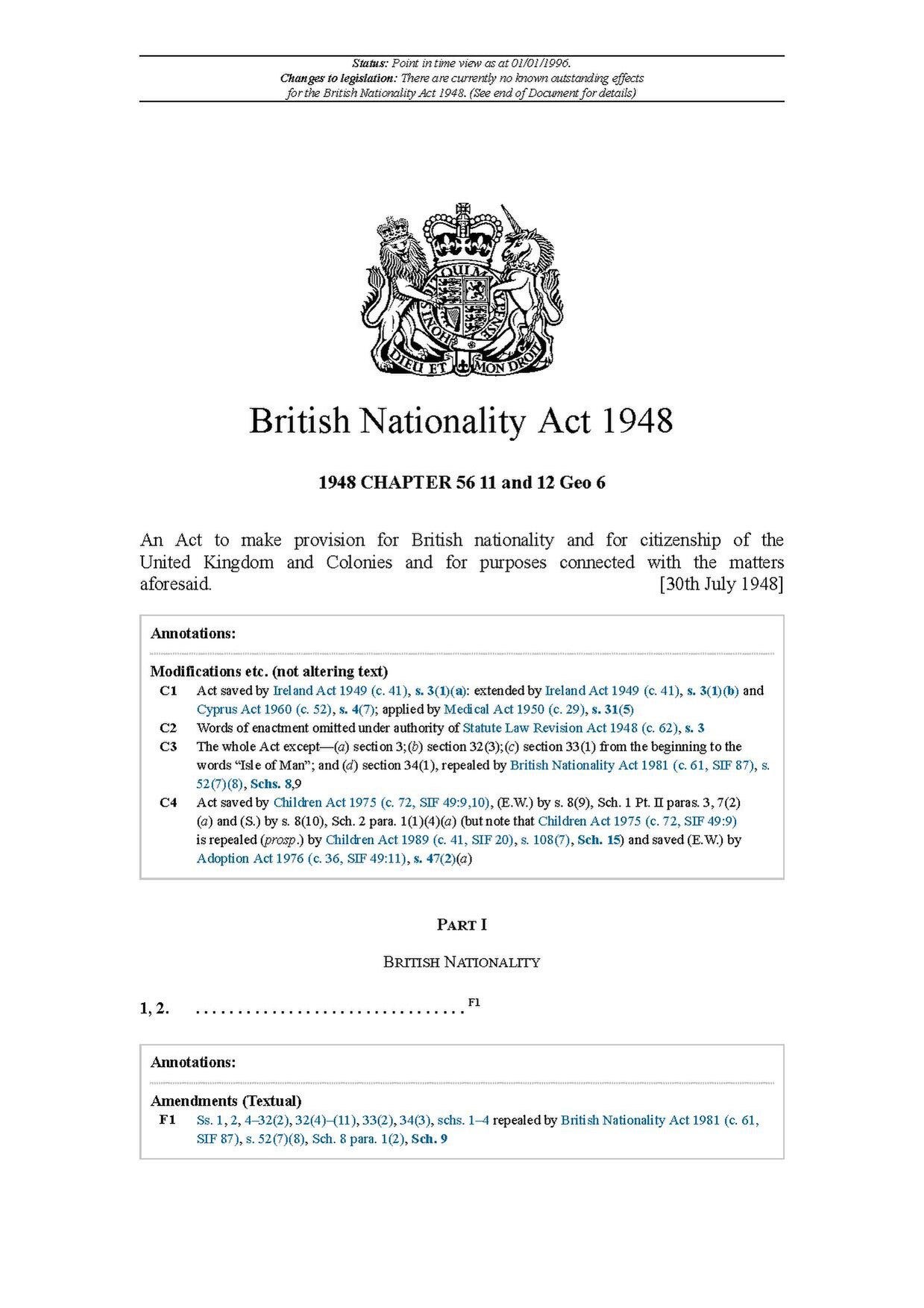
Contrary to the mythology of a knowingly welcoming government, Attlee’s cabinet papers show unease and reluctance toward the arrival of Caribbean migrants. Even before the Windrush landed, ministers debated drastic measures. As one contemporary account records, Attlee himself was “frantically scheming” to prevent the ship from docking, even considering diverting the vessel to British East Africa and putting its passengers to work on the groundnuts scheme.67 A letter to The Guardian in 2019 notes that Attlee called the Windrush arrival an “incursion” of undesired settlers. On 22 June 1948, just as the Windrush was berthed, eleven Labour MPs sent Attlee a private letter proposing new controls on “coloured” immigration.8 Their complaint starkly read: “[Britain has been] blessed by the absence of a racial colour problem… An influx of coloured people domiciled here is likely to impair the harmony, strength and cohesion of our people”.9 Such language, aimed at the prime minister, reveals the anxiety at the heart of government circles.
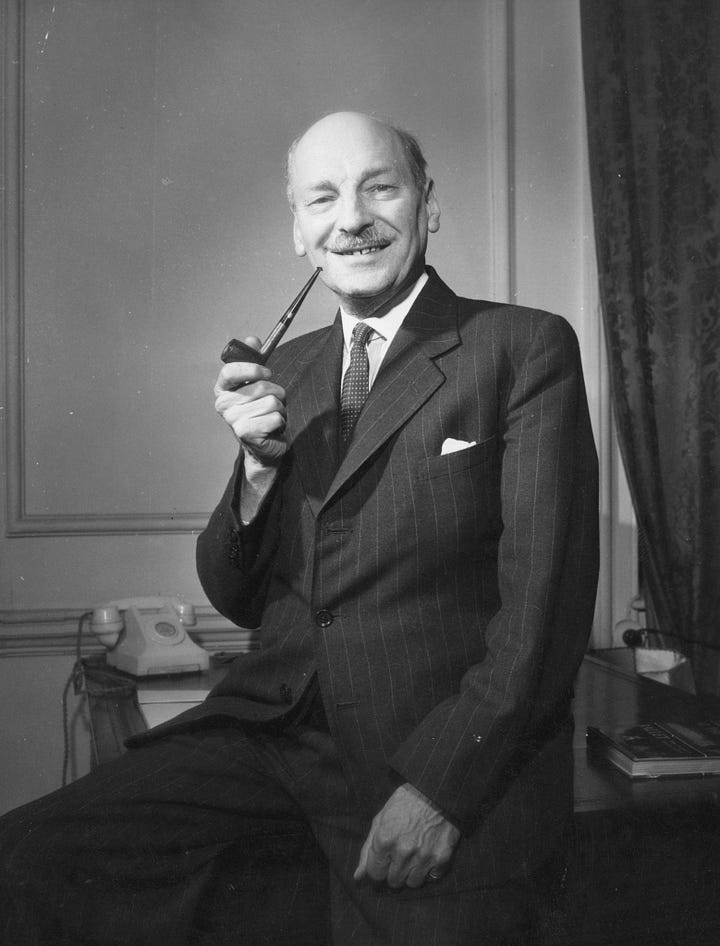
Within days of arrival, senior ministers quietly sought to reverse or limit what had happened. Home Secretary James Chuter-Ede later told MPs that no further black migration was anticipated, and Labour’s Minister of Labour George Isaacs bluntly stated, “I hope no encouragement is given to others to follow [the Windrush passengers’] example”.10 Even bureaucrats in Jamaica noted the problem: a British official fretted that hundreds of ticketed passengers (majority unskilled and penniless) had booked for England, despite warnings about scarce jobs. In London, a cross-Whitehall campaign was launched to discourage Caribbean migration. The Colonial Office ran a publicity offensive warning prospective emigrants of Britain’s housing and employment difficulties; the Foreign Office struck migration-limiting agreements with non-white Dominions; the Home Office instructed immigration officers to refuse entry to anyone without clear British subject credentials; and the cost of a one-way ticket was more than doubled (from £28 to £75).11 In short, the British government, while Legally bound to admit these “citizens of the UK and Colonies” made no secret of its desire to avoid a large new wave of colonial migrants.
The Labour Shortage Myth
Modern retellings often invoke a postwar labour shortage as the rationale for Windrush and subsequent Commonwealth migration. However, contemporaneous documents give a very different picture. In 1946 the Attlee government did indeed estimate a labour deficit, on the order of 1.3 million workers but its solution was entirely European. Immediately after WWII Britain established a Foreign Labour Committee to fill gaps in reconstruction, and this body focused on recruiting from Europe, not the colonies.12 By 1950 some 345,000 Europeans (refugees and displaced persons from Baltic, Italian, Yugoslav etc. schemes) had been settled in British factories and farms.13 Home Secretary Chuter-Ede and Royal Commissions explicitly preferred white European workers as more “compatible” with British society. In April 1947 the Ministry of Labour had recruitment officers all over Europe, and it even created a special “European Voluntary Worker” status to expedite their arrival. By contrast, there was no systematic effort to recruit in the British Caribbean. Indeed, as one recent Home Office report flatly states, “Contrary to popular assumption… labour was not sought in any systematic way from British colonies” instead “European workers were brought in to rebuild Britain after 1945”.14
That official account vindicates what private correspondence hinted at: colonial authorities in Jamaica were warning would-be migrants that jobs in Britain were scarce. Attlee’s own economic planning focused on the white Dominions, not on importing black Commonwealth subjects. The idea that Windrush was a government effort to alleviate labour shortages is an entirely retrospective myth. In reality, the Windrush migrants came of their own accord, responding to the collapse in international travel costs. When unexpectedly faced with Windrush, ministers reacted with measures to deter “further black migration,” not with schemes to maximise it.15
Inventing the Myth: Windrush in National Memory
How, then, did Windrush attain the status of a proud national genesis myth? Over the ensuing decades the episode was reimagined and commemorated in ways that the original participants surely did not anticipate. As historian Simon Peplow notes, “the arrival of the Empire Windrush in 1948 has been cemented as a mythical central symbol for immigration in histories of modern Britain”.16 Newspaper narratives and politics in the 21st century cast the Windrush as the symbolic genesis of multicultural Britain. For example, literature and media (like Andrea Levy’s Small Island, 2004) linked the founding of a “shared history” to 1948, treating the Windrush landing as the first wave of a mass migration that made Britain what it is today.17 Over time this narrative was bolstered by public ceremonies: 50th- and 60th-anniversary events, the 1998 renaming of Brixton’s Windrush Square, and in 2018 the formal creation of a national Windrush Day (22 June) to “pay tribute” to the generation. Politicians and curriculum materials alike have repeated the line that Windrush marked the inception of modern Britain’s diversity.18
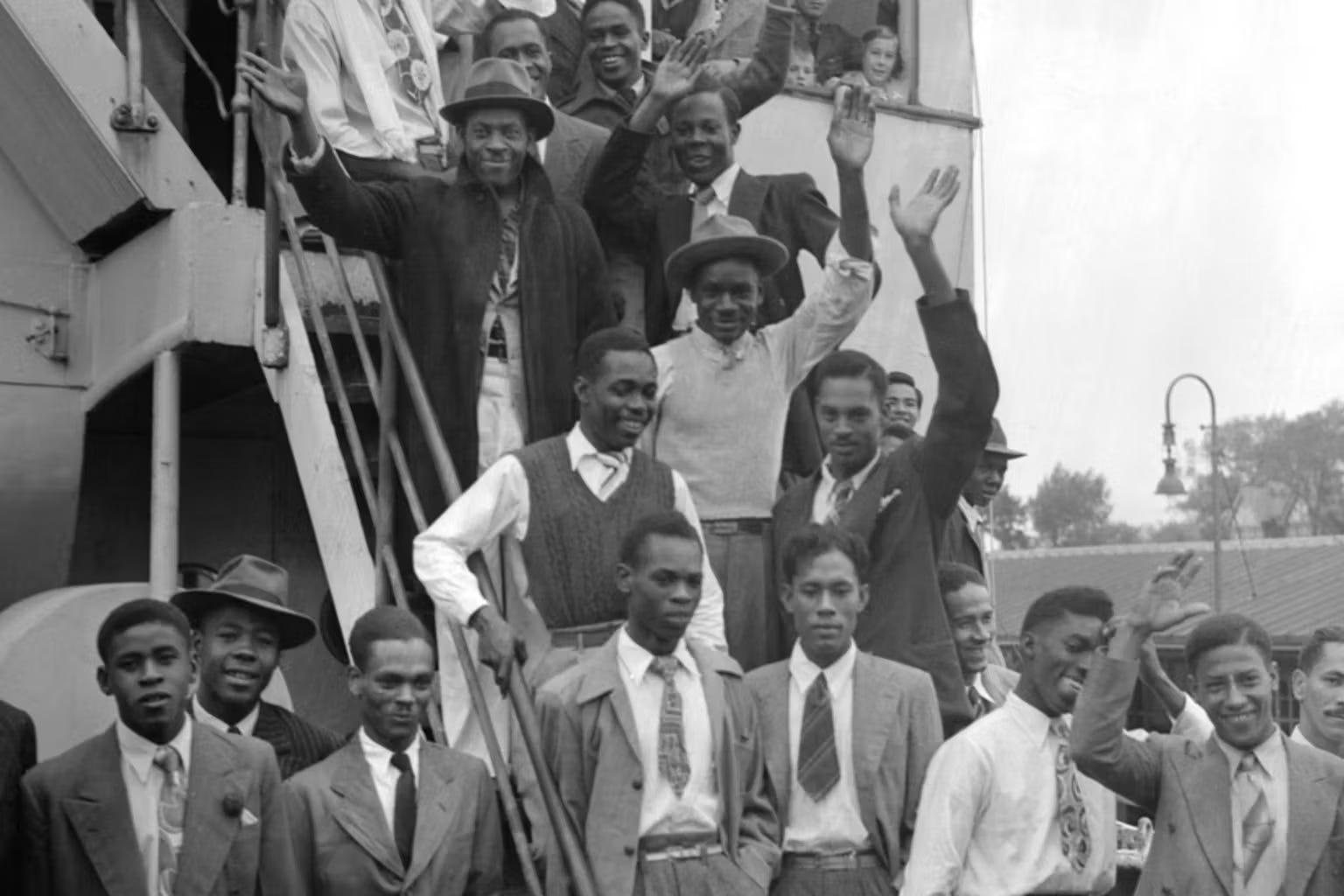
This retrospective framing treats the Windrush episode as a foundational myth, an origin story, and invoked to legitimise contemporary values of tolerance and diversity. In this constructed memory, loyal Caribbean war veterans returned to Mother Country to rebuild Britain, and British society (in hindsight) embraced them with open arms. Newsreel footage from 1948, often screened today, reinforces this sentimental image, the smiling Windrush passengers, calypso music, and patriotic commentary suggest an organised welcome.19 The reality was much, much more ambivalent.
Conclusion: Memory and Record
The story Britain tells about 1948 today, of cosmopolitan welcoming and deliberate post-war recruitment diverges sharply from the contemporaneous record. Cabinet papers, Home Office memos, and ministerial statements show that the Attlee government was apprehensive about Caribbean migration, considered it much more of a problem than a solution, and took steps to deter it. The 1948 Windrush arrival was legal and happened under the imperial citizenship framework, but it was not the result of a planned policy of multicultural nation-building. Rather it was the unintended consequence of old laws, postwar mobility, and cheap tickets.
1 https://www.gov.uk/government/publications/the-historical-roots-of-the-windrush-scandal/the-historical-roots-of-the-windrush-scandal-independent-research-report-accessible#about-this-report
2 Ibid
3 Ibid
4 Ibid
5 https://www.theguardian.com/tv-and-radio/2019/jun/24/the-unwanted-the-secret-windrush-files-review-who-could-feel-proud-of-britain-after-this
6 Ibid
7 https://www.gov.uk/government/publications/the-historical-roots-of-the-windrush-scandal/the-historical-roots-of-the-windrush-scandal-independent-research-report-accessible#about-this-report
8 Ibid
9 Ibid
10 Ibid
11 Ibid
12 Ibid
13 Ibid
14 Ibid
15 Ibid
16 https://wrap.warwick.ac.uk/id/eprint/139720/1/WRAP-1997-Windrush-newspapers-Peplow-2020.pdf#:~:text=Abstract%3A%20The%20arrival%20of%20the,the%20manufactured%20centrality%20of%20this
17 Ibid
18 Ibid
19 https://www.theguardian.com/commentisfree/2018/apr/22/windrush-story-not-a-rosy-one-even-before-ship-arrived