
The Many Faces of Marco Rubio
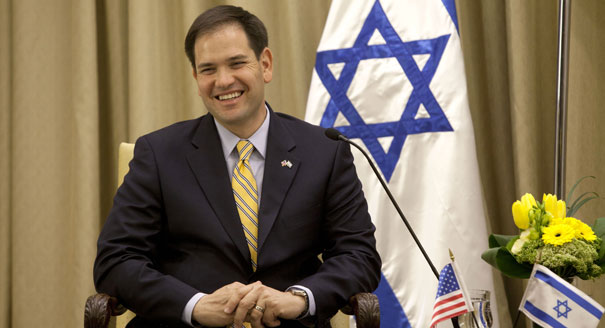
Don’t be fooled, Marco Rubio is no populist.
On February 14, 2026, Secretary of State Marco Rubio delivered what many observers called his most consequential speech. Standing before the Munich Security Conference, he spoke words that would have been unthinkable from a Republican cabinet member just a decade earlier.
“We are part of one civilization, Western civilization,” Rubio declared. “We are bound to one another by the deepest bonds that nations could share, forged by centuries of shared history, Christian faith, culture, heritage, language, ancestry, and the sacrifices our forefathers made together for the common civilization to which we have fallen heir.”
He spoke of defending European cultural legacy. “It was here in Europe where the ideas that planted the seeds of liberty that changed the world were born. It was here in Europe which gave the world the rule of law, the universities, and the scientific revolution. It was this continent that produced the genius of Mozart and Beethoven, of Dante and Shakespeare, of Michelangelo and Da Vinci, of the Beatles and the Rolling Stones.”
He described mass migration as a civilizational threat. “Mass migration is not, was not, isn’t some fringe concern of little consequence,” Rubio warned. “It was and continues to be a crisis transforming and destabilizing all across the West.” He called border control “a fundamental act of national sovereignty” and warned that failure to control borders “is an urgent threat to the fabric of our societies and the survival of our civilization itself.”
The speech drew a standing ovation from approximately half the Munich audience. Non-European delegations were reportedly furious at what they saw as “a tribute to white European civilization and a call to protect it from the rest of the world.”
For nationalist observers hoping Trump’s second administration represents a genuine departure from Republican establishment foreign policy, Rubio’s Munich address offered rhetorical red meat.
For those who’ve watched politics long enough, talk is cheap. Track records are expensive. And Marco Rubio’s track record tells a more complicated story about where his actual commitments lie.
The Tea Party Origins
Rubio entered the Senate in 2011 riding the Tea Party wave. His central campaign theme was American exceptionalism defined through “the American concepts of limited government and free market entrepreneurialism.” He turned to the American exceptionalism canard to justify his candidacy. “This race forces us to answer a very simple question. Do we want our country to continue to be exceptional, or are we prepared for it to become just like everybody else?”
At that point of his political career, adversary of socialism and an unabashed champion of free markets at the start of his Senate career, drawing on his parents’ flight from Cuba to make the case for capitalism. He sought out ties to the Tea Party movement and emphasized conservative credentials while branding himself as a pragmatist. restart
In a 2016 debate, Rubio explicitly opposed tariffs, warning that “China doesn’t pay the tariff, the buyer pays the tariff. If you send a tie or a shirt made in China into the United States and an American goes to buy it at the store and there’s a tariff on it, it gets passed on in the price to the consumer.” This position he later reversed when Trump’s tariffs polled well with the base.
The Tea Party movement that elevated Rubio was explicitly about lower taxes, reduced national debt, decreased government spending, opposition to Obamacare—generic “fusionist” positions that conservative think tanks and politicians have espoused since the 1960s. All positions Rubio loudly championed during his 2010 run against establishment Republican Charlie Crist.
The Immigration Metamorphosis
Nothing illustrates Rubio’s ability to change his political stripes more clearly than his evolution on immigration.
During his time in the Florida House, Rubio was notably amenable to immigrant friendly legislation. In 2003, he co-sponsored a Florida version of the DREAM Act, legislation allowing children of illegal aliens to pay in-state tuition at Florida universities. As late as 2016, he defended this record, telling ABC’s “This Week” that “we didn’t legalize anybody.”
In 2012, Rubio introduced his own alternative DREAM Act granting legal status but not citizenship to illegal alien youth. He compared Dreamers to Cuban refugees, calling it a “humanitarian mission” and saying “we have a chance to allow them to get right what their parents got wrong.”
Then came 2013 and the Gang of Eight. As a member of the bipartisan group, Rubio co-authored the Border Security, Economic Opportunity, and Immigration Modernization Act, which provided a pathway to citizenship for an estimated 11 million illegal immigrants while funding $46 billion in border security. The bill passed the Senate 68 to 32 but died in the House. Senator Chuck Schumer said Rubio’s “fingerprints are all over that bill.”
The bill was backed by a remarkable coalition of mass migration boosters. Mark Zuckerberg’s organization FWD.us created a subsidiary called Americans for a Conservative Direction specifically to run ads supporting Rubio’s immigration reform push. A seven-figure ad buy featured Rubio directly making the case for the Gang of Eight bill. The ad campaign was produced by Zuckerberg and staffed by former Bush aides, former Mississippi Governor Haley Barbour, and former NRSC director Rob Jesmer.
The U.S. Chamber of Commerce was a major institutional backer of Rubio’s campaigns. PBS reported that “business-minded Republican fundraisers” backed by the Chamber supported Rubio’s role as the “leading conservative voice” for comprehensive immigration reform.
Rubio also co-sponsored the Immigration Innovation Act of 2013 with Senators Hatch, Klobuchar, and Coons, which sought to expand H-1B visa caps and increase employment based green cards for high skilled workers. The bill aimed to triple the annual H-1B visa cap based on economic demand, supported by the technology industry lobby.
The Gang of Eight bill’s failure marked a turning point. By 2014, Rubio retreated from full-fledged amnesty, arguing for a “piecemeal” approach prioritizing border security first. By 2015, he stated that “we need to secure the borders before there is any chance of an immigration reform bill passing.”
In 2018, Rubio explicitly refused to join a new bipartisan immigration gang, saying “I don’t believe that what we’re going to end up doing here can be a product of a gang.”
By 2026 in Munich, he was declaring border control “a fundamental act of national sovereignty” and warning of civilizational collapse.
The Economic Pivot
Rubio’s economic positions demonstrate similar adaptability. The senator who championed free markets and opposed tariffs in 2016 became one of the most prominent Republican advocates for what he termed “common good capitalism” by 2019.
From his August 2019 essay in First Things, Rubio argued that the government should support “dignified work,” manufacturing jobs paying wages sufficient to support a family, set against “flashy financial maneuvering that produces short term gains through mere market trickery and pure speculation.”
In his November 2019 speech at Catholic University of America, Rubio declared that “the primary purpose of capitalism is to provide for human dignity.” He asked, “Does our country exist to serve the interests of the market? Or does the market exist to serve the interests of our nation and of our people?”
He told the audience that “economic growth and record profits alone will not lead to the creation of dignified work” and defined common good capitalism as “a vibrant and growing free market, but it is also about harnessing and channeling that growth for the benefit of our country, our people, and our society at large.”
In a 2020 American Affairs Journal interview, Rubio argued that “our challenge is an economic order that is bad for America. It is bad economically because it is leaving too many people behind. And it is bad because it is inflicting tremendous damage on our families, our communities, and our society.” He rejected the binary between free market absolutism and socialism. “An economics of the common good rejects this binary choice. After all, our nation does not exist to serve the interests of the market or the government; the market exists to serve our nation.”
By 2019, Rubio proposed taxing share buybacks and directing government investment toward domestic manufacturing, positions that would have been heretical in the pre Trump GOP. In 2021, he endorsed the push by Amazon workers in Alabama to unionize, citing the company’s “war against working people,” an extraordinary position for a Republican senator.
The Donor Question
Rubio’s rhetorical evolution toward populism and economic nationalism raises an obvious question. Who has funded his political career, and what do they expect in return?
The answer is revealing.
Norman Braman, billionaire auto dealership magnate and past president of the Greater Miami Jewish Federation, was described by The Jewish Telegraphic Agency as “the single largest backer of Rubio’s presidential campaign.” Braman contributed $5 million to a pro Rubio Super PAC, employed Rubio as a lawyer, hired Rubio’s wife as a philanthropic adviser, helped fund Rubio’s teaching position, and traveled to Israel with Rubio in 2010 right after his Senate election. Braman donated $311,000 through a family foundation to American Friends of Ariel, supporting an Israeli West Bank settlement.
Sheldon Adelson, the late casino mogul who spent between $100 to $150 million backing Republicans in the 2012 cycle, reportedly favored Rubio for 2016. Sources close to Adelson told Politico that Adelson “likes the Florida senator’s strong stance on defense, including his strident support for Israel.” Adelson’s endorsement could have unlocked up to $100 million in Super PAC spending. His wife Miriam Adelson contributed $120 million to Trump’s 2024 campaign and reportedly advocated for Rubio’s appointment as Secretary of State.
Paul Singer, founder of Elliott Management hedge fund and a director at the Republican Jewish Coalition, endorsed Rubio in October 2015. His firm was Rubio’s second largest source of campaign contributions between 2009 and 2014, totaling $122,620. Singer was among the largest donors to the Foundation for Defense of Democracies, The Israel Project, and the Republican Jewish Coalition — a network of hawkish pro-Israel organizations that have long shaped Republican foreign policy thinking.
Rubio has received over $1 million in campaign contributions from AIPAC and pro-Israel lobby groups throughout his career, making him one of the top recipients in Congress. The depth of that relationship was made explicit at AIPAC’s 2025 Congressional Summit, where CEO Elliott Brandt — speaking in an off-the-record session later leaked to The Grayzone — named Rubio as one of three former congressional allies now in senior national security positions who would give AIPAC “access” to internal government discussions.
The Republican Jewish Coalition has been a key institutional supporter throughout Rubio’s career, serving as a major gathering point for his donor base during the 2016 presidential cycle. A review of his 2019–2024 Senate finances shows two revealing contributors among his top sources: The Villages, the massive Florida retirement community, at $78,405, and The GEO Group, a major private prison and immigration detention company, at $48,800.
On Capitol Hill, Rubio’s pro-Israel commitments translated into an extensive legislative record. He co-sponsored the Israel Anti-Boycott Act and introduced the Combating BDS Act, which passed the Senate in 2020 with a 77–23 vote. He backed the Taylor Force Act, which cut U.S. funding to the Palestinian Authority over payments to families of convicted terrorists, and co-sponsored both the United States-Israel Security Assistance Authorization Act and the Anti-Semitism Awareness Act. He was among the most vocal opponents of the Iran nuclear deal, supported moving the U.S. embassy to Jerusalem, and voted for the Strengthening America’s Middle East Security Act of 2019.
The Hawkish Constant
While Rubio’s positions on immigration, trade, and economics have shifted dramatically, one element has remained remarkably consistent. His foreign policy has been aggressively interventionist across all adversary nations.
On Cuba, Rubio consistently opposed Obama era normalization and supported maintaining the full embargo under the Helms Burton Act. As Secretary of State in January 2026, he stated plainly, “We would like to see that regime change.”
On Venezuela, Rubio co-sponsored the VERDAD Act of 2019 with Senator Menendez, which authorized $400 million in humanitarian aid, sanctions on regime officials, and support for opposition leader Juan Guaidó. He worked closely with the Trump administration on Venezuela policy, including the January 2026 military operation that captured Nicolás Maduro.
On Iran, Rubio vigorously opposed the Iran nuclear deal and co-sponsored the 2017 bipartisan Iran sanctions bill expanding sanctions for ballistic missile development, terrorism support, and human rights violations.
On China, Rubio sponsored the Uyghur Human Rights Policy Act, which passed the Senate unanimously in May 2020, and the Hong Kong Human Rights and Democracy Act of 2019, which passed unanimously in both chambers. China retaliated by imposing sanctions on Rubio in 2020.
On Russia, Rubio supported the Countering America’s Adversaries Through Sanctions Act of 2017 and co-introduced bipartisan legislation in 2018 targeting Russian oligarchs. He served as acting chair of the Senate Intelligence Committee’s investigation into Russian interference in the 2016 election.
Considered in totality, Rubio’s record both in the Senate and as Secretary of State closely mirrors that of national security conservatives who have previously ascended through Washington’s power structure. His foreign policy approach demonstrates scant restraint, offering even less evidence of any inclination to curtail America’s expansionist international agenda.
Rubio’s invocation of Western civilization serves as red meat rhetoric, aimed at rebuilding trust in American institutions amid a prolonged recruitment crisis in the military, as countless White Americans have abandoned them due to entrenched anti-White policies. Yet this address is little more than a smokescreen, propping up the Judeo-American empire’s drive to secure global dominance for Jewish interests.
Don’t be Fooled by Populist Rhetoric
Believing that Marco Rubio—a career advocate of “invade the world, invite the world” policies, bankrolled by Jewish oligarchs—has suddenly transformed into a true populist strains credulity. Politicians excel at tactical flexibility and siphoning off dissident momentum. They thump their chests about radical overhauls of the system on the stump, float token bills in Congress, but when substantive measures tackling the rot in the American body politic—like strict immigration controls or non-interventionist foreign policy—reach the floor, these faux radicals either cave or sabotage them quietly, ensuring the status quo persists.
Frankly, this writer stands a better shot at sprouting wings and jetting to Neptune than Rubio does at emerging as an authentic nationalist. Such is the uncomfortable reality.
https://www.josealnino.org/p/the-many-faces-of-marco-rubio-from