
The Mossad Delusion: Why Israel Still Thinks Iran Will Fall
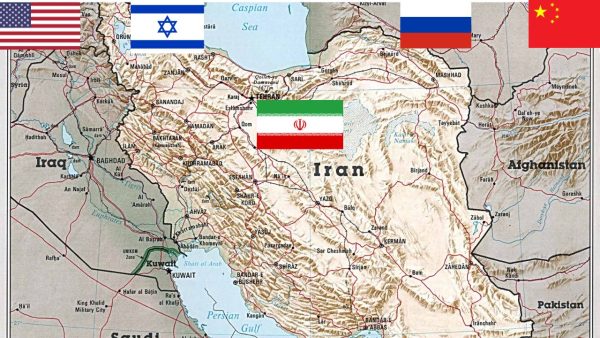
Nations with collective memory do not collapse simply because their enemies misunderstand them.
One of the most revealing aspects of intelligence agencies is that they often tell you more about themselves than they intend to. Not through leaks, defections, or declassified documents, but through moments of self-congratulation. Moments when they believe they are demonstrating strength and sophistication, yet end up exposing the assumptions, fantasies, and misconceptions that drive their strategy.
That was my reaction when I came across an article in Israel Hayom about a secret Mossad branch dedicated to influence operations against Iran.
And I want to begin with a necessary qualification, because the article itself was published in Israel Hayom, a deeply pro-Israeli outlet. Therefore, everything inside it has to be read carefully, not as neutral journalism, but as a window into how the Israeli security establishment wants to present itself, its successes, its failures, and its ongoing war of aggression against Iran. But precisely because of that, the article matters. It reveals the mentality of the people planning this war. It reveals how Mossad thinks about Iranian society, how it understands psychological warfare, how it tries to manufacture political effects through media, scandals, fake accounts, influencers, and pressure campaigns, and perhaps most importantly, how deeply Israel still believes in the fantasy that Iran can be broken from within.
The central revelation in the article is that Mossad created an influence operations branch under David Barnea, who became Mossad director in 2021. Barnea led a broader reform that placed regime change in Iran much closer to the heart of Mossad’s mission. According to the article, this branch was designed to understand public moods, media trends, social pressure points, and vulnerabilities inside Iran, and then weaponize them in ways that could weaken the Islamic Republic psychologically, politically, and socially. In other words, this was a complex political warfare disguised as classical intelligence work.
One of the cases used to illustrate this branch’s activity was the operation against Rostam Ghasemi, a senior Iranian military and political figure who had served in the IRGC, fought in the Iran-Iraq War, later became influential in strengthening Iranian military capabilities, and remained close to important circles within the state. According to Israel Hayom, Mossad had obtained a photograph of Ghasemi in Malaysia years earlier, where he appeared with a woman who was not his wife and who was not wearing a hijab. The image was allegedly held for years and then leaked through Iran International during the 2022 protests, at a moment when the hijab issue was already politically explosive inside Iran. The objective, from Mossad’s perspective, was to remove a seasoned figure from influence while simultaneously feeding the atmosphere of unrest.
This is how psychological warfare works. It does not always invent everything from nothing. It waits. It archives. It stores weaknesses. It watches the emotional temperature of a society and releases material at the moment when it can produce the greatest political effect. And whether this specific operation achieved everything Mossad hoped or not, the logic is clear: Israel is not only trying to kill Iranian commanders, sabotage facilities, or strike military assets. It is trying to shape the moral imagination of Iranian society. It is trying to convince Iranians that their institutions are hypocritical, their leaders are compromised, their system is fragile, and their only future lies in revolt, preferably an armed revolt.
But this is also where the Mossad fantasy begins.
Because the same article that presents Mossad as almost omniscient also reveals the shallowness of its assumptions about Iran. The branch seems to have concluded that the main reason Iranians do not rise en masse against the Islamic Republic is fear. Fear of repression. Fear of consequences. Fear of the security services. And of course, fear is a factor in every political system that faces internal dissent. But to reduce Iranian society to fear alone is wishful thinking.
Iran is a real society. It has contradictions, resentments, class tensions, generational divides, corruption, economic pain, sanctions fatigue, cultural disagreements, and political frustrations. But it also has nationalism, memory, pride, trauma, institutions, religious loyalties, anti-imperial reflexes, and a deep awareness of what happened to other countries targeted for regime change. Many Iranians may criticize their government. Many may dislike aspects of the Islamic Republic. But when Israel and the United States bomb their country, kill their scientists, assassinate their commanders, target their infrastructure, and openly discuss replacing their political order with a Western-backed puppet, the psychological equation changes.
At that moment, many people who were not loyalists became patriots. They may not suddenly love every institution of the state, but they understand who is attacking them. They understand the difference between internal reform and foreign destruction. They understand that the alternative being prepared for them is subordination.
This is what Mossad seems unable to understand.
And this is why the “4D chess” theory collapses when placed beside the reality revealed in this article. For months, some people have insisted that Iran, Israel, and the United States are somehow secretly coordinating, that the war is staged, that the crisis around Hormuz is part of a hidden arrangement, and that all sides are playing a grand scripted game to reshape the global economy. But if Mossad has created an entire branch dedicated to psychological warfare, influence operations, covert networks, regime-change preparation, and destabilization inside Iran, then what exactly are we talking about? Are we supposed to believe that Israel is investing all these resources, building these networks, running these campaigns, activating operatives on Iranian soil, and persuading Trump to escalate merely as theater?
No. This is not theater. It is war.
And it is not only war in the military sense. It is a war against Iran’s social cohesion, against its public confidence, against its ability to absorb shock, and against the relationship between the Iranian people and their state.
The Israel Hayom article even describes what Mossad officials allegedly believed before Operation Rising Lion. They believed that a combination of Israeli and American airstrikes, influence operations, psychological pressure, and internal unrest could produce a dramatic outcome: the fall of the Iranian system. According to the article, Mossad chief David Barnea conveyed this confidence to President Trump in the days before the attack. That detail is extremely important because it suggests that Israel did not merely ask America to help weaken Iran militarily. It sold Washington a political theory: strike hard enough, amplify the psychological pressure, and the regime will crack.
But Iran did not crack.
It absorbed the shock.
And this is where the Israeli narrative begins adjusting itself. When regime change does not happen in days, the timeline becomes months. When it does not happen in months, the timeline becomes the end of 2026. When that does not happen, it will become two and a half years, or five years, or the next “historic opportunity.” This is how regime-change fantasies survive failure. They never admit that the premise was wrong. They only extend the deadline.
We have seen this pattern before. Every time the Iranian system survives a crisis, its enemies say it is weaker than ever. Every time Iran absorbs a blow, they say the next blow will finish it. Every protest becomes “the beginning of the end.” Every assassination becomes “a turning point.” Every economic problem becomes “the final stage.” And yet, the state remains, adapts, hardens, learns, and recalibrates.
This does not mean Iran is invincible. No state is invincible. It does not mean Iran has no internal problems. It has many. But there is a difference between identifying real pressures inside a country and building an entire war strategy on the fantasy that those pressures can be converted into regime collapse on demand.
The article also reveals the so-called “poison machine,” a network of fake accounts, social media operations, online influencers, and AI-generated personas designed to spread messages that undermine the Iranian state. This is not surprising. Anyone who has spent serious time on social media during this war has seen the patterns: accounts that suddenly appear, narratives that move in coordinated waves, emotional messaging designed to demoralize one side and inflate the other, and constant attempts to convince populations under attack that resistance is futile, their leadership is collapsing, and the enemy knows everything.
Psychological warfare today does not only happen through leaflets dropped from planes. It happens through viral videos, anonymous accounts, diaspora media, fake opposition networks, manipulated scandals, and influencers who may not even understand the full architecture in which they are participating.
And this brings us to Lebanon.
One of the most important sections of the Israel Hayom article, in my view, is the admission that Mossad’s influence branch was given a mandate to focus on two countries: Iran and Lebanon. The reason is obvious. Iran is the strategic center. Lebanon is the forward ideological and military front through Hezbollah. If Israel cannot break Iran directly, it tries to weaken Hezbollah’s popular base. If it cannot defeat Hezbollah militarily without paying a terrible price, it tries to isolate it socially, sectarianize the debate, and turn Lebanese public discourse into a permanent psychological battlefield.
This is why Lebanese media matters so much.
Lebanon is easier to penetrate than Iran. Its media landscape is fragmented, factionalized, commercialized, and open to foreign money. Every sect, party, faction, and external sponsor has channels, journalists, influencers, and platforms. In such an environment, it becomes much easier to insert narratives, amplify resentment, dehumanize Hezbollah’s base, provoke sectarian anger, and push the country toward internal confrontation.
And this is exactly what we have seen in recent years: the rise of platforms and personalities whose entire function seems to be provoking the Shia community, dehumanizing them, portraying them as aliens inside their own country, and preparing the psychological conditions for internal conflict. The objective is not necessarily to win an argument. The objective is to produce exhaustion, humiliation, rage, and eventually an explosion.
But Hezbollah has understood this game so far. It has refused to be dragged into a civil war. And that refusal is strategic maturity. Because Israel would love nothing more than to transform its war with Hezbollah into a Lebanese civil war in which the resistance is no longer fighting an external occupier, but internal enemies manufactured and amplified through psychological operations.
This is why the media front is not secondary. It is part of the war.
The same logic applies to Iran. Mossad does not only want to destroy missile launchers. It wants Iranians to believe their country is penetrated everywhere, that their state is collapsing from within, that every official is compromised, every institution is vulnerable, and every act of resistance is pointless. The goal is to turn military pressure into psychological paralysis.
But here again, Israel miscalculated.
During the initial shock of Israeli aggression, there were real blows against Iranian air defenses, missile launchers, and security networks. Mossad clearly achieved tactical successes. Nobody serious should deny that. But tactical success is not strategic victory. Iran adjusted. The IRGC absorbed the shock. Missile capabilities remained substantial. Retaliation followed. The fantasy that Iran would simply freeze, fragment, and collapse under the combined weight of covert operations and airstrikes did not materialize.
And that failure matters. Because the people running this strategy are not only trying to influence Iran. They are also trying to influence Washington. According to Israel Hayom, the CIA was aware of the Mossad plan and supported it, helping Barnea persuade Trump. This is perhaps one of the most dangerous aspects of the entire story. Israel did not merely conduct its own operation and hope America would approve. It inserted its interpretation of Iranian society into the American decision-making process. It told Trump, directly or indirectly, that Iran was vulnerable, that regime change was possible, that influence operations could amplify military strikes, and that the system could be pushed toward collapse.
That is how wars are sold. Not only with intelligence, but with psychology. Not only with facts, but with confidence. Not only with military plans, but with promises that the enemy is weaker than he appears and that victory is closer than cautious people think.
This is where Trump’s contradiction becomes glaring. Years ago, Trump said that a president who drags America into a Middle Eastern war based on lies should be impeached. He said this about George W. Bush and Iraq. And yet now, Trump finds himself surrounded by many of the same dynamics: inflated intelligence claims, Israeli pressure, regime-change fantasies, promises of quick success, and the same old assumption that the Middle East can be reorganized through American force.
The irony is almost unbearable.
Trump campaigned as someone who understood the disaster of endless wars. Yet in practice, he has been pulled again and again into the gravitational field of the very forces he once criticized. The Mossad plan, the CIA support, the pressure from Israel-first think tanks, the influence of figures like Mark Levin, Mark Dubowitz, and the regime-change industry around Washington—all of this creates a machine that takes American power and places it at the service of Israeli regional ambition.
And that ambition is not small.
Israel does not merely want to weaken Iran. It wants to eliminate Iran as the only serious regional obstacle to Israeli supremacy. It wants access, dominance, leverage, and freedom of action from the Mediterranean to the Gulf. It wants the United States to spend its resources, exhaust its military, absorb the economic blowback, and carry the strategic burden while Israel positions itself as the future hegemon of the Middle East.
This is why, if Iran falls, Israel becomes something far larger than a state protected by America. It becomes a regional empire with access to energy corridors, broken Arab Republics, dominated Gulf monarchies, weakened resistance movements, and a direct path toward imposing its will across West Asia.
That is the prize.
And that is why Iran has not collapsed. Because many Iranians understand, even if they do not articulate it in these terms, that this is not a war for democracy. It is not a war for women’s rights. It is not a war for freedom. It is a war to decide whether Iran remains a sovereign civilizational state or becomes another broken territory inside the architecture of American-Israeli domination.
Mossad can build poison machines. It can recruit agents. It can leak photos. It can manipulate media. It can pay influencers. It can manufacture fake online personas. It can promise Trump that regime change is near. It can extend its timeline from days to months to years.
But it cannot easily solve the central problem.
Iran is not merely a regime sitting on top of a passive population.
It is a nation with memory.
And nations with collective memory do not collapse simply because their enemies misunderstand them.
https://kevorkalmassian.substack.com/p/the-mossad-delusion-why-israel-still