
The ‘Restore Britain’ Civil War – The Honeymoon is Over
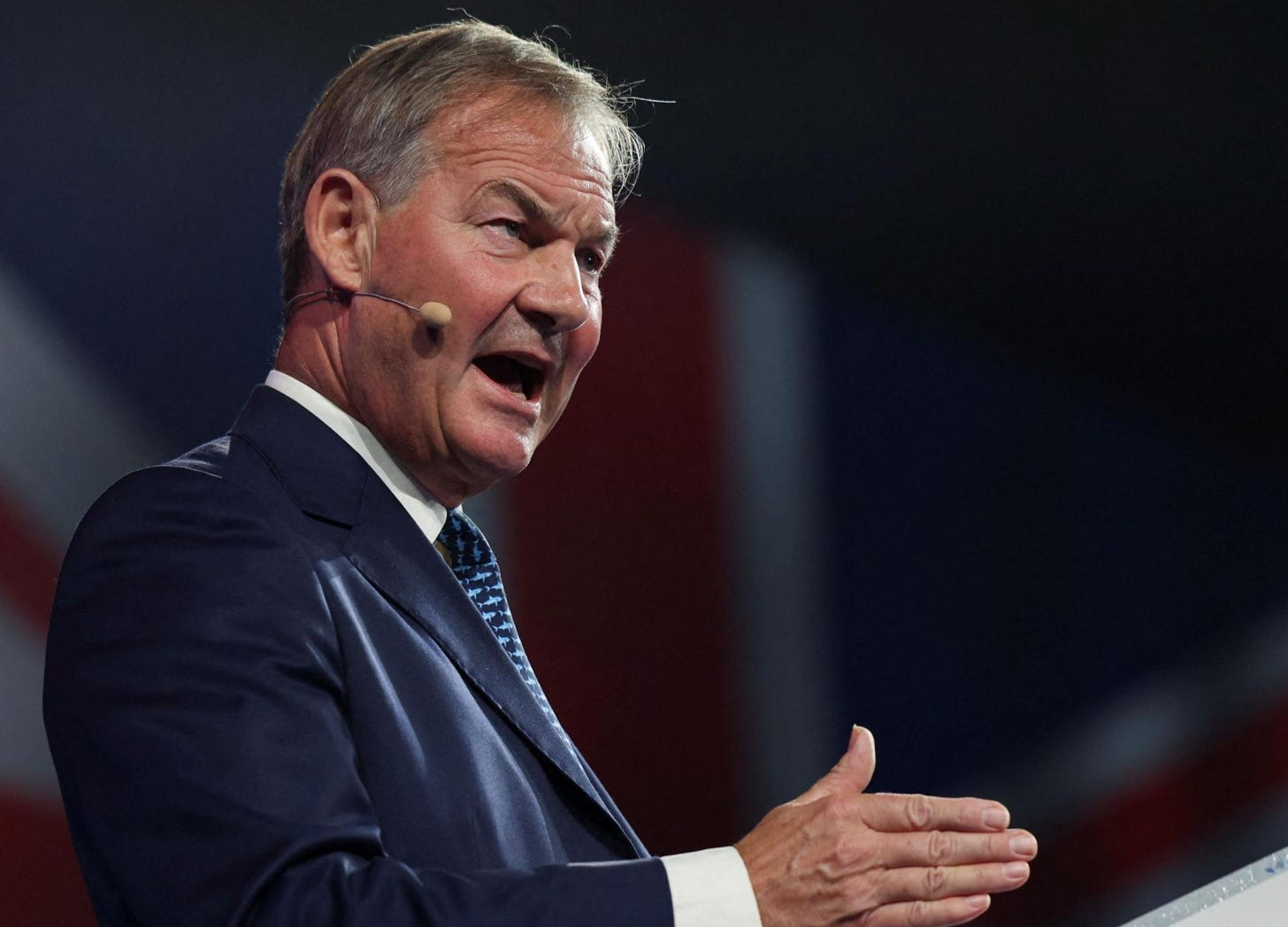
As the disappointment after the Makerfield by-election sets in, the factions within Restore Britain have begun to go to war – but the truth is, Rupert Lowe is ultimately the cause of these problems.
This morning, I woke up and saw that the latest video on Carl Benjamin’s Akkad Daily channel carried an extremely interesting thumbnail that stated: “Restore Britain descends into civil war”. Despite my interest, I was not in the least bit surprised, principally because I predicted this outcome on a live stream titled: Restore Britain – the Good, the Bad and the Ugly which took place on February 20th 2026 – just over four months ago. I pointed out that the party was attracting an extremely broad church of followers and that those followers were not united by ideology, but instead by a shared dislike of Nigel Farage and Reform UK. The vast majority of those flocking to Restore Britain had all at one time or another supported Nigel Farage, but whether due to policy or personality issues, had subsequently soured on him and his party. These people were now looking for a new political home.
This new political home was of course Restore Britain – which grew impressively quickly, surpassing one hundred thousand members in a matter of days. However, such rapid growth and such an impressively large tent led to people who openly despised one another sitting under the same roof, and that was always going to be a recipe for instability and factionalism. How could a party hope to bring together people like Tommy Robinson, Katie Hopkins and Ben Habib with people like Steve Laws, former TASOB podcast hosts (The Absolute State of Britain) and former BNP branch organisers? Currently, one wing of the party is made up of ardent ethno-nationalists who want mass deportations, believe British identity is tied to blood and are heavily critical of Israel and Zionism, whilst the other is made up of people who largely approve of a multi-racial society, oppose deportations of anyone other than a limited number of Muslims and openly identify as Zionists.
A party composed of such disparate groups is always going to descend into civil war sooner or later as a battle for the heart, soul and future direction of the organisation ensues. It is impossible to predict an exact timescale for these developments – it could take months for the civil war to break out, or it could take years. There will always be what is known as a honeymoon period, the length of which is determined by the success of the organisation. In the short term, people are both enthusiastic and willing to set aside their differences with others for the greater good – but this good faith and open-minded approach only lasts as long as the organisation keeps winning. The first serious bump in the road and the different factions immediately start pointing their fingers at one another and the blame game begins.
The Restore civil war beginning to erupt on X and in comment sections all over the internet had an easily identifiable starting point: the Makerfield by-election. Restore Britain took 6.8 per cent of the vote (a raw vote total of 3111) and came third place in Makerfield, certainly not the worst electoral result an anti-immigration party has ever recorded in a parliamentary by-election. However, Restore Britain is a little different from most anti-immigration parties, they have an elected MP who happens to be a multi-millionaire, they openly boasted that they had over one thousand activists on the streets campaigning and finally they enjoyed the support of Elon Musk – the world’s richest man and the first trillionaire. Yet despite this, Restore only took 16.5 per cent of the total anti-immigration vote to the right of the Conservative Party (calculated by totalling the Reform and Restore vote) and were outpolled by more than five votes to one by their nearest rivals, Reform UK. What’s more, despite everything the party had done throughout the campaign, Restore Britain failed to outpoll the British National Party (BNP), who in 2010 took 3229 votes in the same constituency, 7.4 per cent of the overall vote.
This would have been bad enough – as the BNP’s 2010 campaign amounted to a single A5 leaflet and a small local effort carried out by activists who numbered in the single digits. However, the disappointing vote was compounded by the fact that Rupert Lowe and those around him had predicted victory. On the weekend before election day, Rupert Lowe was telling his core support base that the party had a genuine chance of victory. The aforementioned Carl Benjamin, a party cheerleader, was being more reserved and claiming a 20 per cent share of the vote was likely. Meanwhile, those in Restore Britain activist chats were talking of around 25 per cent of the vote going to the fledgling party. This is a textbook example of how not to behave on the eve of an election. By vastly over stating the party’s chances, the activist base and online supporters had their hopes raised to ridiculous levels, only to come crashing back down to earth with an uncomfortable bump in the early hours of the Friday morning after polling day.
Had those at the top of the party had any sense, they would have told the activists that the goal was five per cent – to save their financial deposit and for activists to learn important lessons for future campaigns. Instead, the goal was to win – and the ensuing disappointment mixed with ridiculous coping from online talking heads soon led to fingers being pointed. When an election doesn’t go to plan, someone has to take the blame and each faction is quick to point the finger at the other. The more moderate, pro-multicultural and pro-Zionist faction will always claim that voters were scared off by the more hardline ethno-nationalist faction. The more hardline ethno-nationalist faction will then reply by stating that if the party had stuck to a strict and clear ideological line they would have stood out more from the competition and voters would have had a more obvious choice between Restore and their close rivals Reform.
The moderate civic-nationalists shout that it was in fact the ‘Nazi’ or ‘racist’ element on the hard-right that scared voters off. The ethno-nationalists reply that it was in fact the civic-nationalists who watered down policies who are to blame – they were the ones that made Restore a carbon copy of Reform – and why would voters choose a weak imitation when they could vote for the real thing? This causes the party to begin to fracture and split as it is pulled in two different and diametrically opposed directions. One faction, led by the likes of Tommy Robinson and Ben Habib want the party to purge it’s hard-right affiliations and rush to be more welcoming of minorities in an effort to make the party ‘less scary’. Conversely, the other faction led by Steve Laws and other notable ethno-nationalists want the party to stand firm, plant their flag and mark out a distinct ideological niche that isn’t currently occupied by another serious party with a large membership and adequate funding.
As this battle goes on, the two sides become further apart than they were initially and their irreconcilable differences become more pronounced as individuals double down and declare they will not work with people from the other side. Whilst both sides desperately appeal to the leader for his support and for him to make the ‘right’ choice, this conflict has a profound effect and drives away the more casual support base. Most people simply didn’t sign up for this, they signed up for a chance to put forward their opinions at the ballot box, not to engage in factionalism and infighting. And this is how parties die. The exact same thing happened to both the British National Party and the National Front. Both of those parties attempted to marry populist support with an ideological hardcore, and following disappointing election results, both parties descended into infighting and internal factionalism and withered, becoming mere shadows of their former selves.
At this point it is easy to simply state that people should have known better – that cooler heads should have prevailed and that those committed to political change should be big enough to focus on the greater good. It is also easy to call people naïve – what did those who signed up for Restore Britain actually expect? Did people really think that victory would be this easy and that the most resilient electoral system in Europe would be broken in a matter of months by a new party led by a man who only entered politics a few years ago? And of course, people are naïve and enthusiastic. But a good leader manages that naivety and enthusiasm – managing expectations and ensuring that the party faithful doesn’t get their hopes up too high is a key part of a leader’s job. But a leader’s role is also to be clear on where the party stands – firmly laying out a coherent political platform to ensure that fallouts and factionalism are minimised.
Sadly, Rupert Lowe has failed to do this, in fact, Rupert Lowe has done the very opposite; he has gone from interview to interview and from meeting to meeting saying exactly what he felt the audience in front of him wanted to hear. This is a disastrous way to manage a party and has fuelled the problems Restore Britain is now experiencing. Rupert Lowe has stood in front of activists and talked of deporting millions, then he has sat with former Conservative minister Michael Gove and talked of race blind meritocratic immigration. The party X account has boldly stated that holding a British passport doesn’t make a person British – an ethno-nationalist position, but Rupert Lowe has then sat with Bret Weinstein and claimed that he detests ethno-nationalists. Rupert Lowe’s personal X account has repeatedly talked of remigration, but Lowe himself recently appeared in an interview where he stated he believed in multiculturalism and favoured integration. Is it any wonder Restore Britain’s support base is so fractured and angry?
What we are witnessing now within and around Restore Britain was inevitable and easy to predict. Building a ‘big-tent’ organisation made up of two such different factions that are opposed to one another was always going to be difficult to manage. But still, with the right approach problems could be mitigated and tensions could be cooled. However – what most will find difficult to accept – is that Rupert Lowe himself has exacerbated the problems. Rupert Lowe’s boasts of victory in Makerfield made an already disappointing result seem much worse, bringing an activist base who had felt as if they were soaring high, down to earth with an unceremonious bump. But worse still, Rupert Lowe has tried to please everyone – one minute talking of mass deportations and an ethnic connection to Britishness, whilst the next minute he has accepted multiculturalism and talked of integration and called for race-blind immigration laws.
And unfortunately for those who are still committed to Restore Britain, this has all got the capacity to get much worse in the very near future. Restore Britain has already committed themselves to fighting the by-election for the Greater Manchester Mayoralty. This area of the country is very multicultural and two years ago Labour took 63.4 per cent of the vote. As of the date of this article being published (26.06.2024) there is less than a month until polling day, and mayoral elections take place over much larger electoral areas than parliamentary by-elections making it far harder for small parties to make an impact in this kind of election. As such, this could well be a dangerous gamble on Rupert Lowe’s behalf. Restore Britain would need to make a serious impact in this by-election in order to quell the problems within its support base, but conversely, a poor result would raise tensions around the organisation to boiling point.
What Rupert Lowe and his inner circle don’t seem to have factored in, is that in Makerfield both the Green Party and the Lib Dems effectively capitulated and told their voters to support Andy Burnham. This will not be the case in the Manchester Mayoral race. This means Restore will have to work a lot harder to get a podium finish, and could well end up in a disappointing position behind numerous other parties. This would be deeply humiliating for a party that is headed by a sitting MP who has repeatedly talked-up a political revolution and whose supporters expect nothing less. The next month will be pivotal for Restore Britain, and if the party’s fortunes continue on their current trajectory it will lead to a factional bloodbath that will drive away the organisations soft support whilst completely fracturing the party’s activist base.
As such, Restore Britain appears on track to be a form of political pump-and-dump. It is a party that blew up overnight, offering everyone everything they could ever want, before imploding just as quickly. People who hoped for a genuine ethno-nationalist party that endorsed mass deportations now face a disappointing reality: Restore is increasingly likely to become Reform 2.0. In hindsight, it would have been far better for Rupert Lowe to have kept Restore Britain as a pressure group to drag the Overton window right and influence Nigel Farage into adopting stronger policies on key issues. However, on its current trajectory, Restore is unlikely to achieve anything more than splitting the vote to the right of the Conservative Party. This would ensure the restoration of the political status quo; as the public realises that the anti-immigration right is too fractured to win, voters may begrudgingly return to holding their noses and voting Conservative. This would ultimately condemn Britain to further suffering under the stale two-party system that has existed for over a century.
https://markacollett.substack.com/p/the-restore-civil-war-the-honeymoon