
The Right Needs to Tell Better Stories
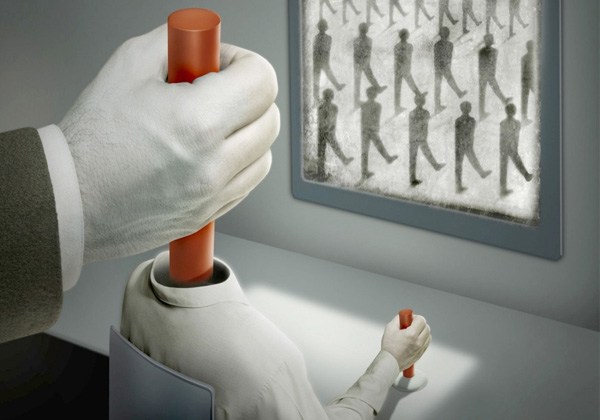
A few months ago, I wrote an article on art and the right for The Metropolitan Review. The gist of it was that thinking about art in terms of “right” and “left” and, therefore, trying to be creative in accordance with specific political criteria is a mistake. No great novel has ever been written by an author who set out to pen the perfect ideological story.
In general, I think the whole debate is a big waste of time. Rather than arguing over what constitutes “right-wing” art, people should, if so inclined, try to create things.
My pseudonymous friend Rambo Van Halen has given me cause to revisit the issue because he said something very interesting.
“I don’t know if you get out of the house very often, but the mood in the USA is turning sour on MAGA,” he wrote on X. “The mood is turning because the other side is very good at communicating.”
According to Rambo, a veteran of the filmmaking industry, the right is too “analytical” and tries too often to persuade with mere “logic.” He points to the different attitudes and approaches conservatives and liberals take toward the production of things like film.
“When I watch conservative political documentaries, they’re always a mess,” he wrote. “They hit you over the head with talking point after talking point and ignore the more effective, subtle emotional messaging.” He also noted that conservatives tend to view these projects strictly in dollar terms. Wealthy patrons will impose themselves on the process to ensure they get their money’s worth, which, in practical terms, means their productions are larded with talking points that appeal to donors, producers, and the already converted.
He is right on all counts. Creative people, by nature, tend to be liberal and are therefore more open to taking risks in both the creation and funding of artistic endeavors. For conservative patrons, return on investment is what reigns supreme. That makes sense in a specific business sense, but that’s not how art works.
But there is another, more salient point here: the “value of emotion,” as Rambo put it. In his view, and I believe he is correct, emotion is a dirty word to the right-wing mind and a concept to be extirpated. You see this in political slogans such as “harden your heart,” a refrain adopted in certain corners of the new right to signify a willingness to advance an agenda by any means necessary. We could call it the vinegar-over-honey approach: using cudgels and coercion rather than persuasion, because, well, that’s just how things get done. Except they don’t. It is neither attractive nor effective.
See, for example, reactions to the Trump administration’s creation of “schizo” edits using copyrighted material. For the mercifully uninitiated, these are short videos composed of images stitched together to music, often electronic music or remixes of pop songs, and interspersed with movie clips. The style has its origins in the fringes of the online right, and the White House has since adopted it to telegraph that aligned staffers are in control of communications.
In one edit, the Department of Homeland Security used a clip featuring comedian Theo Von joking about someone being deported. The video was, naturally, about mass deportations. Von later said he had not been notified in advance that his material would be utilized and distanced himself from it. The video was later pulled down.
More recently, the official White House X account did something similar with the music of pop star Sabrina Carpenter, inserting her song “Juno” into a montage of Immigration and Customs Enforcement agents arresting people. She replied to the video on X by calling it “evil and disgusting,” and demanded that the administration stop using her tracks.
Conservatives reacted with anger at both Von and Carpenter. But these wounds were entirely self-inflicted. While those videos might appeal to people who live by the mantra of “harden your heart,” the average person is not so hardened by this kind of right-wing online discourse. Instead, he looks on in horror, or at least confusion, if not embarrassment. It does not resonate with him. In a way, it recreates the overly analytical right-wing problem Rambo mentioned, except instead of wealthy patrons demanding the insertion of ham-fisted talking points with narrow appeal, the content is tailored exclusively for a hyperactive online audience that is not representative of most Americans. It might have the best “ROI” if the goal is to generate outrage and preach to the choir, but it will not convert the unconverted.
Convincing people to support a controversial cause or policy requires a far more tactful approach and an appeal to pathos, or what Rambo called “emotional messaging.” But doing that would require acknowledging the appropriateness and even legitimacy of such appeals, and that is a tall order for a political faction that has decided to harden its heart and will therefore have a hard time touching anyone else’s.
Decent people do not want to think of themselves as villains in the stories we tell ourselves. And right now, the story the right is selling appeals chiefly to the anger felt by fellow travelers, not to anyone else. Again, that has a great ROI in a very limited sense. But that is also why it is losing support with normal people, and why it struggles to make beautiful things.