
The Senator the mRNA Industry Built
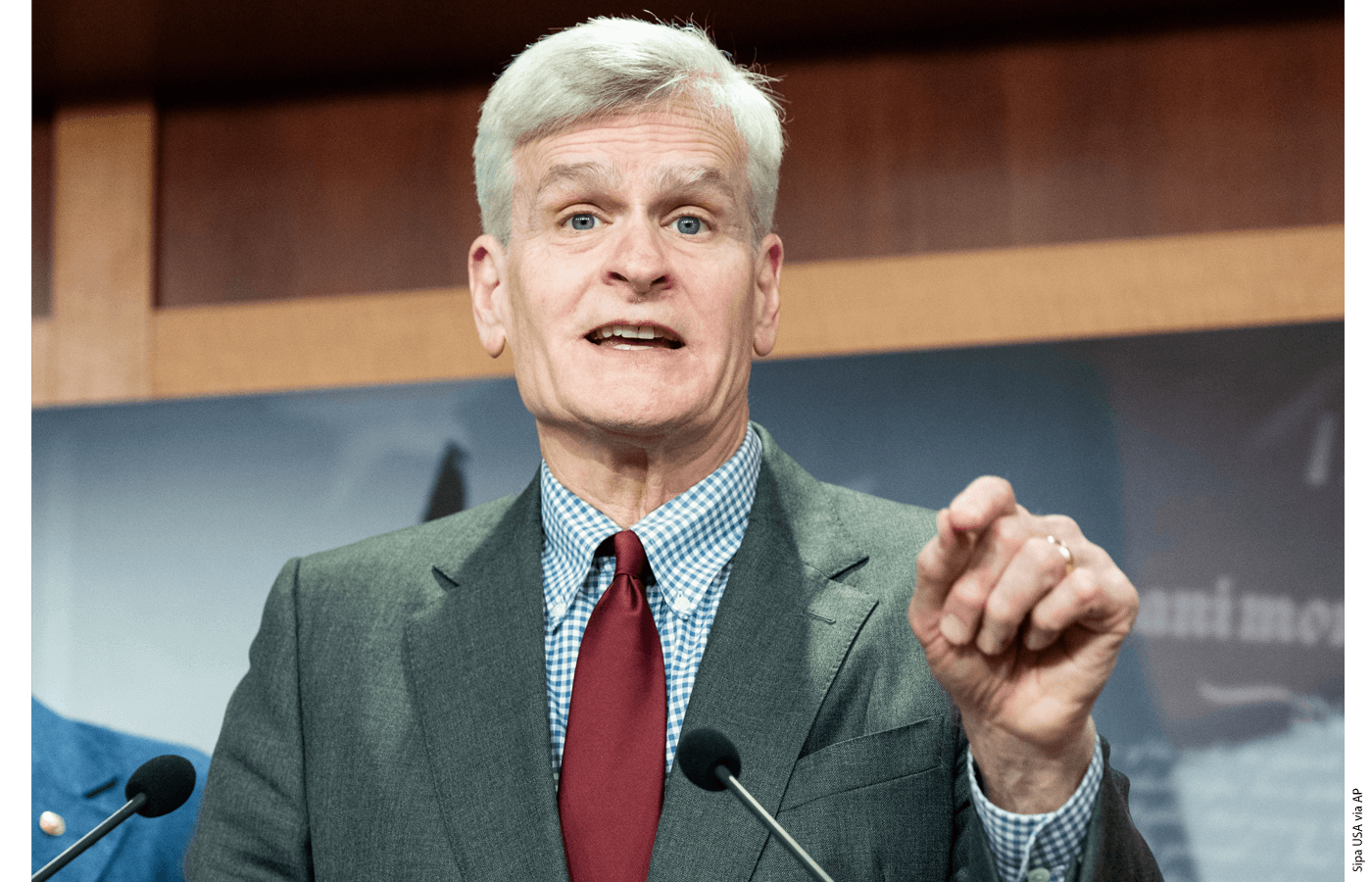
Why Louisiana Republicans Should End Bill Cassidy’s Senate Career on May 16.
Two weeks from now, on May 16, 2026, Louisiana Republicans will vote in a closed primary that has become the single most consequential intra-party election of the second Trump term. Senator Bill Cassidy, who has held the seat since 2015, is fighting for his political life against three challengers. They are Congresswoman Julia Letlow, who carries President Trump’s complete and total endorsement and the endorsement of Governor Jeff Landry; State Treasurer John Fleming, the former congressman; and Mark Spencer.
The most recent Emerson College poll, released April 26, shows Fleming at 28 percent, Letlow at 27 percent, and Cassidy at 21 percent. Twenty-two percent of voters remain undecided. The senator’s path to the runoff is narrow and getting narrower.
A development from the past 72 hours bears registration before the substantive argument begins. On April 29, 2026, the United States Supreme Court ruled in Louisiana v. Callais that the state’s current congressional map was an unconstitutional racial gerrymander. The day after the decision, Governor Landry signed an Executive Order suspending the closed-party primaries for U.S. House races only until July 15, 2026, or until the Legislature redraws the maps. Secretary of State Nancy Landry’s official statement made clear that all other races on the May 16 ballot would proceed as scheduled.
Senator Cassidy’s public reaction to the governor’s decision is itself worth registering. Within hours of Landry’s executive order, Cassidy posted on X that “the governor’s decision to move ahead with the Senate race during a confusing time is disappointing.” It is an unusual move for an incumbent senator to publicly object to his own state’s governor for proceeding with his primary on the originally scheduled date.
The reason it happened is straightforward enough: Cassidy is running third on the most recent polling, and a delay of his primary into July or later would have given him weeks to consolidate institutional support, allow national press attention to shift, and possibly insulate him from the redistricting drama that is dominating Louisiana political coverage. Governor Landry, who has endorsed Letlow, declined to extend that lifeline. The senator’s “disappointing” statement, directed at his own state’s Republican governor two weeks before voting, is the response of a man who knows the math.
A great deal has been written about why this primary matters. Most of the coverage has focused on the obvious: Cassidy’s 2021 vote to convict Donald Trump in the second impeachment trial, the President’s resulting determination to drive him from the Senate, the spectacle of an incumbent Republican facing a credible primary challenge in a state Trump carried by twenty-two points. That is the political surface of the story.
The deeper story, the one that should matter to anyone who has followed the MAHA movement’s first fifteen months in federal power, is something the political coverage has barely touched. Bill Cassidy is not just a Republican who voted to convict Trump. He is the senator most directly responsible, on the documented record, for the institutional containment of Secretary Kennedy’s MAHA agenda.
He is the senator the mRNA industry’s principal lobbying organization has been engaging with since July 2023, before Kennedy was even nominated. And he is the senator who, in February 2026, used his Senate HELP Committee chairmanship to publicly confront NIH Director Jay Bhattacharya over the very mRNA grant terminations and contract cancellations that the President’s own Health and Human Services secretary had ordered.
This essay lays out the documentary record. It argues that the record, fairly read, makes Cassidy’s primary defeat not just a Trump loyalty question but a substantive policy question, a question about whether the MAHA agenda will continue to be contained by a Senate health committee chair operating in alignment with the very industry incumbents the agenda was elected to confront.
Louisiana voters have an opportunity, on May 16, to settle that question.
The Cassidy Confirmation Conditions
The contained-MAHA story begins on February 13, 2025, the day Bill Cassidy announced he would vote to confirm Robert F. Kennedy Jr. as Secretary of Health and Human Services. The vote was 52 to 48. Cassidy was the deciding Republican; without his vote, the nomination would have failed. The Senate health committee chairman had spent the preceding weeks publicly wavering, and his eventual yes was conditioned on what he described as “a series of promises from Kennedy aimed at protecting faith in vaccines.”
Those promises, as Cassidy later detailed in his floor remarks and in subsequent interviews, included commitments that the Kennedy HHS would maintain unchanged the existing CDC vaccine schedule, would not seek to remove vaccines already on the recommended schedule without conducting evidence-based reviews, would maintain the existing Vaccine Adverse Event Reporting System rather than replacing it, would seek Senate input before making major changes to the Advisory Committee on Immunization Practices, and would refrain from using HHS authority to discourage childhood vaccination broadly.
Every one of those conditions was structured to preserve, in its essentials, the pre-2025 vaccine-policy status quo, the status quo that the MAHA movement’s most committed adherents, including the millions of Americans who voted for Trump-Kennedy on the explicit promise of vaccine-policy reform, had been organizing against for fifteen years.
The Cassidy conditions were not, in retrospect, the act of a skeptical senator preserving institutional integrity. They were the act of a senator with a specific structural relationship to the mRNA-platform pharmaceutical industry, exacting policy concessions on that industry’s behalf as the price of allowing Kennedy’s confirmation to proceed.
The Alliance for mRNA Medicines
In November 2023, more than a year before Kennedy was nominated, a new pharmaceutical-industry trade association quietly registered itself in Washington. Its name is the Alliance for mRNA Medicines (AMM). Its founding members numbered thirty-one. Its operational vehicle was Leavitt Partners, the Washington consulting firm founded by former HHS Secretary Mike Leavitt, under George W. Bush. Its Executive Director, Clay Alspach, is a Leavitt Partners principal and former Chief Health Counsel for the House Energy and Commerce Committee under Representative Fred Upton, where he led the committee’s work on the 21st Century Cures Act and other major health legislation.
The Alliance for mRNA Medicines did not exist to lobby for the mRNA platform’s continued commercial viability against competitive threats from other pharmaceutical platforms. It existed to lobby for the platform’s continued regulatory and political insulation against the mRNA-skeptical political movement that, by November 2023, was clearly emerging as a major force in American politics.
AMM’s first inaugural Washington meetings, which the organization itself documented on its LinkedIn account on July 27, 2023, four months before its formal founding, were not held with random congressional offices. They were held with a specific list of officials whose positions on mRNA platform policy mattered.
The list, as AMM publicly disclosed: Senator Bill Cassidy. Representative Brett Guthrie. Then-FDA Center for Biologics Evaluation and Research Director Peter Marks. Cancer Moonshot leadership. White House Office of Science and Technology Policy leadership. Senior staff for Senators Gary Peters and Bob Casey.
Senator Cassidy was on that list before the Alliance for mRNA Medicines had its formal founding meeting. He was on that list because his position on mRNA platform policy mattered to the industry building the lobbying organization that would be deployed against the MAHA movement’s agenda eighteen months later. The senator and the trade association have been documented as engaging with each other since July 2023, before Kennedy was nominated, before Trump’s 2024 victory was assured, before Cassidy cast the confirmation vote that placed Kennedy at the head of HHS subject to the conditions Cassidy himself had extracted. It does not appear that his clear conflict of interest was disclosed to the Senate at the time of the vote, or the public at large.
By late April 2026, AMM’s membership has grown from those original thirty-one members to more than one hundred. Moderna and Merck were added to the public membership roster in the period since the Kennedy HHS confirmation.
The trade association has continued to engage with Senator Cassidy’s office throughout the period the MAHA agenda has been advancing. AMM’s news platform amplified Cassidy’s February 3, 2026 Senate HELP Committee hearing on NIH modernization, the hearing at which Cassidy publicly confronted NIH Director Bhattacharya over the cancellation of $500 million in HHS mRNA contracts and the termination of mRNA research grants the Kennedy HHS had determined did not meet evidentiary standards. At no time during this hearing, did Cassidy disclose his affiliation with AMM.
This is a documented chronology. Every claim in the preceding paragraphs is sourceable to AMM’s own public communications, to Leavitt Partners’ corporate disclosures, to LegiStorm’s lobbyist-registration database, to the Senate HELP Committee’s published hearing record, to Cassidy’s own February 3, 2026 press release, and to contemporaneous reporting by Science magazine, by Holland and Knight, and by the trade press. None of it is contested.
What is contested is what the chronology means. I will offer my reading.
What the Documented Chronology Means
A senator the mRNA industry has been engaging with since July 2023 cast the deciding Republican vote to confirm Robert F. Kennedy Jr. as HHS Secretary on the condition that Kennedy preserve the pre-2025 vaccine-policy status quo. After the confirmation, that same senator, chairing the Senate committee with oversight over HHS, has used his chairmanship to challenge the Kennedy HHS at every major decision point the MAHA agenda has required.
When the reconstituted Advisory Committee on Immunization Practices voted in September 2025 to end the universal recommendation that newborns receive the hepatitis B vaccine on the day of birth, Cassidy publicly called the decision “a mistake” and signaled openness to legislation that would constrain the ACIP’s reform authority.
When Vinay Prasad, the new FDA CBER Director, issued the November 2025 memorandum identifying ten of ninety-six pediatric VAERS deaths as related to COVID-19 vaccination, Cassidy described the memo as having “diverged from standard pharmacovigilance practice” and called for senate hearings on the FDA’s pharmacovigilance methodology under the new HHS leadership.
When the AAP v. Kennedy preliminary injunction was issued by Judge Brian Murphy on March 16, 2026, Cassidy did not publicly defend the Kennedy HHS’s reform program; he registered concern about the injunction’s procedural findings while declining to take a position on the underlying ACIP reconstitution.
When the Kennedy HHS announced the cancellation of $500 million in mRNA contracts in early February 2026, Cassidy convened a Senate HELP hearing which he publicly confronted NIH Director Bhattacharya on the record.
This is not the conduct of a senator skeptically supervising an HHS Secretary he had reluctantly voted to confirm. This is the conduct of a senator using his committee chairmanship to advance a specific policy position, the position the Alliance for mRNA Medicines has been advocating since July 2023.
I do not claim that AMM bought Senator Cassidy’s vote. I claim something narrower and harder to refute: the documented chronology establishes a pattern of alignment between Senator Cassidy and the mRNA-industry lobbying organization that is, on the documentary record alone, structurally consistent with the regulatory-capture analytical framework the MAHA movement was elected to confront.
The senator is on the wrong side of MAHA. Supporters of the MAHA agenda represent a decisive majority of his Republican primary electorate, who voted for MAHA-aligned change in November 2024.
The May 16 Choice
President Trump endorsed Julia Letlow on January 17, 2026, preemptively, before she had announced her candidacy. He called her a “Great Star” and a “TOTAL WINNER” and wrote, in characteristic punctuation, “RUN, JULIA, RUN!!!” Three days later, on January 20, Letlow announced her candidacy at a closed-door business breakfast in Baton Rouge. Governor Jeff Landry has endorsed her. The America First political infrastructure has aligned around her candidacy
Letlow is, what Cassidy is not: a member of Congress who has consistently supported the Trump administration’s agenda across the issue spectrum, including the MAHA agenda’s component policy positions. She has voted for the major appropriations vehicles supporting the Kennedy HHS reform program. She has not publicly broken with Secretary Kennedy on a single major decision. She has not, to public knowledge, met with the Alliance for mRNA Medicines or its operational principals. She has the policy positioning Louisiana Republicans voted for in 2024 and the willingness to defend that positioning under pressure.
State Treasurer John Fleming, the former congressman, is also running. Fleming has substantial conservative credentials and would not be a bad senator. But the analytical case for ending Cassidy’s career rests on the specific documentation this essay has laid out, and the analytical case for replacing him with Letlow rests on the endorsement structure: Trump, Landry, and the America First coalition has aligned around her candidacy specifically.
A vote for Letlow on May 16 is the clearest available signal that Louisiana Republicans want their senator to be aligned with the MAHA agenda rather than aligned against it. A vote for Fleming, on current polling, risks splitting the anti-Cassidy vote in ways that could let the senator survive into the runoff with a structural advantage from incumbent name recognition.
I make this case as the author of the recently completed “The Chronic Rebellion” (Authors Drs. Robert and Jill Malone), a definitive history book that comprehensively documents the MAHA movement’s first fifteen months in federal power. The research performed for the book strongly supports this assessment. The case is not about Donald Trump’s grievances, though those are real and the President is entitled to them. The case is about the specific structural relationship between Senator Cassidy and the lobbying organization that has been working against the policy agenda the President and Secretary Kennedy were elected to advance.
A senator who entered an alliance with the mRNA-industry lobbying organization in July 2023, who used his confirmation-vote leverage to extract conditions structured to preserve the pre-2025 status quo that lobbying organization was protecting. Who has used his committee chairmanship in 2025–2026 to publicly challenge the Kennedy HHS at every major decision point of the reform program. This is a senator who should not be returned to the Senate for a third six-year term.
Louisiana Republicans have the opportunity, on May 16, to end Bill Cassidy’s career by electing Julia Letlow. The opportunity exists in this specific election because of an unusual conjunction of factors: a presidentially-endorsed challenger with the coalition needed to consolidate the anti-Cassidy vote, a primary calendar that places the decision two weeks before the Memorial Day weekend, and Julia Letlow’s pro-MAHA record, which is supported by Republican voters.
The opportunity will not return. Cassidy’s structural advantages: incumbent fundraising, committee chairmanship, NRSC backing, the support of Senate Majority Leader Thune, will not be matched in any subsequent election. If he survives the primary on May 16, he survives for six more years. The MAHA agenda will spend those six years contained by a Senate health committee chairman whose alignment with the lobbying organization opposing that agenda is documentary fact, regardless of whether the causal chain is established.
The choice for Louisiana voters on May 16 is whether to let that happen, or whether to use the closed primary the state has scheduled to make sure it does not.
I urge Louisiana Republicans to vote for Julia Letlow.
https://www.malone.news/p/the-senator-the-mrna-industry-built